

In a speech to U.S. troops on November 27, President Donald Trump announced that his administration had approved the purchase of additional B-2 Spirit intercontinental stealth bombers, citing their effectiveness in the June attacks on Iranian nuclear facilities.
Earlier, speaking before the Israeli Knesset , he also announced the order for an upgraded version of the aircraft, saying: “I didn’t expect them to be able to do what they have done. To be honest, we just ordered another 28 — a slightly improved version. We ordered a large batch.”
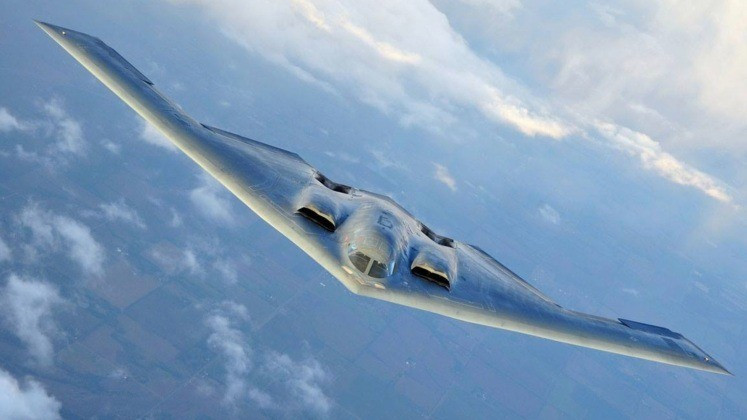
His remarks came after the first images emerged showing China test-flying a heavy, stealth intercontinental bomber with a wingspan comparable to the B-2. Only 20 mass-produced B-2s were ever built, entering service between 1997 and 2000. The production program was significantly shortened from the original plan of 132 aircraft due to design problems.
Operation Midnight Hammer
Under Operation Midnight Hammer, seven B-2s took off from Whiteman Air Force Base on the night of June 21 with flight plans indicating Guam as the destination – aimed at reducing Iran's ability to prepare defensive interceptions. Chairman of the Joint Chiefs of Staff, General Dan Caine, explained that the U.S. military employed “a variety of diversionary tactics, including decoys, with fourth and fifth-generation aircraft flying lead at high altitudes and speeds to sweep away the threat from fighter jets and surface-to-air missiles.”
Each B-2 can carry up to 18,000 kg of weapons, including two GBU-57 Massive Ordnance Penetrator bombs, a type of penetrating bomb designed to destroy the most heavily fortified military facilities without exceeding the threshold for nuclear weapons use. These bombs have been confirmed to have been used to attack Iranian facilities, although the degree of success of the strike remains unclear.
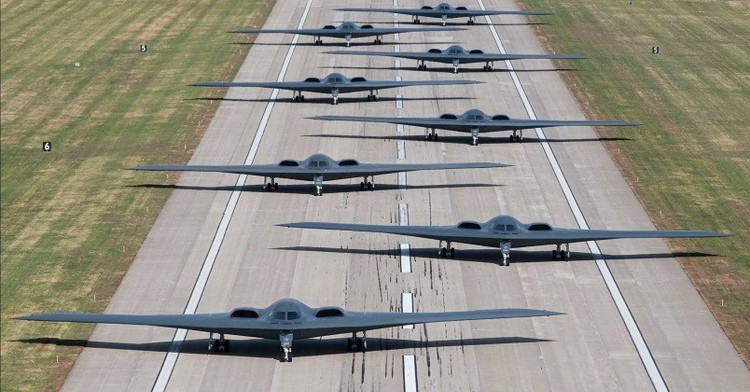
The possibility of bringing the B-2 back into production.
The refitting of Northrop Grumman's production line for the B-2 after more than 25 years is considered too expensive, especially when only 28 aircraft will be produced, as President Trump mentioned. Another issue is that the B-2's design is becoming increasingly outdated, as radar and stealth technology have improved significantly since the 1980s—the time when the B-2 was developed.
It's possible that Trump was actually referring to the B-21 Raider bomber, a refined, scaled-down, and modernized version of the B-2 designed to reduce costs. The B-21 is expected to enter service in the early 2030s, with electronics and stealth capabilities about 25 years more advanced than the B-2, despite having a much smaller payload and range.
At over $2 billion per unit, the B-2 is the most expensive fighter jet ever built. The B-21 is expected to be about 70% cheaper thanks to large-scale production and a smaller size.
The B-2 also faces numerous operational problems, such as extremely high maintenance costs, far exceeding initial estimates; the requirement to store them in special air-conditioned hangars, making them unsuitable for regular deployment outside of the United States, etc.
The U.S. Air Force is currently under immense budgetary pressure to simultaneously fund the B-21, the F-47 fighter jet, the continued purchase of the F-35, and the urgent need for refueling and early warning/control aircraft. This makes the prospect of launching a multi-billion dollar program to resume B-2 production nearly impossible.
Source: https://khoahocdoisong.vn/my-se-dua-oanh-tac-co-tang-hinh-b-2-tro-lai-day-chuyen-san-xuat-post2149074741.html












![[INFOGRAPHIC] Who is the former President of Bolivia who was recently arrested?](https://vphoto.vietnam.vn/thumb/402x226/vietnam/resource/IMAGE/2025/12/12/1765543468412_thumb-cuu-tong-thong-bolivia-jpg.webp)



















































Comment (0)