

| Affirming the "throne" of the fruit and vegetable industry, durian exports reached the 1.2 billion USD mark after 8 months. Joining the billion-dollar export industry, what risks does Vietnamese durian face? |
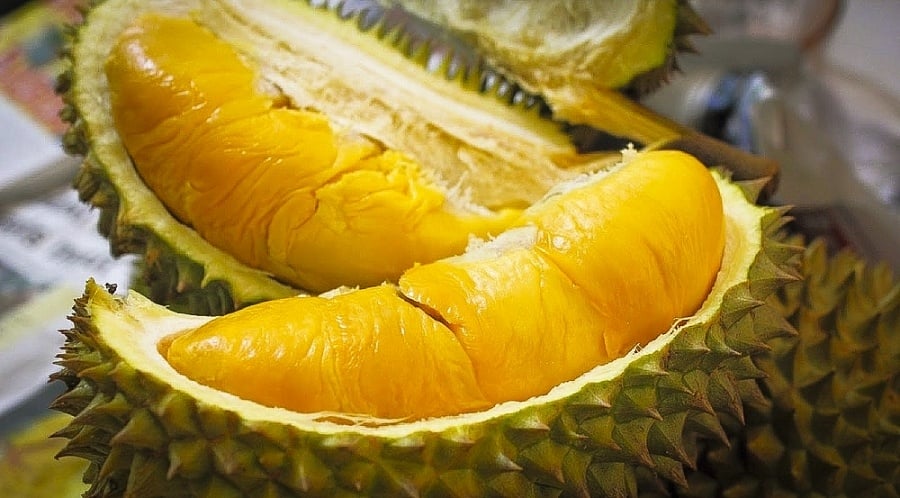
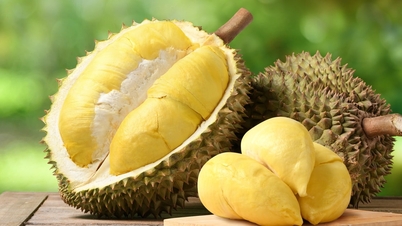
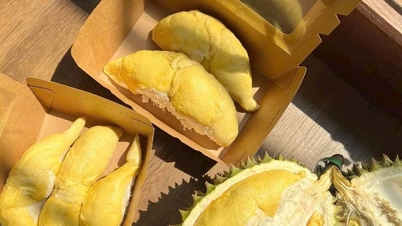
According to records in the Southwest region, beautiful Ri6 durian today, September 5, 2023, costs about 55,000 - 59,000 VND/kg; Ri6 durian in bucket costs about 45,000 - 52,000 VND/kg, unchanged from the previous day.
In the Southeast and Central Highlands regions, beautiful Ri6 durian on September 5, 2023 cost about 55,000 - 58,000 VND/kg; Ri6 durian in bulk cost about 45,000 - 50,000 VND/kg, unchanged from the previous session.
 |
| It is forecasted that durian exports in 2024 will reach 2 - 2.5 billion USD. |
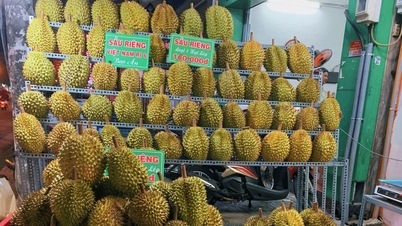
On September 5, 2023, the price of Thai durian of good quality decreased by VND 5,000/kg compared to September 4, dropping to VND 80,000 - 85,000/kg. At the same time, the price of Thai durian bought in bulk also decreased by VND 5,000/kg, currently being purchased by traders at VND 70,000 - 78,000/kg. This is also the price of Thai durian (two types of good quality, selected and bought in bulk) recorded in the Southeast and Central Highlands provinces.
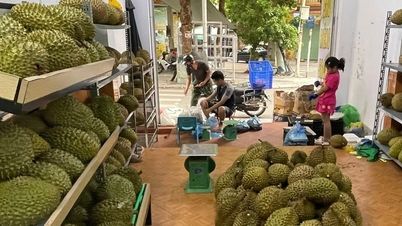
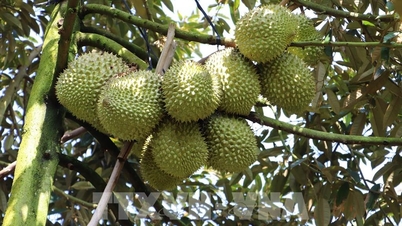
Meanwhile, in Dak Lak , durian harvest season has begun. Durian traders and brokers spread out to all gardens to close the deal at high prices. According to gardeners, Ri6 products have increased to 60,000 - 62,000 VND/kg at times, while Thai products cost 90,000 VND/kg.
As for Dak Nong , some areas have entered the end of the harvest season but prices are still increasing. Currently, the price of Thai durian has "jumped" to 90,000 - 100,000 VND/kg depending on the type.
Previously, in early August 2023, Thai durian was purchased in the garden at a price of 70,000 - 80,000 VND/kg.
Mr. Dang Phuc Nguyen, General Secretary of the Vietnam Fruit and Vegetable Association, informed that the price of durian in the Central Highlands region has increased to a record high. The reason is that, currently, only our country still has durian to harvest, other countries such as Thailand and Malaysia have finished their durian season.
"This is the advantage of Vietnamese durian when officially exporting to the Chinese market. Other countries only have a certain durian season in the year, but in Vietnam, the durian crop is spread out, allowing harvests all year round," said Mr. Dang Phuc Nguyen.
Specifically, the durian season in Vietnam begins in March, with the Southwest region experiencing its peak season until May; the peak season in the Southeast region is from April to July; the peak season is from July to October in the Central Highlands; and from November to March of the following year, off-season durian is harvested in the Mekong Delta.
According to the General Department of Customs, in the first 8 months of 2023, durian exports earned nearly 1.3 billion USD, leading the export turnover of fruits and vegetables. With this export momentum, Mr. Dang Phuc Nguyen predicted that durian exports are likely to bring in 1.6 - 1.7 billion USD.
China is the world's largest consumer of durian, with imports amounting to several billion USD each year. China has also experimented with growing durian in Hainan. There are currently many different opinions surrounding this fruit.
Regarding this matter, Mr. Dang Phuc Nguyen assessed that the durian trees grown in China may not necessarily bear fruit, and even if they do, the fruit may not be delicious. This is because durian trees are selective about soil and climate; too much sun or too much rain is detrimental. Growing durian in areas without water will be very difficult. China grows them in Hainan, an area prone to typhoons, where tree shaking will make it difficult for the trees to set and retain fruit. It would take at least 10 years to achieve success.
“Durian from the Philippines and Thailand is only available seasonally, while Malaysia is only allowed to export frozen products to the Chinese market. If we do a good job in growing and packaging, in the next 10 years our country will not have to worry about the market for durian,” said the leader of the Vietnam Fruit and Vegetable Association.
If by 2024, Vietnamese durian has more growing area codes issued by Chinese authorities, the potential for durian exports to reach 2 - 2.5 billion USD.
According to Mr. Dang Phuc Nguyen, Thailand is currently cutting down many mangosteen trees to switch to growing durian. Cambodia also grows durian. If Vietnam does not grow durian, it will lose its opportunity.
The advantage of Vietnamese durian is that it is available all year round. In addition, we have the advantage of transportation time. “First is distance, second is speed”, the transportation distance is short so the logistics cost of bringing durian to China from our country is much cheaper than that of our competitors in Thailand and Malaysia.
Vietnamese durian not only competes in quality but also competes with Thai durian in price.
The global durian market is worth tens of billions of dollars. China alone imported 4 billion dollars a year a few years ago, and this figure has increased because before that, they mainly imported goods from Thailand (Thailand supplied 90% of the Chinese market).
The market absorption rate for durian in this market remains high, because the amount of durian they previously imported from Thailand only served the needs of about 200-300 million people. In other words, only a segment of consumers in China could afford to eat durian due to its high price.
With a Chinese market of 1.4 billion people, quality Vietnamese durian at affordable prices will serve a large number of Chinese consumers.
Source link



















![[Video] The craft of making Dong Ho folk paintings has been inscribed by UNESCO on the List of Crafts in Need of Urgent Safeguarding.](https://vphoto.vietnam.vn/thumb/402x226/vietnam/resource/IMAGE/2025/12/10/1765350246533_tranh-dong-ho-734-jpg.webp)



























































Comment (0)