

(QBĐT) - In order to train a skilled workforce with strong expertise, vocational education institutions in the province have always focused on improving the quality of their teaching staff, considering this a breakthrough solution and the "key" to the success and effectiveness of vocational training.
As a reputable vocational training institution in the province, Quang Binh College of Technology and Agriculture always focuses on training and improving the quality of its teaching staff through various comprehensive and effective solutions. Aiming to become a high-quality college by 2025, the school places particular emphasis on improving the quality of its teaching staff through a range of effective measures. Besides strengthening the training of teachers to meet professional standards and promoting the transfer of training programs and materials for vocational teachers, the school organizes training and professional development in vocational skills and pedagogy for its teaching staff, especially in key industries and professions.
In particular, the school focuses on mobilizing resources to invest in improving the system of facilities and practical equipment; applying technology to teaching, such as: using simulation software, e-learning, virtual reality (VR), building an electronic learning materials system to help learners easily access knowledge; applying the "learning by doing" method; and emphasizing links with businesses in training... Through this, teachers can accumulate professional experience and practical production experience to pass on to students.
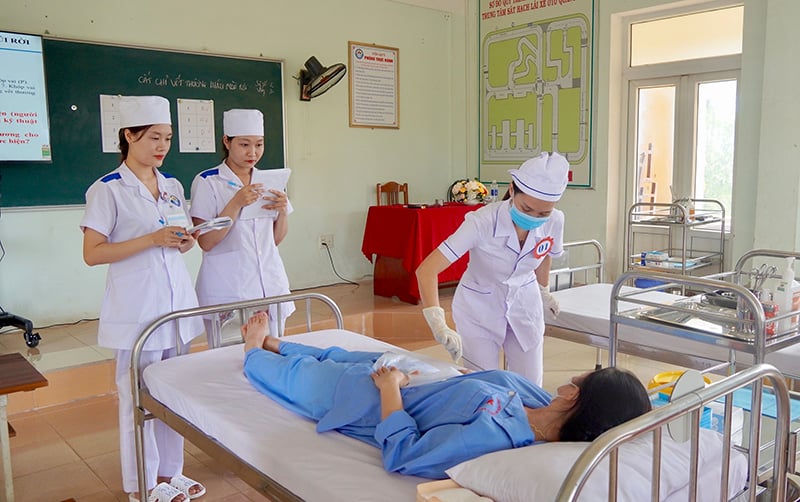 |
According to the Principal of Quang Binh College of Technology and Agriculture , Dao Hoai Linh, innovation and improvement in the quality of training in vocational education institutions is an urgent requirement to enhance the quality of human resources. To achieve this, the teaching staff needs to be innovative, proficient in theory, and skilled in practice. In addition to providing opportunities for teachers to participate in standardized training courses on practical skills and vocational teaching methods, the school also regularly organizes competitions for teachers to create self-made training equipment, vocational education teacher conferences, and competitions for skilled and safe driving instructors, creating a professional and friendly working environment so that teachers can confidently dedicate themselves to their work.
As a result, the quality of the school's teaching staff has been continuously improved. 100% of the school's teachers have received training and professional development to meet or exceed the required standards for teaching at all levels. The school currently has 172 teachers, including 3 with doctoral degrees and 77 with master's degrees. From 2021 to the present, the school has had 10 teachers awarded the title of excellent teacher at the provincial level and 3 teachers awarded the title of excellent teacher at the national level…
The province currently has 206 vocational education and training (VET) management staff and 625 full-time teachers (both on the payroll and under contracts of 12 months or more) at VET institutions, VET operating facilities, and facilities operating VET for less than 3 months. 100% of teachers meet the required standards. The number and quality of VET teachers have increased rapidly, gradually meeting the requirements for innovation and improving the quality and effectiveness of VET activities.
Annually, the General Department of Vocational Education and Training regularly organizes training and professional development courses for management staff and teachers to meet the required standards and competencies for each position. In addition, vocational education institutions have focused on arranging for teachers to participate in standardized training courses on practical skills and vocational teaching methods, ensuring their capacity to teach key vocational training programs. As a result, both the quantity and quality of vocational education teachers have increased, meeting standards in terms of training level, vocational skills, pedagogical competence, foreign language proficiency, and information technology skills.
| The province currently has 18 vocational training institutions and other registered vocational training establishments with 625 teachers, including 319 teachers in colleges, 210 teachers in vocational schools, and 96 teachers in vocational training centers, continuing education centers, and centers for farmers and women. |
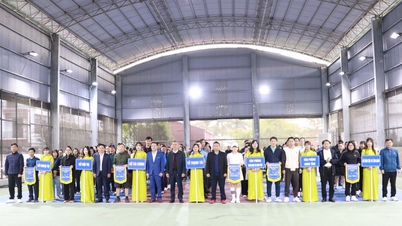
In particular, the province organizes an annual vocational education teacher training conference to create a beneficial platform for teachers. This is an opportunity for teachers at vocational schools to exchange and share experiences, thereby promoting emulation movements in vocational education institutions. At the same time, it encourages teachers to actively develop technical innovations, improve teaching methods, equipment, and materials, and hone their pedagogical skills. In 2024, the provincial-level vocational education teacher training conference was successfully organized with 3 first prizes, 7 second prizes, 10 third prizes, and 9 consolation prizes. Based on the results of the provincial-level conference, 6 outstanding teachers from the province were selected to participate in the national vocational education teacher training conference in November 2024, and as a result, 1 teacher won a third prize and 5 teachers won consolation prizes…
To produce a highly skilled and proficient workforce, the teaching staff plays an extremely important role. They are considered the key, playing a decisive role in improving the quality of training at vocational education institutions, thereby contributing to raising the quality of human resources to meet the diverse needs of the labor market and the increasingly high demands for the quantity, structure, and quality of skilled workers.
Objectively speaking, although the training and professional development of teachers and management staff in vocational education and training in the province has improved in recent years, it still does not meet the requirements of fundamental and comprehensive reform of education and training. There is still a shortage of teachers with high professional qualifications and good practical skills. The management and administrative capacity and training level of many staff in vocational secondary schools and centers are still inadequate, unprofessional, and not adapted to changes in science and technology and the trend of international integration...
Therefore, the development of the teaching staff in vocational education institutions needs to be comprehensively reformed. Vocational education institutions need to diversify training and professional development methods; develop appropriate training materials and programs; create conditions for teachers to participate in vocational education teacher training conferences; strengthen cooperation with businesses; and at the same time, implement policies and regulations to ensure a better material and spiritual life for the teaching staff so that they can work with peace of mind and with enthusiasm and responsibility…
Peace of Mind
Source: https://www.baoquangbinh.vn/giao-duc/202504/nang-cao-chat-luong-nha-giao-giao-duc-nghe-nghiep-2225377/

















































































Comment (0)