

In solidarity with the rest of the country in commemorating the great celebration of April 30th (Liberation of the South, Reunification of the Country), in the ancient capital of Hue , the red flag with a yellow star on the Hue flagpole was replaced with a new one, fluttering proudly against the blue sky...
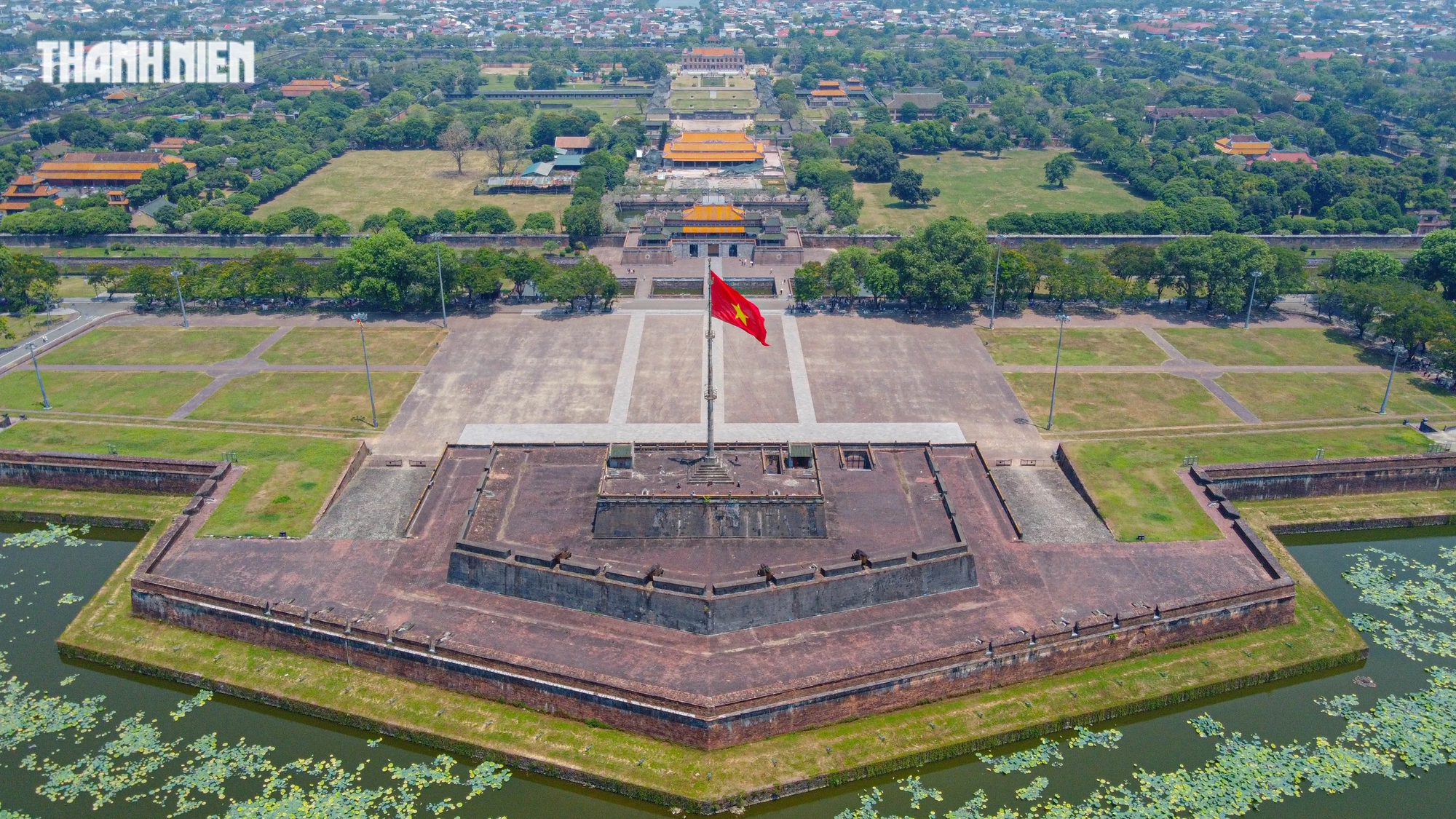
According to historical records, the Hue flagpole was built along with other structures within the Imperial Citadel in the 6th year of Gia Long's reign, which is 1807. The structure was erected in the southern part of the Hue Citadel, within the Nam Chanh fortress. This is considered the place where the imperial flag was hoisted.

After the death of King Gia Long, King Minh Mạng ordered the complete construction of the Hue Imperial Citadel, and the flagpole was also renovated and completed in 1840.

The original flagpole, made of wood and over 30 meters high, was broken by a storm and replaced with a cast-iron pole during the reign of Emperor Thành Thái. In 1947, when the French reoccupied Huế, the flagpole was again broken by artillery fire. In 1948, it was rebuilt with reinforced concrete, reaching a height of 37 meters.
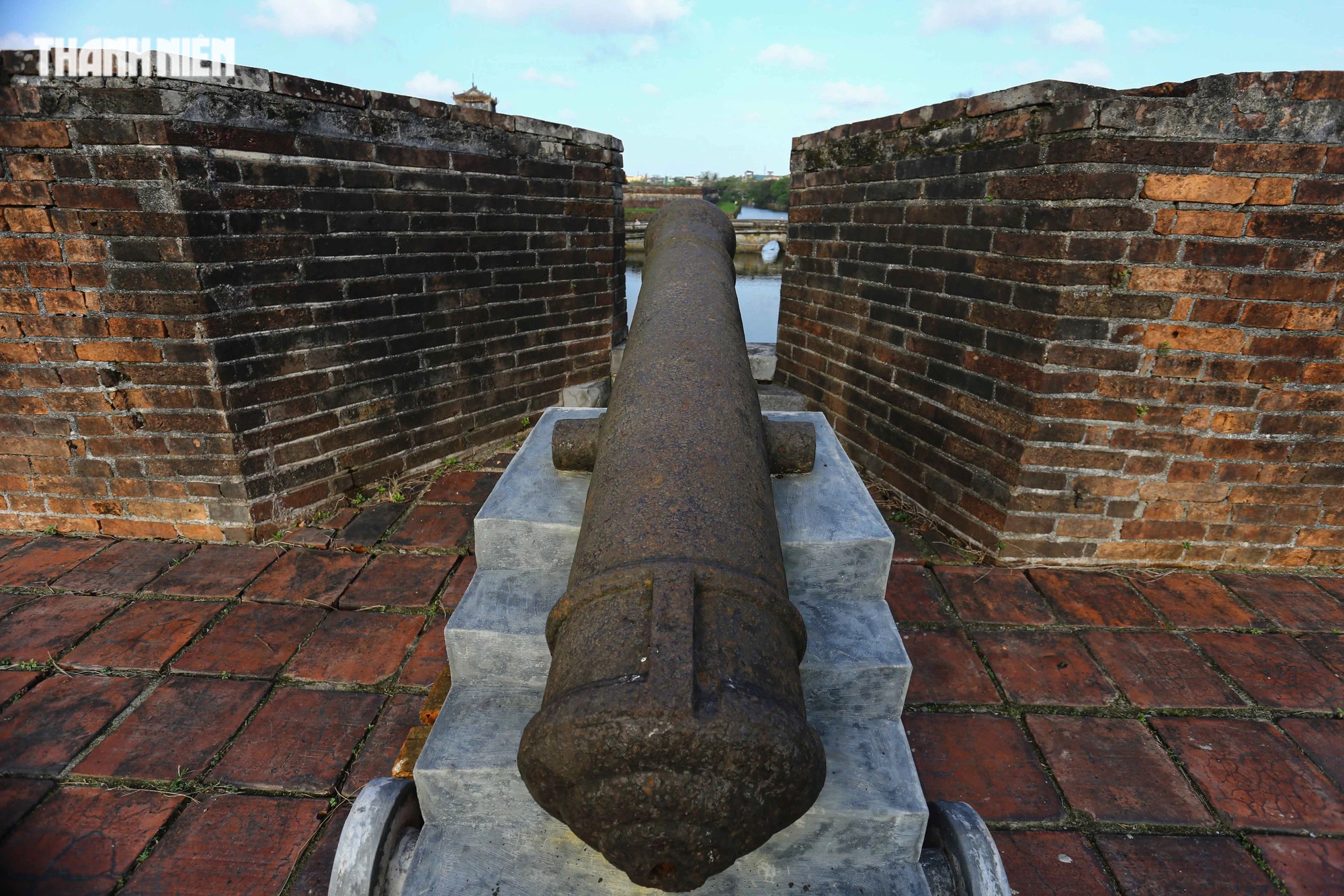
The monument was equipped with cannons for defense.
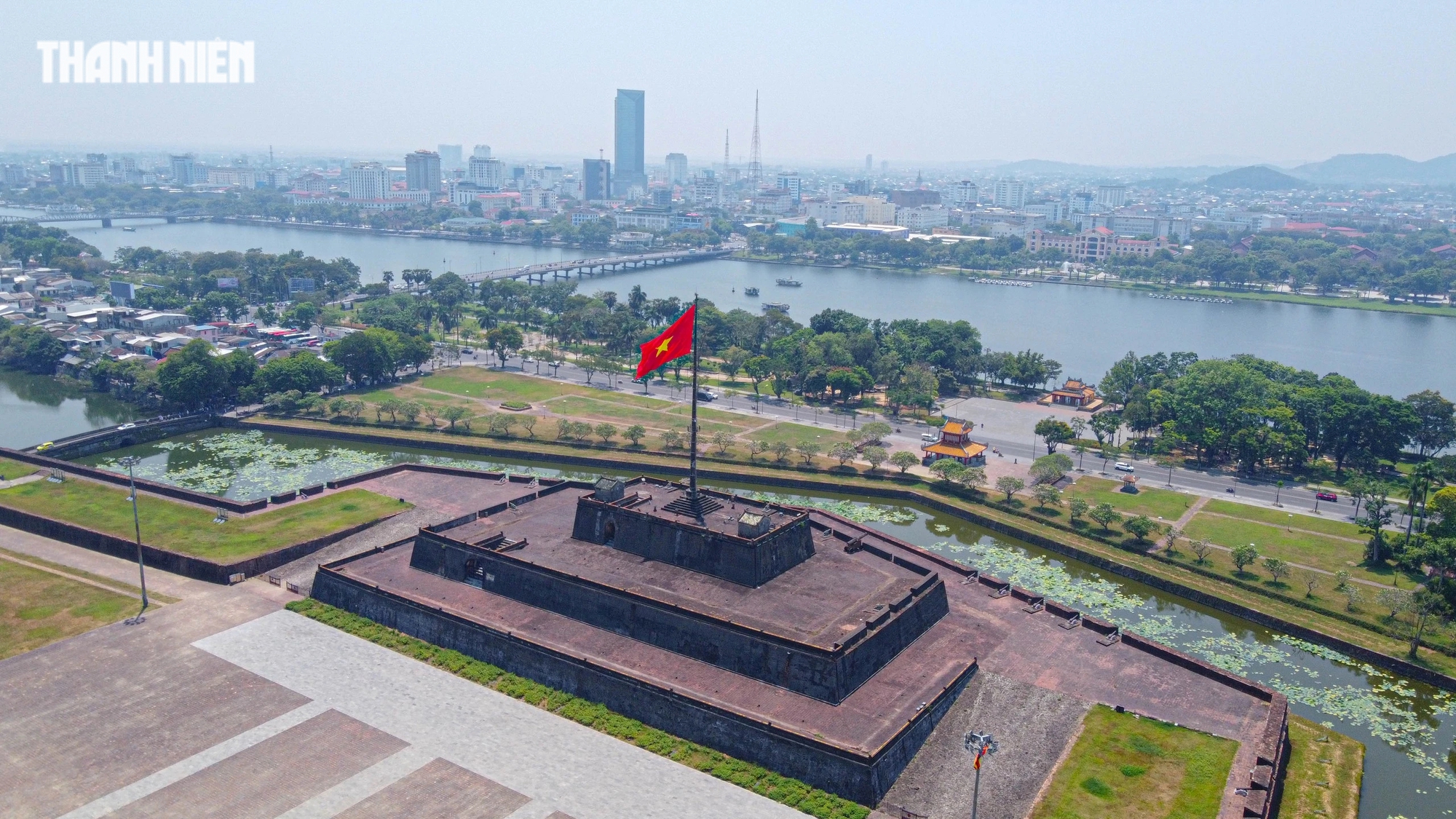
On August 23, 1945, the red flag with a yellow star of the Democratic Republic of Vietnam flew atop the flagpole, replacing the trigram-shaped flag of the Nguyen Dynasty. Significantly, on March 26, 1975, the 12-meter-long, 8-meter-wide flag of the National Liberation Front of South Vietnam was raised on the flagpole, marking the liberation of Thua Thien - Hue.

Tourists check in on the ramparts of the monument.
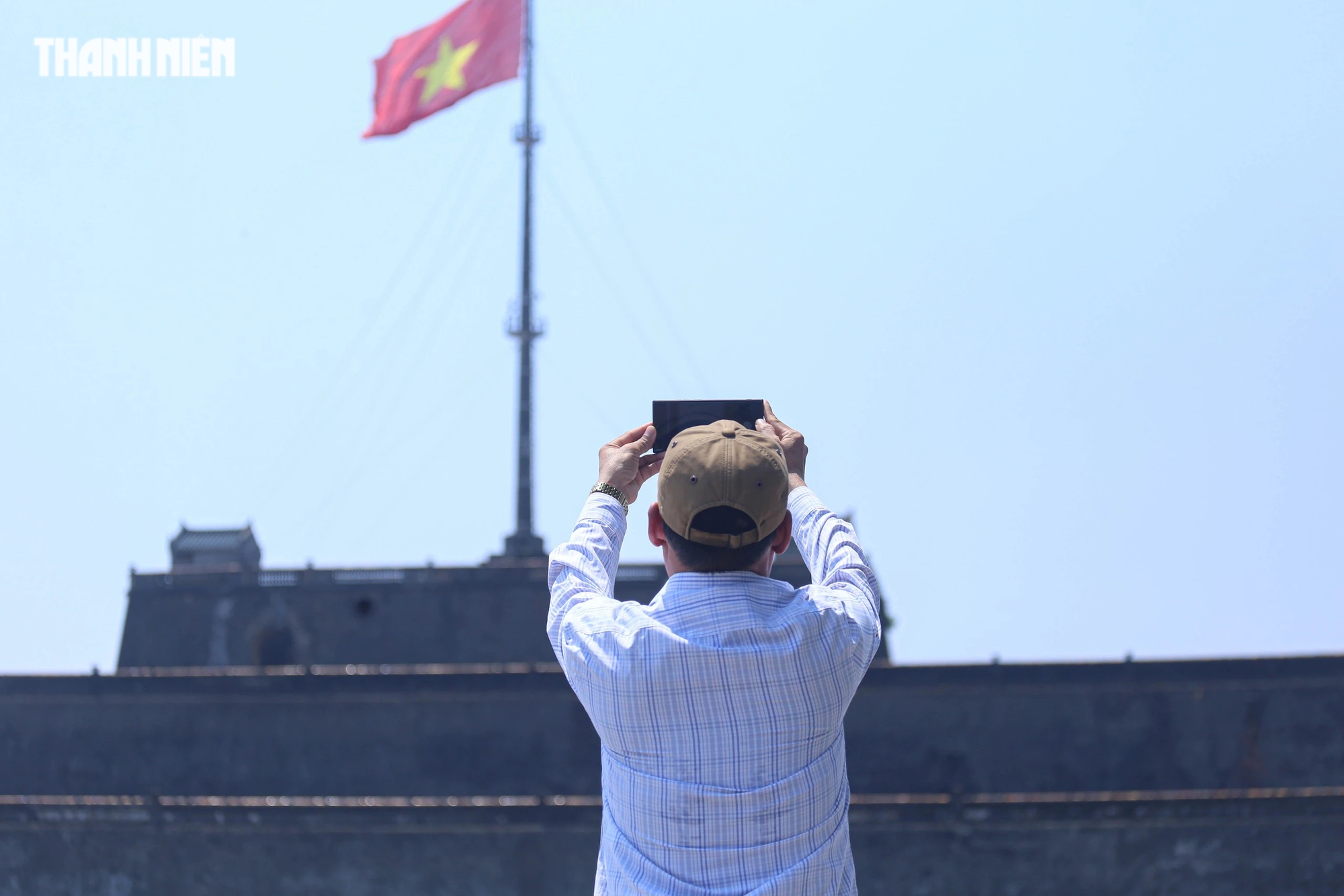
And take a picture of the monument while visiting the Hue Imperial Citadel.
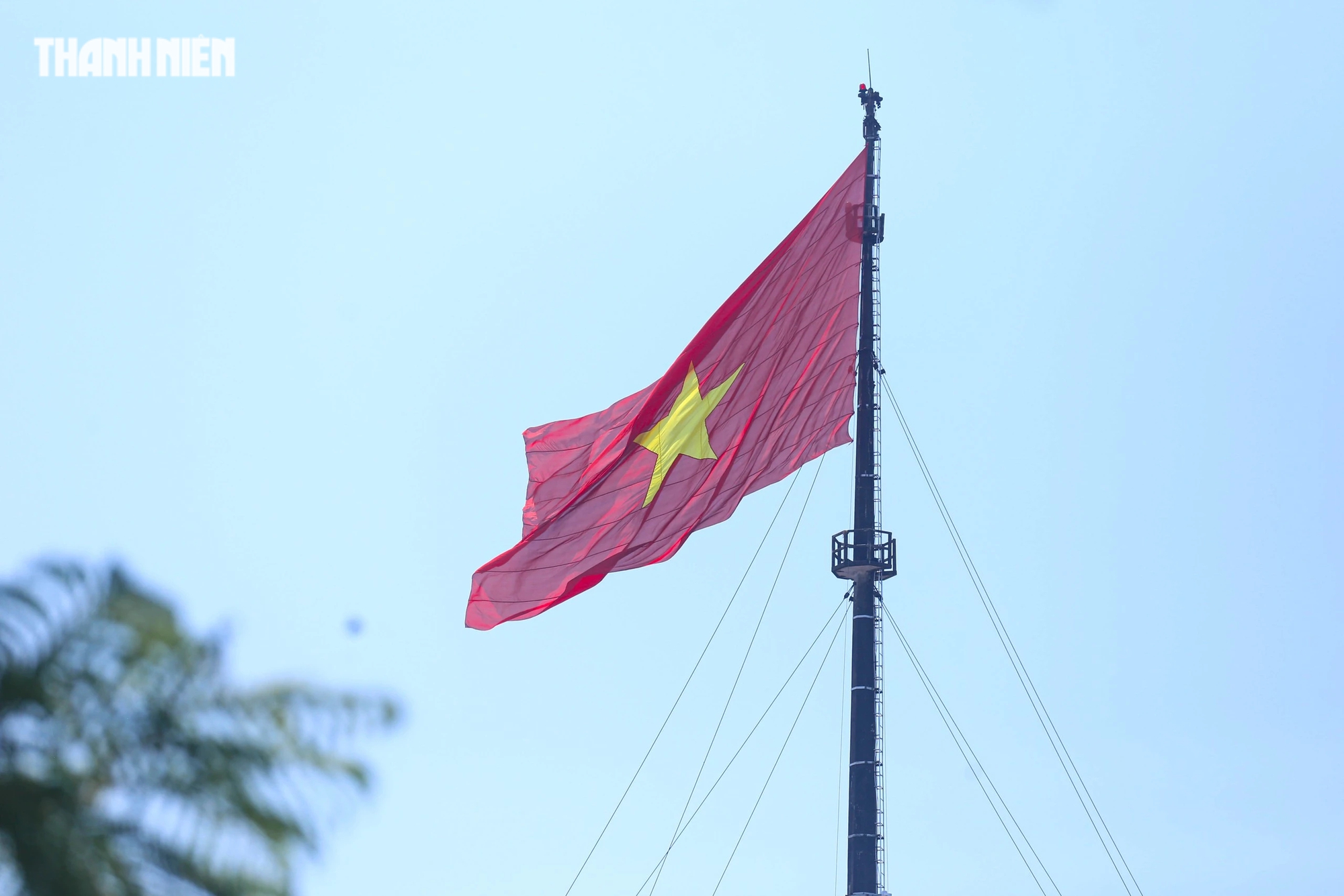
The Hue Citadel is one of the Nguyen Dynasty structures included in the UNESCO World Heritage site system recognized in 1993. Every year, on important holidays, the national flag on the citadel is replaced with a new one.
Source link
![[Photo] Prime Minister Pham Minh Chinh holds a phone call with the CEO of Russia's Rosatom Corporation.](/_next/image?url=https%3A%2F%2Fvphoto.vietnam.vn%2Fthumb%2F1200x675%2Fvietnam%2Fresource%2FIMAGE%2F2025%2F12%2F11%2F1765464552365_dsc-5295-jpg.webp&w=3840&q=75)




![[Photo] Closing Ceremony of the 10th Session of the 15th National Assembly](/_next/image?url=https%3A%2F%2Fvphoto.vietnam.vn%2Fthumb%2F1200x675%2Fvietnam%2Fresource%2FIMAGE%2F2025%2F12%2F11%2F1765448959967_image-1437-jpg.webp&w=3840&q=75)




































![[OFFICIAL] MISA GROUP ANNOUNCES ITS PIONEERING BRAND POSITIONING IN BUILDING AGENTIC AI FOR BUSINESSES, HOUSEHOLDS, AND THE GOVERNMENT](https://vphoto.vietnam.vn/thumb/402x226/vietnam/resource/IMAGE/2025/12/11/1765444754256_agentic-ai_postfb-scaled.png)










































Comment (0)