

 |
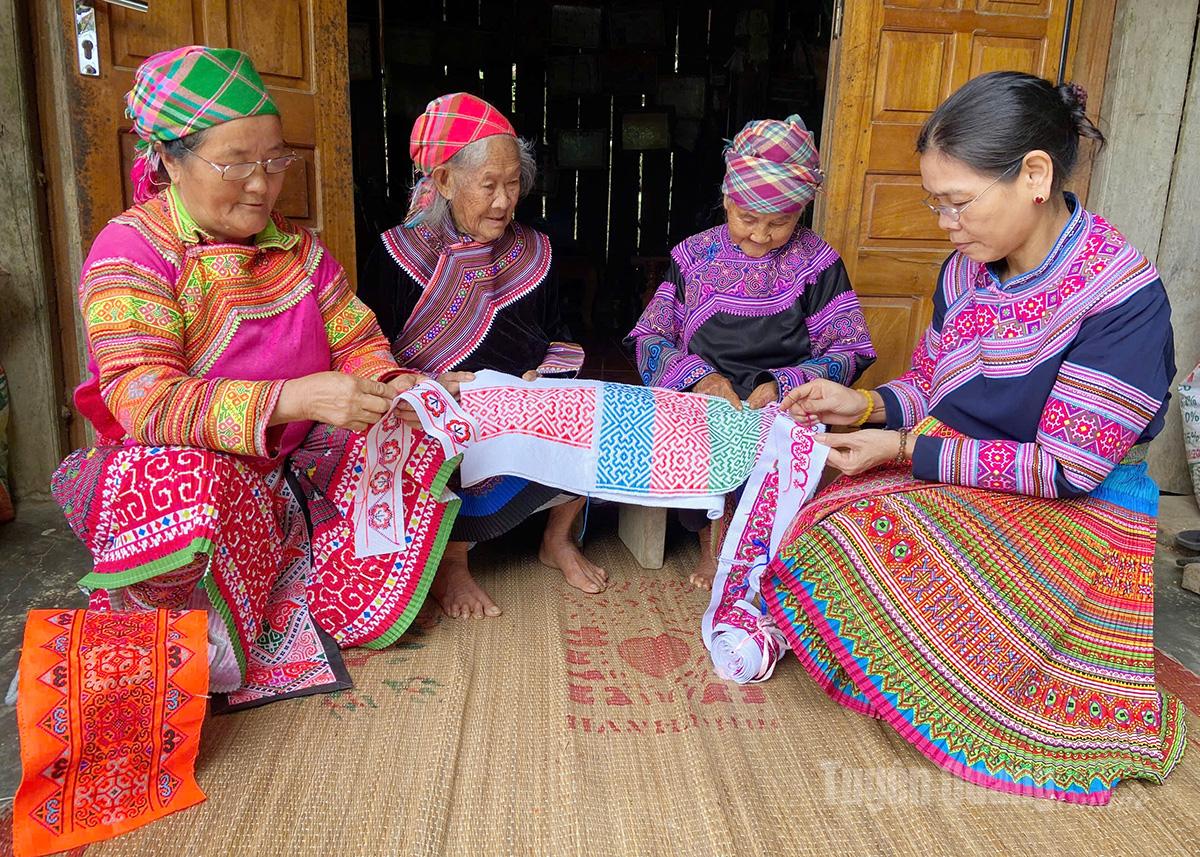
| The Hmong women and mothers in Bac Trien village still preserve the traditional embroidery craft. |
Mrs. Sung Thi So, now 68 years old, still takes advantage of her free time during the agricultural off-season to embroider. She always keeps a pretty little bag by her side, containing needles, thread, and fabric, so she can focus on embroidery whenever she has the time. Mrs. So shared that she learned basic embroidery from the age of 5 or 6, and then learned by watching her grandmothers and mothers embroider. She mainly embroiders aprons, skirt sashes, and leg wraps. At market days, the women in the village rush to buy fabric and embroidery thread to make them. She embroiders for herself, her children, and family members, because the Hmong women's dresses are already colorful and vibrant, with the apron, skirt sashe, and leg wraps being the highlight. Every stitch reflects the skill of the wearer.
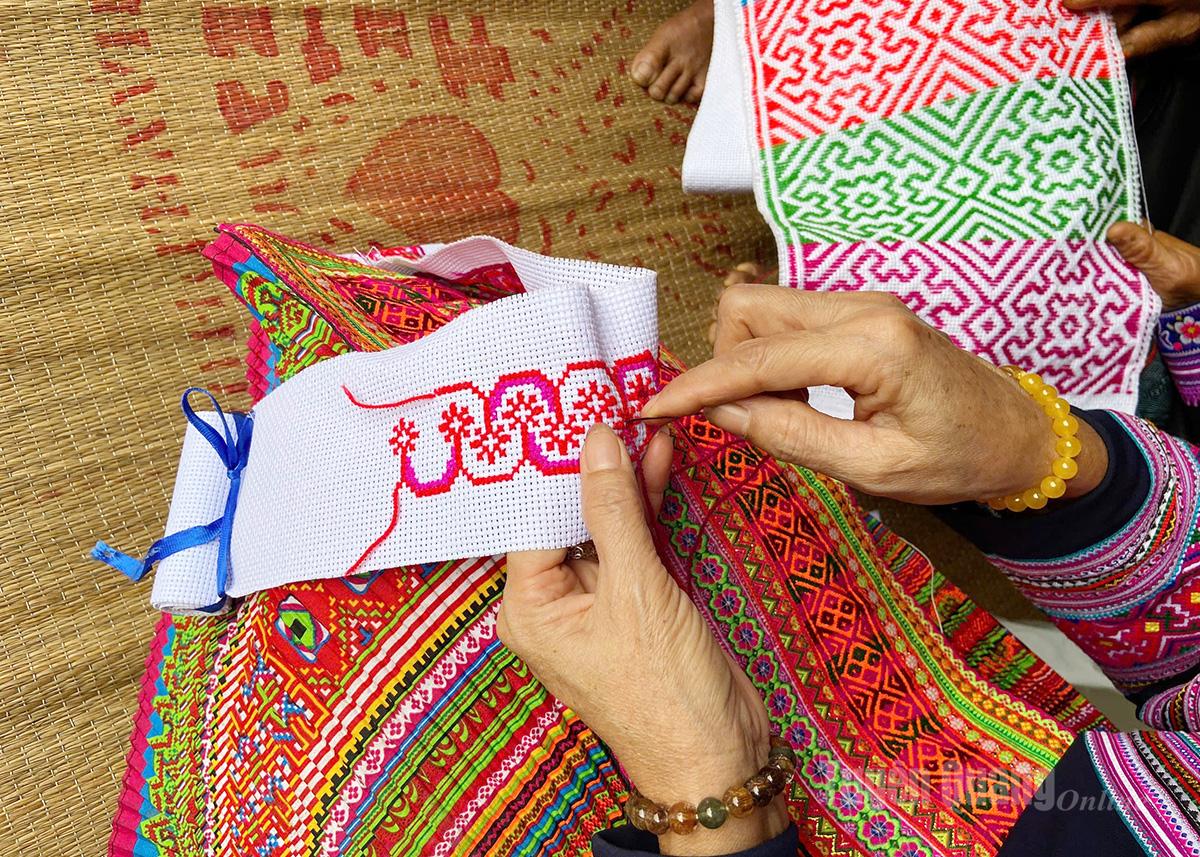 |
| With skillful hands and meticulous attention to detail, many unique patterns have been embroidered and decorated onto the traditional costume. |
According to Mr. Hoang Cao Thuong, Party Secretary and Head of Bac Trien village, the village has 129 households, of which 40 are Hmong Hoa ethnic minority households, accounting for over 30% of the total number of households. Along with focusing on economic development to improve their lives, the villagers are always conscious of preserving their ethnic cultural identity, especially the traditional embroidery craft. During festivals and holidays, the colorful Hmong dresses worn by the women when going out to celebrate contribute to the vibrant tapestry of ethnic minorities in the commune.
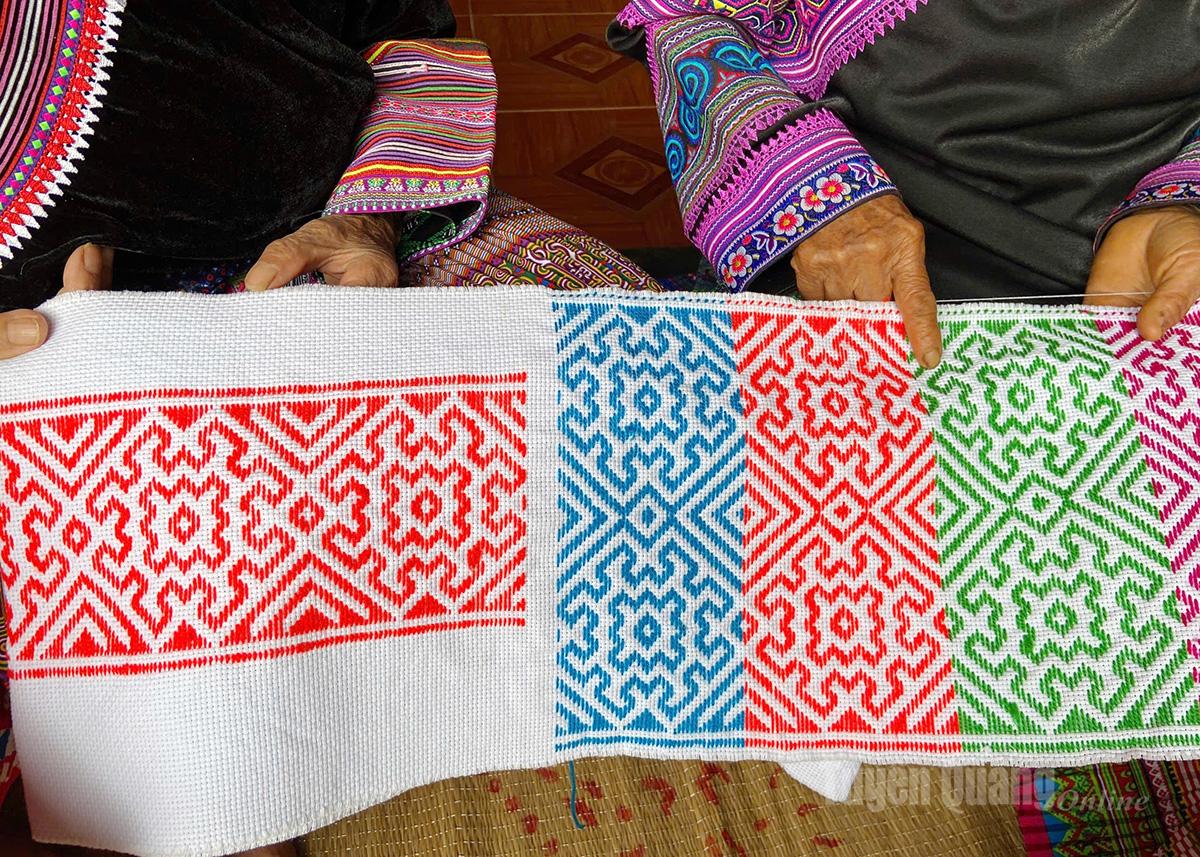 |
| The bib is meticulously embroidered with unique patterns. |
Mrs. Vang Thi Say, now over 80 years old, shared that she used to love embroidery and was one of the most skilled embroiderers in the village. With her skillful hands, meticulous attention to detail, and harmonious color coordination, she embroidered aprons, skirts, and leg wraps for the traditional costumes of her children and grandchildren. The characteristic patterns she chose were often flowers, trees, and birds, reflecting the close connection and harmony between humans and nature.
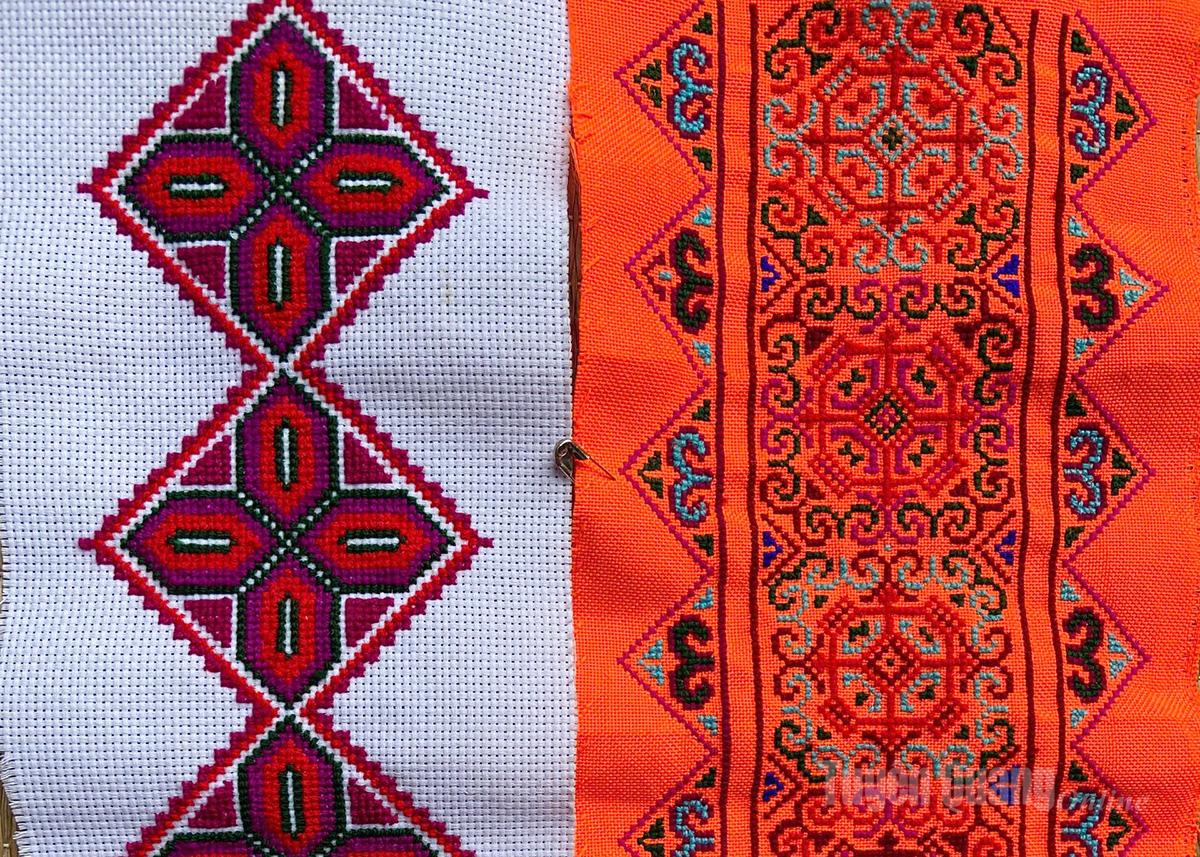 |
| These vibrant aprons, with their unique patterns, showcase the skillful craftsmanship of Hmong women. |
Ms. Cu Thi Bay excitedly said that, thanks to her grandmother and mother's teachings, she had known how to embroider since she was little. In the past, children didn't have phones or as many games as they do now, so almost all girls knew how to embroider. When they grew up, they could embroider decorations onto their own clothes. And everyone tried to prepare the most beautiful outfit to wear for holidays, festivals, weddings, or other important occasions in life.
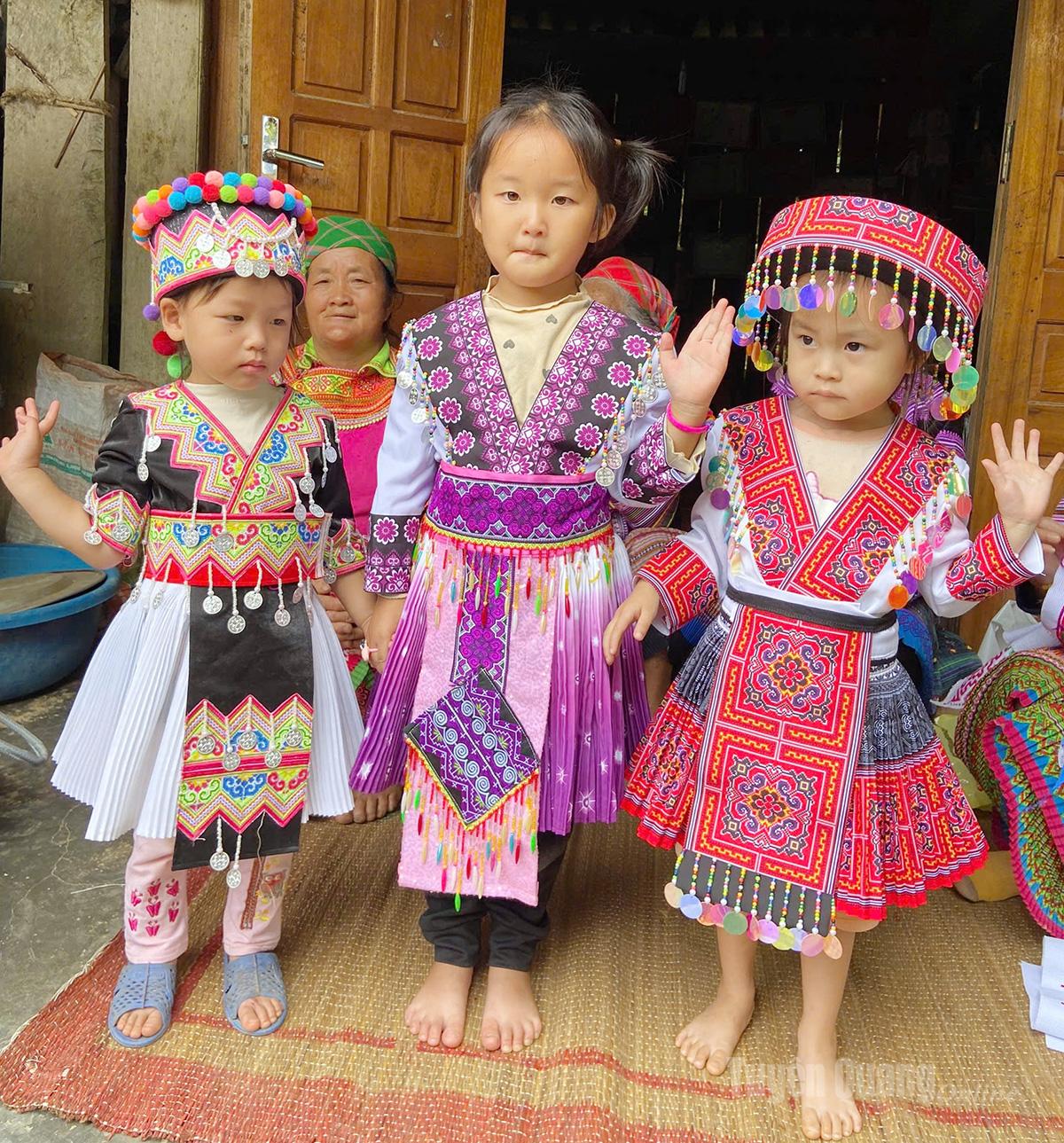 |
| Hmong babies are dressed in vibrant traditional costumes by their mothers. |
Amidst the hustle and bustle of modern life, the meticulous stitching not only creates vibrant, colorful costumes but also serves as a strong bond connecting generations of Hmong people in Bac Trien. This, in turn, creates a unique cultural identity for the local Hmong community.
Huyen Linh
Source: https://baotuyenquang.com.vn/van-hoa/du-lich/202510/nguoi-mong-o-bac-trien-giu-gin-nghe-theu-truyen-thong-8496700/
![[Photo] General Secretary and President To Lam presides over a meeting with the Central Organizing Committee.](https://vphoto.vietnam.vn/thumb/1200x675/vietnam/resource/IMAGE/2026/06/03/1780482764658_a1-bnd-4741-3342-jpg.webp)
![[Photo] Secretary of the National Assembly Party Committee, Chairman of the National Assembly presides over the meeting of the Standing Committee and Executive Committee of the National Assembly Party Committee.](https://vphoto.vietnam.vn/thumb/1200x675/vietnam/resource/IMAGE/2026/06/03/1780480353201_ndo_br_bnd-2585-jpg.webp)
![[Photo] First session of the 14th Congress of the Vietnam Trade Union](https://vphoto.vietnam.vn/thumb/1200x675/vietnam/resource/IMAGE/2026/06/03/1780465947883_ndo_br_img-3852-jpg.webp)





































![[Video] Sunset at Lap An Lagoon – Where the sun sets over the fishing nets](https://vphoto.vietnam.vn/thumb/1200x675/vietnam/resource/IMAGE/2026/05/31/1780192137701_beach-landscape-sea-water-nature-grass-745871-pxhere-com.jpeg)



























Comment (0)