

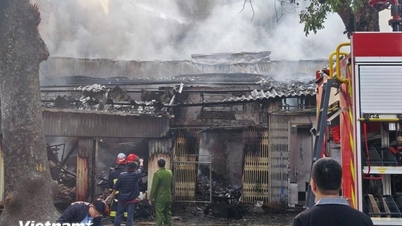
Most fatalities in fires are caused by suffocation and gas poisoning, especially in high-rise buildings.
This article was professionally reviewed by Dr. Ngo Duc Hiep, Head of the Burn and Plastic Surgery Department, Cho Ray Hospital (Ho Chi Minh City).
Risk of death due to suffocation and gas poisoning.
- In a fire, many types of toxic gases are produced from the smoke, such as CO, CO2, ammonia, organic acids, etc.
- CO and CO2 are the leading causes of death. Specifically, gas poisoning leads to respiratory failure, neurological disorders, and loss of control.
These gases also cause the body to expend a lot of energy due to a lack of oxygen.
- In addition, the toxic smoke produced during the fire obstructs visibility, irritates the eyes, and disorients victims, making escape and rescue efforts difficult.
Prevention skills
- Use a damp cloth to cover your mouth and nose, filtering the air you breathe. A smoke mask can be used if one is available.
- To escape a fire, use a wet blanket to cover your entire body and run quickly through the flames to get outside, avoiding getting your clothes on and burning your skin.
- When there is a large amount of smoke, those escaping must crouch, kneel, crawl, or slide out of the fire.
- Try to stay calm and quickly call the fire department immediately for timely rescue.
- During transport to the hospital, if the victim is breathing weakly or is unconscious, artificial respiration should be performed.
Steps to take in case of a burn accident.
- Eliminate contact with the burning agent as soon as possible.
+ Quickly get victims out of the fire, extinguish the flames, cut off the power...
Remove or cut away burnt or water-soaked clothing, rings, or watches before the burn swells.
Avoid breaking or dislodging the blister.
Place the victim in a safe, well-ventilated, and elevated location to allow for effective initial first aid.
- Initial assessment, ensuring vital functions
+ Conduct a quick examination to promptly assess the victim's overall condition.
+ Preliminary assessment of the extent of the injury.
+ Perform mouth-to-mouth resuscitation and chest compressions if there is respiratory or cardiac arrest, immobilize broken bones (if any)...
- Quickly rinse the burned area of the body in clean water.
+ Rinse the affected area with cool water as soon as possible, ideally within 30-60 minutes of the burn.
The ideal water temperature is between 16-20 degrees Celsius.
+ The soaking time lasts from 15-45 minutes, and can be continued until the pain and irritation subside.
+ It is necessary to utilize readily available water sources at the disaster site: boiled and cooled water, tap water, rainwater, well water, etc.
+ If sterile water is available, that's even better.
+ Be sure to keep the victim warm and avoid drafts after soaking, especially in winter. Do not use ice water as it can cause hypothermia.
- Temporarily cover the burn.
+ Cover the burned area with clean material such as medical gauze, or even a clean face towel, hand towel, or gauze to wrap around it.
For burns on the face or genitals, simply cover with a layer of gauze.
+ Compression bandaging should be applied early, avoiding bandaging too tightly which can compress the burned area.
Do not apply anything to the burn area without first cleaning it and under the guidance of a medical professional.
- Keep the affected area warm, rehydrate, and replenish fluids and salts after burns.
Keep the victim warm, especially in winter.
Give the victim oral rehydration solution (ORS), warm sweetened tea, thin rice porridge, instant noodle soup, or fruit juice.
+ If the victim is a nursing infant, continue breastfeeding as usual.
- Quickly transport the victim to the nearest medical facility.
After administering first aid, the victim should be transported to the nearest medical facility as quickly as possible.
+ Burns combined with trauma or fractures: temporarily immobilize the injured area and fractured bones before transport.
+ Take care to keep warm during transportation.
Depending on the specific circumstances, transportation may be by stretcher, hammock, bicycle, motorbike, car, etc.
+ In cases of severe burns, it is best to transport the victim by ambulance, continuing to monitor vital signs, provide fluids, and administer pain relief (if available in the ambulance).
America and Italy
Source link


![[Photo] Prime Minister Pham Minh Chinh holds a phone call with the CEO of Russia's Rosatom Corporation.](/_next/image?url=https%3A%2F%2Fvphoto.vietnam.vn%2Fthumb%2F1200x675%2Fvietnam%2Fresource%2FIMAGE%2F2025%2F12%2F11%2F1765464552365_dsc-5295-jpg.webp&w=3840&q=75)



![[Infographic] Preventing students from making their own firecrackers: 7 things parents need to know](https://vphoto.vietnam.vn/thumb/402x226/vietnam/resource/IMAGE/2025/12/11/1765466656703_img_0320_20251211183542.jpeg)





























































Comment (0)