

The American Enterprise Institute (AEI) recently published an analysis by economist Desmond Lachman, former Deputy Director of the International Monetary Fund's (IMF) Policy Assessment and Development Division and chief strategist for emerging market economies at Salomon Smith Barney, on the risk of Italy facing a public debt crisis. In the article, the author argues that Italy has very little prospect of reducing its current massive public debt.
According to the author, markets have not been quick enough in predicting economic crises in Europe. At the end of 2009, before the sovereign debt crisis erupted in Greece, Greek government bonds were trading at interest rates only slightly higher than German government bonds.
A year later, the Greek debt crisis rocked global financial markets, and Greece eventually defaulted. It was the largest government default ever.
 |
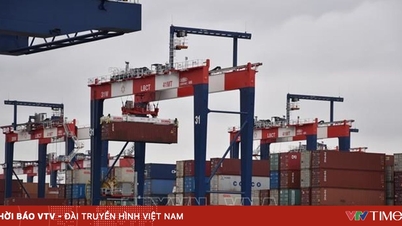
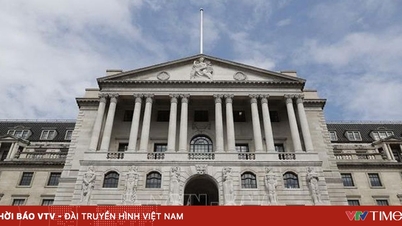
| Another Italian debt crisis is something the global economy absolutely does not want at a time when economic growth is slowing across the globe. (Source: Getty) |
Public debt crisis looms large.
Now, another Italian debt crisis is something the global economy absolutely does not want at a time when economic growth is slowing across the globe. The Italian economy is ten times larger than the Greek economy and has a government bond market worth $3 trillion.
If the Greek debt crisis of 2010 shook global financial markets, how much of a shock will today's Italian debt crisis cause?
The main reason the world is bracing for another debt crisis in Italy is that all factors that could allow Rome to alleviate its debt burden are now unfavorable. This is particularly worrying given that Italy's public debt-to-GDP ratio is over 145%, about 15% higher than at the time of the Italian debt crisis in 2012.
From a purely mathematical standpoint, three factors that can improve a country's public debt burden are a healthy primary budget surplus (a balanced budget after deducting interest payments), lower interest rates at which the government can borrow, and higher economic growth rates.
Unfortunately, in Italy's current situation, all three of these factors are moving in the opposite direction.
Instead of seeking to achieve a basic budget surplus, the disappointing budget presented this week by Prime Minister Giorgia Meloni's government implies a significant basic budget deficit.
Meanwhile, against the backdrop of the European Central Bank (ECB) tightening monetary policy and investor doubts about the direction of the current government's economic policies, the yield on Italy's 10-year government bonds has risen from below 1% in 2021 to around 4.75% currently. This is the highest level since the Italian debt crisis of 2012, but is only about 1.8% higher than its German counterpart.
Meanwhile, instead of achieving high economic growth, the Italian economy appears to be on the brink of a recession. This is a collapse of the ECB's monetary tightening aimed at controlling inflation. A recession, if it occurs, would hardly inspire confidence in Italy's ability to grow under the mountain of debt caused by its stagnant economy.
Will Italy fall into a technical economic recession?
With current government bond yields, the prospect of Italy escaping its debt burden seems to have diminished. This is especially true given the country's dismal economic growth record. Since joining the Eurozone in 1999, Italy's per capita income has remained virtually unchanged.
Until recently, the Italian government faced little difficulty in self-financing under relatively favorable conditions, despite its high public debt. This was largely due to the fact that, under its aggressive quantitative easing program, the ECB met almost all of the Italian government's net borrowing needs.
However, since July 2023, the ECB has completely ended its bond-buying programs. This has left Rome heavily reliant on financial markets to meet its borrowing needs. It seems that Italy will soon follow Germany into a technical recession due to the ECB's tight monetary policy.
Given the serious state of public finances, it is particularly important for the Italian government to build investor confidence that it is capable of managing the very difficult economic situation. For this reason, it is regrettable that the current government has failed to deliver on its economic promises.
Among their more disappointing missteps were the unexpected tax on bank profits and the projection of a 5.3% budget deficit, which brought the country into conflict with the European Commission (EC). This did little to restore market confidence in the Italian government's ability to boost economic growth or resolve a potential debt crisis.
In recent days, the market has focused its attention on Italy's shaky public finances, pushing the yield spread between Italian and German government bonds to its highest level since the beginning of the year.
The Italian government should pay attention to market fluctuations during difficult periods and change its economic course early if it wants to avoid a full-blown debt crisis next year.
All of the above does not mean that a full-blown sovereign debt crisis is imminent for Italy. However, the ECB needs to be careful to avoid excessive monetary policy in an attempt to control inflation.
Italy and Europe do not want to fall into the abyss of economic recession, and higher interest rates would only worsen the country's public finances.
Source


![[Photo] Prime Minister Pham Minh Chinh attends the Conference summarizing and implementing tasks of the judicial sector.](/_next/image?url=https%3A%2F%2Fvphoto.vietnam.vn%2Fthumb%2F1200x675%2Fvietnam%2Fresource%2FIMAGE%2F2025%2F12%2F13%2F1765616082148_dsc-5565-jpg.webp&w=3840&q=75)

































































































Comment (0)