

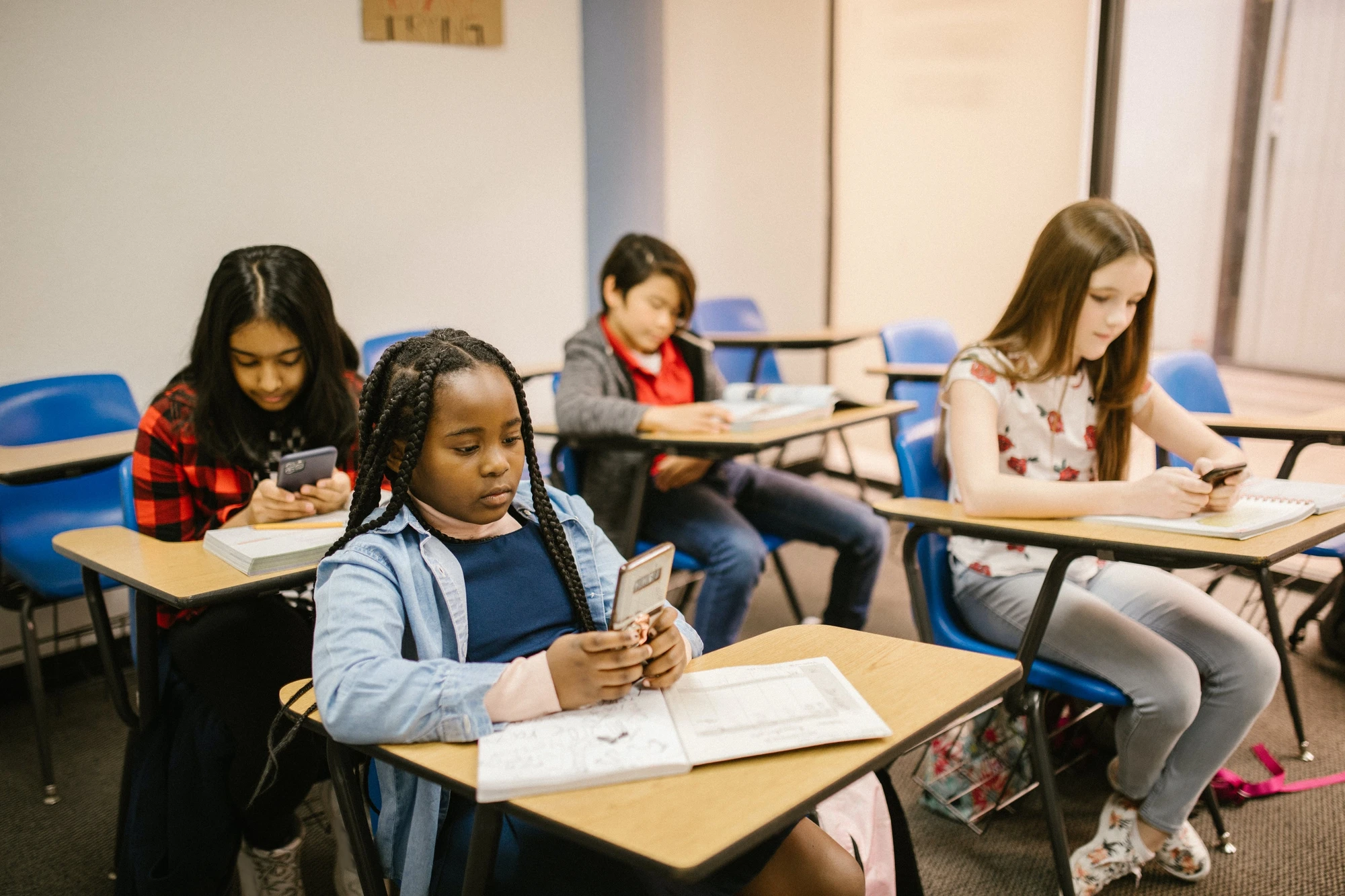
More and more countries from East to West are enacting bans on cell phones in schools.
Reasons for controversy
In May, Florida passed a law requiring public schools statewide to ban students from using phones during class and to block students from accessing social media through the district's Wi-Fi. By September, the Orange County school district in Florida went even further, banning phone use throughout the day, even during breaks between classes. This decision immediately sparked controversy.
In recent interviews with The New York Times , dozens of parents and students in Orange County expressed support for the ban on phones during school hours, but opposed a full-day ban. Parents argued that their children should have the opportunity to contact them directly during their free time, while students described the ban as unfair and out of touch with the times.
"They expect us to take responsibility for our choices. But then they take away our ability to choose and learn responsibly," Sophia Ferrara, a 12th-grade student who needs to use her phone in her free time to attend online university classes, said angrily. Many other students argue that the ban on phones prevents them from checking their schedules or requires them to go to the office to ask permission to use their phones if they want to call their parents, making school seem more like a "prison."
Implementing increasingly strict measures to keep young people away from their phones is a common move by many public schools across the United States. Statistics from the U.S. Department of Education in 2021 show that approximately 77% of schools banned non-academic phone use during class time. Some counties, such as South Portland, Maine, also prohibit phone use throughout the day, similar to Orange County.
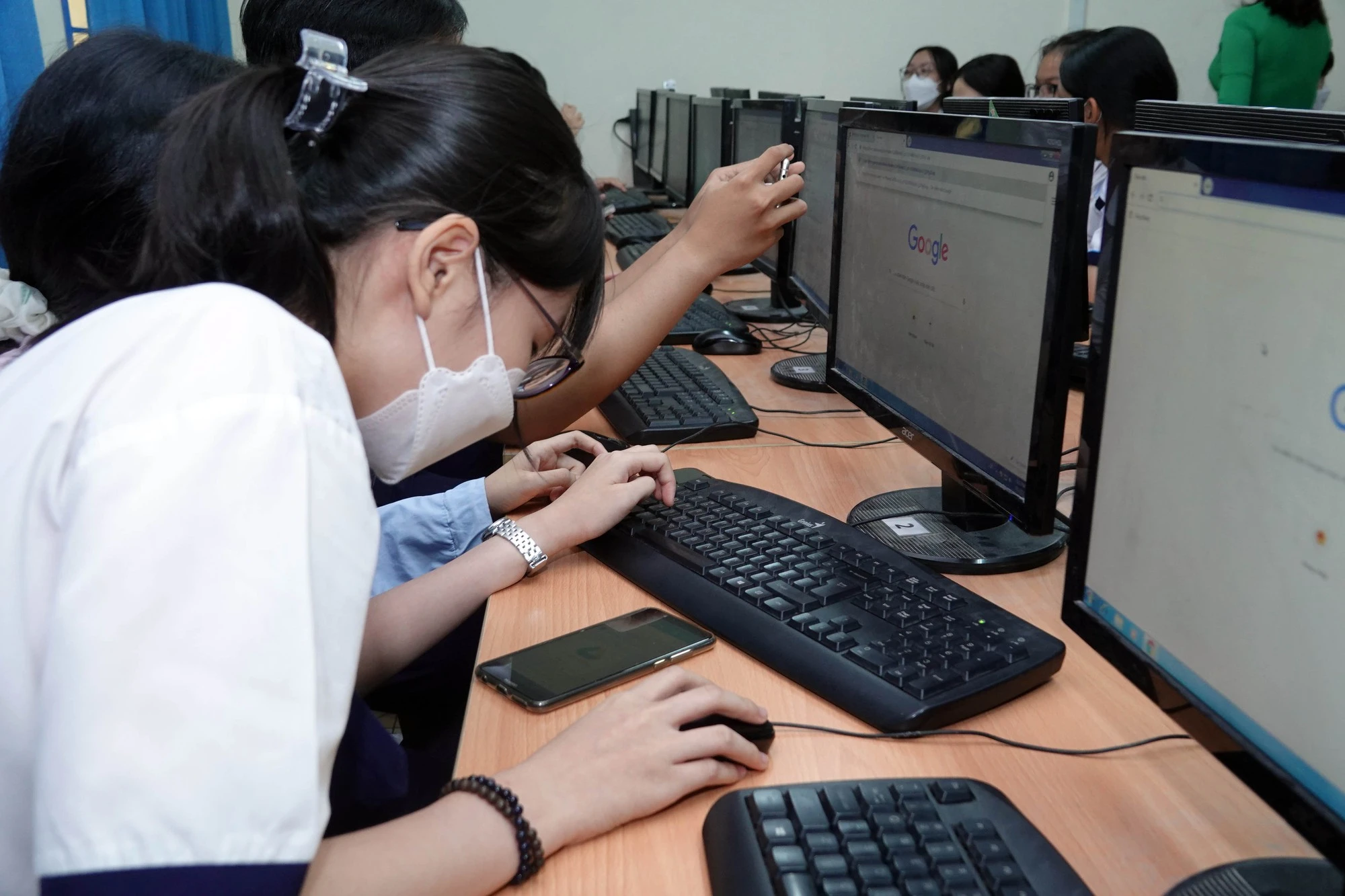
The debate over whether to allow or ban the use of phones during class time remains heated to this day (illustrative image).
According to lawmakers and school district leaders, the rampant use of social media on campus is threatening students' learning abilities, well-being, and physical safety. In some schools, students have planned and filmed assaults on classmates to post on TikTok and Instagram. Meanwhile, messaging apps are considered a leading cause of distraction and loss of focus, as students constantly "talk" to each other in the virtual space throughout class time.
Many countries are taking similar action.
Earlier in October, the UK Department of Education issued new guidance recommending that schools nationwide ban students from using mobile phones throughout the day, including during breaks. This aims to reduce online bullying and enhance focus during lessons. If schools do not follow this guidance, the UK government will consider enacting it into law in the future, the statement said.
A year ago, the Italian Ministry of Education also issued a nationwide ban on the use of mobile phones in schools, and teachers were instructed to collect students' phones at the beginning of class. On the other hand, the use of phones in the classroom was described as "a distraction" and "disrespectful to teachers." "We must protect the interests of students, which is to come to class to learn," the statement read.
Starting in 2021, China began banning primary and secondary school students from bringing mobile phones to school. The reason given by the Chinese Ministry of Education is to "protect students' eyesight, help them concentrate on their studies, and prevent internet and game addiction," with the added goal of "enhancing students' physical and psychological development," according to the South China Morning Post .
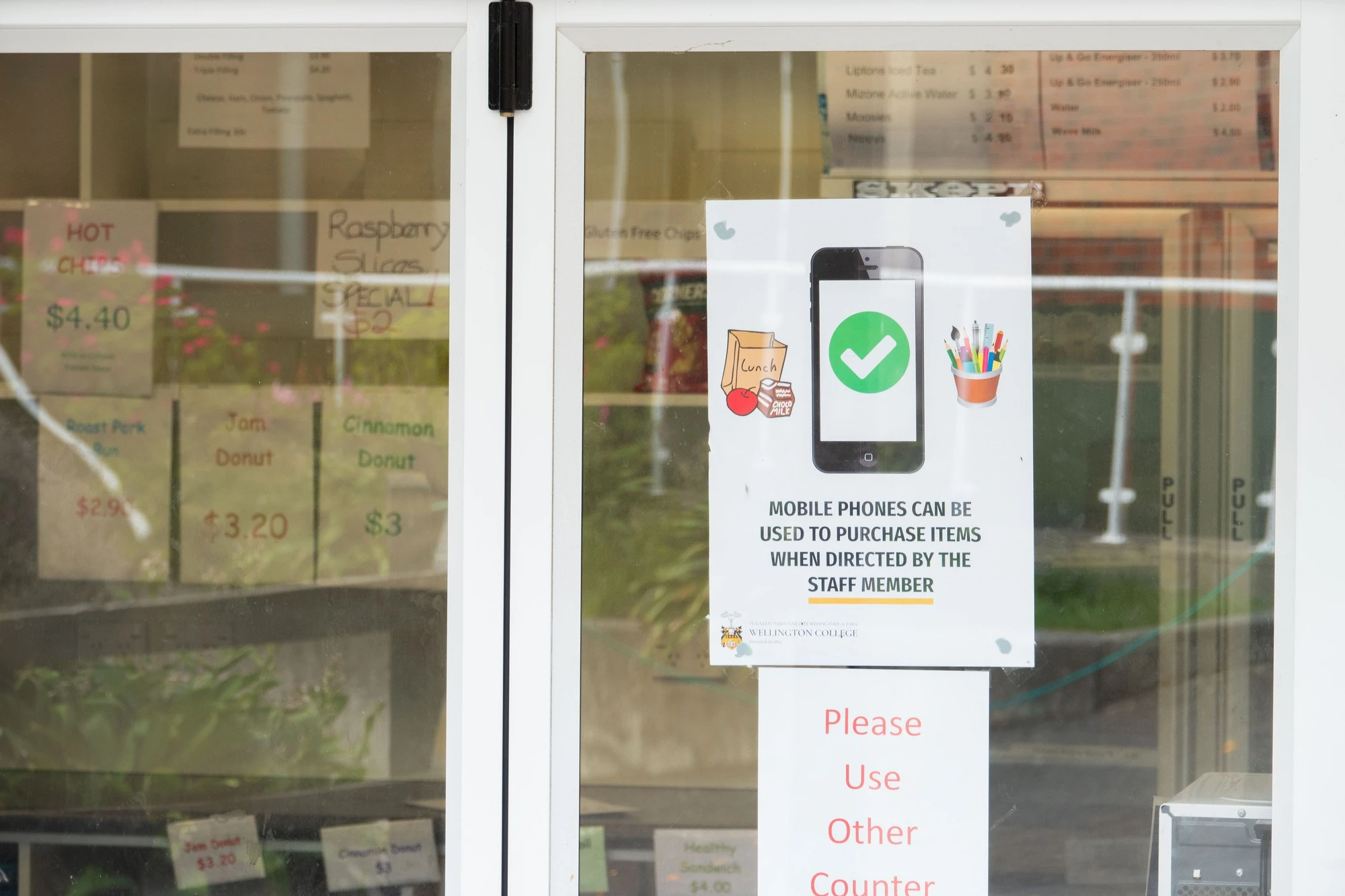
A notice allowing the use of mobile phones to purchase food is posted in the Wellington College (New Zealand) cafeteria. For the rest of the time on campus, students are generally not allowed to use their phones.
In 2018, France passed a law banning primary and secondary school children from using phones, tablets, and smartwatches on school grounds. The ban also applied to boarding schools and school field trips. That same year, the Greek Ministry of Education also banned the use of phones in all kindergartens, primary and secondary schools, and teachers were only allowed to use phones for teaching purposes.
In New Zealand, several schools have recently banned the use of mobile phones during class, including Wellington College. Speaking to Thanh Nien newspaper, Patrick Smith, the school's Deputy Headteacher, said the ban aims to help students feel safe at school, have the opportunity to interact directly with classmates, and allow teachers to teach without distractions. "However, in subjects like technology, teachers can allow students to use their phones to follow the lesson effectively," Smith said.
Regarding the effectiveness of the ban, national-level studies have yielded varying conclusions. For example, a 2016 federal survey of American school principals found that schools banning cell phones had higher rates of cyberbullying than schools that allowed them, although it did not specify the reasons.
A study of schools in Spain published last year showed that cyberbullying had decreased significantly in two areas where cell phones were banned in schools. In one of the surveyed areas, students' math and science test scores also increased significantly.
Meanwhile, a recent study in Norway found that female students banned from using phones in high school had higher average grades. The study also showed that the ban had "no effect" on the average grades of male students, perhaps because female students spent more time on their phones.
Advice from UNESCO
In July, the United Nations Educational, Scientific and Cultural Organization (UNESCO) published its 2023 Global Education Monitoring Report, which affirmed that excessive mobile phone use reduces learning performance and negatively impacts children's emotional stability. Therefore, the organization called on countries to ban mobile phones in schools while maintaining a "human-centered" education approach.
According to UNESCO, students need to understand the risks and opportunities that come with technology, develop critical thinking skills, understand how to live with technology, and how to adapt when technology is absent. "Protecting students from new and innovative technologies can put them at a disadvantage," the report further notes.
Source link


![[Photo] Prime Minister Pham Minh Chinh attends the Conference summarizing and implementing tasks of the judicial sector.](/_next/image?url=https%3A%2F%2Fvphoto.vietnam.vn%2Fthumb%2F1200x675%2Fvietnam%2Fresource%2FIMAGE%2F2025%2F12%2F13%2F1765616082148_dsc-5565-jpg.webp&w=3840&q=75)

































































































Comment (0)