

Social media groups are buzzing about a list of apartment buildings with the highest rates of fake listings. Many well-known projects, such as the Diplomatic Quarter and My Dinh Pearl, have been mentioned in this statistic.
Many apartment buildings in Hanoi have a high percentage of fake listings, reaching 50-70%.
Social media groups are buzzing about a list of apartment buildings with the highest rates of fake listings. Many well-known projects, such as the Diplomatic Quarter and My Dinh Pearl, have been mentioned in this statistic.
Recently, real estate investors and homebuyers have been circulating a list of apartment projects with the highest rates of fake listings in Hanoi and Ho Chi Minh City over the past 10 months. Many well-known projects such as the Diplomatic Quarter (Bac Tu Liem), My Dinh Pearl (Nam Tu Liem), Hapulico Complex (Thanh Xuan)... have been named with fake listings accounting for over 50%.
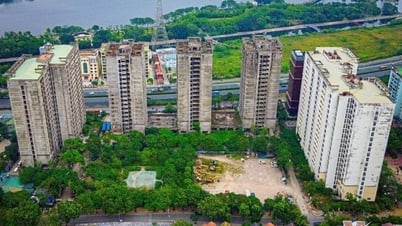
Several other apartment projects, such as The Legend Tower (Thanh Xuan), have a high rate of fake listings, approximately 59%; Golden Land (Thanh Xuan) at 60%; and Golden Field (Nam Tu Liem) at around 66%. The highest rate was recorded at the Hanoi Paragon project (Cau Giay), reaching 70%.
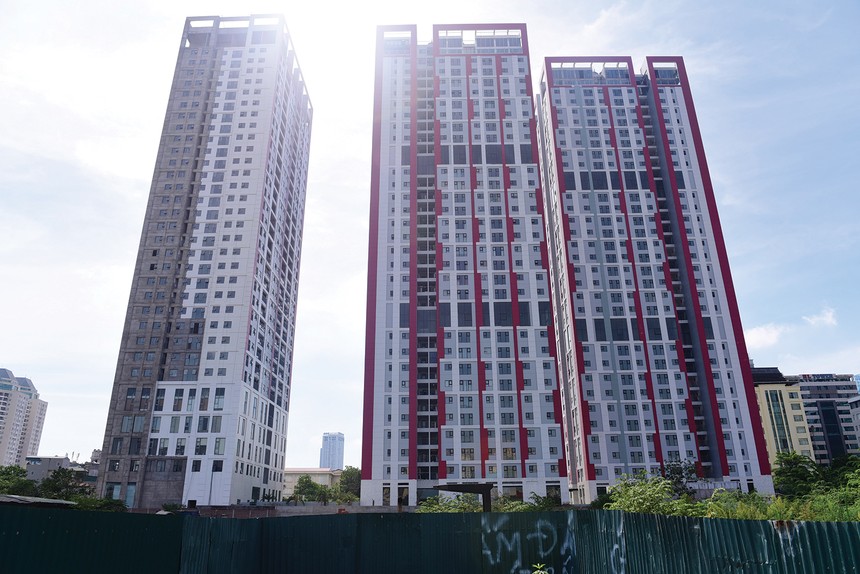 |
| The Hanoi Paragon project currently has the highest rate of fake listings on the list. Photo: Dung Minh |
Reporters from Baodautu.vn (Investment Online Newspaper) investigated and contacted the unit that compiled this list. According to them, the information was published by Biggee Company, a real estate information analysis platform established in 2021.
A company representative stated that they have uploaded approximately 100,000 apartment listings nationwide to their database. This information was compiled from the most popular real estate websites currently in use.
The algorithm then scans the data and detects listings that use images from other projects to illustrate the project being offered. For example, if a real estate agent posts an advertisement for an apartment in the Diplomatic Quarter but uses images from Hanoi Paragon apartment complex (Cau Giay), the system will detect it and consider it a fake listing.
In addition, the system identifies fake listings based on the information provided in the post. The figures regarding floor area, number of floors, handover date, etc., in the listing must match the developer's announcement. If there is any discrepancy, the system will consider it a fake listing.
In an interview with reporters, Biggee stated that the statistical list of fake listings has an error rate of approximately 5%. This information is for reference only and should not be used to hastily conclude that the project is engaging in deceptive practices. Before making any investment, buyers should conduct thorough research and choose reputable and dedicated real estate agents.
The practice of real estate agents posting misleading information is not uncommon. Beyond simply posting inaccurate images or project details, these individuals even inflate prices, disrupting the market. The frustration from homebuyers has reached such a point that, at one time, over 60,000 Facebook users joined a group "calling" to stop buying houses in Hanoi "to avoid inflated prices."
From the perspective of proptech companies, they have only gone as far as creating filters to classify information based on images and data published by developers. However, to truly purify the market and provide homebuyers with accurate information, especially regarding selling prices, this remains the responsibility of state agencies. In particular, a national database system for the real estate market would be the most appropriate solution to the current challenges facing the real estate industry.
Source: https://baodautu.vn/batdongsan/nhieu-chung-cu-tai-ha-noi-co-ty-le-tin-rao-ban-ao-len-toi-50---70-d229563.html



































































Comment (0)