

In the final days of the year, across the red basalt soil of Gia Lai, joy spreads throughout the villages as numerous educational projects are launched and put into use. From Ia Krel, Ia Nan to Ia Dom, Ia Púch…, everywhere is filled with the joyful laughter of children mixed with the excitement of the local people.
Joy in the new school
In Ia Krel commune, the Sao Mai Kindergarten, built and donated by the 15th Army Corps ( Ministry of National Defense ), has become a prominent highlight in this border region still facing many hardships. The spacious school, with its newly painted walls, bright red tiled roof, and large playground featuring slides and swings, attracts the eager attention of village children as if they've stepped into another world. Inside, there are enclosed classrooms, a kitchen, a physical education room, and a parking area, providing a safe and clean environment for 300 children to learn and play.
For the people here, the building is not only a place for their children to study, but also the realization of a long-held dream of a proper school. Elder Rah Lan Vong, watching the children chattering excitedly, said emotionally: “Before, our children had to study in a makeshift house, which would get soaked in the rain and wind. Now, with a new, clean, and sturdy school, we can rest assured sending our children there so we can go work in the fields and protect our land and village. This is not only a joy for the children but also a source of excitement for the entire village.”
The joy of the students was clearly expressed in the words of Rơ Châm Lan, a student at Phan Bội Châu Secondary School (Ia Nan commune), who shared: “I am very happy that I will be able to attend school for two sessions a day, have functional rooms, a playground, and have lunch at school. My parents will also have less trouble picking me up and dropping me off. In addition, the new school offers new experiences such as doing chemistry and physics experiments, and participating in extracurricular activities with friends in a clean and safe environment.”
In the impoverished border region, the new schools truly bring great peace of mind to parents. Previously, many families had to send their children to school dozens of kilometers away, along rough roads that were muddy in the rainy season and dusty in the dry season. Often, parents had to wake up at dawn to take their children to school, then rush back to their fields. Their children's education became a burden in terms of both time and money, while the journey to school was also fraught with danger.
Now that there are boarding schools right in the locality, children receive attentive care, live, and study in a safe environment, allowing parents to work and produce with peace of mind, no longer having to worry about picking up their children while working. For the local government, this is an important step to retain students and reduce the dropout rate, which has been a concern for many years. Boarding schools help maintain student numbers, create opportunities for students to access knowledge equally, and thus form a local workforce for the future.
A foundation for sustainable development.
Gia Lai currently has nearly 200,000 ethnic minority students, mainly from the Gia Rai and Ba Na ethnic groups. Investing in the construction of modern and well-equipped schools not only meets their learning needs but also motivates teachers to commit to working in remote areas for the long term. Understanding this, the province has also commenced the project of a boarding school for primary and secondary levels in seven border communes: Ia Mơ, Ia Púch, Ia Pnôn, Ia Nan, Ia Dom, Ia Chia, and Ia O. With 212 classrooms and a total investment of over 1,500 billion VND, this is considered the largest education project to date in the western border region of Gia Lai province, helping to narrow the regional gap between localities.
According to the design, the schools are built in a coordinated manner, with complete functional blocks and modern technical infrastructure: classrooms, laboratories, libraries, dormitories, cafeterias, sports fields, etc., all aimed at creating a learning environment for more than 7,000 students, mostly children of ethnic minorities, to access education. This helps the younger generation in the border region to develop both physically and mentally, while also forming essential life skills.
Mr. Pham Van Nam, Director of the Department of Education and Training of Gia Lai province, said: "We are focusing on improving educational infrastructure and building appropriate mechanisms for the teaching staff. In the near future, the Department will submit to the Provincial People's Council a policy to support students in particularly disadvantaged areas, while also improving the remuneration system to ensure teachers can work with peace of mind. Along with that, the province is implementing the Project to improve the quality of ethnic boarding and semi-boarding schools in the period 2025-2030 to maintain student enrollment and expand learning opportunities for students from poor and near-poor families in disadvantaged areas."
Comrade Pham Anh Tuan, Chairman of the Gia Lai Provincial People's Committee, emphasized that the construction of a multi-level boarding school system in border areas is a special policy with strategic significance. Units must implement it with urgency, certainty, and efficiency to ensure the project is completed on schedule and put into use from the 2026-2027 school year. Provincial leaders have identified this as a "special campaign" aimed at narrowing the regional gap, raising the intellectual level of the population, creating a foundation for the younger generation in disadvantaged areas to receive a full education, and contributing to maintaining political stability and border security.
The new classrooms in the border region of Gia Lai are not only places for imparting knowledge, but also places for sowing hope. Every brick, every classroom, embodies the aspiration for a generation of young people to receive a full education and acquire the knowledge to build their homeland. This is proof of the strategic policy of the Party and State in raising the intellectual level of the people and training local human resources, especially in ethnic minority and border areas. From these schools, the young generation in disadvantaged areas will receive a full education, grow up, and contribute to building a prosperous and sustainably developed homeland.
Source: https://baolamdong.vn/nhung-ngoi-truong-moi-noi-bien-gioi-409714.html



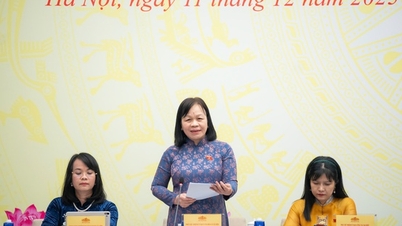
![[Photo] Closing Ceremony of the 10th Session of the 15th National Assembly](/_next/image?url=https%3A%2F%2Fvphoto.vietnam.vn%2Fthumb%2F1200x675%2Fvietnam%2Fresource%2FIMAGE%2F2025%2F12%2F11%2F1765448959967_image-1437-jpg.webp&w=3840&q=75)
![[Photo] Prime Minister Pham Minh Chinh holds a phone call with the CEO of Russia's Rosatom Corporation.](/_next/image?url=https%3A%2F%2Fvphoto.vietnam.vn%2Fthumb%2F1200x675%2Fvietnam%2Fresource%2FIMAGE%2F2025%2F12%2F11%2F1765464552365_dsc-5295-jpg.webp&w=3840&q=75)
![[Infographic] Preventing students from making their own firecrackers: 7 things parents need to know](https://vphoto.vietnam.vn/thumb/402x226/vietnam/resource/IMAGE/2025/12/11/1765466656703_img_0320_20251211183542.jpeg)





























![[OFFICIAL] MISA GROUP ANNOUNCES ITS PIONEERING BRAND POSITIONING IN BUILDING AGENTIC AI FOR BUSINESSES, HOUSEHOLDS, AND THE GOVERNMENT](https://vphoto.vietnam.vn/thumb/402x226/vietnam/resource/IMAGE/2025/12/11/1765444754256_agentic-ai_postfb-scaled.png)









































Comment (0)