

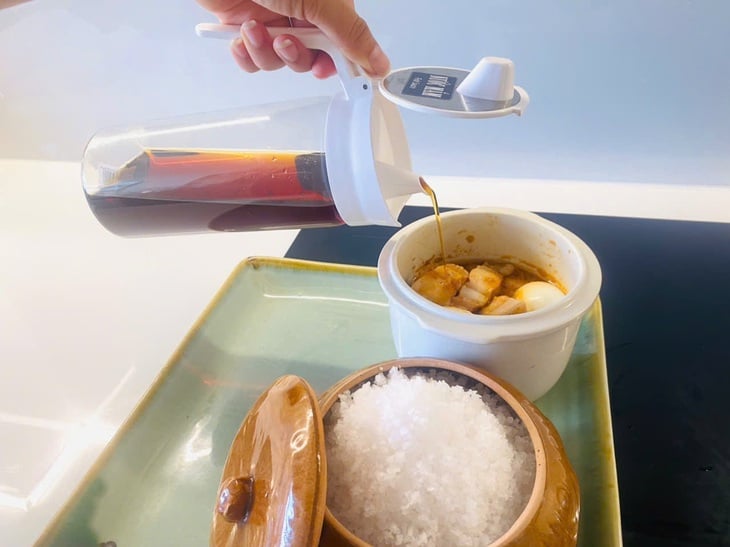
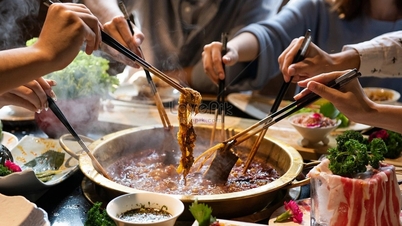
Using too much salt and eating salty foods increases the risk of high blood pressure - Illustration photo
Foods high in salt
According to MSc. Ngo Thi Ha Phuong, National Institute of Nutrition, salt can be in the form of table salt or sea salt.
Sodium is the main factor in creating the salty taste of salt and also causes harmful effects to the human body when used in excess. Na+ is an electrolyte that plays a role in regulating osmotic pressure and fluid balance, acid-base balance, as well as electrophysiological activities in muscles and nerves.
In addition, along with potassium and chloride, sodium is essential for the active transport of materials across cell membranes such as glucose metabolism and sodium ion exchange of cells.
Excess sodium compared to recommended needs causes increased permeability, increased vascular tone, water retention in cells, increased peripheral resistance causing high blood pressure.
In the daily diet, sodium comes from two sources: naturally occurring in food and mainly from adding salt and salty spices when preparing food and dipping food.
In natural foods, sodium is available in a certain amount, often found in animal foods such as aquatic products, seafood, meat, milk and dairy products... In 100g of food, the amount of sodium is as follows: Crab (316 mg), freshwater crab (453mg), freshwater shrimp (418 mg).
For milk, the sodium content is also almost equivalent to that of aquatic and seafood: 100g of fresh cow's milk contains 380mg, whole milk powder is 371mg...
Meats contain lower amounts of sodium. In 100g of edible meat, the amount of sodium is as follows: chicken (70mg), pork (76mg); grade 1 beef (83mg - Vietnam Food Composition Table, 2007 - Institute of Nutrition).
The main sources of sodium consumed daily are from table salt, seasoning powder, fish sauce, dipping sauces, etc., added during food processing (including the preparation, marinating, and cooking of regular foods as well as processed foods) and dipping sauces on the dining table.
The amount of sodium in salt and other salt-containing spices is much higher than in natural foods. The amount of sodium in 100 grams of salt is 38,758 mg, fish sauce is 7,720 mg, soy sauce is 5,637 mg. Normally, 8 grams of seasoning powder or 11 grams of seasoning powder or 25 ml of fish sauce or 35 ml of soy sauce contains the same amount of sodium as 5 grams of salt.
"Thus, seasoning powder, fish sauce and soy sauce contain less sodium when compared to the same unit. The minimum amount of sodium intake needed for normal body function does not have a specific figure but is estimated to be only about 200 - 500mg/day (equivalent to 0.5 - 1.25g of salt, less than 1 teaspoon)," Dr. Phuong shared.
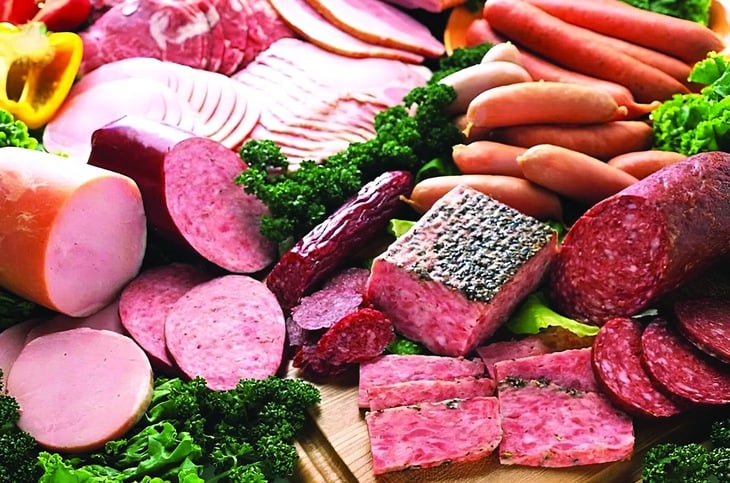
Sausages, bacon... are quite salty foods, so you should limit eating them.
Low salt diet
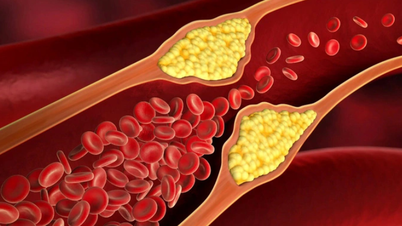
Increased sodium intake is associated with increased blood pressure (HTN), while decreased sodium intake reduces blood pressure in adults. Increased sodium intake is also directly associated with cardiovascular disease, especially stroke and coronary heart disease.
Reducing sodium intake and thus blood pressure is beneficial to health, reducing morbidity and mortality, and reducing health care costs. Many studies have shown that a high-salt diet significantly increases the incidence of hypertension.
Basically, a low-salt diet should be understood as reducing the amount of sodium in all sources taken into the body, not simply reducing the amount of salt consumed. Implementing a low-salt diet starts with reducing the amount of seasoning when preparing dishes as well as dipping sauces when eating.
If the amount of sodium in a serving of food is less than or equal to 5% of the recommended daily intake, the food is considered low in sodium. If it is greater than or equal to 20%, it is considered high in sodium and should be avoided.
A 5g teaspoon of salt contains about 2,000mg of sodium, equivalent to the amount of salt an adult should consume per day.
For children under 1 year old, the recommended amount of salt is even less than 1.5g and for infants it is less than 0.3g of salt.
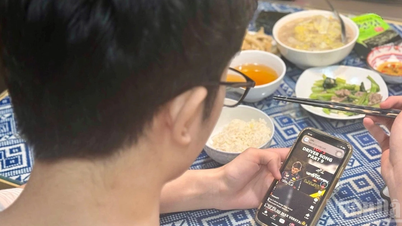
The habit of Vietnamese people is that when eating at home, in addition to the dishes, on each meal tray there is a bowl of fish sauce or a plate of salt for dipping; in restaurants, on each table there are available spices for users to add to suit their taste.
Each individual and family can reduce salt intake with very simple measures as follows: Do not leave fish sauce, soy sauce and salt on the dining table.
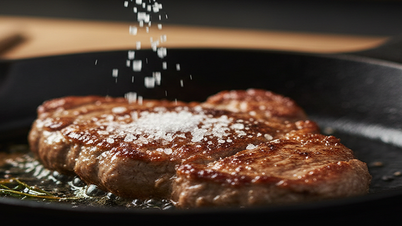
Limit the amount of salt, seasoning powder, fish sauce, etc. added to food when cooking. The maximum is no more than one-fifth of a teaspoon of salt per meal per person per day.
Limit your regular consumption of high-salt products such as chips, pizza, and canned foods. Choose low-salt products when purchasing processed foods.
Read labels when buying prepared foods to check the salt content. Feed children natural foods and control the addition of salty seasonings.
Several common food additives—such as monosodium glutamate (MSG), sodium bicarbonate (baking soda), sodium nitrite, and sodium benzoate—also contain sodium and contribute (in lesser amounts) to the total amount of "sodium" listed on the nutrition facts label.
Source: https://tuoitre.vn/nhung-thuc-pham-chua-nhieu-muoi-can-tranh-va-che-do-an-giam-muoi-phong-tang-huet-ap-20251201093045631.htm

























![[Photo] Worshiping the Tuyet Son statue - a nearly 400-year-old treasure at Keo Pagoda](/_next/image?url=https%3A%2F%2Fvphoto.vietnam.vn%2Fthumb%2F1200x675%2Fvietnam%2Fresource%2FIMAGE%2F2025%2F12%2F02%2F1764679323086_ndo_br_tempimageomw0hi-4884-jpg.webp&w=3840&q=75)
![[Photo] Parade to celebrate the 50th anniversary of Laos' National Day](/_next/image?url=https%3A%2F%2Fvphoto.vietnam.vn%2Fthumb%2F1200x675%2Fvietnam%2Fresource%2FIMAGE%2F2025%2F12%2F02%2F1764691918289_ndo_br_0-jpg.webp&w=3840&q=75)









































































Comment (0)