

Child labor is an issue that has always received much attention from the Party and the State. With tireless efforts in many fields, the situation of child labor has decreased significantly in recent years, but it is still an existing problem that needs to be solved.
Therefore, in recent years, Vietnam has implemented many measures and policies to prevent, combat, and minimize child labor and better ensure the basic rights of children.
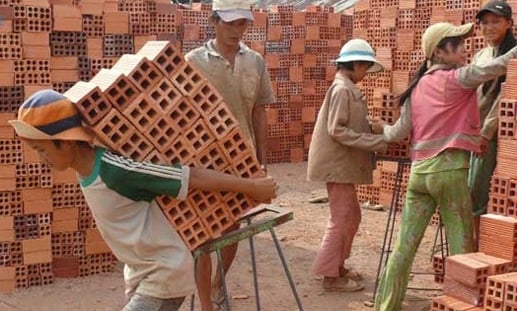 |
| Child labor remains a difficult problem. (Source: Dai Doan Ket) |
Current status of child labor
According to the provisions of the Law on Children 2016, a child is a person under 16 years old. Therefore, child labor is a worker under 16 years old working for an employer.
In Vietnam, there are many causes of child labor. Many are due to economic factors or family traditions… child labor can lead to serious physical and mental health consequences for children, and even death.
In some cases, children are deprived of education and healthcare; their basic rights are restricted, and their future is threatened. Worse still, this can lead to slavery, sexual exploitation, or economic abuse.
According to statistics from the Ministry of Labour, Invalids and Social Affairs , currently, out of the total number of children participating in labor, 1,031,944 are identified as child laborers, accounting for 5.4% of the total number of children aged 5 to 17 (in 2012 this rate was 9.6%).
Among child laborers, 519,805 children are engaged in strenuous, hazardous, or dangerous work, accounting for 2.7% of the total number of children aged 5 to 17, and 29.6% of economically active children. Children working in strenuous, hazardous, or dangerous jobs are more common in the industrial and construction sectors and this trend is high; 20.1% of child laborers work more than 42 hours per week; and 20.9% of children aged 15 to 17 in rural areas are no longer attending school.
Child labor occurs primarily in economically disadvantaged areas, among poor families, and in remote regions. According to the 2018 child labor survey, 84% of child laborers in Vietnam are concentrated in rural areas, with more than half working in agriculture, forestry, and fisheries. Other sectors with high rates of child labor include services, industry, and construction. Approximately 40.5% of child laborers are unpaid household workers.
Climate change, epidemics and natural disasters are also factors that cause child labor to increase. A report by the Ministry of Labor, War Invalids and Social Affairs shows that 70% of child laborers come from poor or near-poor families.
Child labor often occurs in traditional craft villages such as weaving, embroidery, sewing, carpentry... on a household scale. Children are an indispensable source of labor for households doing traditional crafts to help their families increase their income. For example, in craft villages in Canh Nau and Binh Phu communes (Thach That, Hanoi ), there are currently from 190 to more than 200 children who have to work early or are at risk of working early; many other craft villages in Chuong My, Gia Lam, Hoai Duc, Thuong Tin, Thanh Oai districts... also have child labor. In total, districts with craft villages in Hanoi currently have about 30,000 child laborers.
 |
| Workshop on Preventing and Reducing Illegal Child Labor in 2024, held on June 11th in Hanoi. (Source: Ministry of Labour, Invalids and Social Affairs) |
Vietnam's actions
Over the years, with its commitment, Vietnam has always strived to implement many synchronous solutions to minimize child labor.
Firstly, it is necessary to improve laws and policies to harmonize with international law on child labor. Many legal documents related to children have been researched, promulgated, supplemented, and amended to conform with practical realities and international law, such as: the 2016 Law on Children; the 2019 amended Labor Code, and especially Decision No. 782/QD-TTg dated May 27, 2021, approving the Program for preventing and reducing child labor in violation of the law for the period 2021-2025, with a vision to 2030...
In addition, action programs have been issued to minimize the causes of child labor, such as: the National Target Program for Sustainable Poverty Reduction giai đoạn 2021-2025; the National Target Program for Building New Rural Areas giai đoạn 2021-2025; the National Target Program for Socio-Economic Development in Ethnic Minority and Mountainous Regions…
Sustainable solutions for preventing and reducing the number of children involved in economic activities and child labor, linked to social security policies and poverty reduction policies in Vietnam, have been implemented increasingly promptly and effectively. Children in poor and near-poor households are placed at the center of priority application, such as state support policies on health insurance and social assistance.
Many models and solutions have been implemented through Government programs and projects and international cooperation and aid to directly prevent and resolve child labor as well as integrate into socio-economic development plans, achieving effectiveness and sustainability: Supporting the creation of livelihoods for households with children at risk or currently working as child laborers; improving working conditions and environments suitable for children in traditional craft villages and informal economic sectors; supporting children at risk of becoming child laborers to not drop out of school.
As of September 2023, the Vietnam Children's Fund has mobilized over 1,700 billion VND and hundreds of thousands of tons of goods and materials to support over 7.6 million children in special and difficult circumstances across the country.
Secondly , raise awareness about preventing and reducing child labor. Through mass media, workshops, forums, etc., aim to raise public awareness of the state's policies and laws on child labor.
Organize dialogues with businesses and employers to eliminate child labor in supply chains, especially in agricultural supply chains in the context of international integration, focusing on vocational education solutions. Use media to raise awareness among mothers and families to minimize child labor at its source…
Thirdly, enhance the capacity of officials from the central to local levels in preventing and reducing child labor. Develop documents and guidelines on child labor prevention and reduction, especially on how to identify child labor; procedures for supporting and intervening in child labor… to improve the capacity of the tripartite partners (relevant sectors and levels, VCCI, the Vietnam Cooperative Alliance, and the Vietnam General Confederation of Labor); and concretize prevention solutions to suit the practical conditions in localities, schools, etc.
Fourth, implement a model of intervention to prevent and remove children from child labor in several localities (Hanoi, An Giang, and Ho Chi Minh City).
Establish a network for monitoring and supervising beneficiaries at the local level; support education and career counseling services for child laborers and children at risk of becoming child laborers, linked to the implementation of the "Business Literacy" curriculum; support children aged 14-17 in accessing vocational skills training and apprenticeships linked to improved employment prospects; improve community-based economic conditions and sustainable employment opportunities for family members of child laborers/children at risk, including beneficiaries aged 15-17.
Fifth, international integration and cooperation activities on the implementation of children's rights have been strengthened. In May 2022, Vietnam attended the 5th World Conference on the Elimination of Child Labour in Durban, South Africa. Here, Vietnam pioneered the commitment to implement Target 8.7 to eliminate child labour by 2025.
In addition, many other solutions have been implemented simultaneously, such as: building and strengthening the system for monitoring, supervising, and evaluating child labor; implementing procedures and networks for preventing, detecting, supporting, and intervening in child labor and children at risk of becoming child laborers; and strengthening inter-sectoral coordination and inspection and supervision to achieve the goal of eliminating child labor in the coming years.
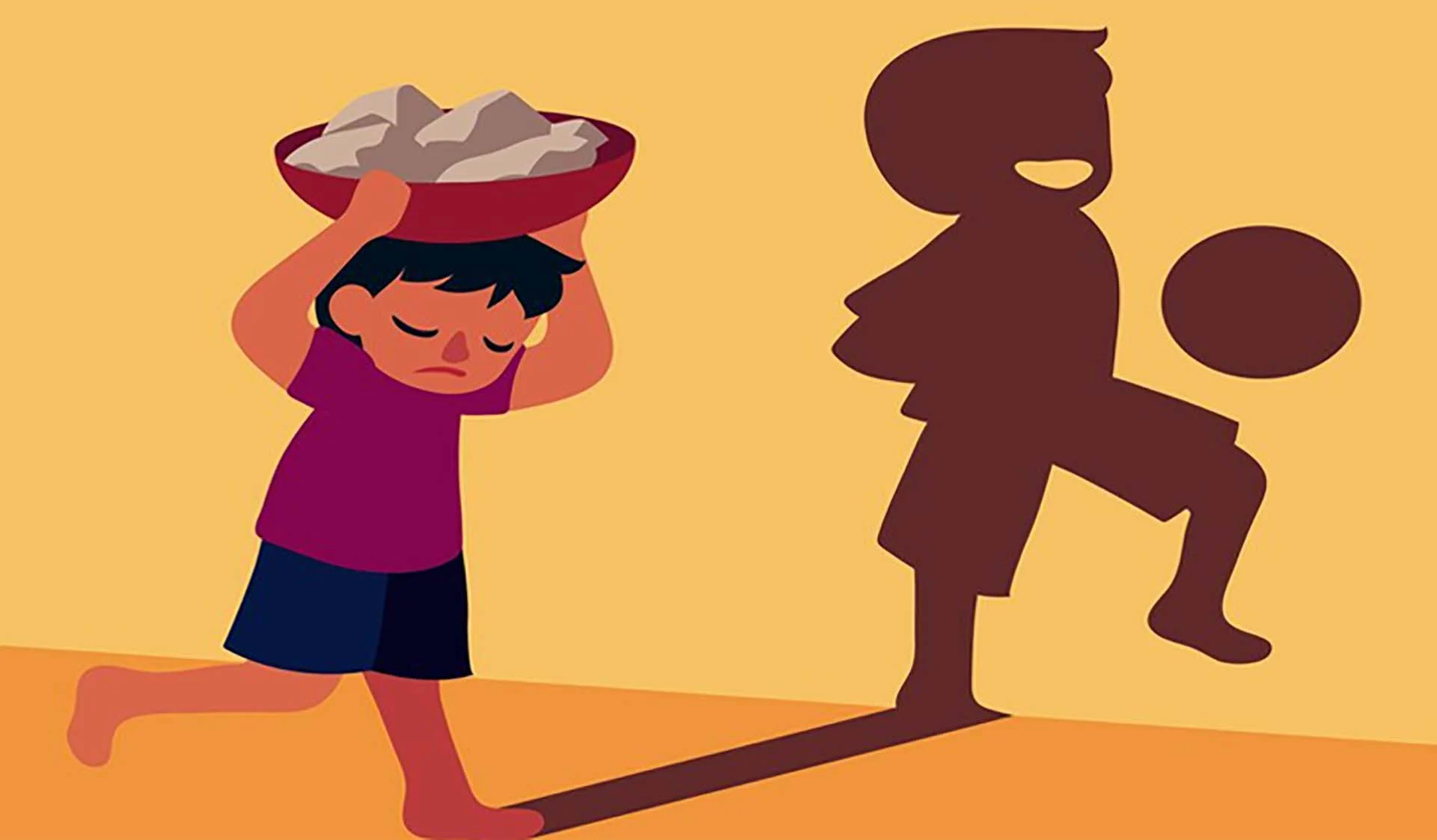 |
| The world has made great progress in reducing child labor, but is also witnessing global trends being reversed. (Illustration photo) |
Goal of eliminating child labor
However, the goal of eliminating child labor still faces many difficulties and challenges:
Child labor in the informal sector is difficult to control and detect; the impact of epidemics, natural disasters, and climate change degrades economic conditions, threatens the livelihoods of households, disrupts supply chains, leads to unemployment, and causes families to lose their economic breadwinner when a family member dies.
The emergence of online fraud and deception increases the risk of children and minors becoming child laborers and being trafficked and exploited, especially children in remote areas without access to education and social security services.
Awareness among all levels, sectors, grassroots officials, employers, parents, caregivers, and children regarding the prevention of child labor is inadequate; the staff at all levels, especially at the local level, are insufficient and limited in their capacity to detect cases of child labor in the community; the lack of inspectors makes conducting labor inspections and audits difficult, especially in the informal sector where many children are involved in labor; and there are financial limitations in implementing prevention, support, and intervention models.
To achieve the goal of eliminating child labor, the following solutions should be focused on in the coming period:
Continue researching, developing, and perfecting laws and policies on children, ensuring the realization of their rights and minimizing child labor: the Law on Teachers, the Law on Lifelong Learning, the Law on Juvenile Justice, the Law on Disease Prevention, the Law on Health Insurance (amended), the Law on Prevention and Combat of Human Trafficking (amended), the Law on Personal Data Protection, etc.
Continue to promote the implementation of action programs aimed at minimizing and ultimately eliminating child labor : the Child Labor Prevention and Reduction Program 2021-2025, with a vision to 2030, while simultaneously achieving Goal 8.7 on eliminating child labor, integrating child labor issues into the child protection system with poverty reduction issues in the National Target Program on Sustainable Poverty Reduction 2021-2025… Summarize lessons learned and experiences, and document the project “Technical Support to Enhance National Capacity for Preventing and Reducing Child Labor in Vietnam”.
Strengthening communication and raising awareness and capacity for employers, communities, teachers, parents, and children in the agricultural sector, supply chains, and household production and business, especially employers in craft villages, production and business establishments, households, and the informal economy where children are learning trades and participating in labor; developing a communication model for preventing and reducing child labor using the SCREAM method: "Supporting children's rights through education, art, and media."
Continue to implement services and models to support and intervene in child labor : The process of supporting and intervening in child labor within the child protection service system is linked to the early detection, support, and intervention model for child labor; the career counseling model for children is suitable to the needs and interests of children and the needs of the labor market…
1. The poverty rate has decreased sharply. In 1993, the national poverty rate was 58.1%, and by the end of 2023 it had decreased to 2.93%, equivalent to 815,101 poor households according to the multidimensional poverty standard.
According to statistics from the Ministry of Labor, War Invalids and Social Affairs, currently, of the total number of children participating in labor, 1,031,944 are identified as child laborers, accounting for 5.4% of the total number of children from 5 to 17 years old (in 2012, this rate was 9.6%). Among child laborers, 519,805 children do heavy, toxic, and dangerous work, accounting for 2.7% of the total number of children aged 5 to 17, and 29.6% of economically active children. Children working in strenuous, hazardous, and dangerous jobs are common in industrial and construction sectors and the trend is high; 20.1% of child laborers work more than 42 hours per week; 20.9% of children aged 15 to 17 in rural areas are no longer attending school. |
Source: https://baoquocte.vn/no-luc-giam-thieu-lao-dong-tre-em-tai-viet-nam-293868.html


































![[Video] The craft of making Dong Ho folk paintings has been inscribed by UNESCO on the List of Crafts in Need of Urgent Safeguarding.](https://vphoto.vietnam.vn/thumb/402x226/vietnam/resource/IMAGE/2025/12/10/1765350246533_tranh-dong-ho-734-jpg.webp)





























































Comment (0)