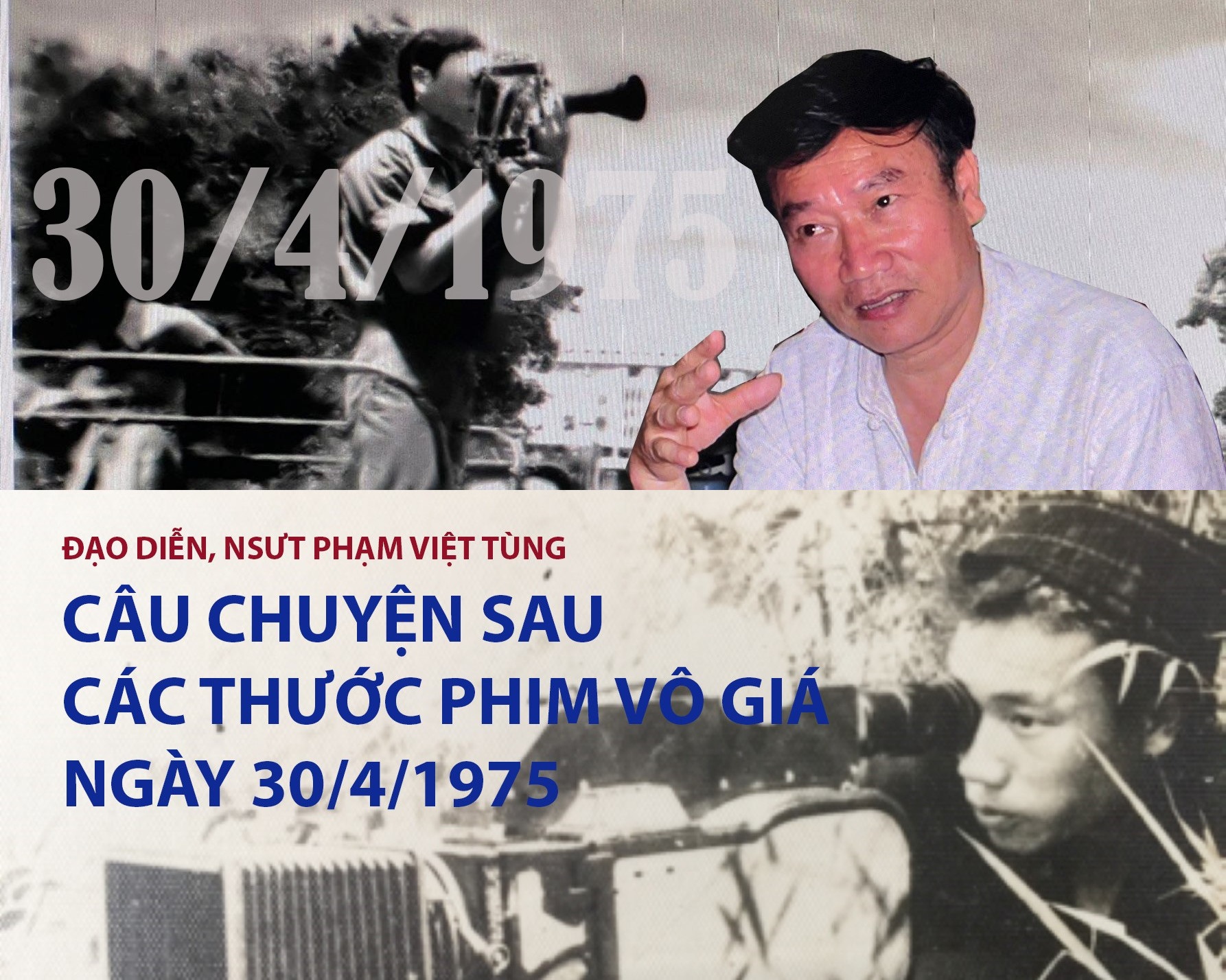
Meritorious Artist Pham Viet Tung and the story behind the priceless footage of April 30, 1975
Báo Dân trí•30/04/2024
(Dan Tri Newspaper) - "I am honored to have witnessed a glorious historical event of the nation: the complete liberation of the South, and the reunification of the country!", Meritorious Artist Pham Viet Tung shared.
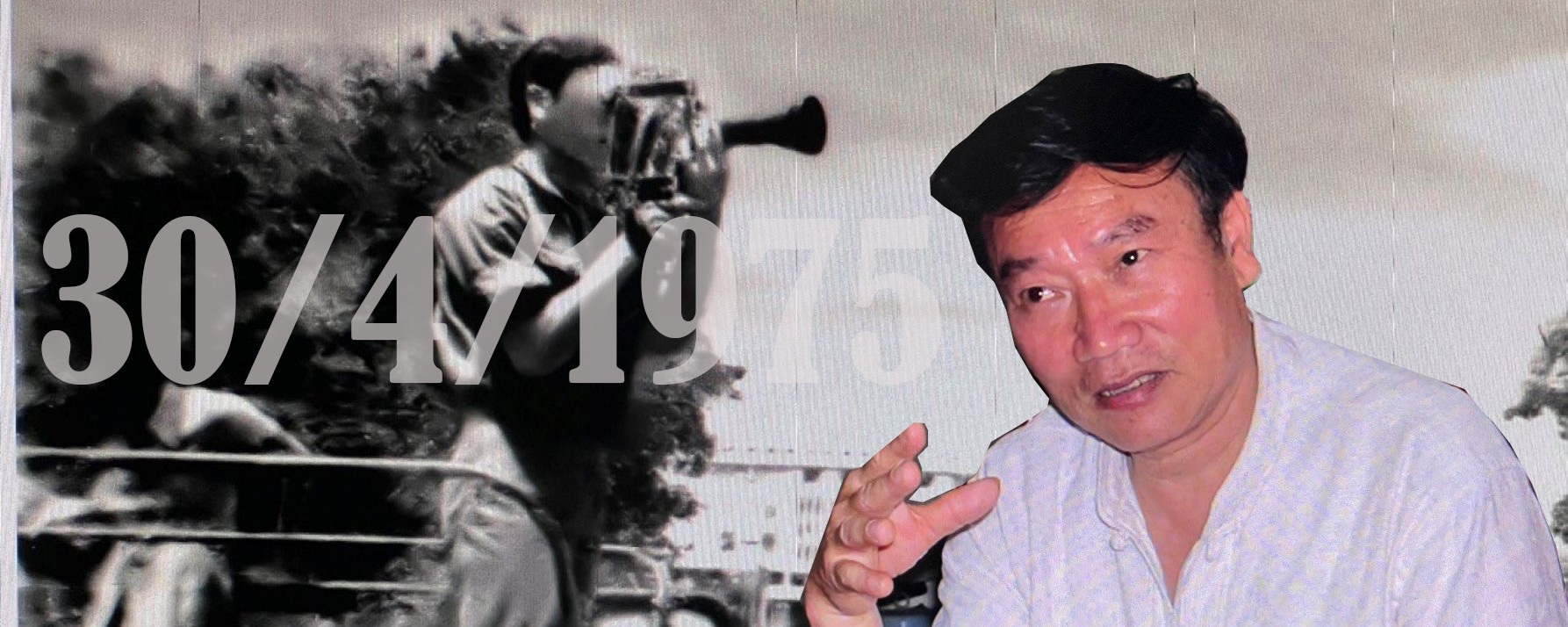
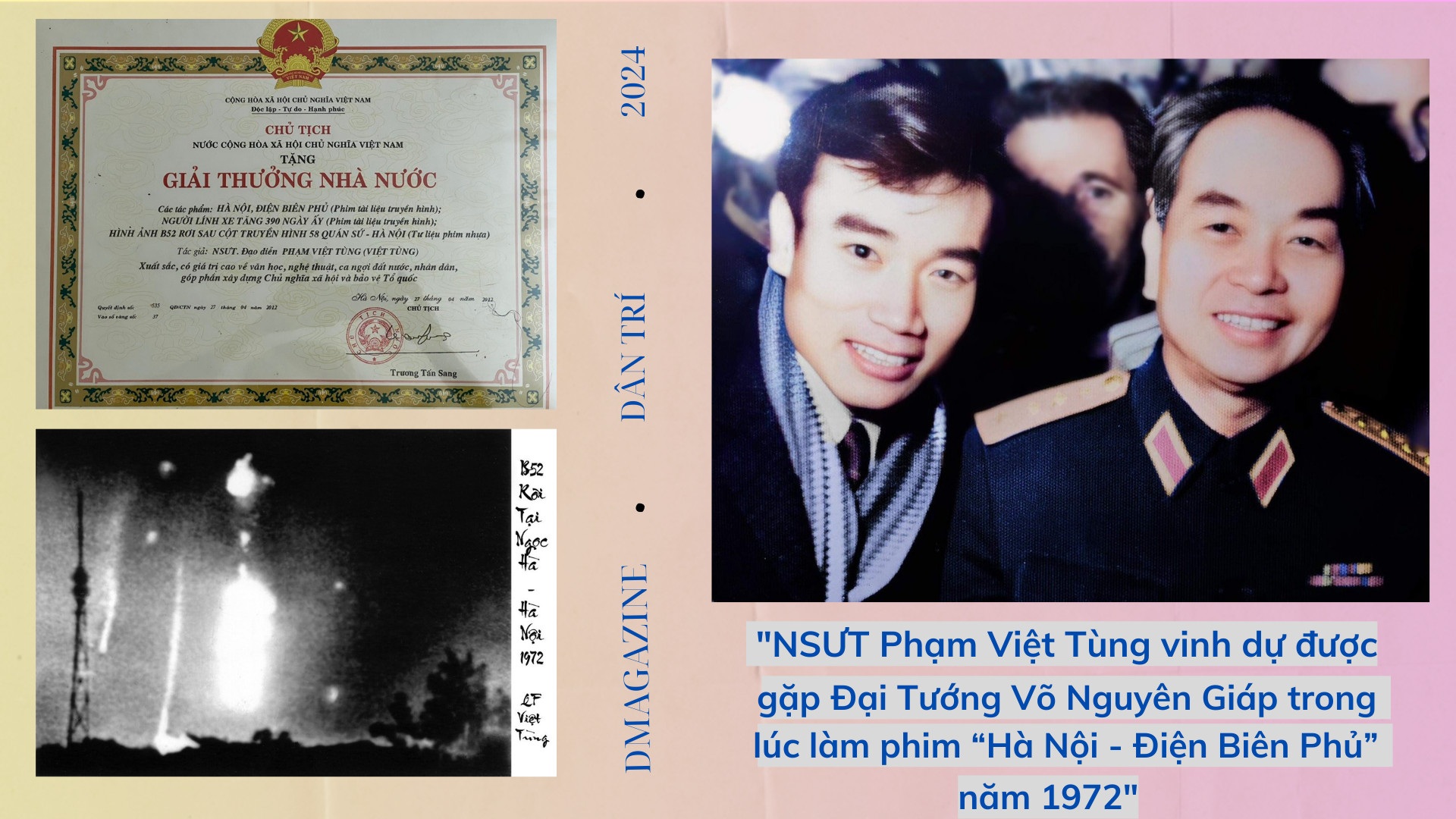
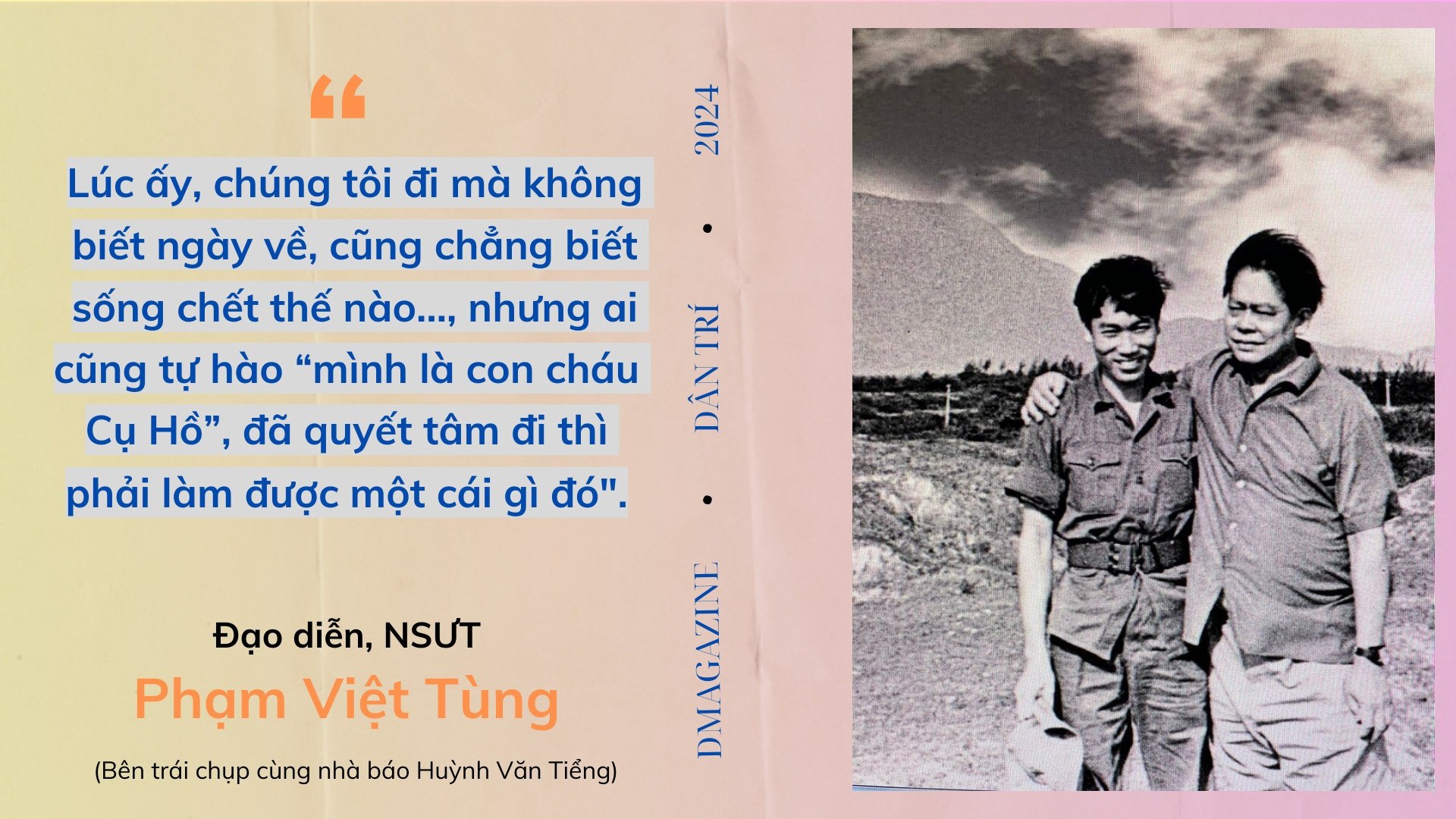
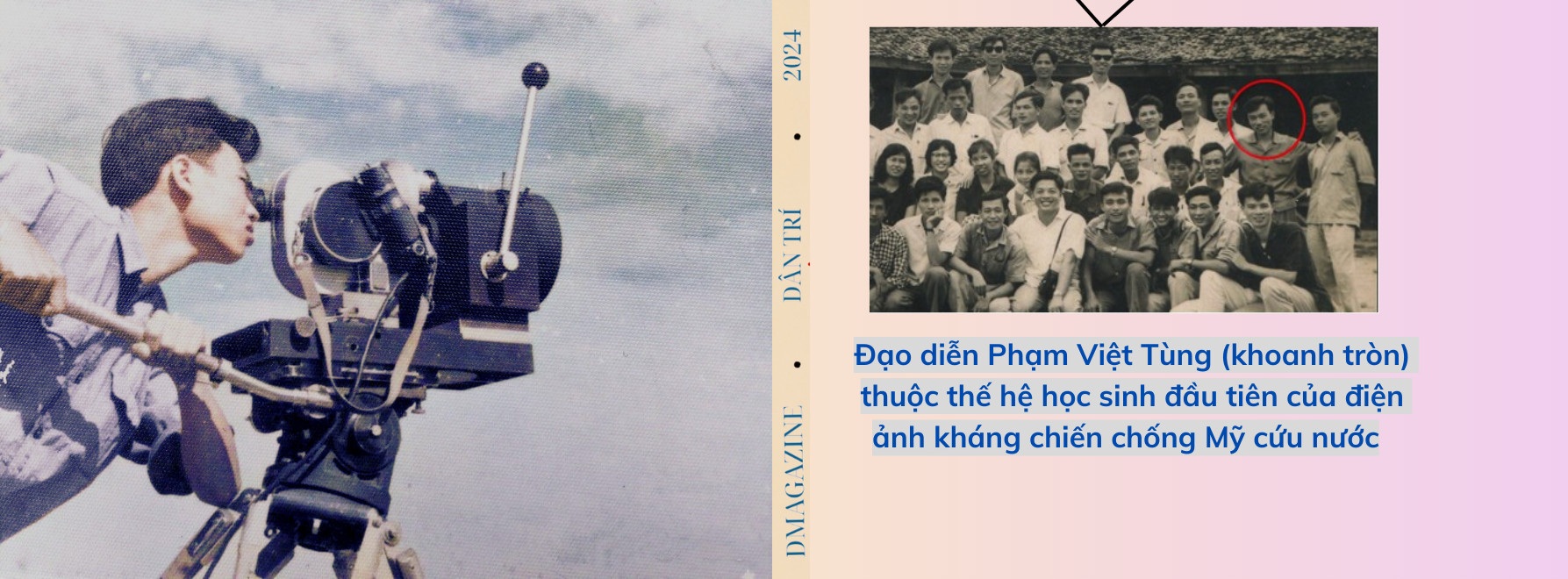
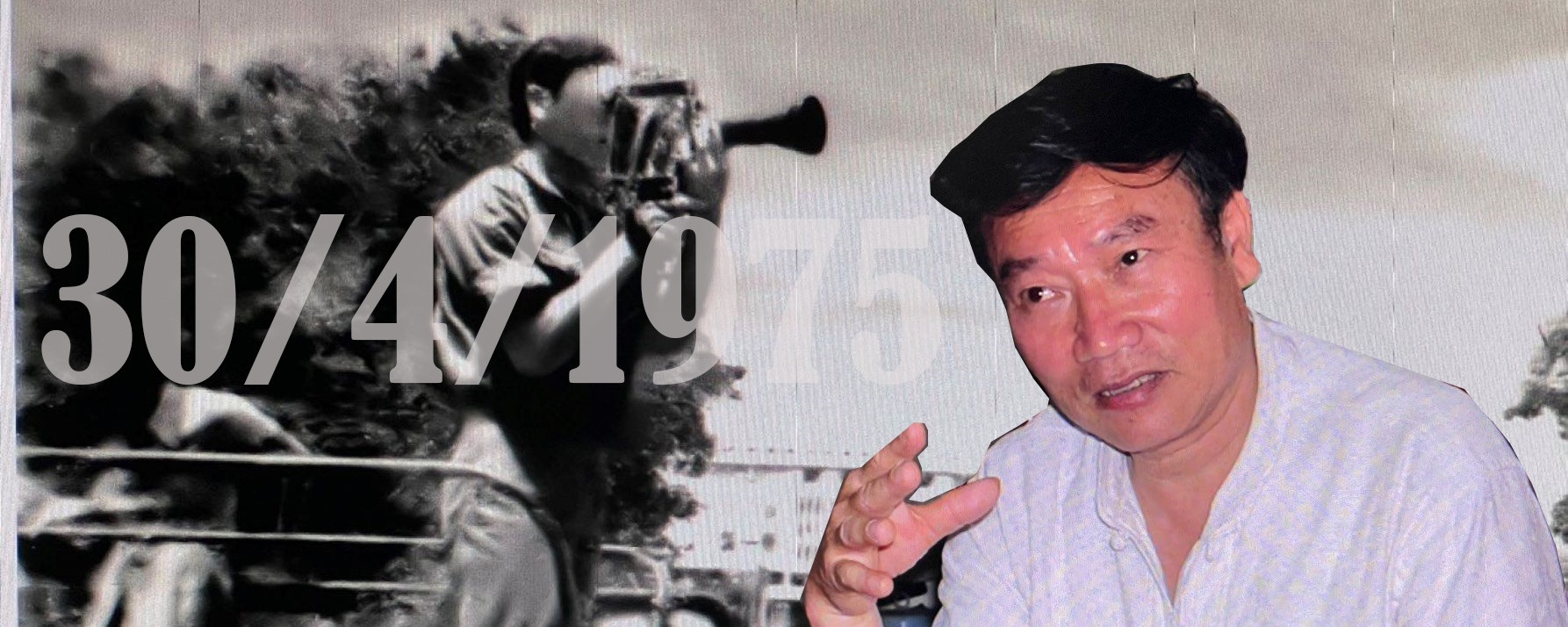
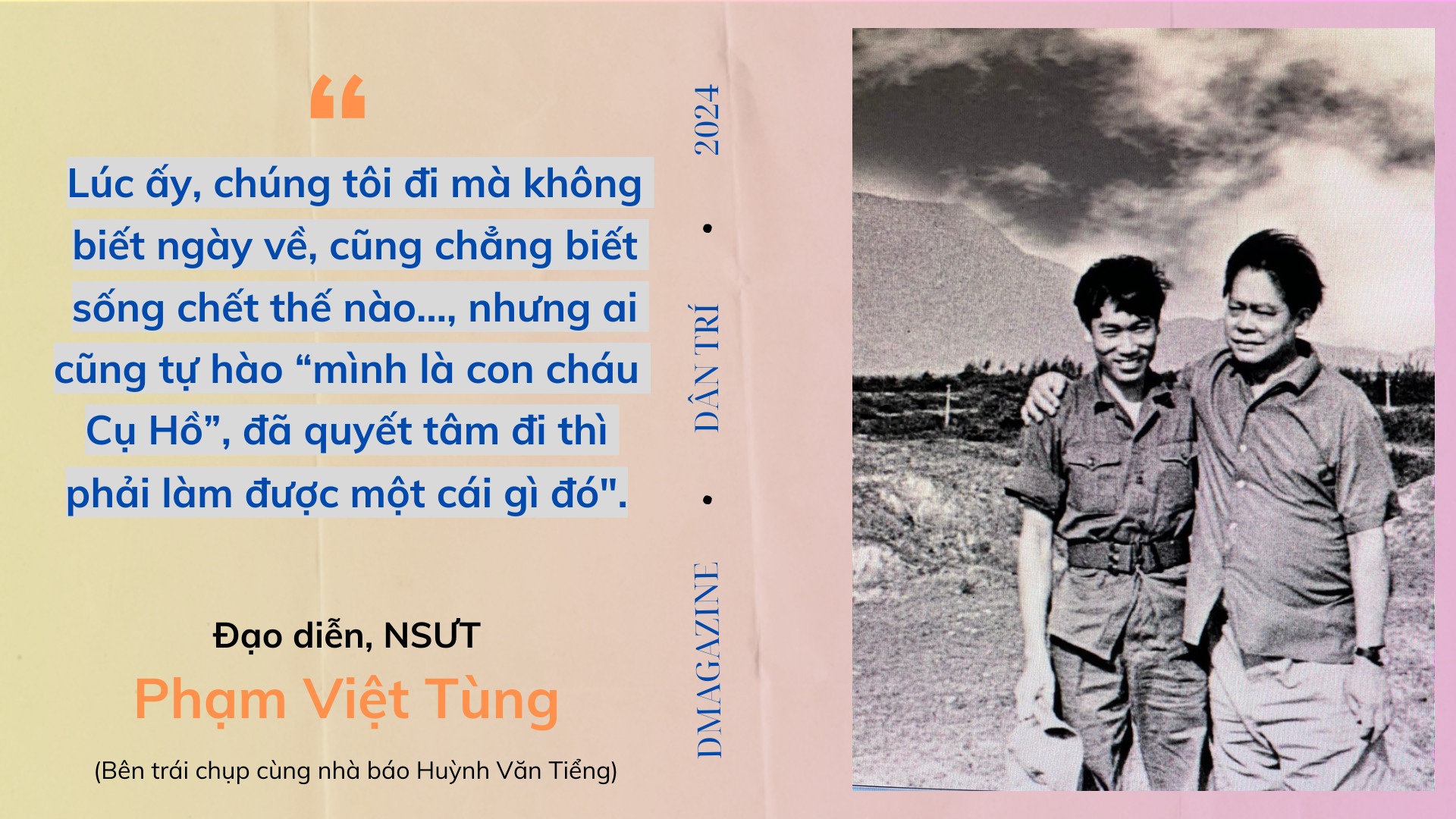
Meritorious Artist and director Pham Viet Tung was one of the few war correspondents present at the Independence Palace at the momentous historical moment of the nation – when the Saigon government's cabinet surrendered to the Liberation Army on April 30, 1975. Having lived through two wars, at nearly 90 years old, director and Meritorious Artist Pham Viet Tung still retains an incredibly vibrant and enthusiastic voice. He passionately recounted to the Dan Tri reporter his time carrying a camera on his shoulder as a weapon on the battlefield, the stories behind invaluable documentary footage, and unforgettable memories, including the tragic lives amidst the bombing and shelling… Mr. Pham Viet Tung, Director and Meritorious Artist, after 49 years since the liberation of South Vietnam and the reunification of the country (April 30, 1975 - April 30, 2024), what are your feelings when you recall that historic moment?- When I arrived at the Independence Palace, the last stronghold of the puppet regime, I was deeply moved and incredibly happy to know that I hadn't died. At that moment, I thought about how our ancestors had contributed so much to the wars against foreign invaders, how many generations had sacrificed themselves, never knowing what independence and freedom were, but we knew that feeling. I was honored to witness the glorious historical event of the nation: the complete liberation of South Vietnam, the reunification of the country! I was overjoyed thinking that my children and grandchildren would no longer have to suffer, that they could get an education, learn to read and write like everyone else, and that the people would now have independence and freedom. In that historic moment, the people of both North and South Vietnam embraced each other with immense joy. Some people were laughing, but others were sad and crying because they couldn't find their siblings at home. Especially on the faces of the students in Saigon - Gia Dinh, there was a glimmer of joy and pride. Those emotions were encapsulated in the footage I made. At that historic moment, you filmed invaluable footage of Saigon on the first day of liberation. Can you share some memories, difficulties, and unforgettable stories from the making of that footage?- I didn't encounter any difficulties in the process of filming the first day of Saigon's liberation; the only difference was the choice of perspective. I went to the Independence Palace. Because I'm from the North, I asked the students to drive me there and pay for the gas. On the way, I asked a friend of mine: "Nguyen, what is the clearest manifestation of victory right now?" Although my friend didn't answer in time, I thought that during wartime, when they lost, they threw down their weapons, but now, with the new regime, they will throw away things from the old regime. So, the scene of our tanks crushing the three-striped flag of the puppet regime was the first footage I filmed of the first day of liberation, April 30, 1975. At that time, filming in color was very difficult and expensive. However, I received funding to film it, and even now, those color films are still very beautiful and haven't faded. The atmosphere at the Independence Palace on the afternoon of April 30, 1975, was also very different; people in Saigon rushed out, overjoyed. They wanted to see the faces of the soldiers. Life for the people of Saigon after liberation was very chaotic and varied. Some were happy, some were suffering, some were released from prison, but others, after liberation, didn't know where to turn. They rejoiced at gaining independence and driving the imperialists out of the country, but they also didn't know what the future held. At that time, I didn't think much about myself; I only thought about how the country and its people would live together in harmony after the war. Many families were torn apart, and some people scattered in different directions, never to see each other again. But above all, despite the pain and loss, in the end, our nation shared the same joy of victory. When mentioning director and Meritorious Artist Pham Viet Tung and his invaluable documentary footage, one cannot fail to mention the image of a burning American B52 bomber ablaze near the 58 Quan Su Television Tower in 1972. How did he capture that image? What are his feelings when recalling the 12 days and nights of the Dien Bien Phu air battle ?- Hanoi, sacred during those days, was engulfed in scenes of "earth shaking, tiles shattering, bricks crumbling," yet always exuded a heroic spirit. At the end of 1972, at the Paris Conference, the US declared that " peace was within reach," making us optimistic that the Vietnam War would end. However, the US reneged on its promise, using B52s to bomb Hanoi and several other cities in North Vietnam. At that time, I was working at the Television Department (of the Voice of Vietnam Radio), among those who remained in Hanoi to carry out their duties while the order for a complete evacuation of the entire city was urgently implemented. At that time, shrapnel was raining down on the rooftops, and although I didn't know whether I would live or die, I was determined to film the heroic battle of the army and people of Hanoi. My colleagues and I braved the danger, standing on the rooftops of tall buildings amidst swarms of American planes dropping bombs on the city. One of the locations I chose to film was the water tower on top of what is now the Hoa Binh Hotel (Hanoi). I remember the bitterly cold winter night of December 27, 1972. I tied a scarf to the railing of the water tower, and together with my assistant cameraman, Dac Luong, waited under the rain of bombs shaking the entire city. I pointed the camera towards the Khuyen Luong ferry, where our missiles and anti-aircraft guns were fiercely unleashing fire into the sky, thick with the roar of American planes. Suddenly, Dac Luong shouted, "Brother Tung! It's over here, Brother Tung!" Everything happened in a split second, so I didn't have time to aim properly; I just instinctively pressed the shutter and adjusted the camera towards my assistant's hand. And so, the image of the B52 flying fortress, like a giant fireball blazing across the Hanoi sky, was captured in my view for a few seconds, before it plummeted down towards Hoang Hoa Tham Street. That was also the "key scene" in the film " Hanoi - Dien Bien Phu." Could you share more about this film? - Initially, I thought that if I wanted to use the phrase "Dien Bien Phu," I definitely had to ask General Vo Nguyen Giap's opinion. So I requested a meeting with the General. After I presented my idea for a documentary film titled "Hanoi - Dien Bien Phu" about the war against the American invaders in the North and the capital Hanoi using B52 bombers, the General slowly walked around the large conference table, deep in thought, and then said: "Agreed! Hanoi - Dien Bien Phu !" Thus, the precious footage I used to denounce the crimes of the American invaders who carpet-bombed and devastated our capital created the film "Hanoi - Dien Bien Phu ." The film won the Special Prize at the International Film Festival in Czechoslovakia in 1974. Later, did you also film on the northern border battlefield? - Jokingly, as my colleagues at the Voice of Vietnam radio station say , I was so good at dodging bombs and bullets that I was assigned to Cao Bang to cover the 1979 Northern border war. I trekked through the jungle, from Tai Ho Sin to Dong Khe and That Khe. It was cold, drizzling, and there were countless leeches. I was hungry and thirsty, but luckily I had a cameraman with me. My film bag had to be carefully protected to prevent it from getting damp. After that, I was assigned to Ai Nam Quan. We were hungry, but we held our breath to film. As a cameraman who grew up amidst the smoke and fire of war, entering the conflict as a "visual chronicler," surely every step you took on the battlefield left you with unforgettable memories, including the most painful ones? - There are so many, I don't know when I'd finish telling them all. I still remember in 1975, the entire Voice of Vietnam had three teams of reporters and editors going to the South. Like Ms. To Uyen and Mr. Huynh Van Tieng - Vice Chairman of the Vietnam Journalists Association - who had just gotten married, they got on a bus to go to the South to film and considered it their honeymoon. At that time, we went without knowing when we would return, or whether we would live or die, but everyone was proud to be "descendants of Uncle Ho," and having decided to go, we had to accomplish something. On our way to the South, fighting was still going on both sides. We traveled day and night, the enemy was destroying bridges so we had to go around under ravines, then use rocks to wedge the vehicles so we could get through. With the intense bombing, there were no houses above ground, so we had to sleep in bunkers. The team had many editors but few cameramen; our task was to record the images and the truth. Our clothes were soaked, but we still had to wear our cameras and keep them dry. If the cameras got wet and damaged, we wouldn't have anything to film when we got to the South, and the trip would be meaningless. Therefore, everyone was afraid of death, but we still had to go so that today we could have independence and freedom for our country. I thought, at that time, I might die, but I could also live to be proud that I had contributed a small part to the victory. That was in 1967, when a beautiful Hanoi Medical University student named Ngo Thi Ngoc Tuong was examining patients in the suburbs. Five years later, she was preparing for her wedding and had sent out wedding invitations to friends and relatives. But tragically, just one day before her wedding, on her way home from Bach Mai Hospital to the Lo Duc area, she was killed by an American bomb. The family brought her body home, her wedding dress becoming a shroud. The tattered wedding invitations lay scattered in the gloomy house. Amidst this tragic situation, the belief in victory still shone through. Or in 1968, I was present at the Vinh Linh battlefield, a place once subjected to the most intense bombing by the American imperialists, to film. On the way to filming, I met 10 young women at Dong Loc Crossroads. But by the time I returned from filming, they had all perished. That is one of the most painful memories I will ever experience. It is known that Meritorious Artist Pham Viet Tung was the first cameraman of Vietnam Television to be fortunate enough to accompany President Ho Chi Minh with his camera. What memories and teachings of Uncle Ho moved him deeply and are unforgettable?- Uncle Ho always taught us: "Culture and arts are a front, and journalists are soldiers on that front." Every journalist must improve their skills, and everything they do must originate from the people and serve the people. Uncle Ho also always created conditions to help cameramen and photographers. Sometimes he would ask: "Do you have enough film? If not, I'll go back and film for you." Mr. Khanh Du was the cameraman filming Uncle Ho during his trip to the Soviet Union. Uncle Ho always went ahead, with the cameramen and assistants following behind, but to get beautiful photos and footage, the cameramen and photographers had to go first. Knowing that the cameraman couldn't film properly, Uncle Ho said, "My dear, you couldn't film just now? I was moving too fast, so you couldn't get a shot, right? Then, let me get back in the car and let you film." Then, Uncle Ho instructed us on which scenes to film, how to film to convey the political message, national pride, and Vietnam's equality with the world. Or, there was the time Uncle Ho held a Government Council meeting in a dark room. While everyone could see the meeting clearly, filming would be impossible due to insufficient light. At that time, Uncle Ho told the crew to climb onto the roof, remove some leaves, and let the light in so we could film immediately. This shows how well Uncle Ho understood the profession and how close he was to us cameramen. Another time, the women from the National Salvation Women's Association saw Uncle Ho asking them to mend his worn-out shirt, so they made him a new one. But Uncle Ho resolutely refused to wear it, saving it for a meeting with outstanding elderly people, at which point he would present it as a gift. As for cadres, Uncle Ho always advised: "Serve the revolution by doing as much as possible, but boast little about your contributions to the revolution." According to you, what determined you to become an outstanding "visual historian"?- I love my profession and dedicate a lot of time to it, so I got married late. Throughout my life, I've made hundreds of films, and for each film, I have to choose the right perspective that interests people both domestically and internationally . My films must have a connection to the present for them to have lasting value. And especially, they must be critical. Everything I say must have a justification. Are you haunted by what you experienced during the war? - Honestly, there were nights when I'd suddenly sit up, remembering the sound of bombs, and then think about the scenes I went through while working, feeling proud that I had made a small contribution to the war to defend the homeland. Sometimes we also felt resentful because some people who returned after the war weren't adequately rewarded. They endured hardships to fight the enemy and protect the homeland, which was a worthy deed. But when they returned, life was difficult, and they didn't know where to turn for support. Then I reflected on how our ancestors had to sacrifice and suffer to achieve peace, and even though they suffered, they were still proud, while today… there are things we see that are heartbreaking. The war is over, but when you look back at the documentary footage and the stories you witnessed, what themes about war do you still cherish? - I want to tell the story of a woman named Nhàn (in Đông Anh, Hanoi), who is still alive today. Her life was tragic; she married not long ago, before she could even experience married life, her husband died in a B52 bombing. Twenty-six years ago, I met her and heard her heartbreaking story. The story itself is the most convincing condemnation of war; there's no need to add details about bombs, bullets, or our victory and the enemy's defeat… At nearly 90 years old, how does Meritorious Artist Phạm Việt Tùng still exude such lucidity, a vibrant and enthusiastic voice, and show no signs of being at such an advanced age?- Honestly, even though I had to endure hardship and danger to obtain each frame of film during the war, I am always proud and happy that the smoke, fire, and bombs forged in filmmakers like myself a fierce spirit and a unique artistic personality. Having gone through two wars, at this age I feel happy because I can still work, without resting. I still advise young people passionate about television on history because I always believe that "giving is receiving," never thinking about gain or loss. Occasionally, I still go to talk and exchange experiences with officials and reporters from central and local television stations such as Vietnam Television, Ho Chi Minh City Television, Tuyen Quang Radio and Television... to keep my passion alive. As for life, whether in peacetime or wartime, there is always struggle, a struggle to become a better person, gradually eliminating evil. I raise my children to be decent people, and that is the greatest happiness of a father. Thank you very much for sharing!Design: Huu Bach













































































Comment (0)