

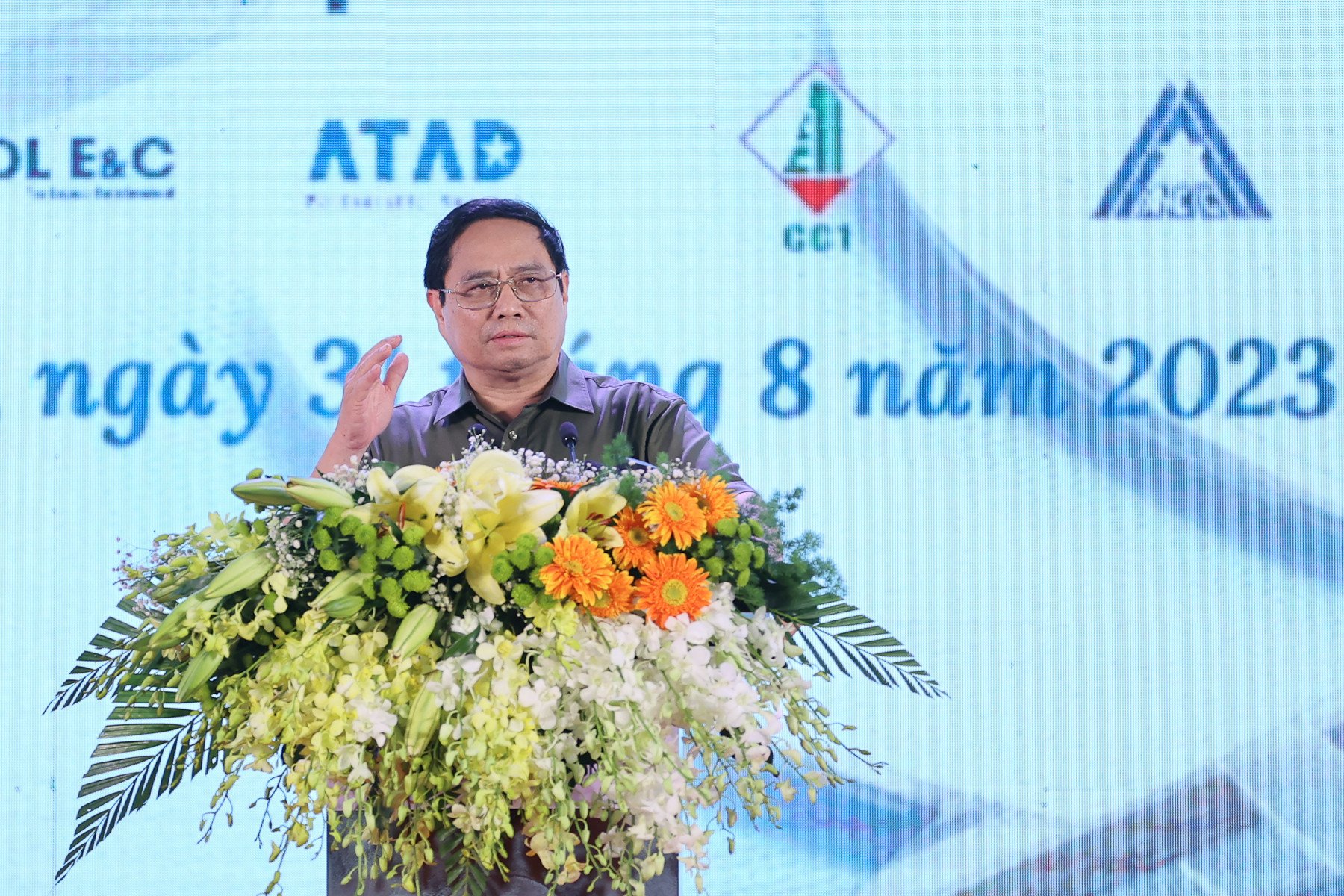
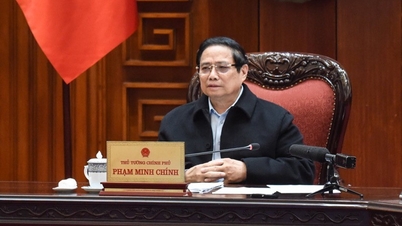
Prime Minister Pham Minh Chinh requested functional units to strive to exceed the schedule of the three most important items of the Long Thanh and Tan Son Nhat airport projects - Photo: VGP/Nhat Bac
Attending the event at various locations were: Politburo member and Secretary of the Ho Chi Minh City Party Committee Nguyen Van Nen; Central Committee member and Deputy Prime Minister Tran Hong Ha; Central Committee members, leaders of central and local departments, ministries, agencies; and representatives of domestic and international agencies, units, and contractors.
The groundbreaking ceremony was jointly organized by the State Capital Management Committee at Enterprises, the Ministry of Transport , the People's Committee of Ho Chi Minh City, the People's Committee of Dong Nai Province and the Airports Corporation of Vietnam (ACV), and was connected online between two locations: Long Thanh, Dong Nai Province and Tan Son Nhat, Ho Chi Minh City.
The contracts commenced include: the construction and equipment installation package for the passenger terminal at Long Thanh International Airport, phase 1; the construction and equipment installation package for the runway, taxiway, and aircraft parking apron at Long Thanh International Airport, phase 1; and the construction and equipment installation package for the T3 passenger terminal at Tan Son Nhat International Airport.
National key projects, special level projects
According to ACV, the Long Thanh International Airport construction project, with a capacity of 100 million passengers and 5 million tons of cargo per year, and the Tan Son Nhat International Airport expansion project, which has completed its planning with a capacity of 50 million passengers per year, are two nationally important projects, special-grade works, with significant importance for the development of the aviation industry in particular, and the socio-economic development of the Southern key economic region and Vietnam in general.
The two airports form a powerful, modern airport cluster, poised to become one of the region's major aviation hubs in the future, boosting the competitiveness of Vietnam's aviation industry on the path of international integration, and contributing to the successful implementation of the strategic breakthrough in transportation infrastructure as outlined in the Resolution of the 13th National Congress of the Communist Party of Vietnam.
Tan Son Nhat International Airport is currently one of the three largest international air gateways in Vietnam, operating one international and one domestic passenger terminal. However, the domestic passenger volume through the existing Terminal 1 alone has reached 26 million passengers per year, exceeding its designed capacity by more than 1.7 times, and is projected to exceed this capacity by more than double by 2024. Furthermore, many of the airport's infrastructure investments have deteriorated over the years, becoming outdated, overloaded, and congested, affecting service quality and reducing the competitiveness of the locality and the nation.
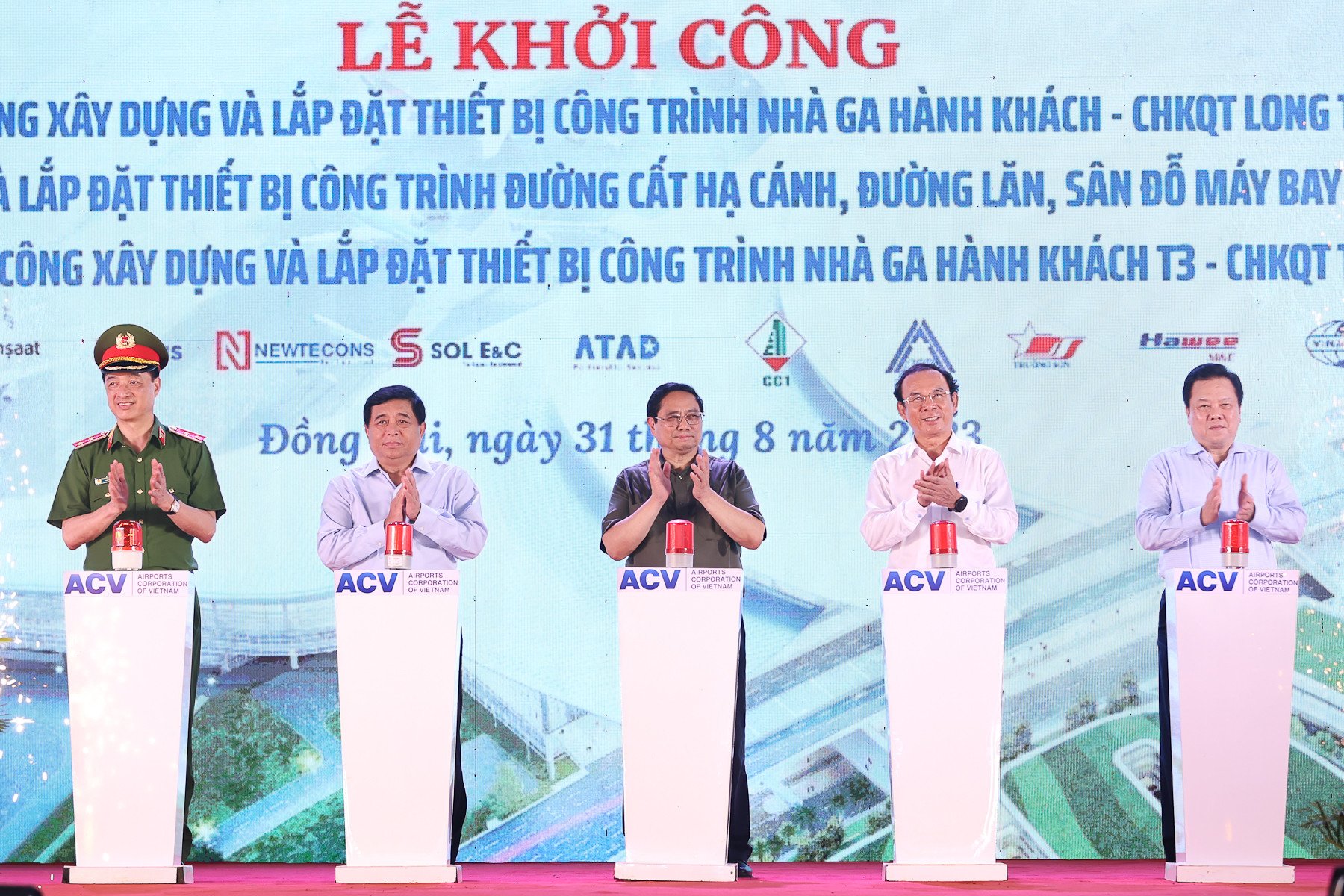
Prime Minister Pham Minh Chinh, along with leaders of ministries, sectors, and localities, pressed the button to simultaneously launch the construction of three important packages with a total investment of approximately 53,000 billion VND for the Long Thanh International Airport project and the Tan Son Nhat T3 passenger terminal construction project - Photo: VGP/Nhat Bac
The Tan Son Nhat T3 passenger terminal construction project comprises three main components: the passenger terminal, a multi-story parking garage combined with non-aviation services, and an elevated bridge system in front of the terminal, with a total investment of nearly 11,000 billion VND.
Of these, the construction and equipment installation package for Terminal T3 is the most important item, with a total investment of nearly 9,300 billion VND, expected to be constructed in 20 months (600 days) and will be completed and put into trial operation in early Q2/2025.
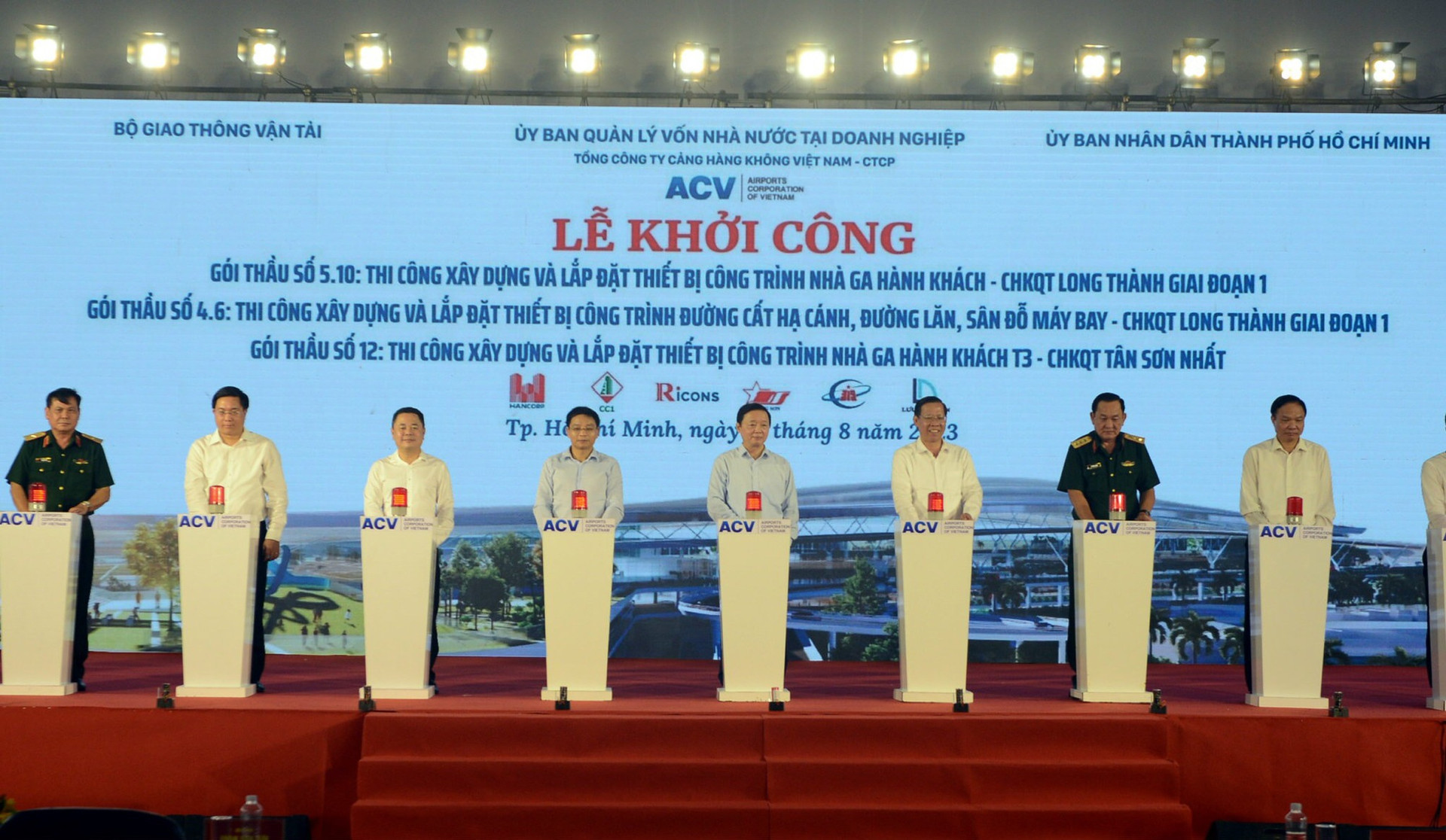
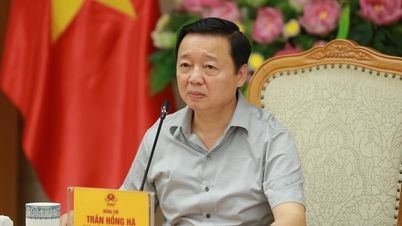
Deputy Prime Minister Tran Hong Ha and leaders of the Ministry of Transport, the People's Committee of Ho Chi Minh City and a number of ministries, departments and agencies pressed the button to officially launch the construction project of Terminal 3 at Tan Son Nhat Airport - Photo: VGP/MH
Upon completion, Terminal 3 will be a domestic passenger terminal with a capacity of 20 million passengers per year, accommodating 7,000 passengers per hour during peak times, and capable of handling all aircraft types (Code C and Code E).
Meanwhile, the Long Thanh International Airport project, among the 16 most anticipated airports in the world, is a nationally important project, demonstrating the strong determination and correct policies of the Party and State, and Vietnam's strong aspiration for progress. Phase 1 of the project involves the investment of one runway and one passenger terminal, along with synchronized supporting facilities, with a capacity of 25 million passengers per year and 1.2 million tons of cargo per year.
Upon completion of all phases, Long Thanh International Airport is expected to reach a capacity of 100 million passengers per year. This will not only be the largest airport in Vietnam, but also aims to become one of the region's international air transit hubs, expected to make Vietnam an attractive destination on the international aviation map. It will not only "boost" the development of the aviation industry but also bring positive benefits to the socio-economic development of the region and the entire nation.
Specifically, the construction and equipment installation contract for the Long Thanh passenger terminal is valued at over 35,000 billion VND, with a construction period of 39 months. This is also the most important component of the Long Thanh International Airport investment project, phase 1.
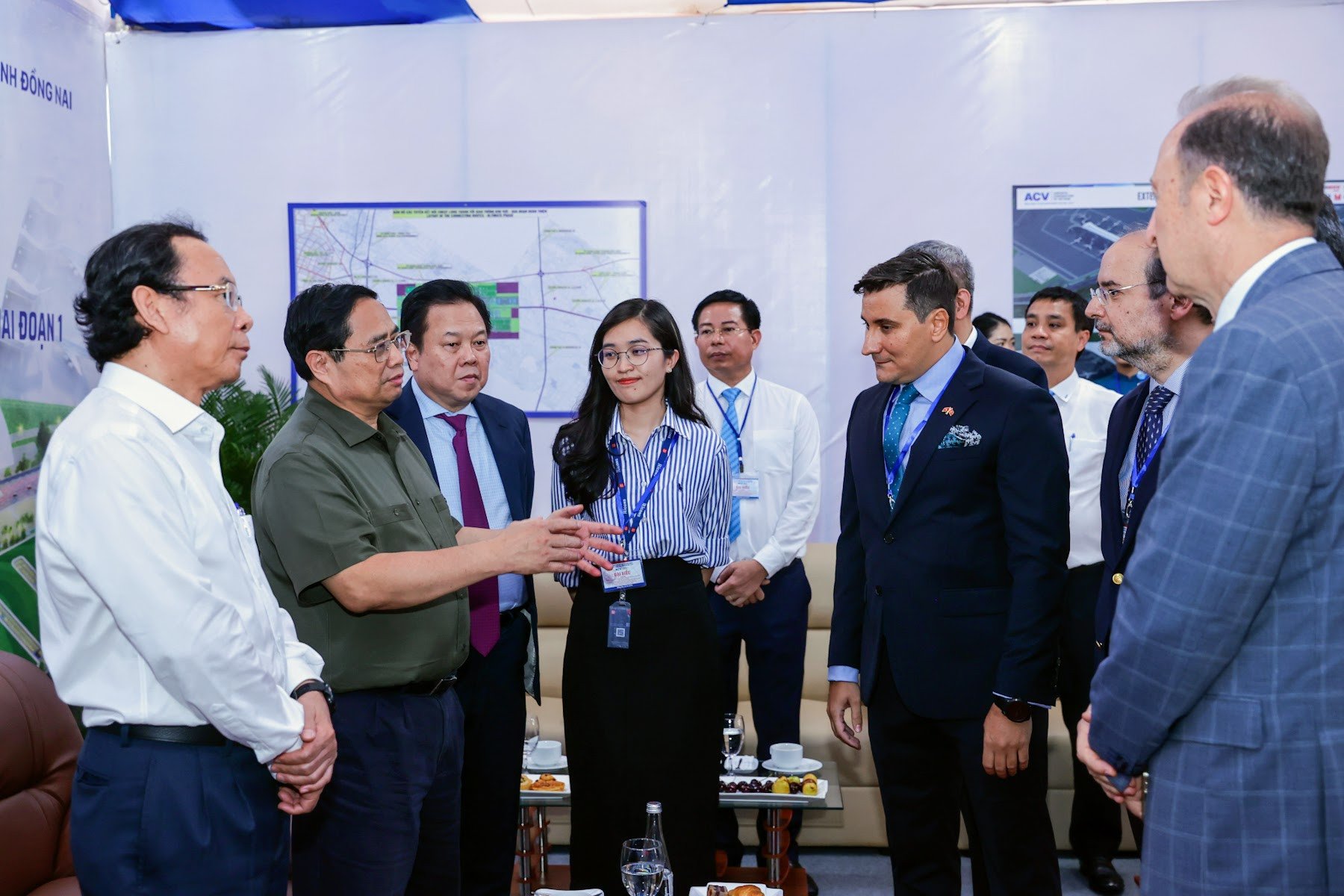
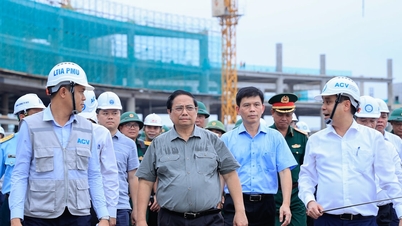
The Prime Minister discussed with representatives of contractors, construction, design, and supervision consultants of Long Thanh airport project - Photo: VGP/Nhat Bac
The construction and equipment installation contract for the runway, taxiway, and aircraft parking apron of Long Thanh International Airport, Phase 1, is valued at over 7,300 billion VND, with a construction time of approximately 23 months (700 days) - making it the second largest contract under component 3 of the Long Thanh airport project to date.
These are two crucial bidding packages of the project, directly related to safe and efficient flight operations, so technical accuracy is paramount. The most advanced technologies and state-of-the-art equipment currently available are also being applied to the project to build a modern, smart Long Thanh airport, comparable to airports of similar scale worldwide.
According to ACV Chairman Lai Xuan Thanh, the fact that the bidding packages fully meet the conditions for commencement of construction as stipulated by law is primarily due to the encouragement, motivation, close and decisive direction, and continuous supervision of the Prime Minister, Deputy Prime Ministers, the State Steering Committee, and central ministries and agencies.
Mr. Lai Xuan Thanh reiterated that the Prime Minister, the leaders of Ho Chi Minh City, and many ministers had inspected and held meetings directly at the construction site, making strategic decisions and resolving difficulties and obstacles in the project's implementation, including specific issues such as demolishing embankments and land allocation.
The leaders also directly paid attention to, urged, and reminded about improving the working and living conditions of the construction site staff, and enhancing the sense of responsibility of ACV leaders towards the task. Leaders of the Ministry of Transport and the State Capital Management Committee regularly held meetings directly at the construction site.
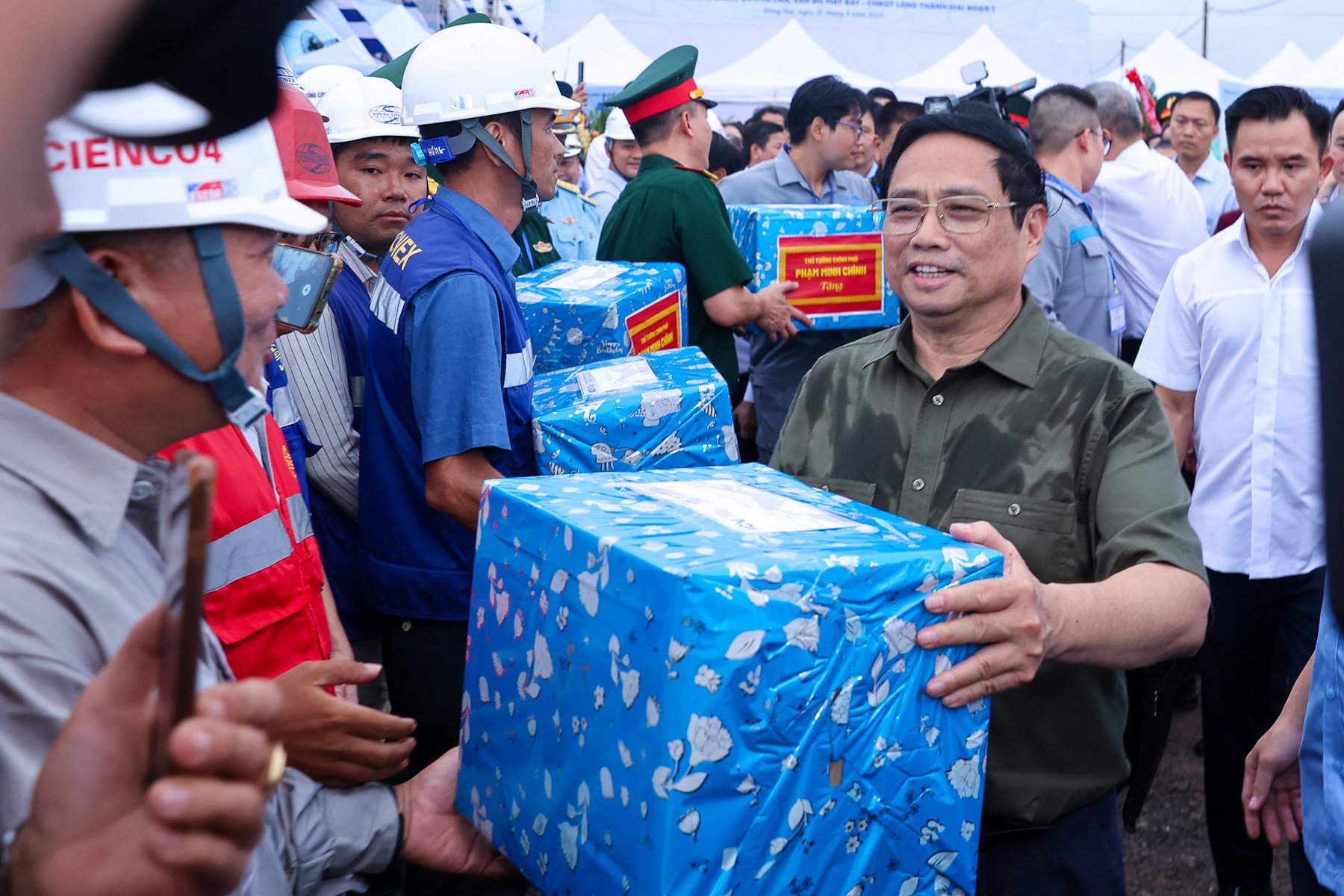
The Prime Minister presents gifts to officials and workers at construction sites of two projects in the southern key economic region - Photo: VGP/Nhat Bac
6 key requirements for tenders
Speaking at the groundbreaking ceremony of the three packages, Prime Minister Pham Minh Chinh emphasized the role of the two projects in the Southern key economic region, which are of great significance to domestic and international connectivity, contributing to the implementation of the Resolution of the 13th National Party Congress and Resolution 24 of the Politburo on the Southeast region.
Developing infrastructure, especially transportation infrastructure, is one of the three strategic breakthroughs of our Party and State. Practical experience has proven that transportation in general, and airports and seaports in particular, bring clear benefits to socio-economic development, security, and national defense. Wherever transportation develops, it opens up opportunities for further development, leading to the formation of many urban areas, industrial zones, service areas, and tourist destinations, and the efficient utilization of land resources.
As a crucial component of the transportation infrastructure system, aviation infrastructure is highly specialized, complex, and deeply integrated internationally. Developing air transport infrastructure aims to strengthen and expand transportation methods to facilitate sharing and interconnectedness domestically and internationally, thereby promoting socio-economic development and fulfilling the tasks of national defense, security, and protection of territorial sovereignty (including airspace, sea, and land).
However, developing aviation infrastructure requires synchronized, modern, and sustainable investment, in line with global aviation development trends, with airports playing a key role. In recent years, aviation infrastructure in our country has been upgraded, expanded, and newly built with significant investment from the State and private sector. However, it has not kept pace with the growth and development of the nation and the international community; many airports have become overloaded both in the air and on the ground, especially Tan Son Nhat Airport.
Analyzing the integration trend and the increasingly improved living standards of people, leading to the need for aviation development, the Prime Minister said that aviation is the fastest form of transport with many advantages.
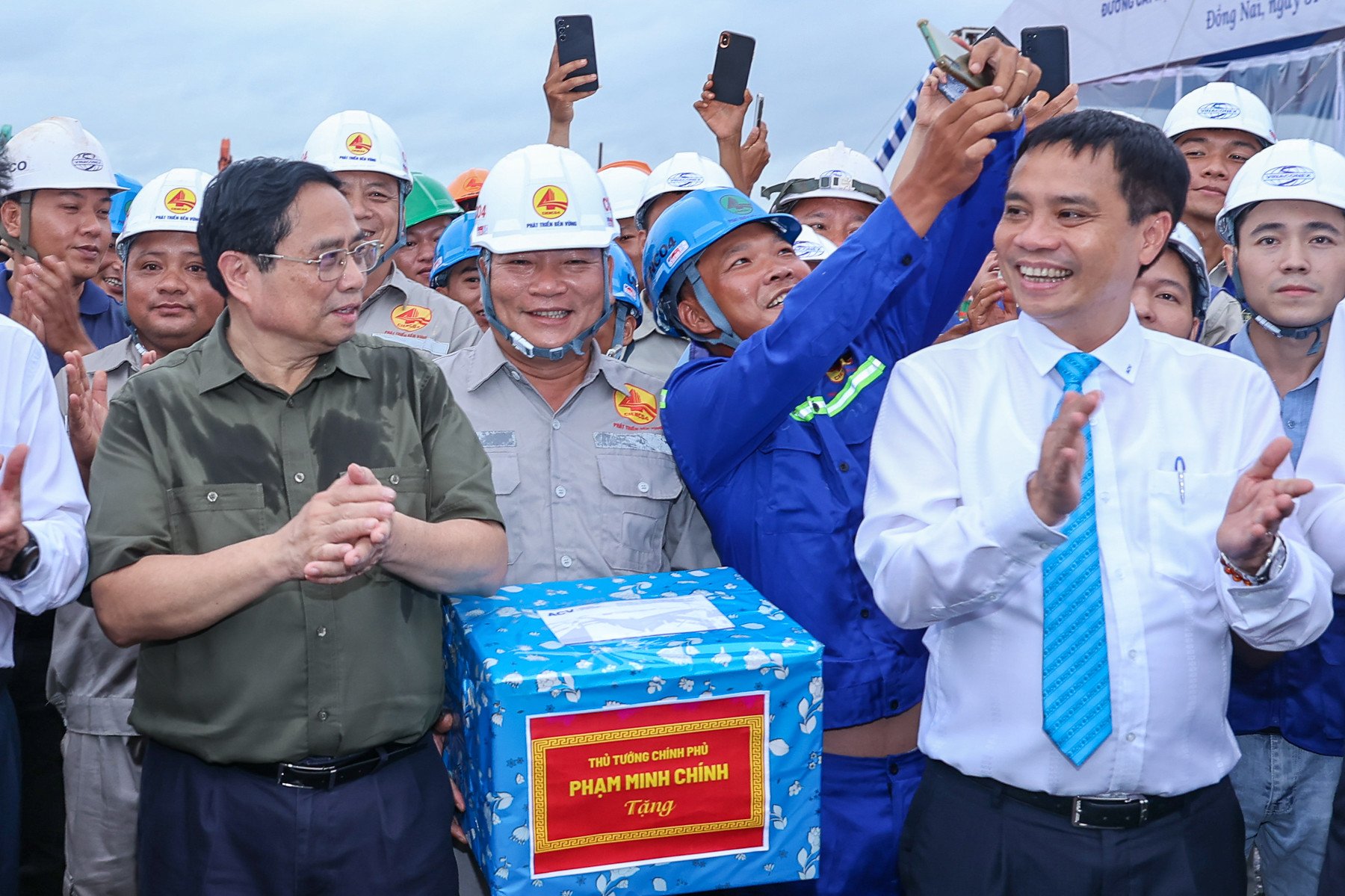
Photo: VGP/Nhat Bac
The Long Thanh International Airport Phase 1 project and the Tan Son Nhat T3 passenger terminal construction project are two exceptionally large projects, playing a crucial role in the national airport network system. They are important infrastructure projects related to national security, defense, and socio-economic development of the Southern key economic region in particular and the whole country in general.
Once completed, these two projects will contribute to making Vietnam a major transportation hub in the region and the world, opening up new development space with an "aviation economic ecosystem", creating new growth momentum, promoting development and enhancing national competitiveness.
The Prime Minister acknowledged, highly appreciated, and commended the Ministry of Transport, the Ministry of National Defense, Ho Chi Minh City, Dong Nai province, the State Capital Management Committee at enterprises, ACV, and other relevant ministries and agencies for their proactive and positive coordination in resolving many difficulties and obstacles, especially procedures related to bidding, land, investment, and capital, and for completing the procedures according to regulations to commence the construction of 3 packages, with the participation and support of the people.
The groundbreaking ceremony for the three most important components of the two airport projects is a significant event, a milestone in the development of the aviation industry, and a meaningful "gift" on the occasion of the August Revolution and National Day on September 2nd. This also serves as concrete and clear evidence of the investor's utmost efforts and the involvement of the Government, ministries, and localities over the past period.
As these are very large and technically complex projects, the groundbreaking ceremony for the three packages is only the first step; the task ahead is still very challenging. The Prime Minister requested the Ministry of Transport, the Ministry of Construction, the Ministry of Natural Resources and Environment, the Ministry of National Defense, the State Capital Management Committee at enterprises, central ministries and agencies, the People's Committee of Ho Chi Minh City, and the People's Committee of Dong Nai province to effectively perform their state management functions, strengthen inspection and supervision; promptly support and resolve difficulties in the project implementation process, and accelerate the progress of the construction with the common goal of ensuring the quality, progress, safety, and efficiency of the project as assessed and approved.
The Ministry of Transport and the State Capital Management Committee at Enterprises will continue to closely coordinate with the People's Committee of Ho Chi Minh City, the People's Committee of Dong Nai province, and relevant ministries and agencies to direct the investor to organize the implementation of the project, ensuring quality and safety, striving to exceed the schedule, completing the project early, putting it into operation, avoiding unreasonable cost overruns, and preventing corruption, negative practices, and waste.
ACV proactively coordinates with the People's Committee of Ho Chi Minh City, the People's Committee of Dong Nai province, and relevant ministries, agencies, and organizations to promptly resolve difficulties and obstacles during implementation; actively inspects and supervises the construction process to ensure compliance with legal regulations, quality, technical and aesthetic standards, absolute safety, and to prevent corruption and waste. It also pays attention to the well-being of officials, workers, and employees involved in the construction of the projects.
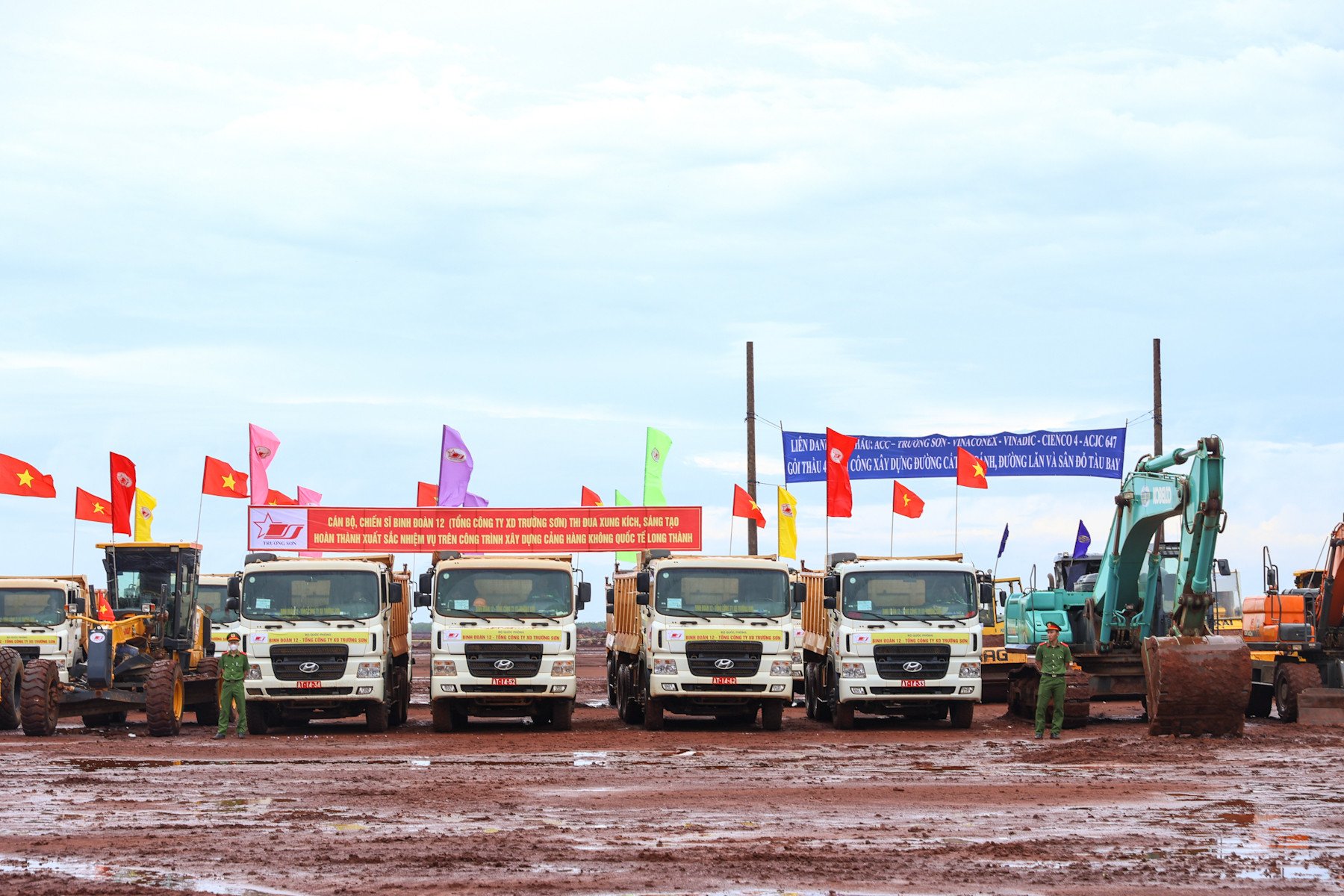
The units are ready to carry out the construction with the highest sense of responsibility - Photo: VGP/Nhat Bac
Construction contractors must act with the highest sense of responsibility, strictly adhering to construction laws and regulations, and mobilizing sufficient machinery, equipment, and personnel to ensure the quality and progress of the project. The use of substandard or low-quality materials, or the use of insufficient materials as required, is strictly prohibited. The investor and supervisory consultant will be held responsible if construction contractors commit violations that affect the quality of the project. Any violations discovered will be dealt with severely.
Contractors and supervisors have said they must do it, have committed to it, and must do it effectively and quantifiable with specific products, with the right quality, regulations, and schedule, without waste or negativity; the construction process must be scientific and safe.
The Prime Minister urged the people in the areas affected by the project to continue to cooperate for the national interest; to support and create favorable conditions for the project to be completed smoothly and on schedule.
The Prime Minister affirmed that the Government, steering committees, ministries, branches and agencies with responsibility and authority will fully support, assist and remove obstacles so that investors and contractors can complete these two very important projects.
The Prime Minister emphasized six requirements that all entities involved in the project implementation must seriously adhere to: Firstly, ensuring progress and striving to exceed the schedule; secondly, improving quality; thirdly, avoiding unreasonable cost overruns and not subdividing the project into smaller packages; fourthly, ensuring safety, technical standards, aesthetics, and environmental hygiene; fifthly, combating corruption, negative practices, vested interests, and waste at all stages; sixthly, ensuring the legitimate rights and interests of the people, ensuring a harmonious balance of interests between the state, the people, and businesses, contributing to the training of a team of officials who are both politically sound and professionally competent, improving the quality and qualifications, and enhancing the capacity of officials in the transportation sector in particular and the political system in general.
The Prime Minister wished the projects to be completed on schedule and with quality, achieving the set goals, meeting the expectations of the people and the trust of the Party and State.
Source






















![[Video] The craft of making Dong Ho folk paintings has been inscribed by UNESCO on the List of Crafts in Need of Urgent Safeguarding.](https://vphoto.vietnam.vn/thumb/402x226/vietnam/resource/IMAGE/2025/12/10/1765350246533_tranh-dong-ho-734-jpg.webp)













































Comment (0)