

On December 1st, Master of Pharmacy Nguyen Huu Tu – Permanent Vice President and General Secretary of the Vietnam Young Doctors Association – announced that the program series "Living Healthy Every Day – For a Healthier Vietnam" will screen approximately 11,000 people in 6 provinces and cities for H.Pylori bacteria (one of the main causes of gastritis, duodenal ulcers, and stomach cancer) and other non-communicable diseases in the community.
Over the past two weeks, doctors have implemented four programs in four provinces and cities (including Hai Phong, Thanh Hoa, Nghe An, and Da Nang ), providing free medical examinations, screenings, medication, and gifts to nearly 5,000 people.
Notably, following community screening, doctors discovered 973 cases positive for Helicobacter pylori (H. pylori) bacteria. In Vietnam, the rate of H. pylori infection is high; previous studies in Ho Chi Minh City estimated that approximately 70% of the adult population is infected with this bacteria. Although most people infected with H. pylori have no obvious symptoms, about 10-20% of them are at risk of developing peptic ulcers, and 1-2% may progress to stomach cancer.
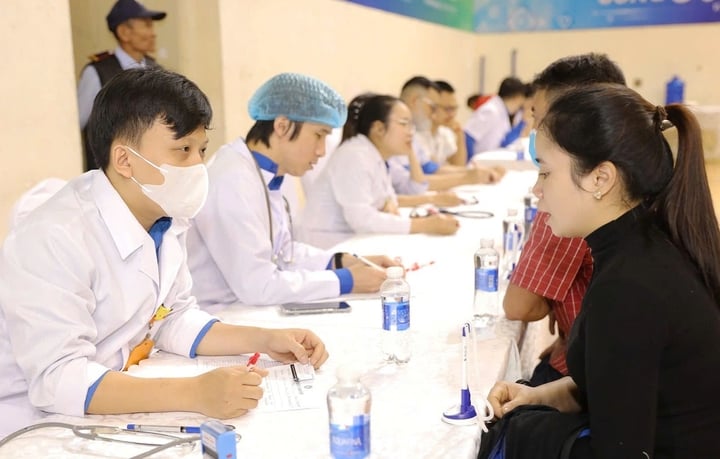
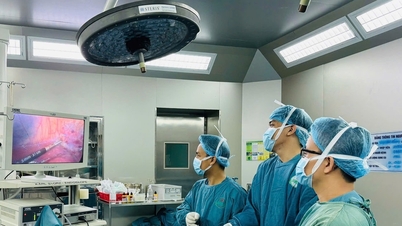
Medical staff advise people coming for screening. (Photo: LH)
“Antibiotic resistance in Vietnam is at a high level, making effective treatment difficult. In addition, the rate of H. pylori reinfection after treatment is also worrying. A 2005 study showed that, on average, after 11 months of treatment, the rate of H. pylori recurrence was 23.5%,” Mr. Tú said.
During the screening program, doctors also found that 721 patients showed signs of impaired fasting glucose (15%), 963 patients had abnormal blood pressure readings and were re-examined with electrocardiograms (20%), 1,585 patients had dyslipidemia (33%), and 111 patients had uric acid disorders (0.2%).
According to Dr. Ha Anh Duc, President of the Vietnam Young Doctors Association, health is not only a valuable asset for each individual but also the foundation for the sustainable development of the entire community and society.
“Over the years, non-communicable diseases such as cancer, cardiovascular disease, diabetes, and stomach-related illnesses caused by H. Pylori bacteria have become a major burden on global and Vietnamese healthcare. Early detection and raising awareness of prevention of these diseases are extremely important,” Mr. Duc said.
Nhu Loan


![[Photo] The captivating scenery of the fragrant maple forest in Quang Tri](/_next/image?url=https%3A%2F%2Fvphoto.vietnam.vn%2Fthumb%2F1200x675%2Fvietnam%2Fresource%2FIMAGE%2F2025%2F12%2F10%2F1765353233198_lan09046-jpg.webp&w=3840&q=75)
![[Photo] Explore the US Navy's USS Robert Smalls warship](/_next/image?url=https%3A%2F%2Fvphoto.vietnam.vn%2Fthumb%2F1200x675%2Fvietnam%2Fresource%2FIMAGE%2F2025%2F12%2F10%2F1765341533272_11212121-8303-jpg.webp&w=3840&q=75)




















![[Video] The craft of making Dong Ho folk paintings has been inscribed by UNESCO on the List of Crafts in Need of Urgent Safeguarding.](https://vphoto.vietnam.vn/thumb/402x226/vietnam/resource/IMAGE/2025/12/10/1765350246533_tranh-dong-ho-734-jpg.webp)























































Comment (0)