

Previously, due to symptoms of passing black stools and a dull pain in the right side of the abdomen, Mr. Q. was taken by his family to a medical facility in Ho Chi Minh City for examination. There, a CT scan of the patient's abdomen revealed a tumor in the right colon along with many surrounding lymph nodes. A biopsy after endoscopy confirmed that it was a cancerous mass.
The patient's condition caused poor appetite, anemia, and progressive weight loss. Furthermore, the patient suffered from cardiac arrhythmia, making surgery difficult.
Mr. Q. was discharged from the hospital and had to be hospitalized for blood transfusions every two weeks. Upon learning about robotic surgery for colon cancer, which is minimally invasive, less painful, and allows for faster recovery, Mr. Q. decided to undergo surgery at Binh Dan Hospital.
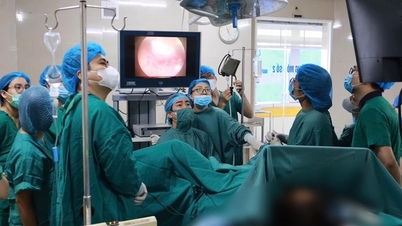
On October 15th, Dr. Nguyen Phu Huu (Deputy Head of the Department of Gastrointestinal Surgery, Binh Dan Hospital), a specialist in gastroenterology, stated that surgery on an 89-year-old patient with stage 3 cancer and severe malnutrition was a significant challenge. The doctors held interdisciplinary consultations and prepared meticulously to perform the surgery, in response to the patient's resilience and trust.
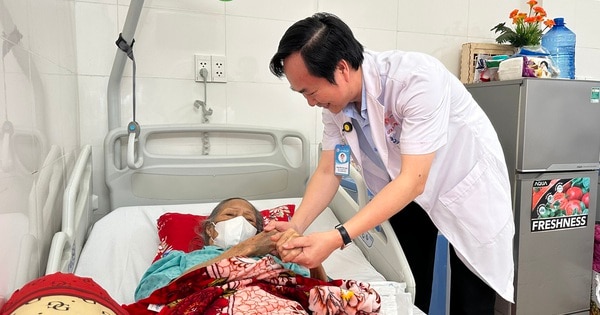
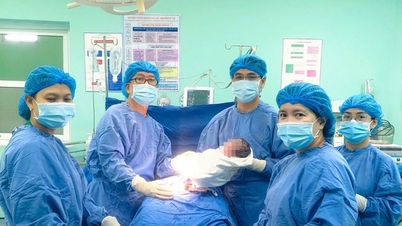
The patient thanked the doctor before being discharged.
After surgery, patients can have bowel movements naturally.
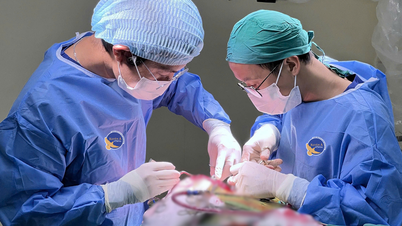
Thanks to the efforts of the surgical team, Mr. Q.'s 120-minute surgery was a complete success. The tumor was completely removed, the lymph nodes were quickly excised, and most importantly, the healthy tissues in the patient's abdominal cavity were preserved. After removing approximately 40 cm of the right colon containing the tumor, the surgeons removed the lymph nodes. Robotic surgery also allowed the doctors to restore gastrointestinal continuity in a single operation. This means that the two ends of the bowel segment were connected accurately and conveniently, instead of having to perform the procedure in two separate surgeries. This ensured the patient's ability to defecate naturally without the need for an artificial anus in the abdominal wall. This is very significant for the quality of life of the patient and their family.
After surgery, Mr. Q. was cared for in the Intensive Care Unit of the Gastrointestinal Surgery Department and began eating and drinking again on the third postoperative day. The patient continued to receive nutritional care and physical therapy to help him move around as soon as possible after surgery.
The abdominal ultrasound performed on the 7th postoperative day showed a clean abdominal cavity with no fluid. The patient was discharged on the 10th postoperative day.
Sharing with the doctor before being discharged, Mrs. Q. said: "I felt tired right after the surgery, but it gradually subsided, and now I feel healthy. Thank you, doctor, for giving me a second chance at life."
Source: https://thanhnien.vn/tphcm-phau-thuat-robot-tri-ung-thu-dai-trang-giai-doan-3-cho-cu-ba-89-tuoi-185241015163701019.htm



















![[Image] Close-up of the newly discovered "sacred road" at My Son Sanctuary](/_next/image?url=https%3A%2F%2Fvphoto.vietnam.vn%2Fthumb%2F1200x675%2Fvietnam%2Fresource%2FIMAGE%2F2025%2F12%2F13%2F1765587881240_ndo_br_ms5-jpg.webp&w=3840&q=75)























































Comment (0)