

 |
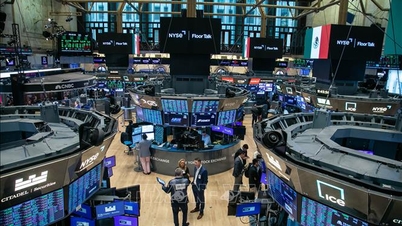
| Positive data raises expectations of Fed rate cut, Wall Street maintains cautious rally |
At the end of the session, the S&P 500 increased 13.28 points (0.2%) to 6,870.40, less than 1% away from the record high set in October. The index even reached the peak of the session before narrowing the gain.
The Dow Jones Industrial Average rose 104.05 points, or 0.2%, to 47,954.99, while the Nasdaq Composite advanced 72.99 points, or 0.3%, to 23,578.13. Small-cap stocks were less positive, with the Russell 2000 down 0.4%, reflecting that money has not spread strongly to riskier stocks.
For the week, the S&P 500 rose 0.31%, the Nasdaq rose 0.91% and the Dow Jones rose 0.5%, marking the second consecutive weekly gain for all three indexes.
The main driver of the market was the report on the personal consumption expenditures (PCE) index, the Fed's preferred inflation measure. The latest report showed a moderate increase, consistent with the goal of controlling prices and played an important role in reinforcing expectations of a 0.25 percentage point rate cut by the Fed at its upcoming meeting.
According to CME's FedWatch tool, the market is pricing in an 87.2% chance of the Fed taking such a step, up sharply from below 30% two weeks ago.
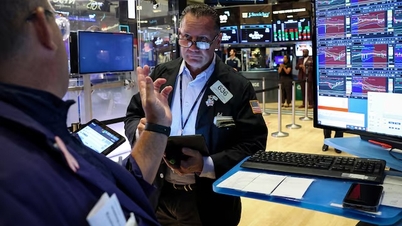
“All eyes will be on the Fed meeting on Wednesday. The odds of a rate cut are high, but what the market is looking for is not just the decision, but the policy message going forward,” said Michael Sheldon, vice president and senior portfolio manager at Washington Trust Wealth Management.
Investors are also assessing delayed economic data following the 43-day government shutdown, with sub-indices on consumption and labor drawing particular attention as they directly influence the Fed's decision.
The standout was Ulta Beauty, which jumped 12.7% after raising its full-year revenue and profit forecast, bolstering its outlook for the holiday shopping season. Retailers were generally positive, with Victoria's Secret & Co. also rising after reporting strong results.
The media services sector led the S&P 500, rising nearly 1% to a new high. Notably, Warner Bros. Discovery rose as much as 6.3% after Netflix agreed to buy its TV-studio-streaming unit for $72 billion, ending a weeks-long acquisition race. Netflix shares, however, fell 2.9%, while rival Paramount Skydance plunged nearly 10%.
On the other hand, the health care index weakened after the vaccine advisory panel withdrew its recommendation for universal hepatitis B vaccination at birth.
In addition to inflation, another positive signal came from the University of Michigan survey, showing that the consumer confidence index increased from 51.0 to 53.3 in December, higher than forecast. This supports expectations of a recovery in spending in the context of the approaching holiday season.
However, although the market recorded a slight increase, liquidity on December 5 only reached 16.2 billion shares, lower than the average of the last 20 days of 17.72 billion shares. The number of stocks declining overwhelmed the stocks increasing on both NYSE and Nasdaq, indicating that the waiting mentality still prevails.
The sudden surge in small stocks in recent weeks has been largely driven by expectations of lower interest rates, according to Jed Ellerbroek of Argent Capital Management: Low-quality, unprofitable, highly leveraged companies are leading the wave, which often happens when the market expects further rate cuts.
While expectations of a rate cut are strengthening markets, experts warn that the Fed remains heavily dependent on upcoming economic data, including: - New inflation index - Labor market data - Fed meeting minutes - Number of unemployment benefit applications |
Any data showing a rebound in inflation or an overheating labor market could prompt the Fed to be more cautious, delaying rate cuts and putting downward pressure on markets.
The trading session on December 5 reflected a “steady but cautious” state on Wall Street. Major indexes rose slightly, inflation supported expectations of interest rate cuts and consumer sentiment improved. However, the divergence of cash flow, especially between large and small capitalization groups, showed that investors were still probing, waiting for clearer signals from the Fed.
In the current context, analysts recommend prioritizing defensive stocks, large capitalization and stable financial foundations, while closely monitoring economic reports next week, which could determine Wall Street's short-term trend.
Source: https://thoibaonganhang.vn/pho-wall-tang-nhe-nho-ky-vong-fed-sap-ha-lai-suat-174726.html
![[Photo] National Assembly Chairman Tran Thanh Man attends the VinFuture 2025 Award Ceremony](/_next/image?url=https%3A%2F%2Fvphoto.vietnam.vn%2Fthumb%2F1200x675%2Fvietnam%2Fresource%2FIMAGE%2F2025%2F12%2F05%2F1764951162416_2628509768338816493-6995-jpg.webp&w=3840&q=75)




![[Photo] 60th Anniversary of the Founding of the Vietnam Association of Photographic Artists](/_next/image?url=https%3A%2F%2Fvphoto.vietnam.vn%2Fthumb%2F1200x675%2Fvietnam%2Fresource%2FIMAGE%2F2025%2F12%2F05%2F1764935864512_a1-bnd-0841-9740-jpg.webp&w=3840&q=75)
































































































Comment (0)