

Traffic police are allowed to use their own cameras to record the control activities of the task force. Controls conducted in the evening or at night must be illuminated and adequately lit.
Circular No. 73/2024 of the Ministry of Public Security, regulating the patrol, control, and handling of violations of laws on road traffic order and safety by traffic police, will soon take effect from January 1, 2025.
Article 6 of this circular stipulates the organization of forces directly conducting overt patrols and inspections on road traffic routes.
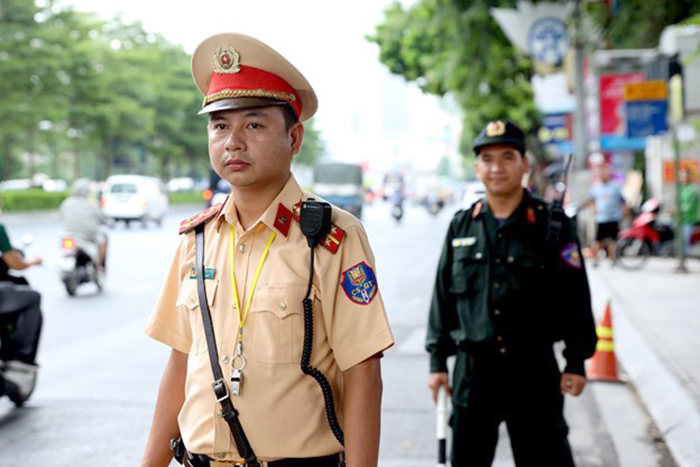
Traffic police checkpoints must be located in open areas with unobstructed views.
Specifically, traffic police have the right to deploy forces at a point on the road or at a police station according to a plan issued by the competent authority.
The checkpoint must be located at a point on a road, with the chosen location being a wide, open road surface that does not obstruct visibility and complies with the regulations of the law on road traffic order and safety, road law, and related laws.
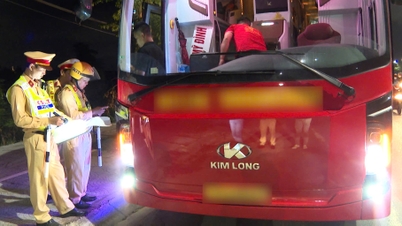
When deploying traffic control forces at a point on the road, traffic police use equipped cameras to record the control activities of the task force. Controls conducted in the evening or at night must be illuminated and adequately lit.
Furthermore, Article 14 of Circular No. 73/2024 clearly states that when the vehicle to be inspected has stopped in the designated position, the traffic police officer shall stand in a suitable and safe position and perform the following steps:
The driver is requested to take safety precautions and get out of the vehicle.
Perform the salute according to the regulations of the People's Public Security (except in cases where it is known in advance that the person is committing an act with signs of a crime, is caught in the act of committing a crime, or is subject to an arrest warrant or wanted notice).
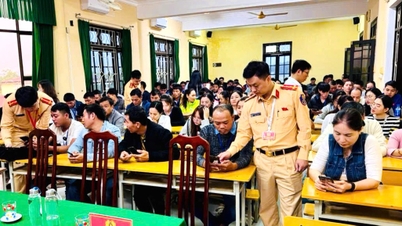
When interacting with traffic violators, traffic police officers maintain proper posture, etiquette, and demeanor, and conduct themselves appropriately. They inform the driver of the reason for stopping the vehicle for inspection and control; the purpose of the inspection; and request the driver to present relevant documents.
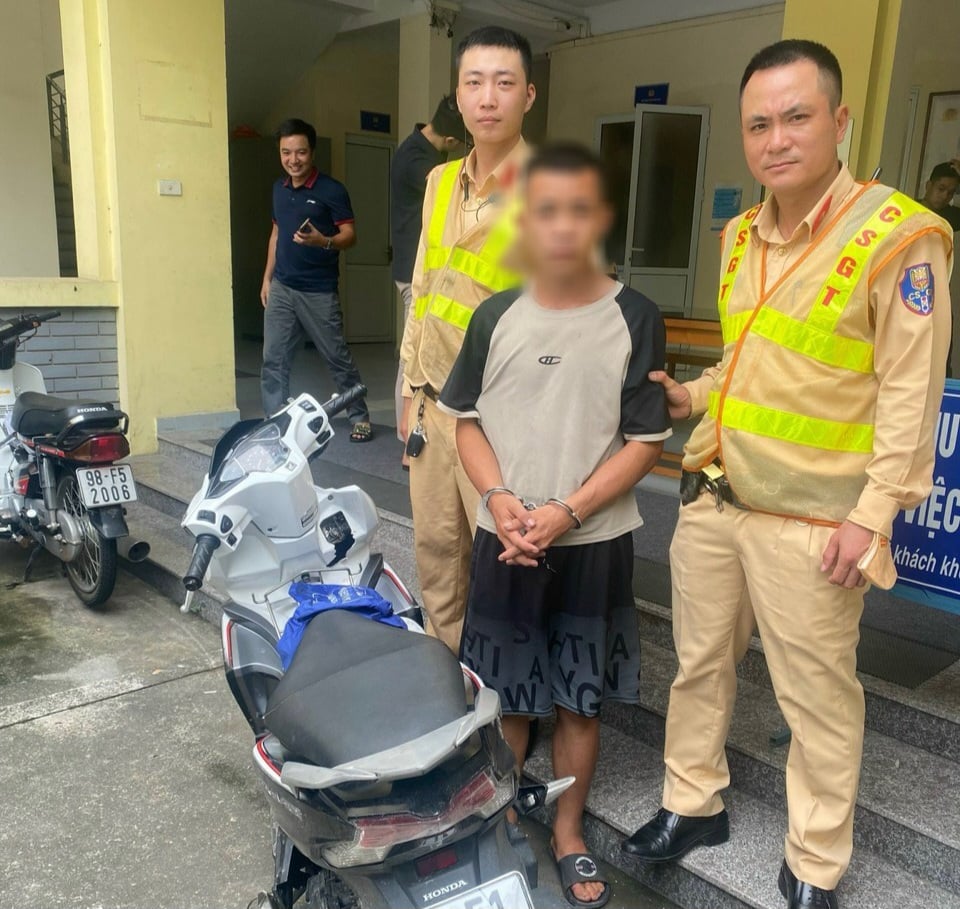
Hanoi traffic police have uncovered a suspected illegal activity.
Upon completion of the inspection, the officer on duty reports the results to the team leader, informs the driver and other relevant parties of the inspection results, any violations (if any), and the corrective measures.
If there are grounds to believe that a person, vehicle, or object is concealing evidence, means, or documents used to commit an administrative violation, then a search of that person, vehicle, or object may be conducted in accordance with the law on handling administrative violations.
In cases where signs of criminal activity are detected, traffic police will act in accordance with the provisions of the law on criminal procedure.
Source: https://www.baogiaothong.vn/quy-dinh-sap-ap-dung-doi-voi-csgt-khi-lap-chot-kiem-soat-xu-ly-vi-pham-192241201154300943.htm

![[Image] Central Party Office summarizes work in 2025](/_next/image?url=https%3A%2F%2Fvphoto.vietnam.vn%2Fthumb%2F1200x675%2Fvietnam%2Fresource%2FIMAGE%2F2025%2F12%2F18%2F1766065572073_vptw-hoi-nghi-tong-ket-89-1204-jpg.webp&w=3840&q=75)


















































































Comment (0)