

Irrigation planning in the Mekong Delta needs to be more responsive to uncertainties.
The irrigation planning process should not only address urgent problems but also create groundbreaking infrastructure, laying the foundation for long-term strategies that address multiple objectives in the future.
Challenges from irrigation infrastructure
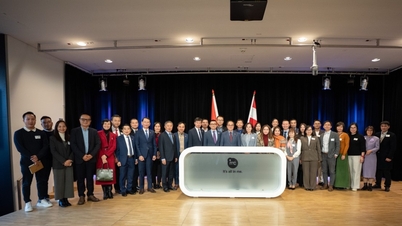
Recently, Deputy Minister of Agriculture and Rural Development Nguyen Hoang Hiep chaired the Workshop on Irrigation Planning for the Mekong River Basin for the period 2022-2030, with a vision to 2050 (hereinafter referred to as the Plan).
The workshop aimed to gather opinions from localities, relevant agencies, experts, etc., to ensure the planning is consistent with reality, meets the socio -economic development requirements of the provinces in the Mekong Delta, and addresses the restructuring needs of the agricultural sector.
 |
| Workshop on Irrigation Planning for the Mekong River Basin, 2022-2030, with a vision to 2050. |
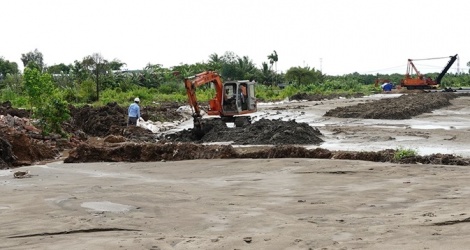
Currently, the irrigation infrastructure in the Mekong Delta provinces still has many limitations. In particular, many flood control embankments and dikes do not meet flood prevention standards, and the risk of flooding remains frequent.
At the same time, the lack of drainage pumping stations has significantly affected agricultural production, especially in low-lying areas prone to flooding and poor drainage, such as Long My and Vi Thuy in Hau Giang province; and Nga Nam, Thanh Tri, and Chau Thanh in Soc Trang province…
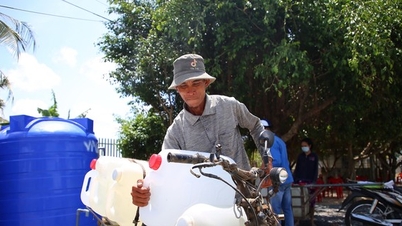
According to Mr. Do Duc Dung, Director of the Southern Irrigation Planning Institute (the planning consulting unit), the irrigation systems in the Mekong Delta are still incomplete, the inland canal system is not dredged regularly, and irrigation pumping stations have not been invested in… therefore, water shortages for irrigation during the dry season still occur.
Meanwhile, urban areas such as Ca Mau, Can Tho, Vinh Long, Bac Lieu, Tan An, etc., have not yet received investment in flood control systems, and flooding is becoming increasingly severe. Although the Long Xuyen Quadrangle has invested in key flood control structures, these are still not completely closed (some canals connecting to the Hau River remain open), thus not fully capable of proactively controlling flooding inland.
Currently, the Mekong Delta region is shifting from a production-based agricultural mindset to an agricultural-based economy. Therefore, irrigation must both ensure a proactive water supply to serve socio-economic needs in all adverse situations, and be linked to living spaces, cultural spaces, and tourism...
“In the face of challenges and strategic planning until 2050, the vision for irrigation planning needs to be long-term, proposing steps and actions to increase proactive responses to the region's uncertainties such as climate change, water use by upstream countries, changes and advancements in science and technology, and market fluctuations…,” Mr. Dung shared.
Develop specific content.
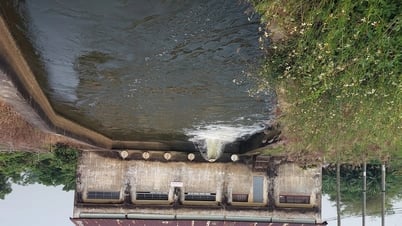
According to the Southern Irrigation Planning Institute, a new feature of this plan is the initial formation of large-scale, inter-regional water control systems (right bank of the Hau River, left bank of the Tien River, etc.). Large sluice gates controlling river mouths are also being calculated and evaluated more thoroughly for operational efficiency (Vam Co and Ham Luong sluice gates), serving as a basis for proposing investment and construction.
Furthermore, due to the practical needs of aquaculture requiring diluted freshwater, or shrimp-rice farming areas needing freshwater support for rice crops, this plan has proposed two water transfer systems for the Southern Ca Mau region and the area south of National Highway 1A in Bac Lieu.
Regarding water supply for aquaculture, this plan proposes a model of supplying seawater from offshore using pumping stations and pipelines directly to the farming areas, while the canal system will only serve the purpose of drainage (a completely separate supply and drainage model).
Some areas with relatively favorable irrigation system conditions will pilot the arrangement and completion of the system of structures (sluices, canals), and operate the system to separate water supply and drainage (the area south of National Highway 1 in Bac Lieu, the coastal area of Vinh Chau in Soc Trang, and the An Minh - An Bien area in Kien Giang).
 |
There is a need for multi-purpose, multi-valued irrigation planning linked to cultural preservation, services, tourism, etc. |
The solution for the remaining areas is to invest in closed-loop irrigation systems to prevent flooding and manage drainage; the production model will be saltwater aquaculture; dredging of main canals will be intensified to increase water exchange and limit the impact of excessively saline water due to evaporation from the fields; and the enclosed areas will proactively store rainwater in the canal system to support additional production.
Action needs to be taken quickly to cope with the extreme weather.
According to representatives from provinces and cities in the Mekong Delta region, implementing the Mekong River Basin Irrigation Plan for the period 2022-2030, with a vision to 2050, is necessary. However, the plan's progress needs to be accelerated, as climate change has a significant impact on the economy and society of each locality.
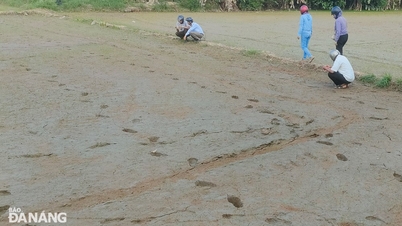
According to Mr. Pham Tan Dao, Head of the Irrigation Department of Soc Trang province, many areas in the locality are flooded due to uneven low-lying areas and inconsistent salinity intrusion times, making it difficult for the locality to control the situation and hindering agricultural development for the people. Therefore, Soc Trang hopes to plan the construction of sluices and freshwater reservoirs in the near future.
Agreeing with the opinion, Mr. Van Huu Hue, Deputy Director of the Department of Agriculture and Rural Development of Vinh Long province, shared: “Given the current climate change situation, Vinh Long province is considering exploiting the Mang Thit River, with an area of over 61 hectares, as a freshwater reservoir to serve agriculture, daily life, transportation, and economic development… by building locks at both ends of the river and implementing it after 2030.”
Furthermore, given the increasing saline intrusion on major rivers combined with high tides encroaching deep into inland canals and ditches, causing many difficulties for the lives and production of people in Ben Tre, Mr. Nguyen Minh Canh, Vice Chairman of the Ben Tre Provincial People's Committee, pointed out that the most serious challenges and difficulties currently are the rising sea levels, the use of freshwater upstream in some countries, and the increasingly severe saline intrusion.
“The period of 2015-2016 was considered a record-breaking salinity intrusion, occurring only once every hundred years. However, after four years, this salinity intrusion occurred again with even greater severity. After another four years, the salinity intrusion situation similar to 2015-2016 occurred, and the future developments are difficult to predict,” Mr. Canh shared.
The scarcity of freshwater and increased reliance on groundwater are leading to land subsidence and landslides. Therefore, without more fundamental solutions, Ben Tre in particular and the provinces in the Southwest region will face even greater impacts by 2050 or 2100.
Therefore, Mr. Canh believes that planning for several large reservoirs would be difficult due to challenges in land acquisition and water transportation. He suggests that having smaller reservoirs to serve production and daily life in each locality would provide greater flexibility.
According to Mr. Nguyen Hoang Hiep, Deputy Minister of Agriculture and Rural Development, the development plan for the Mekong Delta region is now complete. Therefore, the challenge lies in addressing the fundamental conflicts and difficulties faced by each locality in the plan.
In particular, this plan must be integrated, consistent, and synchronized with previous plans approved by the Prime Minister and the Ministry of Agriculture and Rural Development (national plans, regional plans, specialized plans for irrigation and national disaster prevention and mitigation; and local plans).


![[Photo] Closing Ceremony of the 10th Session of the 15th National Assembly](/_next/image?url=https%3A%2F%2Fvphoto.vietnam.vn%2Fthumb%2F1200x675%2Fvietnam%2Fresource%2FIMAGE%2F2025%2F12%2F11%2F1765448959967_image-1437-jpg.webp&w=3840&q=75)
![[Photo] Prime Minister Pham Minh Chinh holds a phone call with the CEO of Russia's Rosatom Corporation.](/_next/image?url=https%3A%2F%2Fvphoto.vietnam.vn%2Fthumb%2F1200x675%2Fvietnam%2Fresource%2FIMAGE%2F2025%2F12%2F11%2F1765464552365_dsc-5295-jpg.webp&w=3840&q=75)

































































Comment (0)