

DNO - On June 6th, according to information from the Department of Agriculture and Rural Development, based on reports from localities and units, 142.15 hectares of summer-autumn rice crops are currently affected by saline water contamination at pumping stations. In many areas, the percentage of rice plants that have died ranges from 30-70%.
Video : HOANG HIEP
According to reports, over the past two weeks, the Yen River downstream of the An Trach dam and the Tuy Loan River have been severely affected by saltwater intrusion from the Cam Le River.
Several pumping stations along the Yen River, such as Thach Bo and Cam Toai Dong, are severely affected by salinity. In particular, the Tuy Loan pumping station, which draws water from the Tuy Loan River upstream of the Giang Bridge, has also been affected by salinity and has had to stop pumping for the past week.
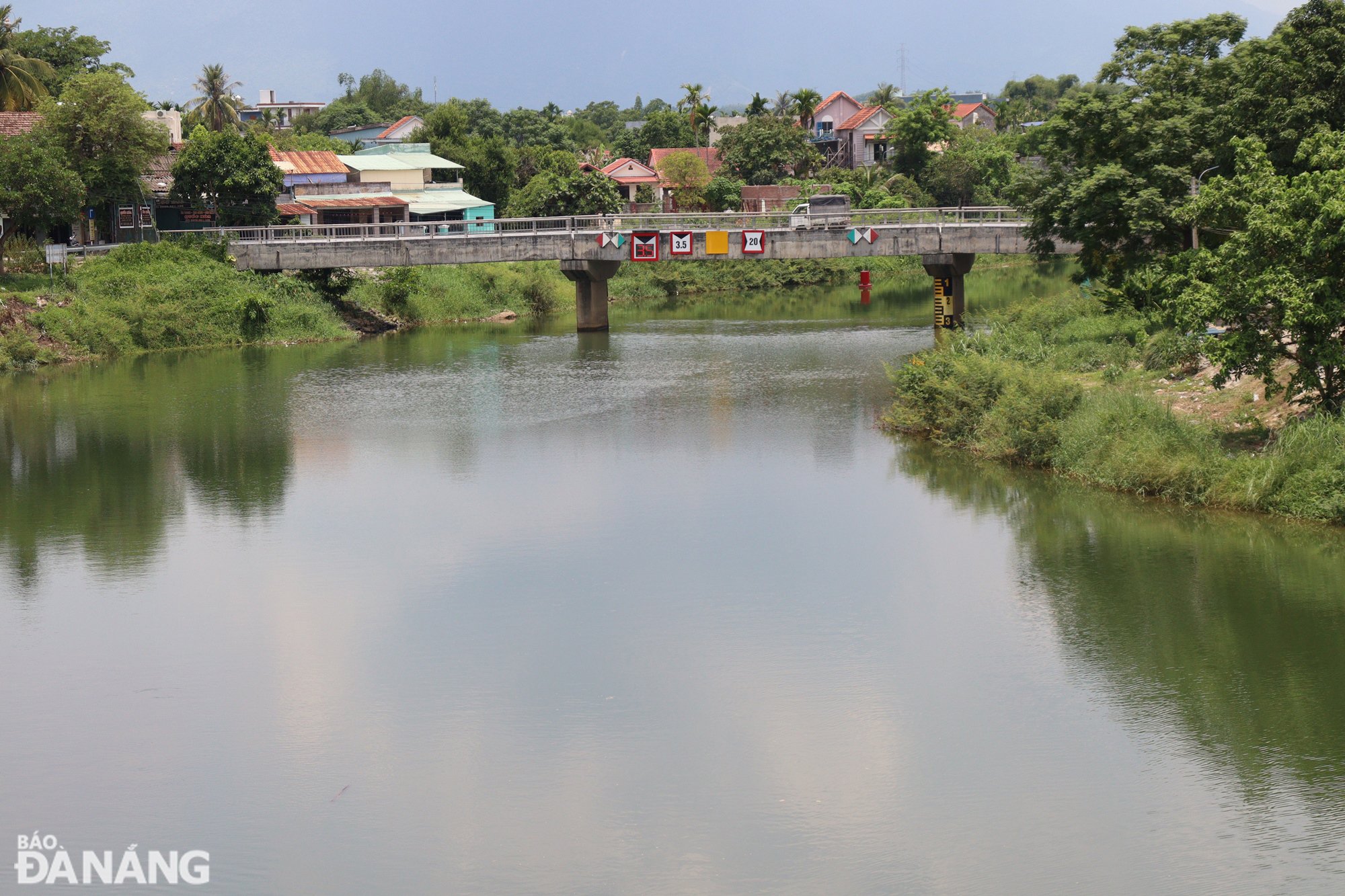 |
| Salinity has intruded deep into the Tuy Loan River. Photo: HOANG HIEP |
According to statistics from the Department of Agriculture and Rural Development, since May 21, 2024, many areas of summer-autumn rice crops have suffered from leaf tip burn, root rot, and sprout rot due to hot weather combined with heavily saline and acidic irrigation water.
Some rice fields have been destroyed and need to be replanted, while other areas are experiencing stunted growth and development.
Local authorities and units have actively coordinated with farmers to implement various solutions to overcome the situation, such as measuring salinity levels and mobilizing pumps to extract low-salinity water from the river surface; pumping water from lakes, canals, and drainage ditches, etc.
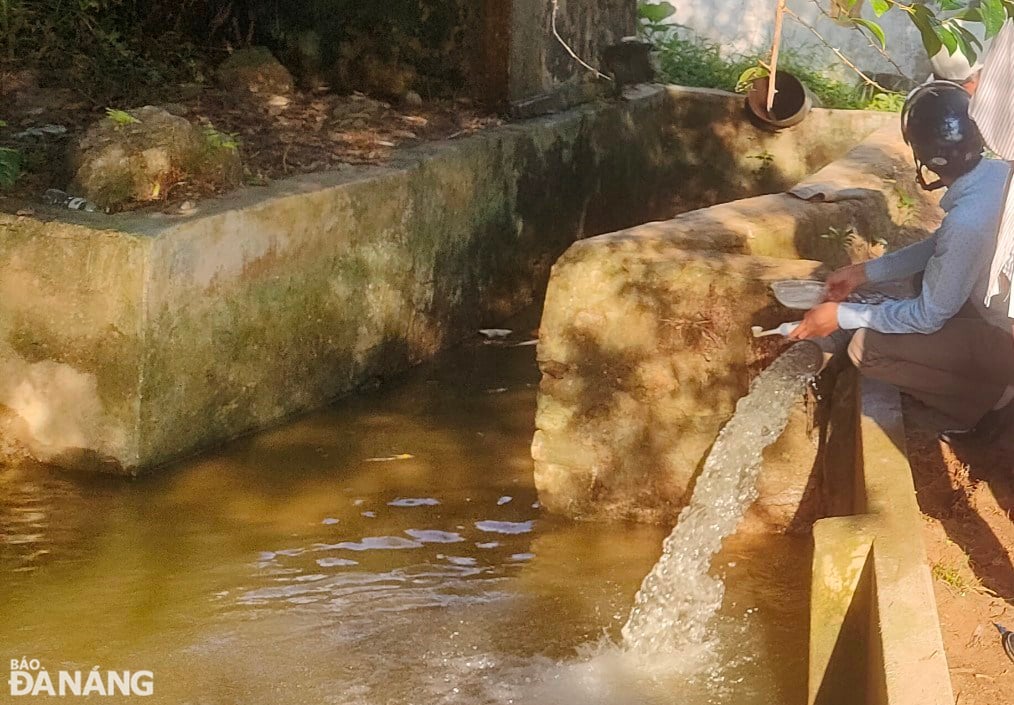 |
| Despite continuously monitoring salinity and installing additional pumps to extract less saline surface water, the amount of water pumped is very limited due to salt contamination. Photo: HOANG HIEP |
However, currently, many areas of summer-autumn rice crops are still affected, with some areas experiencing high rates of crop failure.
Specifically, in Hoa Phong commune, 14.1 hectares of rice fields are currently affected by salinity (11.1 hectares in Cam Toai Dong village and 3 hectares in Thach Bo village). Of these, 9.6 hectares have a rice mortality rate of 30-70%, and 4.5 hectares have a mortality rate below 30% (3 hectares in Cam Toai Dong are still being monitored due to lack of irrigation water; 1.5 hectares in Thach Bo village are recovering).
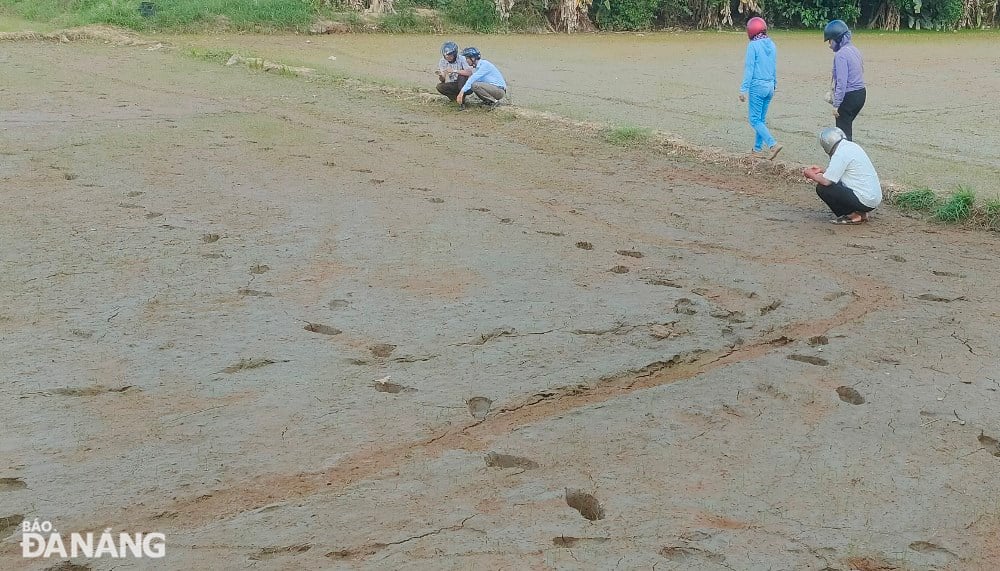 |
| Large areas of summer-autumn rice crops in Hoa Phong commune (Hoa Vang district) have been affected due to saline contamination of irrigation water. Photo: HOANG HIEP |
In Hoa Tien commune, 20.75 hectares of rice fields have been affected by salinity. Of this, 10 hectares have been replanted (1.5 hectares in La Bong village, 7.5 hectares in Duong Son, and 1 hectare in Yen Ne), and the rice plants are growing steadily thanks to irrigation from the Yen Ne pumping station; 10.75 hectares are being cared for and thinned. However, currently, the fields in Cam Ne village are experiencing drought and water shortage, with salinity levels measured at 1.04-3.3‰; the fields in Duong Son village have been ensured irrigation, with salinity levels measured at 0.07-1.03‰.
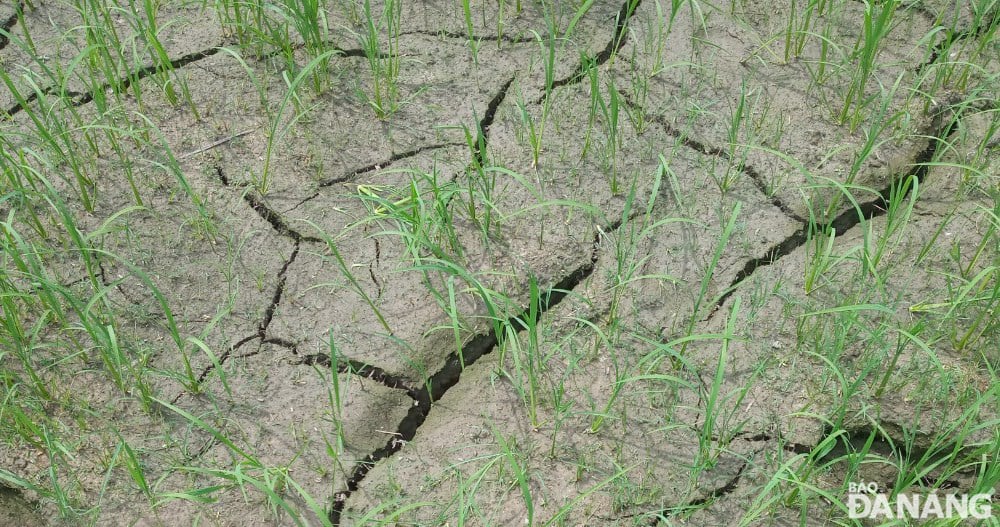 |
| Some rice fields are experiencing water shortages due to the heatwave and saline contamination of irrigation water sources. Photo: HOANG HIEP |
Hoa Nhon commune has 80 hectares of rice affected by salinity. Of these, 15.2 hectares cannot be re-sown due to salinity of the water source and the delay in the crop schedule (11.5 hectares have a death rate of more than 50% in Hoa Khuong Dong, Hoa Khuong Tay, and Phuoc Thai villages); 3.7 hectares in Gia and Roc Tiet fields have stopped sowing because the irrigation water source has a salinity of 1.6-2.9‰; the remaining 64.8 hectares with a death rate of less than 30% can be remedied, but this area has dried up.
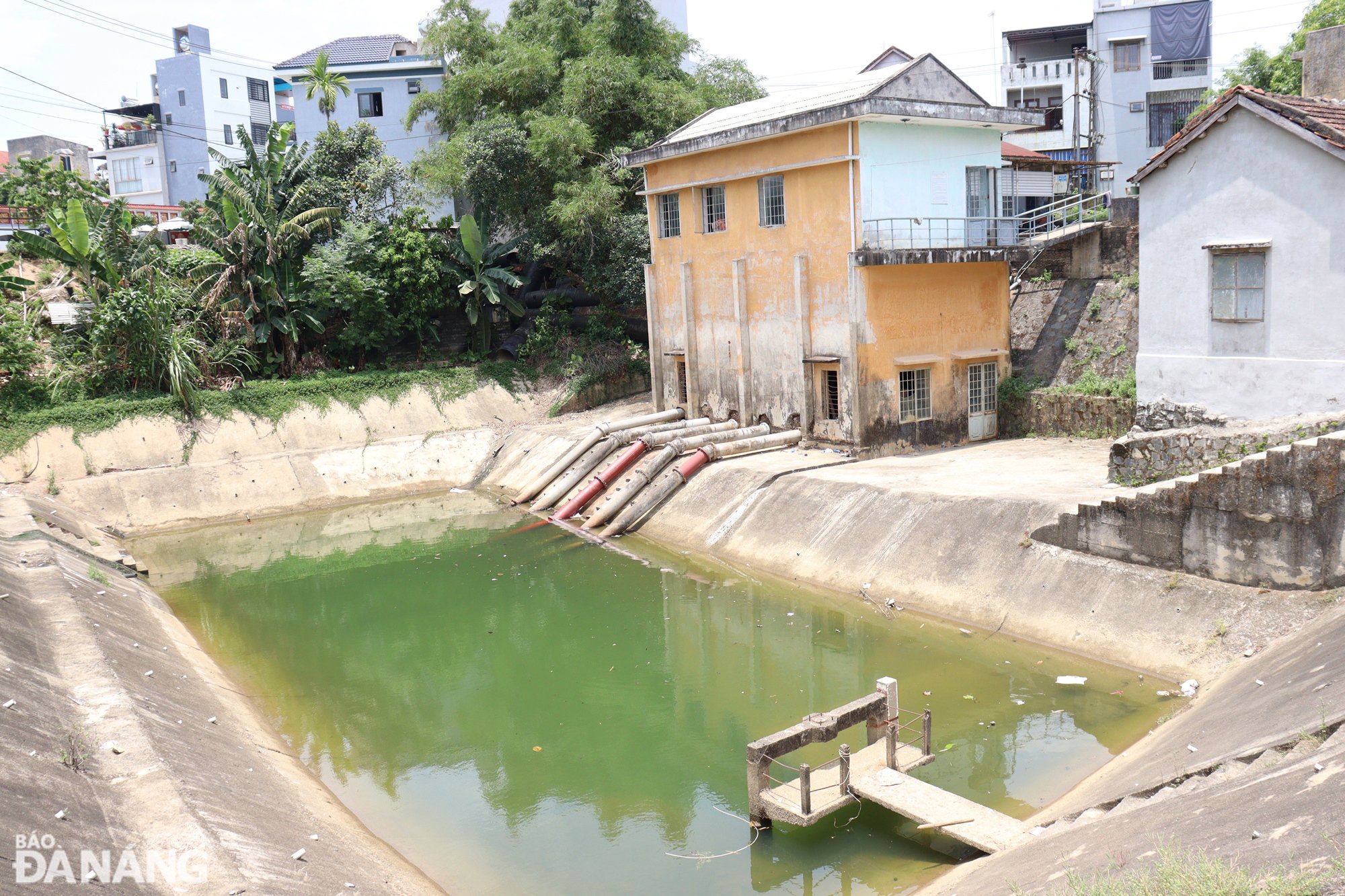 |
| The irrigation water source at the Tuy Loan pumping station is contaminated with salt, causing water shortages for many rice fields in Hoa Nhon commune (Hoa Vang district) and Hoa Tho Tay ward (Cam Le district). Photo: HOANG HIEP |
In Hoa Tho Tay ward (Cam Le district), 27.3 hectares of rice fields have been affected, with 10-70% of the rice plants dying and growing poorly due to saline contamination of irrigation water (salinity in the fields ranges from 1.4-3‰) in residential areas 5, 6, 7, 8, and 9. For about 7-10 days now, many areas have suffered from water shortages, causing the rice fields to dry up and crack.
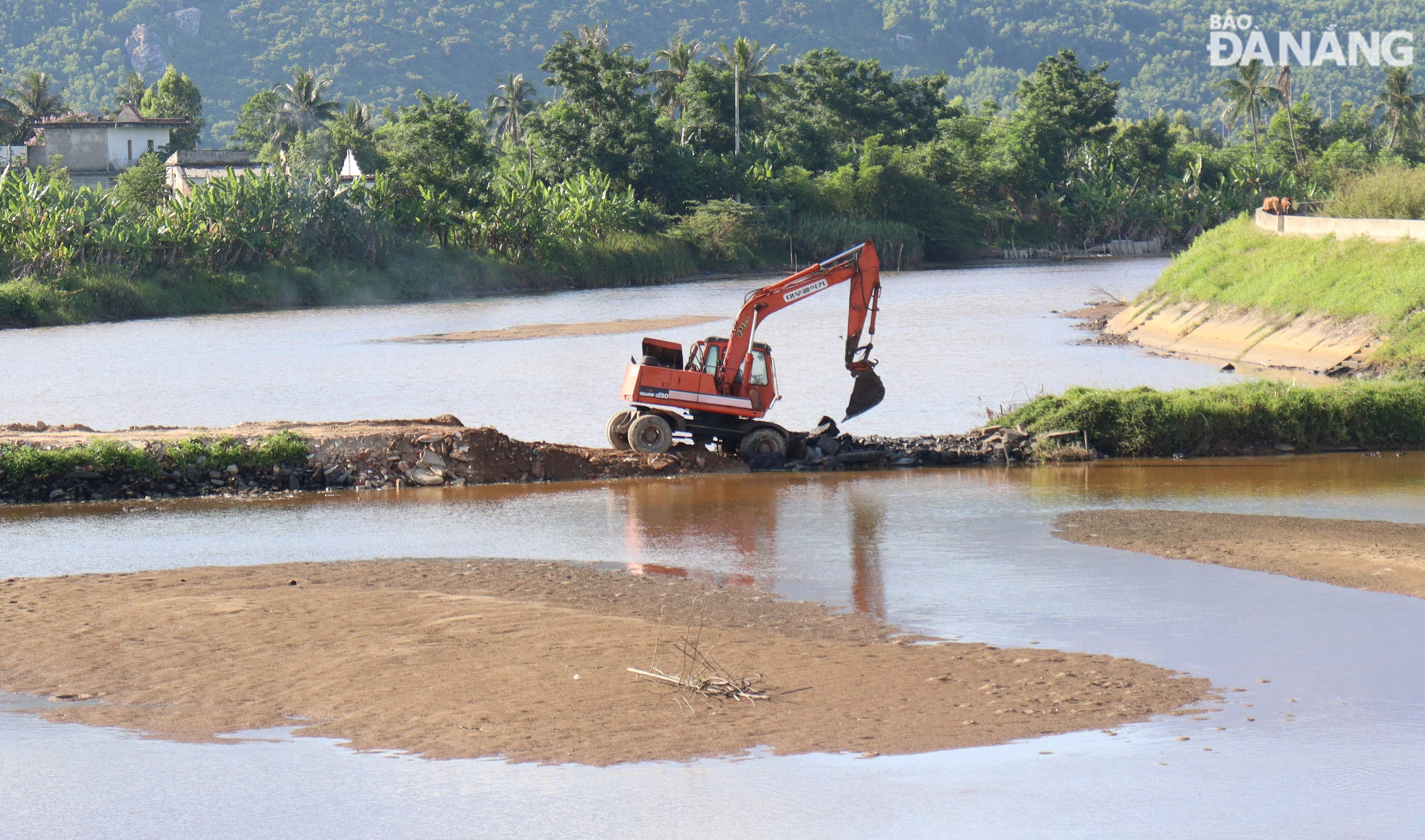 |
| Da Nang Water Resources Exploitation Company Limited mobilized mechanical equipment to build a dam to prevent saltwater intrusion and retain freshwater at the end of the Hoa Lien flood drainage canal (Hoa Vang district) to ensure irrigation water for the summer-autumn rice crop. Photo: HOANG HIEP |
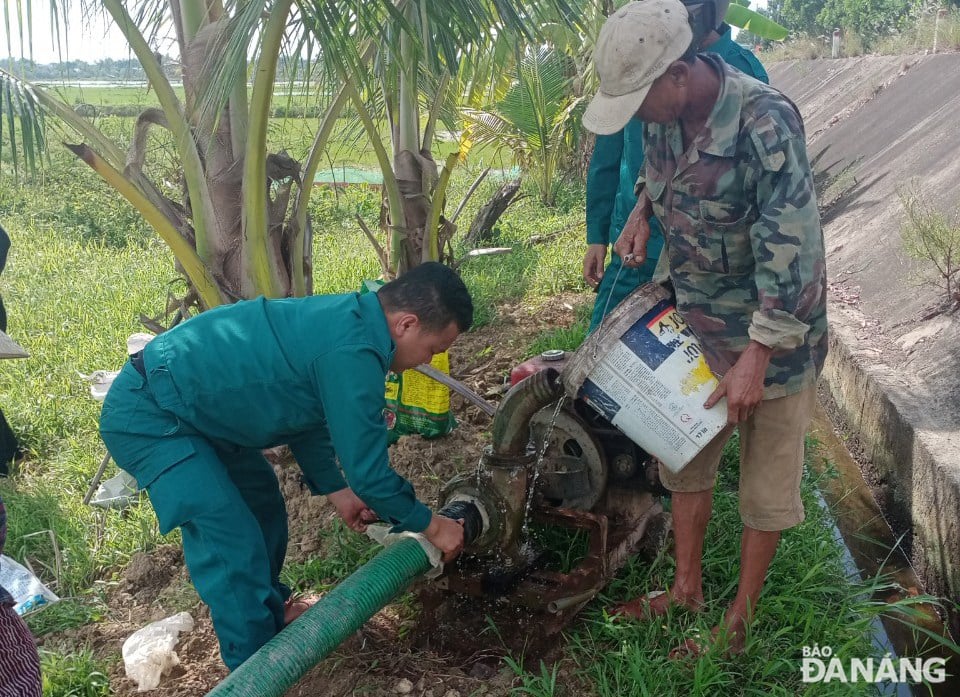 |
| The units coordinated with farmers to mobilize pumps to "save" the rice crop. Photo: HOANG HIEP |
HOANG HIEP
Source



![[Photo] Closing Ceremony of the 10th Session of the 15th National Assembly](/_next/image?url=https%3A%2F%2Fvphoto.vietnam.vn%2Fthumb%2F1200x675%2Fvietnam%2Fresource%2FIMAGE%2F2025%2F12%2F11%2F1765448959967_image-1437-jpg.webp&w=3840&q=75)

![[Photo] Prime Minister Pham Minh Chinh holds a phone call with the CEO of Russia's Rosatom Corporation.](/_next/image?url=https%3A%2F%2Fvphoto.vietnam.vn%2Fthumb%2F1200x675%2Fvietnam%2Fresource%2FIMAGE%2F2025%2F12%2F11%2F1765464552365_dsc-5295-jpg.webp&w=3840&q=75)







































![[OFFICIAL] MISA GROUP ANNOUNCES ITS PIONEERING BRAND POSITIONING IN BUILDING AGENTIC AI FOR BUSINESSES, HOUSEHOLDS, AND THE GOVERNMENT](https://vphoto.vietnam.vn/thumb/402x226/vietnam/resource/IMAGE/2025/12/11/1765444754256_agentic-ai_postfb-scaled.png)





































Comment (0)