

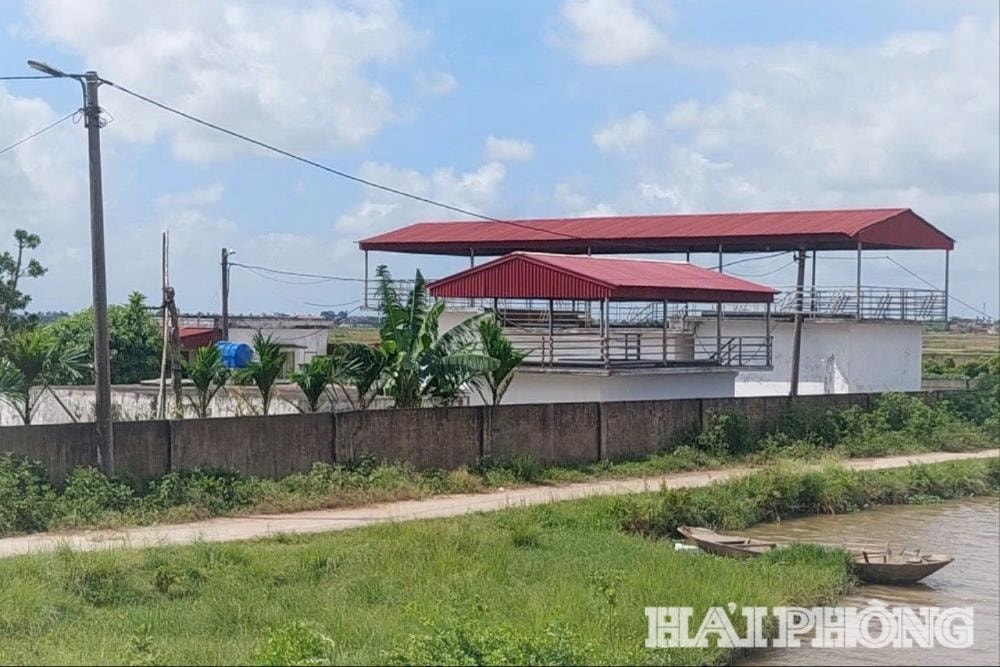
No guarantee it will still work.
The Thang Thuy water plant, located in Vinh Thinh commune, was scheduled to cease operations in 2024. However, nearly two years later, the plant is still operating, supplying water to a portion of the population in Vinh Thinh commune.
Similarly, in other communes and wards across the city, many rural water supply projects that are supposed to cease operation but do not meet quality standards are still operating normally. For example, An Phong ward has five water treatment plants that were supposed to stop operating in 2024, but to date, nothing has changed.
According to information from the Department of Agriculture and Environment, the delay is due to many water treatment plant owners hesitating and deliberately prolonging the operating time. On the one hand, the cooperation in transferring business rights between the water supply facility owner and the receiving entity has not yet finalized the plans and conditions for implementation and has not reached a common ground. In addition, the assessment of assets and the mobilization of socialized funding to compensate the investing enterprises have been slow, costly, and lacking in coordination. The propaganda and mobilization efforts of local authorities have not been sufficiently vigorous in recent times.
According to Mr. Doan Van Ban, Deputy Head of the Water Resources Management and Disaster Prevention and Control Sub-Department (Department of Agriculture and Environment), in addition to the above difficulties, some localities have reported agreement on the transfer of service areas. However, in reality, the participating parties have not yet agreed on the transfer value and implementation time. Furthermore, the determination of the remaining asset value of water treatment plant management enterprises that have made additional investments has not been implemented uniformly by localities, and some localities have not yet implemented it.
The delay in closing down rural water treatment plants significantly impacts the implementation of tasks and solutions for providing clean water to rural areas as outlined in Resolution No. 15 of the Standing Committee of the City Party Committee, affecting the quality of drinking water supplied to local people.
According to the Department of Agriculture and Environment, as of the end of July 2025, 88 out of 161 water supply facilities in the eastern part of Hai Phong city had ceased operation, mainly in the districts of Vinh Bao, Kien Thuy, Thuy Nguyen, An Lao, and Duong Kinh. Currently, 73 water treatment plants are still in operation.
Of these, more than 50 water treatment plants will continue to be shut down in the near future; 20 water treatment plants that basically meet the requirements in terms of scale, service area, and have good water supply technology and capacity are proposed to be added to the planning, allowing them to operate stably and long-term.
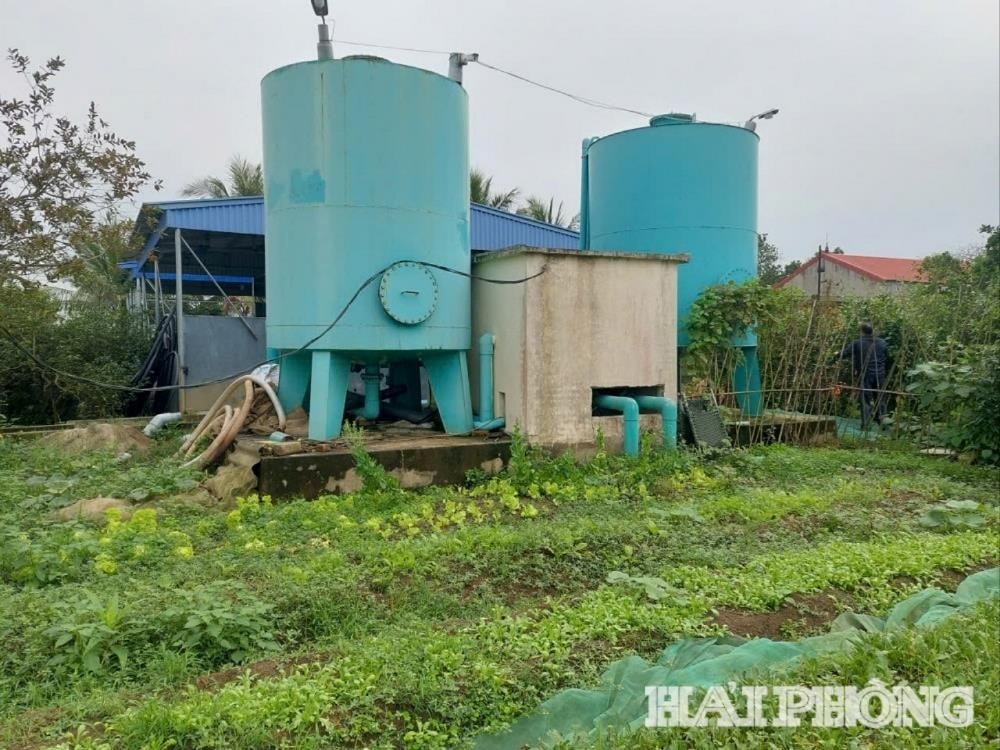
Focus on removing obstacles and accelerating progress.
According to Mr. Pham Duc Duyen, Head of the Water Resources Management and Disaster Prevention and Control Sub-Department (Department of Agriculture and Environment), to ensure the goal of 100% of rural residents having access to clean water for domestic use meeting standards by 2025, the Department of Agriculture and Environment will focus on coordinating with localities and units to overcome difficulties and accelerate progress, striving to cease operation of 53 out of 73 rural water supply projects that do not meet requirements by 2027.
In 2025, the city will require the closure of 15 substandard water treatment plants in Tien Lang district (formerly). The remaining water treatment plants in other localities will continue to be closed in 2026 and 2027.
To achieve this goal, the city requires the People's Committees of communes and wards to terminate water supply service agreements with organizations and individuals providing water supply services in their areas that do not meet standards; to mobilize social resources and allocate funds from the budget to provide temporary water supply to residents during the period of selecting a replacement water supply unit.
For rural clean water infrastructure assets invested with budget funds in water treatment plants that are not in accordance with the planning, consideration should be given to terminating operations, continuing to entrust the management of assets to the commune-level People's Committees, and carrying out asset disposal according to a roadmap that ensures compliance with regulations.
For water treatment plants currently operating, the quality meets the standards.
The water treatment plants meet the standards but must cease operation before 2030 according to the city's water supply system development plan. The current water treatment plant management unit is encouraged to transfer the water supply service business rights to a water treatment plant management enterprise that ensures quality, as updated in the city's water supply plan, or to purchase water through a master meter from water treatment plants that meet quality standards to continue providing water supply services in the area.
In addition, localities continue to encourage businesses (including both state-owned and private enterprises) managing large-scale water treatment plants, which have been updated in the planning, to acquire service areas from plants that are not in line with the plan in order to expand their service areas and replace alternative water sources. They are also accelerating the updating and supplementation of the water supply system development plan to attract businesses to invest in upgrading and expanding service areas. The Department of Agriculture and Environment is strengthening its monitoring of the implementation progress in localities and reporting to the City People's Committee on the progress. Furthermore, it is proposing that the city adjust Resolution 15 to suit the actual situation.
TIEN DATSource: https://baohaiphong.vn/quyet-liet-xoa-bo-nha-may-nuoc-khong-bao-dam-chat-luong-o-nong-thon-518825.html

![[Photo] Closing Ceremony of the 10th Session of the 15th National Assembly](/_next/image?url=https%3A%2F%2Fvphoto.vietnam.vn%2Fthumb%2F1200x675%2Fvietnam%2Fresource%2FIMAGE%2F2025%2F12%2F11%2F1765448959967_image-1437-jpg.webp&w=3840&q=75)
![[Photo] Prime Minister Pham Minh Chinh holds a phone call with the CEO of Russia's Rosatom Corporation.](/_next/image?url=https%3A%2F%2Fvphoto.vietnam.vn%2Fthumb%2F1200x675%2Fvietnam%2Fresource%2FIMAGE%2F2025%2F12%2F11%2F1765464552365_dsc-5295-jpg.webp&w=3840&q=75)







































![[OFFICIAL] MISA GROUP ANNOUNCES ITS PIONEERING BRAND POSITIONING IN BUILDING AGENTIC AI FOR BUSINESSES, HOUSEHOLDS, AND THE GOVERNMENT](https://vphoto.vietnam.vn/thumb/402x226/vietnam/resource/IMAGE/2025/12/11/1765444754256_agentic-ai_postfb-scaled.png)













































Comment (0)