

 |
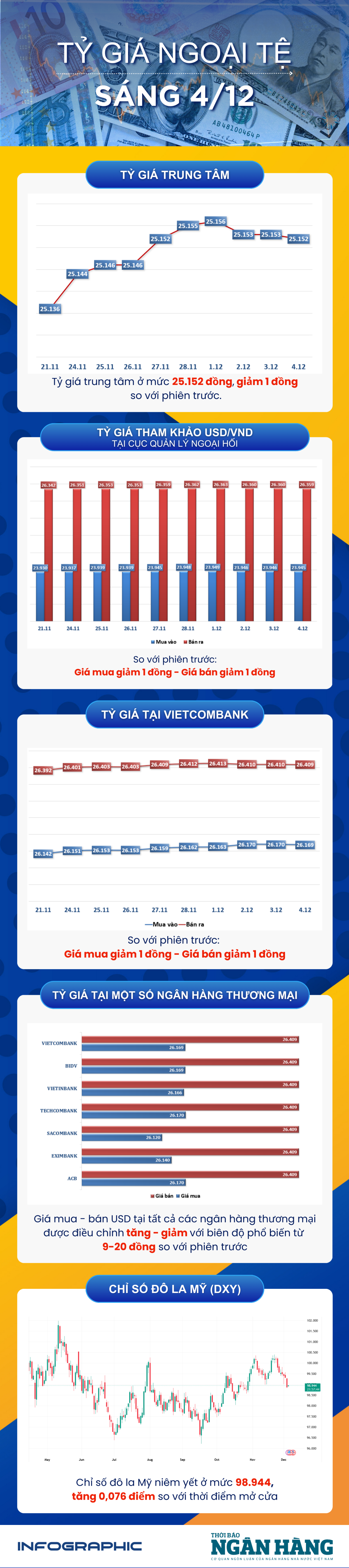
The dollar weakened this morning after a series of weak economic data reinforced the possibility of a rate cut by the US Federal Reserve next week, helping the yen recover and pushing the euro to its highest level in nearly seven weeks.
Investors are also considering the possibility that White House economic adviser Kevin Hassett will take over as Fed chairman after Jerome Powell's term ends in May next year.
Mr Hassett is expected to push for more rate cuts.
US President Donald Trump said this week that he would announce his choice for Powell's successor early next year, extending the search process by months, although he previously said he had "already made up his mind".
Hassett's appointment could put pressure on the dollar, as some bond investors have expressed concerns that he could cut interest rates too aggressively to accommodate Mr Trump's priorities, the Financial Times reported.
The CME FedWatch tool shows the market is pricing in an 89% chance of a 25 basis point rate cut next week, and forecasts a total of 89 basis points of cuts before the end of next year. However, analysts remain skeptical about the depth and length of the upcoming easing cycle.
Given the current resilience of the US economy, investors may be overestimating the scope for the Fed to cut interest rates in the medium term, regardless of this decision, said Thomas Mathews, head of markets for Asia- Pacific at Capital Economics.
“That, I think, will keep the dollar from falling too much,” he said.
However, the US dollar index - which measures the greenback's strength against six major currencies - remained at 98.919 points, and has fallen nearly 9% year-to-date.
More positive data from other economies, signs of wage growth in Japan, plus the possibility of Hassett becoming Fed chairman, have contributed to pushing many other currencies higher as the USD falls, said Thierry Wizman, global FX and interest rate strategist at Macquarie.
The euro was steady at $1.1674 in Asia, after hitting its highest since Oct. 17 in the previous session. New data showed eurozone business activity grew at its fastest pace in 30 months in November. The currency has risen more than 12% in 2025, on track for its strongest annual gain since 2017, supported by a weaker dollar due to tariff uncertainty early in the year and recently rising expectations for U.S. interest rate cuts.
The European Central Bank (ECB) meets in two weeks and is likely to keep interest rates on hold, with markets pricing in just a 25% chance that the ECB will ease next year.
The Japanese yen was little changed at 155.18 yen per dollar, as concerns about possible intervention by Tokyo authorities eased, despite a sharp sell-off in Japanese government bonds this week on fiscal concerns over Prime Minister Sanae Takaichi’s massive spending plans.
The market now expects the BoJ to raise interest rates in the next two weeks, following signals from Governor Kazuo Ueda, helping to ease pressure on the yen.
The British pound traded at $1.33425, near its highest since October 28.
The Australian dollar was at $0.66075, and the New Zealand dollar was at $0.5774, both hovering around their highest levels in more than a month.
Source: https://thoibaonganhang.vn/sang-412-ty-gia-trung-tam-giam-1-dong-174619.html
![[Photo] 60th Anniversary of the Founding of the Vietnam Association of Photographic Artists](/_next/image?url=https%3A%2F%2Fvphoto.vietnam.vn%2Fthumb%2F1200x675%2Fvietnam%2Fresource%2FIMAGE%2F2025%2F12%2F05%2F1764935864512_a1-bnd-0841-9740-jpg.webp&w=3840&q=75)
![[Photo] National Assembly Chairman Tran Thanh Man attends the VinFuture 2025 Award Ceremony](/_next/image?url=https%3A%2F%2Fvphoto.vietnam.vn%2Fthumb%2F1200x675%2Fvietnam%2Fresource%2FIMAGE%2F2025%2F12%2F05%2F1764951162416_2628509768338816493-6995-jpg.webp&w=3840&q=75)



![[Infographic] Cross-calculated exchange rates to determine taxable value from December 4-10](https://vphoto.vietnam.vn/thumb/402x226/vietnam/resource/IMAGE/2025/12/04/1764832340841_infographic-ty-gia-tinh-cheo-de-xac-dinh-tri-gia-tinh-thue-tu-4-1012-20251204120447.jpeg)





























































































Comment (0)