

Income transformation
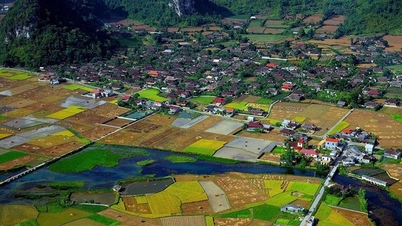
Over the years, tens of thousands of hectares of low-yield rice land in An Giang have been converted by farmers to integrated aquaculture and crop cultivation models. The most prominent examples are the shrimp-rice rotation, fish-rice rotation, or integrated aquaculture in ditches within orchards. However, for these models to be effective, farmers need access to information on techniques, markets, disease management, and cultivation processes.
In particular, farmers who join cooperatives have regular access to information on farming techniques, crop rotation, seed varieties, disease prevention and control, and cost management. Cooperatives also act as information centers, helping farmers understand the market, forecast prices, and orient their production. In localities such as Vinh Tuy, Dong Thai, Tay Yen, An Bien, Dong Hoa, An Minh, Hon Dat, etc., numerous cooperatives have been formed, becoming "facilitators" for farmers in accessing information, thereby building sustainable value chains, reducing risks, and increasing productivity.
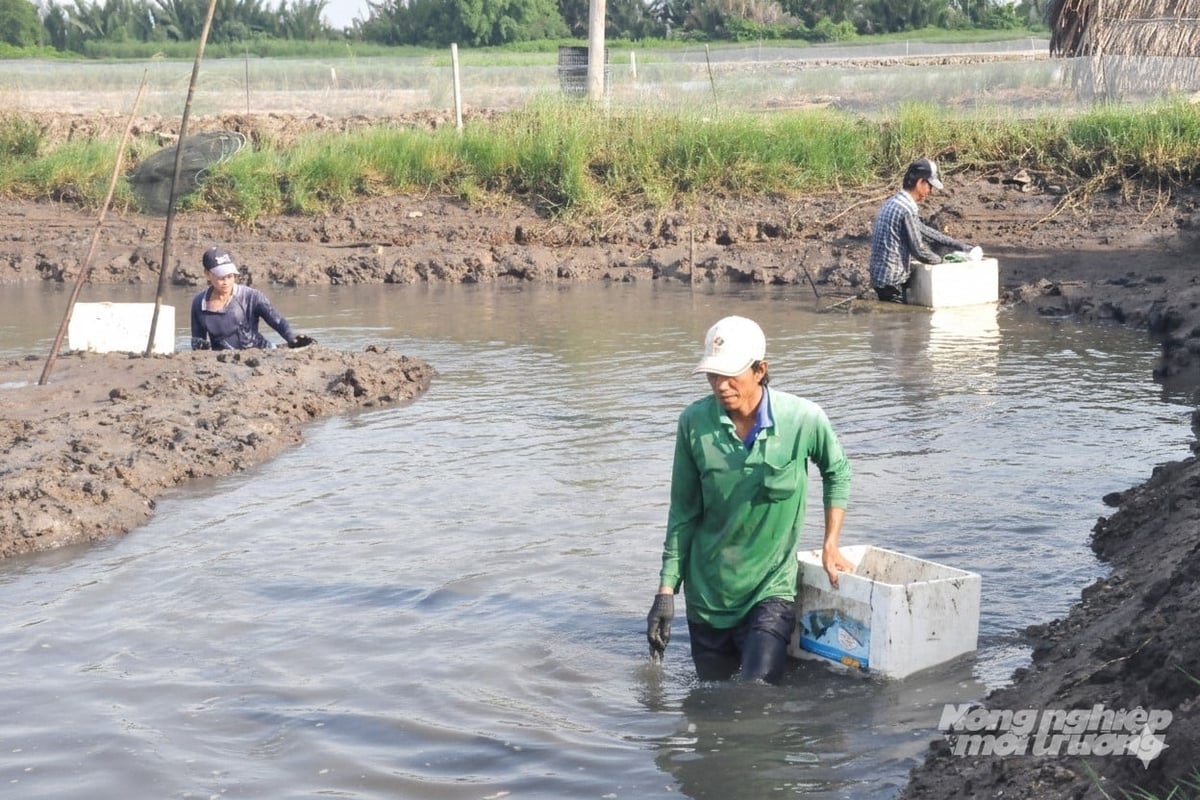
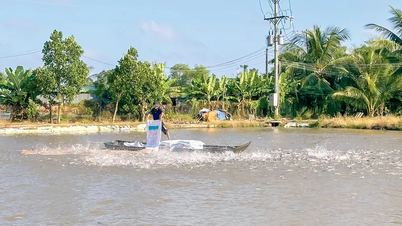
By transforming production methods and joining cooperatives, farmers not only receive support in terms of technology and market information, but also help each other harvest shrimp, reducing labor costs. Photo: Trung Chánh.
Starting as a cooperative with just 5 members, the Vinh Binh Shrimp-Rice Cooperative (Vinh Tuy commune, An Giang province) now has 38 members, cultivating nearly 140 hectares. Thanks to guidance on techniques and ecological production management, the cooperative supplies tens of tons of shrimp and nearly 100 tons of rice to the market each year, bringing in an income of over 100 million VND per hectare.
In addition to providing technical support, the Vinh Binh Shrimp-Rice Cooperative also contributes to a "revolving fund" to help disadvantaged households invest in production. Each month, members contribute 200,000 VND, creating a fund of over 600 million VND to date. Poor members are prioritized to borrow 20 million VND at a low interest rate. This model fosters solidarity and spreads the spirit of mutual economic development.
Thanks to this, dozens of households have escaped poverty sustainably. Many households previously faced difficulties when transitioning to cooperative production due to lack of experience and unstable productivity. By participating in cooperative economic activities, information on shrimp-rice production processes, cost calculation methods, weather risk forecasting, market trends, and disease prevention techniques has helped improve production efficiency and increase profits. The labor exchange system during harvest season is also based on information about labor needs and harvesting times, helping people reduce labor costs and enhance solidarity within the community.
Expand the conversion zone.
After months of brackish water shrimp farming during the dry season, farmers practicing the shrimp-rice farming model switch to rice rotation (approximately from August to December) during the rainy season. Timely guidance on soil, fertilizer, and irrigation techniques is provided, helping farmers utilize the remaining organic matter from the shrimp crop to provide nutrients for the next rice crop. This flexible shift in crop and livestock structure according to seasons, along with the application of scientific and technical knowledge based on updated information from training courses and cooperatives, helps the locality increase production value and move towards sustainable agricultural development.
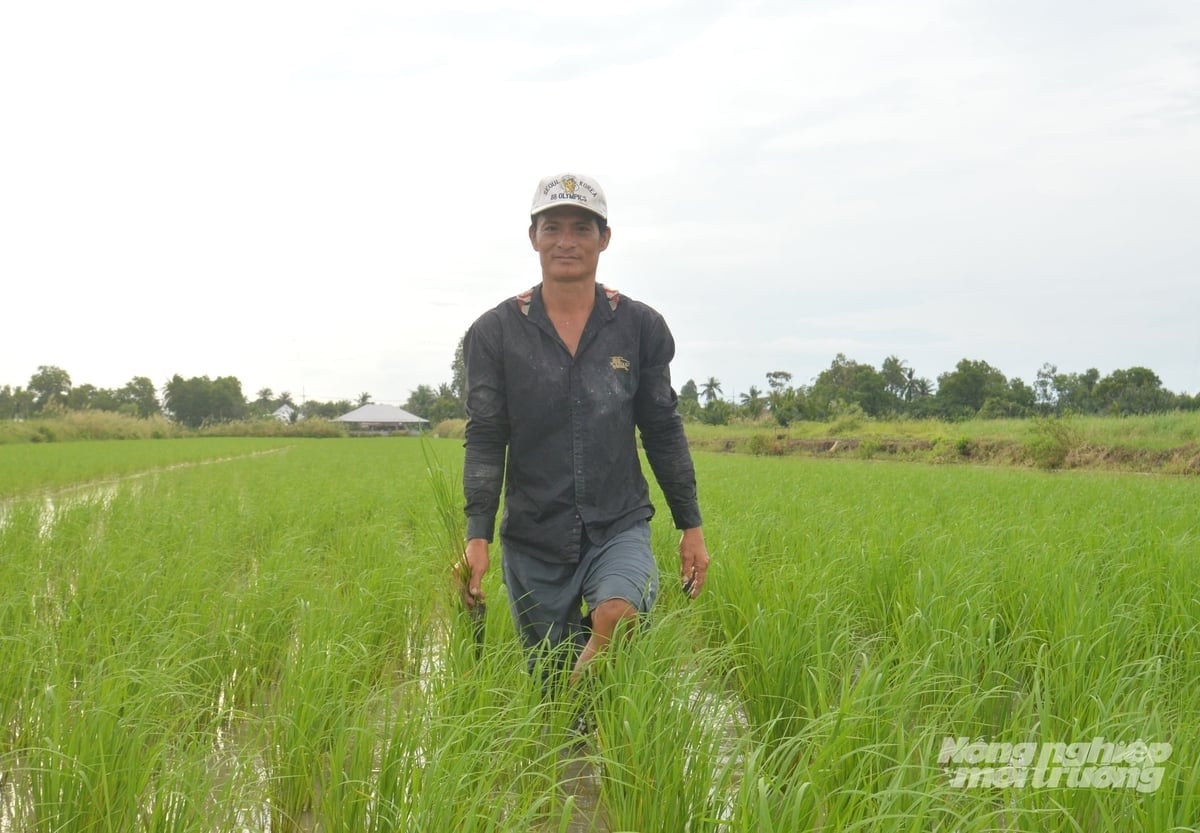
An Giang province is pursuing a policy of continuing the conversion of low-yield rice-growing areas or those affected by saltwater intrusion for three months or more to the shrimp-rice farming model, thereby increasing income and helping farmers escape poverty sustainably. Photo: Trung Chánh.
In many localities, since the government initiated the policy of converting inefficient rice-growing land to shrimp-rice farming models, farmers have been provided with detailed information on support mechanisms, farming techniques, and consumption markets. As a result, many households have risen out of poverty and improved their economic situation.
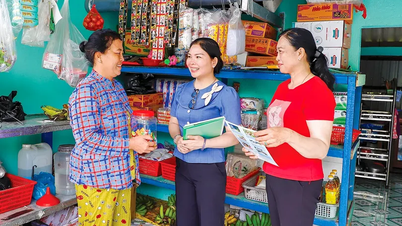
The integrated aquaculture and crop farming model not only helps farmers escape poverty but also creates a shift in production mindset, from individualistic to cooperative, from small-scale to integrated, and from raw production to market-oriented. Farmers' organizations play a central role in providing information, training, technology transfer, capital support, trade promotion, and brand building. Thanks to comprehensive information, farmers know how to manage risks, improve productivity, and develop high-quality products.
According to the An Giang Department of Agriculture and Environment, the province aims to stabilize the area of rice-shrimp farming at approximately 117,000 hectares by 2030. To achieve this goal, An Giang province will convert inefficient rice-growing areas or those lacking adequate irrigation water to integrated aquaculture and crop farming models. The province will also continue to develop the shrimp-rice model for rice-growing land affected by saltwater intrusion for three months or more, tailored to each ecological zone.
Looking at successful models, it can be affirmed that access to accurate and timely information is fundamental to helping farmers effectively transform their livelihoods, increase income, escape poverty, and achieve sustainable development. The aquaculture-crop farming model linked with cooperatives will be a crucial foundation for An Giang to move towards the goal of green agriculture, prosperous farmers, and sustainable rural development.
Source: https://nongnghiepmoitruong.vn/sinh-ke-tu-mo-hinh-chuyen-doi-nuoi-thuy-san-ket-hop-trong-cay-d786271.html


























































Comment (0)