

This revision of the law has shifted the focus from a "rights protection" mindset to the "proprietaryization, commercialization, and marketization" of intellectual property. This shows that a developed country is one where intangible assets, intellectual property, account for a large proportion of the total national assets, and Vietnam must follow this trend if it wants to increase its competitiveness.
The law stipulates that the recognition and management of intellectual property assets in enterprises should be handled by the Government, which will issue detailed regulations on accounting, explanation, and valuation standards. Assets that do not yet meet the criteria for recognition on the balance sheet can still be tracked in separate books, enabling enterprises to proactively inventory and manage all of their intellectual property assets.
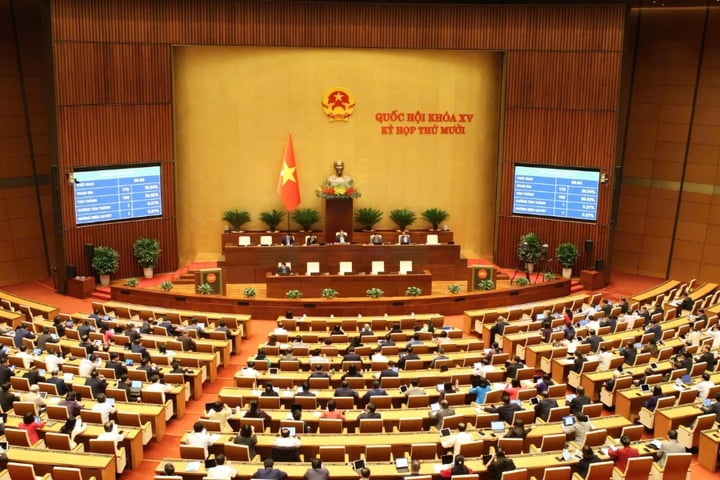
One major reform is the comprehensive digital transformation of industrial property registration and examination activities. The patent examination time has been reduced to 12 months; at the same time, a fast-track examination mechanism within 3 months has been introduced, demonstrating a strong effort to reduce administrative procedures and improve service quality.
The law also clarifies regulations regarding products created by artificial intelligence. AI is not subject to intellectual property rights. Products created entirely by AI are not protected by copyright or patents. If humans use AI as a tool and make significant creative contributions, they may be recognized as the author. In cases where the level of contribution is low, ownership rights do not form, but users still have the right to commercially exploit it. This regulation aligns with global trends.
Regarding the use of data to train AI, the law allows the use of legally published and publicly available information, provided that the output does not infringe on the rights of the author or owner of intellectual property. This is an important step towards creating a safe and creative environment for the research community and technology businesses.
The law expands the scope of protection to include industrial designs for non-physical products, a necessary change to adapt to the trends of digital design, virtual products, and the new technological environment. At the same time, it legalizes a range of issues arising from technology such as big data, blockchain, digital assets, and AI generation, ensuring that the legal framework does not become outdated in the face of rapid technological development.
In the field of intellectual property rights enforcement, the law strengthens the authority of the courts and adds more deterrent sanctions, treating infringement as similar to theft in the real world. Enforcement in the digital environment is emphasized as a groundbreaking solution.
Integrating intellectual property into general and higher education is considered a fundamental approach to raising social awareness. Businesses and the community are encouraged to approach intellectual property not only as a defensive tool but also as a driver of competition and development.
With a focus on commercializing intellectual property, simplifying procedures, and promoting the application of technology in state management, the Law amending and supplementing a number of articles of the Law on Intellectual Property is expected to create a solid legal foundation, promote innovation, and enhance national competitiveness in the era of digital transformation and artificial intelligence.
Source: https://mst.gov.vn/tai-san-tri-tue-duoc-dinh-gia-va-cong-nhan-lam-tai-san-bao-dam-19725121113585226.htm



![[Photo] Closing Ceremony of the 10th Session of the 15th National Assembly](/_next/image?url=https%3A%2F%2Fvphoto.vietnam.vn%2Fthumb%2F1200x675%2Fvietnam%2Fresource%2FIMAGE%2F2025%2F12%2F11%2F1765448959967_image-1437-jpg.webp&w=3840&q=75)
![[Photo] Prime Minister Pham Minh Chinh holds a phone call with the CEO of Russia's Rosatom Corporation.](/_next/image?url=https%3A%2F%2Fvphoto.vietnam.vn%2Fthumb%2F1200x675%2Fvietnam%2Fresource%2FIMAGE%2F2025%2F12%2F11%2F1765464552365_dsc-5295-jpg.webp&w=3840&q=75)





































![[OFFICIAL] MISA GROUP ANNOUNCES ITS PIONEERING BRAND POSITIONING IN BUILDING AGENTIC AI FOR BUSINESSES, HOUSEHOLDS, AND THE GOVERNMENT](https://vphoto.vietnam.vn/thumb/402x226/vietnam/resource/IMAGE/2025/12/11/1765444754256_agentic-ai_postfb-scaled.png)











































Comment (0)