

Soaking, bathing, and applying herbal remedies from traditional healers can worsen the condition.
Recently, at the Central Dermatology Hospital, female patient Nguyen Thanh H. (37 years old) from Hanoi came for a follow-up examination and the doctor assessed that her psoriasis was under stable control.
Ms. H. shared that she heard about traditional healers and traveled to a distant province to get herbal remedies for her psoriasis, including oral medication, baths, soaks, and topical applications. Initially, after applying the remedies, soaks, and baths, the itching subsided. However, after some time, the lesions thickened, inflammation appeared in the affected areas, and they oozed fluid. The lesions spread throughout her body, leading to secondary infections.
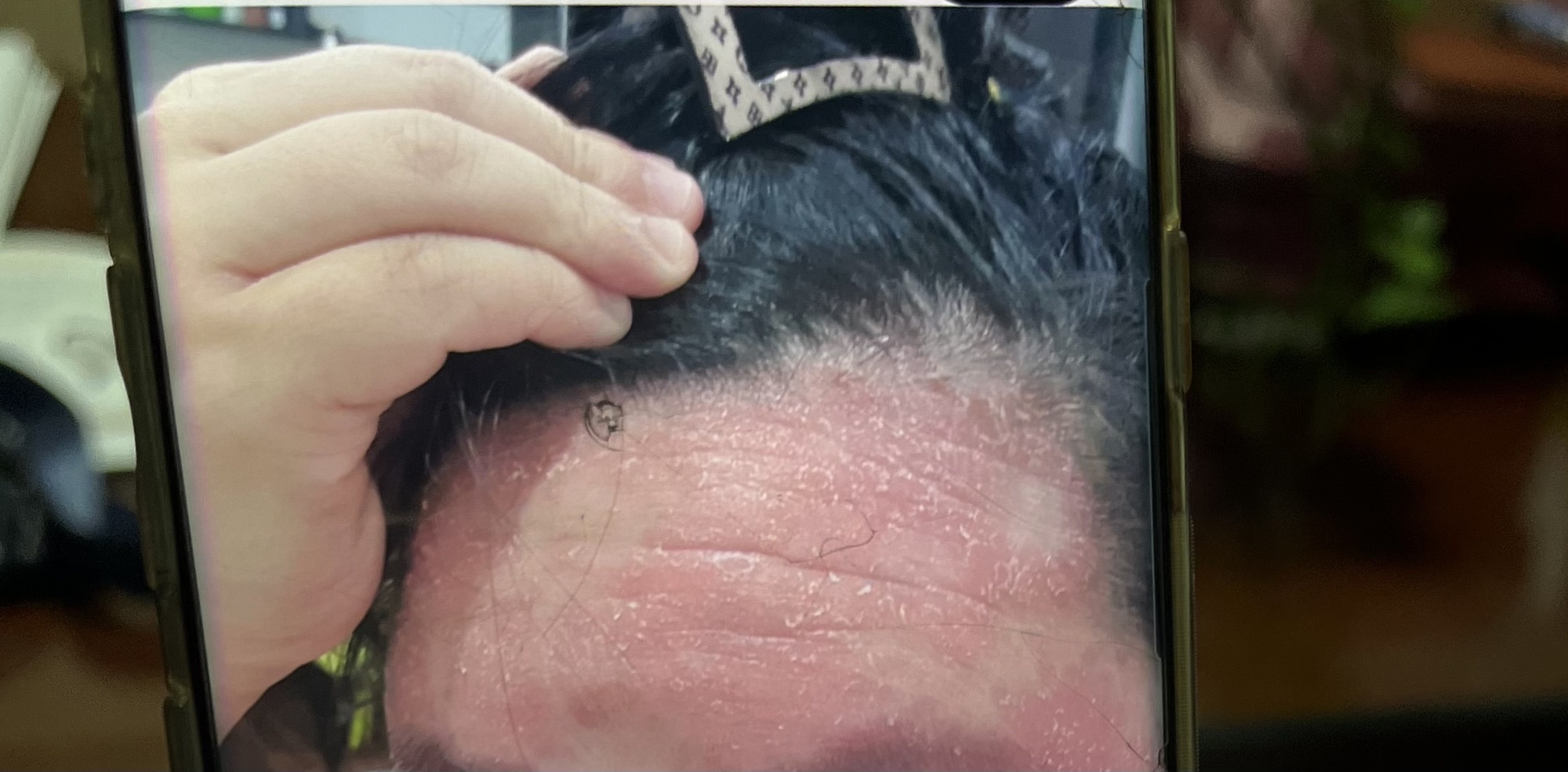
Psoriasis lesions flared up all over the head, face, and body after treatment with medications of unknown composition and origin.
"The traditional healer didn't tell me what medicine it was, just told me to keep using it. However, the skin lesions spread, causing itching and burning pain. Unable to bear the condition, I went to the Central Dermatology Hospital for examination," Ms. H. said.
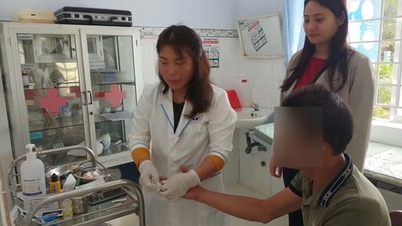
Regarding the aforementioned case, Dr. Hoang Van Tam, Deputy Head of the Day Inpatient Treatment Department (Central Dermatology Hospital), said that patient H. came for examination with generalized redness and scaling of the skin. Psoriasis is a chronic disease requiring long-term treatment; therefore, patients often become discouraged and seek treatment at other facilities with medications of unknown origin, which then worsens the condition.
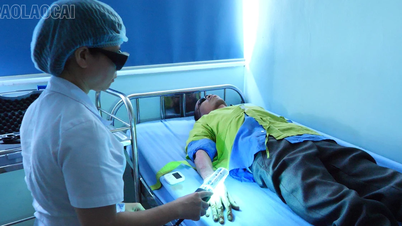
"For patient H., we applied topical medication, then switched to ultraviolet light therapy. To date, 4-5 sessions of light therapy have been completed. Currently, patient H.'s condition is almost completely under control," Dr. Tam assessed.
According to the Central Dermatology Hospital, psoriasis is related to immune system disorders. External factors such as trauma, infection, and stress can trigger or worsen the disease. Therefore, psoriasis patients need to maintain a positive attitude, follow a healthy, balanced, and nutritious diet, and supplement it with antioxidant-rich foods as advised by their specialist.
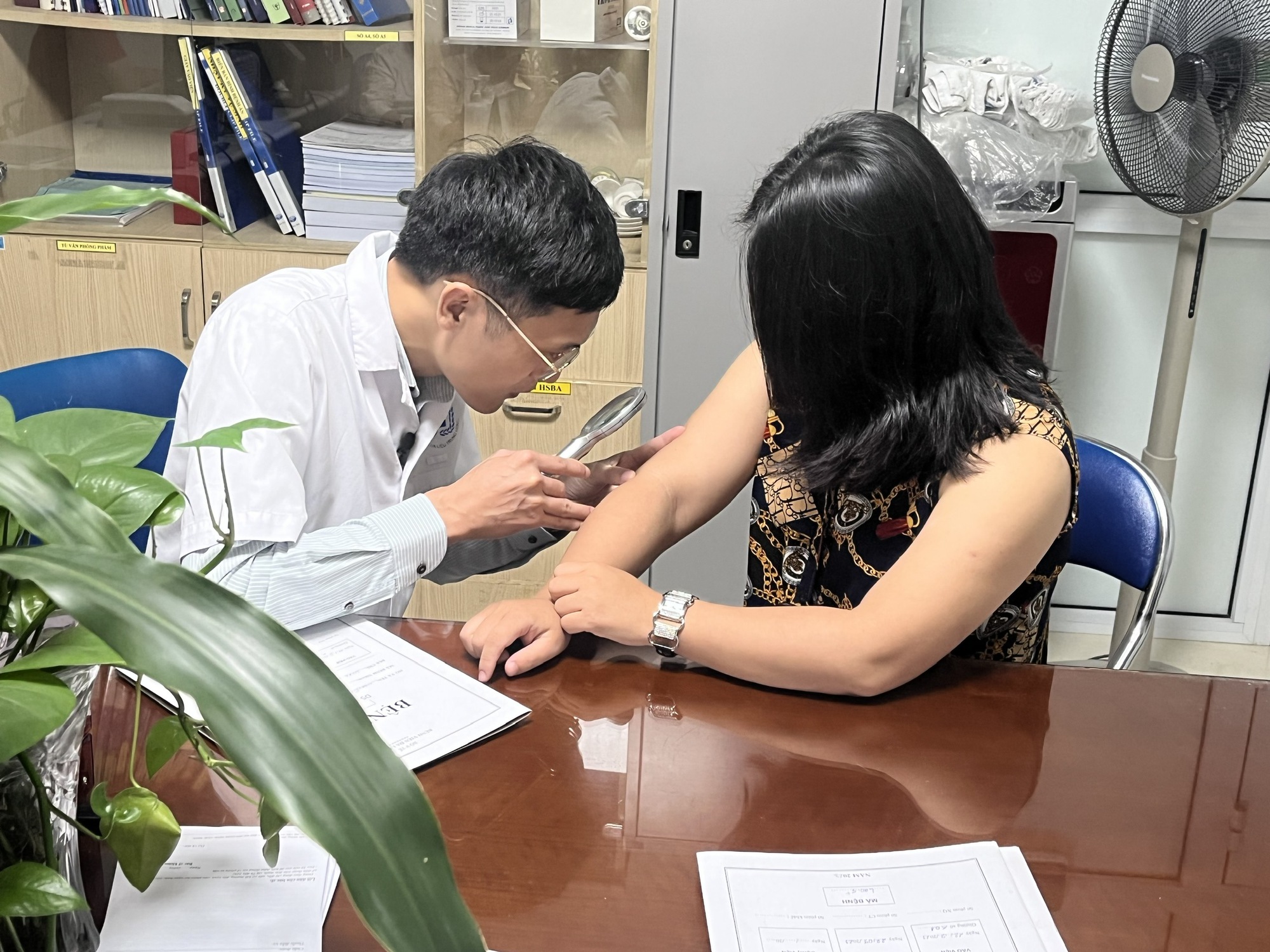
Patients with psoriasis need to have follow-up appointments and adhere to their doctor's prescribed treatment. There is currently no cure for psoriasis.
Follow your doctor's treatment plan and attend follow-up appointments regularly. Do not self-medicate (especially with traditional medicine, herbal remedies, or medications containing corticosteroids).
Regularly moisturizing the skin affected by psoriasis is very important. Keep the skin hydrated by applying moisturizer frequently, after showering and whenever the skin feels dry.
Drugs with unknown ingredients may contain toxic heavy metals.
In practice, Dr. Tuan said that most patients with severe psoriasis had previously used unproven methods or medications of unknown origin before coming to the hospital. This can worsen the disease, progressing from mild to severe forms such as pustular psoriasis or psoriatic arthritis.
Dr. Tam noted that in the past, when medicine did not have many treatment methods, herbal remedies of unknown composition and origin were often found to contain added heavy metals, including mercury, to increase their effectiveness. Long-term use of these heavy metals can affect the skin and the entire body.
The second group of substances often added is corticosteroids. With this substance, symptoms may subside quickly, but the disease then recurs very severely and affects internal organs such as the stomach, digestive system, adrenal glands, and other organs such as the eyes, musculoskeletal system, and joints.
Dr. Hoang Van Tam, Central Dermatology Hospital
Source link


![[Photo] Closing Ceremony of the 10th Session of the 15th National Assembly](/_next/image?url=https%3A%2F%2Fvphoto.vietnam.vn%2Fthumb%2F1200x675%2Fvietnam%2Fresource%2FIMAGE%2F2025%2F12%2F11%2F1765448959967_image-1437-jpg.webp&w=3840&q=75)











































![[OFFICIAL] MISA GROUP ANNOUNCES ITS PIONEERING BRAND POSITIONING IN BUILDING AGENTIC AI FOR BUSINESSES, HOUSEHOLDS, AND THE GOVERNMENT](https://vphoto.vietnam.vn/thumb/402x226/vietnam/resource/IMAGE/2025/12/11/1765444754256_agentic-ai_postfb-scaled.png)











































Comment (0)