

Final Post: Pressure to Upgrade Warning
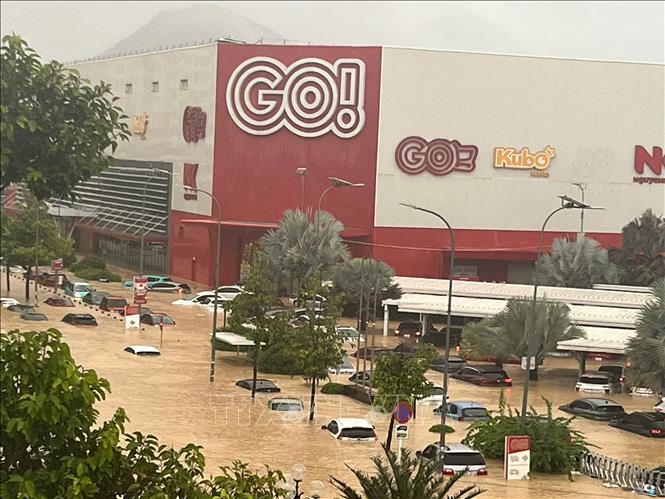
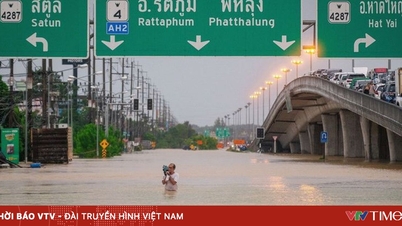
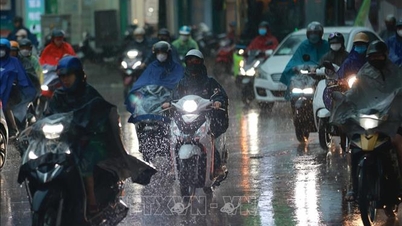
Looking back at the floods in the South Central region from November 16-22, the National Center for Hydro-Meteorological Forecasting assessed that this was an extreme phenomenon, exceeding historical records, causing flooding, landslides, and severe damage. Rainfall at many stations such as Son Hoa (Dak Lak) at 601.2 mm or Quy Nhon (Gia Lai) at 380.6 mm, both exceeded historical records, while some other stations such as Son Thanh Tay, Son Thanh Dong, Hoa My Tay, Song Hinh (Dak Lak) recorded up to 1,000 - 1,200 mm in just a few days. According to the classification of the World Meteorological Organization (WMO), these are rare events, almost impossible to accurately forecast quantitatively.
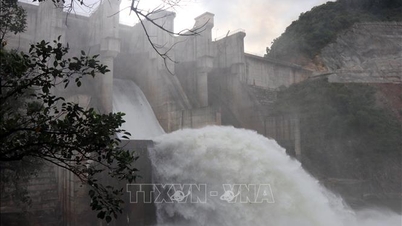
Flash floods and landslides are dangerous natural disasters. Under the impact of climate change, heavy rains and some other weather patterns have caused flash floods and landslides; in which the Central and Central Highlands regions are the most affected areas in 2025. Many areas have been cut off from traffic, many places have been isolated and suffered heavy damage.
Referring to the work of forecasting and warning of natural disasters, especially in the context of extreme natural disasters occurring with high frequency, continuously and unpredictably, chairing the Government Standing Committee meeting on October 9 on overcoming the consequences of storm No. 11 and post-storm floods, Prime Minister Pham Minh Chinh requested to improve forecasting capacity to proactively prevent and combat natural disasters in a timely, flexible and effective manner. Specifically, the Prime Minister assigned the Minister of Agriculture and Environment to direct the hydrometeorological forecasting agency to closely monitor, coordinate and refer to international forecast information to forecast and provide the most complete, earliest and accurate information on the developments and impacts of storms and the risk of floods... to prevent and combat them promptly, effectively, in the right direction, with the right focus and key points.
Assessing the response to floods after storm No. 11, the Ministry of Agriculture and Environment also frankly admitted that the work of forecasting extreme heavy rains, exceptionally large floods, and floods exceeding history is still limited, and has not been able to forecast historical values in advance during the flood season.
Regarding information on forecasting and warning in extreme weather conditions, Ms. Bui Thi Phuong (Vietnam Greenhouse Gas Partnership Network) commented that in addition to forecasting information in the form of weather and climate bulletins, the hydrometeorological agency needs to mobilize support resources to invest in modern equipment to meet digital transformation; improve data collection systems to enhance weather forecasting and early warning capabilities with interconnectivity between sectors.
Data must be standardized, updated in real time and ready to be shared, along with the development of smart sensor networks and satellite images in high-risk areas via SMS, Apps, radio, social networks, etc. to ensure that all classes of people have timely access to information, especially in remote areas.
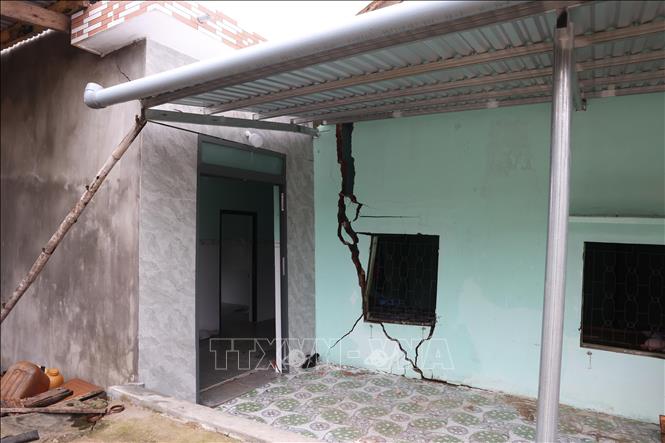
In fact, one of the important factors to improve forecasting and early warning capacity is the application of science and technology. Deputy Minister of Agriculture and Environment Le Cong Thanh emphasized that climate change is becoming increasingly evident, with natural disasters increasing in frequency and severity. Therefore, science and technology play a key role in forecasting, preventing and mitigating natural disaster risks, as well as effectively responding to climate change and protecting the environment.
This is important for preventing, preparing for and responding to increasingly extreme weather and climate, while contributing to protecting people's lives and sustainable livelihoods. The effectiveness of long-term, early warning and forecast bulletins is enormous.
To improve forecasting and warning capacity, effectively respond to the current context as well as the coming years, according to Director of the Department of Hydrometeorology Nguyen Thuong Hien, the industry has implemented many solutions to improve forecasting and early warning capacity of natural disasters such as: Increasing the quantity and quality of meteorological, hydrological and oceanographic monitoring stations, especially in key areas, at sea and areas at high risk of natural disasters in the direction of modernization and automation; enhancing modern monitoring solutions such as weather radar, marine radar, satellite cloud imaging applications...
The industry develops modern forecasting and warning technologies that are close to those of developed countries in hydrometeorology, such as high-resolution digital models for storm forecasting, rain and flood forecasting, flash flood and landslide warnings. Integrating the impacts of climate change on natural disaster developments into hydrometeorological forecasting plans, and continuing to research and apply artificial intelligence (AI) in forecasting and warning of natural disasters, first of all for storm forecasting, rain and dangerous weather phenomena that rarely occur according to normal rules. In addition, promoting international cooperation in information and data exchange, especially for storms at sea; receiving and developing advanced and modern forecasting technologies and processes of countries through bilateral and multilateral cooperation.
The sector continues to coordinate with localities and units under the Ministry of Agriculture and Environment to speed up the implementation of the Project "Early warning of landslides, mudslides, flash floods in the midland and mountainous areas of Vietnam" and the Program to update disaster risk zoning, create disaster warning maps, especially disasters related to storms, storm surges, floods, flash floods, landslides, droughts, saltwater intrusion...
In the context of increasingly complex climate change, improving forecasting and early warning capacity is not only an act to save lives, but also a strategy to protect the country's sustainable development.
Source: https://baotintuc.vn/xa-hoi/thich-ung-thien-tai-vuot-quy-luat-bai-cuoi-suc-ep-nang-cap-canh-bao-20251203103908910.htm
![[Photo] Parade to celebrate the 50th anniversary of Laos' National Day](/_next/image?url=https%3A%2F%2Fvphoto.vietnam.vn%2Fthumb%2F1200x675%2Fvietnam%2Fresource%2FIMAGE%2F2025%2F12%2F02%2F1764691918289_ndo_br_0-jpg.webp&w=3840&q=75)


















![[Photo] Worshiping the Tuyet Son statue - a nearly 400-year-old treasure at Keo Pagoda](/_next/image?url=https%3A%2F%2Fvphoto.vietnam.vn%2Fthumb%2F1200x675%2Fvietnam%2Fresource%2FIMAGE%2F2025%2F12%2F02%2F1764679323086_ndo_br_tempimageomw0hi-4884-jpg.webp&w=3840&q=75)
























































Comment (0)