

On the afternoon of December 3, continuing the 10th Session, with 419 National Assembly deputies present and voting in favor (accounting for 88.58% of the total number of deputies), the National Assembly passed the Law on State of Emergency. The law takes effect from July 1, 2016.
The Law on State of Emergency consists of 6 chapters and 36 articles regulating the principles, order, procedures, and authority to promulgate and abolish a state of emergency; measures to be applied in a state of emergency; organization of implementation of resolutions and orders on the state of emergency; and responsibilities of agencies, organizations, and individuals in a state of emergency.
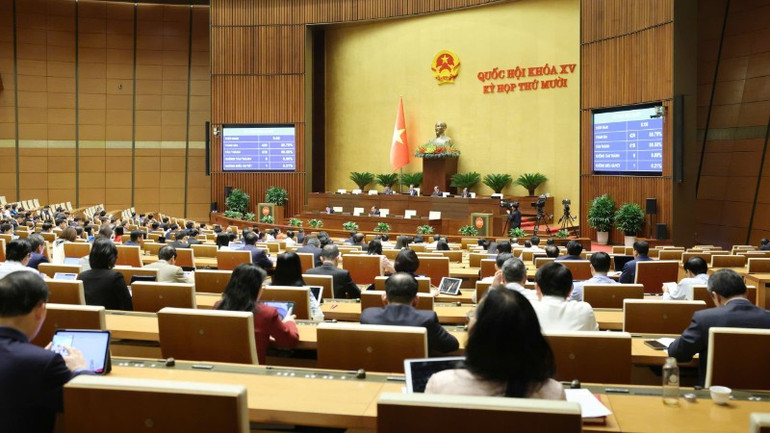
Regarding the authority, order of promulgation, announcement and abolition of a state of emergency, the Law clearly stipulates:
The Standing Committee of the National Assembly decides to declare or lift a state of emergency. Pursuant to the resolution of the Standing Committee of the National Assembly on declaring or lifting a state of emergency, the President shall issue an order to declare or lift a state of emergency.
In case the National Assembly Standing Committee cannot meet, the President shall order the proclamation or abolition of the state of emergency.
The Prime Minister requests the National Assembly Standing Committee to decide to declare or lift the state of emergency; in case the National Assembly Standing Committee cannot meet, the President is requested to order the declaration or lift of the state of emergency.
The state of emergency is lifted when there is no longer a risk of disaster or the disaster has been prevented or overcome; the national defense and security situation, social order and safety have stabilized.
Regarding the authority of the Prime Minister in emergency cases, the Law stipulates: If absolutely necessary, for the national interest, the people's lives and health, after receiving the consent of competent authorities, the Prime Minister has the right to decide to apply measures not yet prescribed by law to respond to and overcome the emergency situation, or apply measures prescribed in this law when a state of emergency has not yet been declared or announced.
The Prime Minister will report on the application of these measures to the competent authorities of the Party, the National Assembly, and the National Assembly Standing Committee in the nearest future.
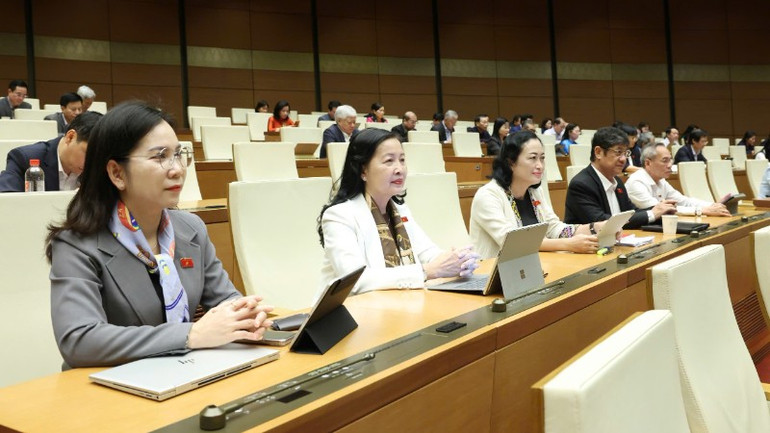
The State has policies to support finance, taxes, fees, charges, credit, investment, production, business, labor, employment, exit, entry, and social security to quickly restore production, stabilize people's lives, and the operations of agencies, organizations, and enterprises.
Supported subjects include agencies, organizations, households, individuals and businesses directly affected by the emergency.
For policies under the authority of the National Assembly or the National Assembly Standing Committee, the Government shall report to the National Assembly Standing Committee for consideration and decision before implementation; in urgent cases, the Government shall decide to apply the policies and report to the National Assembly Standing Committee as soon as possible.
The Law also clearly stipulates measures to be applied in a state of emergency when a disaster occurs; measures to overcome consequences in a state of emergency; statistics and assessment of damage; mobilization, donations and allocation of relief and support resources...
Article 2. State of emergency
1. A state of emergency is a social state declared by a competent authority, declaring a state of emergency in one or more localities or nationwide when there is a disaster or risk of a disaster that seriously threatens human life, health, property of the State, agencies, organizations and individuals or there is a situation that seriously threatens national defense, national security, social order and safety.
2. State of emergency includes: a) State of disaster emergency; b) State of national security, social order and safety emergency; c) State of national defense emergency.
Source: https://nhandan.vn/thu-tuong-duoc-quyen-ap-dung-cac-bien-phap-luat-chua-quy-dinh-trong-tinh-trang-khan-cap-post927645.html











![[Photo] Worshiping the Tuyet Son statue - a nearly 400-year-old treasure at Keo Pagoda](/_next/image?url=https%3A%2F%2Fvphoto.vietnam.vn%2Fthumb%2F1200x675%2Fvietnam%2Fresource%2FIMAGE%2F2025%2F12%2F02%2F1764679323086_ndo_br_tempimageomw0hi-4884-jpg.webp&w=3840&q=75)
![[Photo] Parade to celebrate the 50th anniversary of Laos' National Day](/_next/image?url=https%3A%2F%2Fvphoto.vietnam.vn%2Fthumb%2F1200x675%2Fvietnam%2Fresource%2FIMAGE%2F2025%2F12%2F02%2F1764691918289_ndo_br_0-jpg.webp&w=3840&q=75)



























































Comment (0)