

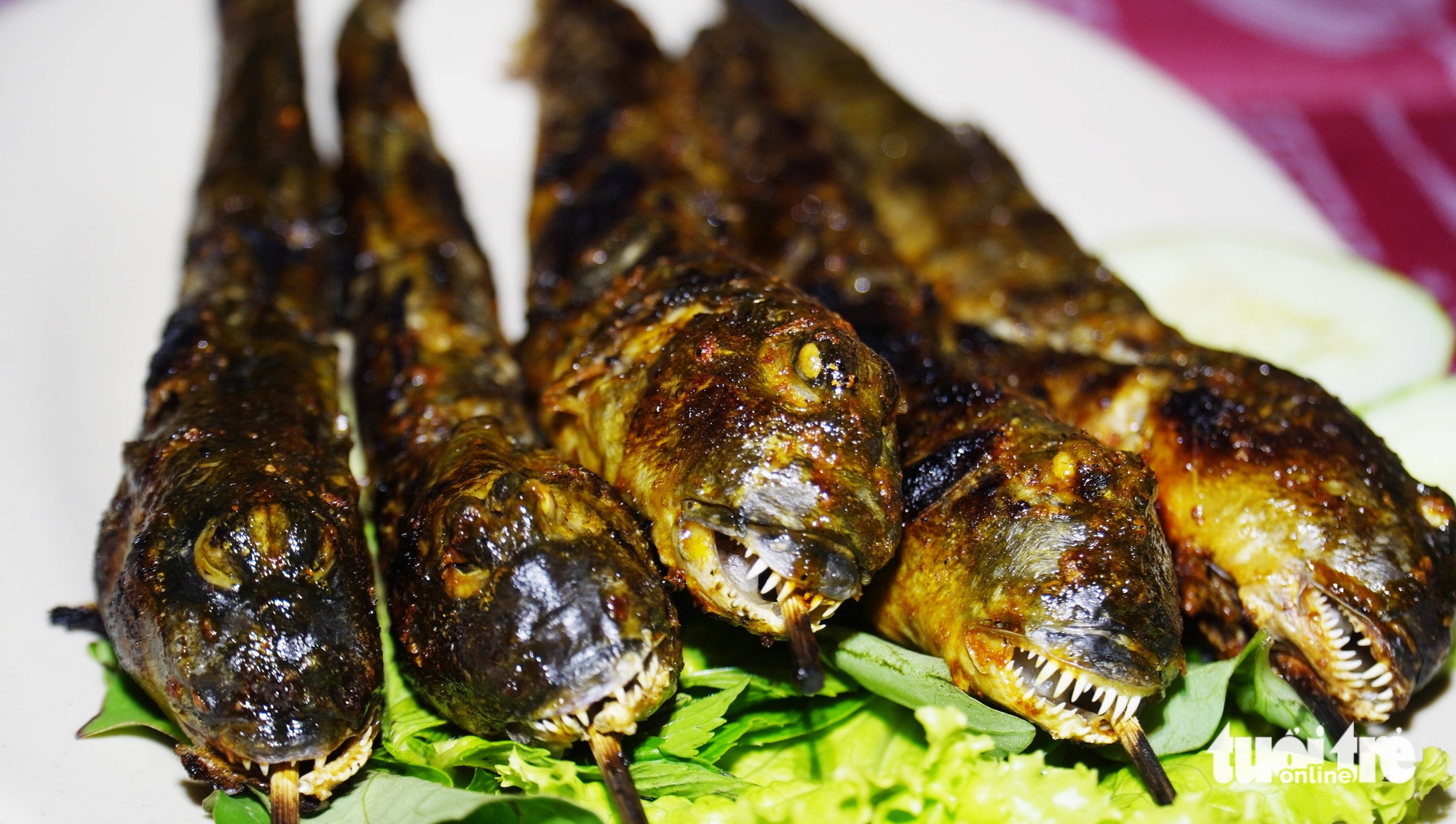
Mudskippers are a species of fish characteristic of mangrove swamps. Despite their unsightly appearance, these small fish are remarkable because they can swim, run on water or land, and even climb trees. - Photo: THANH HUYEN
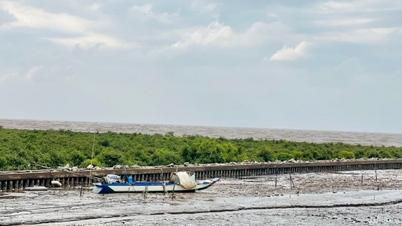
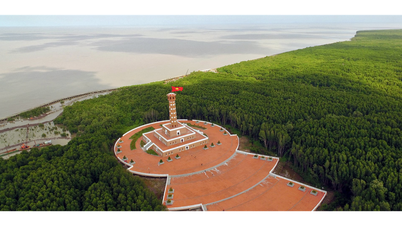
Ca Mau province has approximately 90,000 hectares of mangrove forests stretching along the coast, about 254km from the East Sea (Tan Thuan commune, Dam Doi district) to the West Sea (Khanh Tien commune, U Minh district).
The mangrove forests in Ca Mau have the second largest area in the world , after the Amazon rainforest in South America.
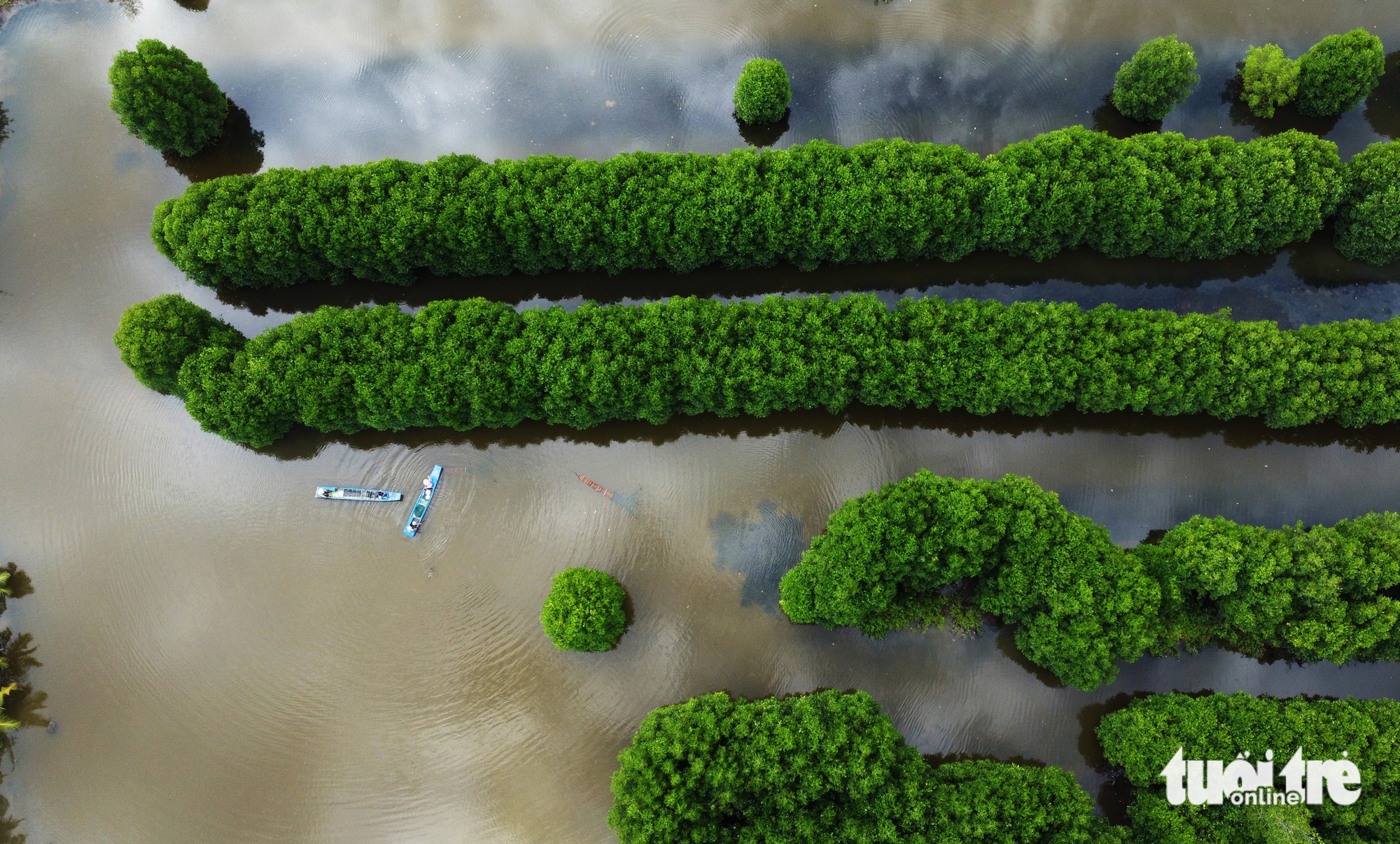
Ca Mau has nearly 40,000 hectares of ecological shrimp and crab farming under the mangrove canopy - Photo: THANH HUYEN
This place boasts a unique and diverse ecosystem, with rich vegetation including many types of trees: mangrove, nipa palm, Avicennia, Sonneratia, Bruguiera, Sonneratia, and many animal species such as: shrimp, crabs, fish, clams, snails, mud crabs, oysters, etc.
Besides its role in preventing erosion, the mangrove forests of Ca Mau also contribute to land reclamation, increasing the territorial area of our country. Specifically, to the west of Ca Mau Cape, there is a large alluvial plain with an area of 6,500 hectares, which annually extends into the sea by 50-80 meters thanks to the deposition of silt.
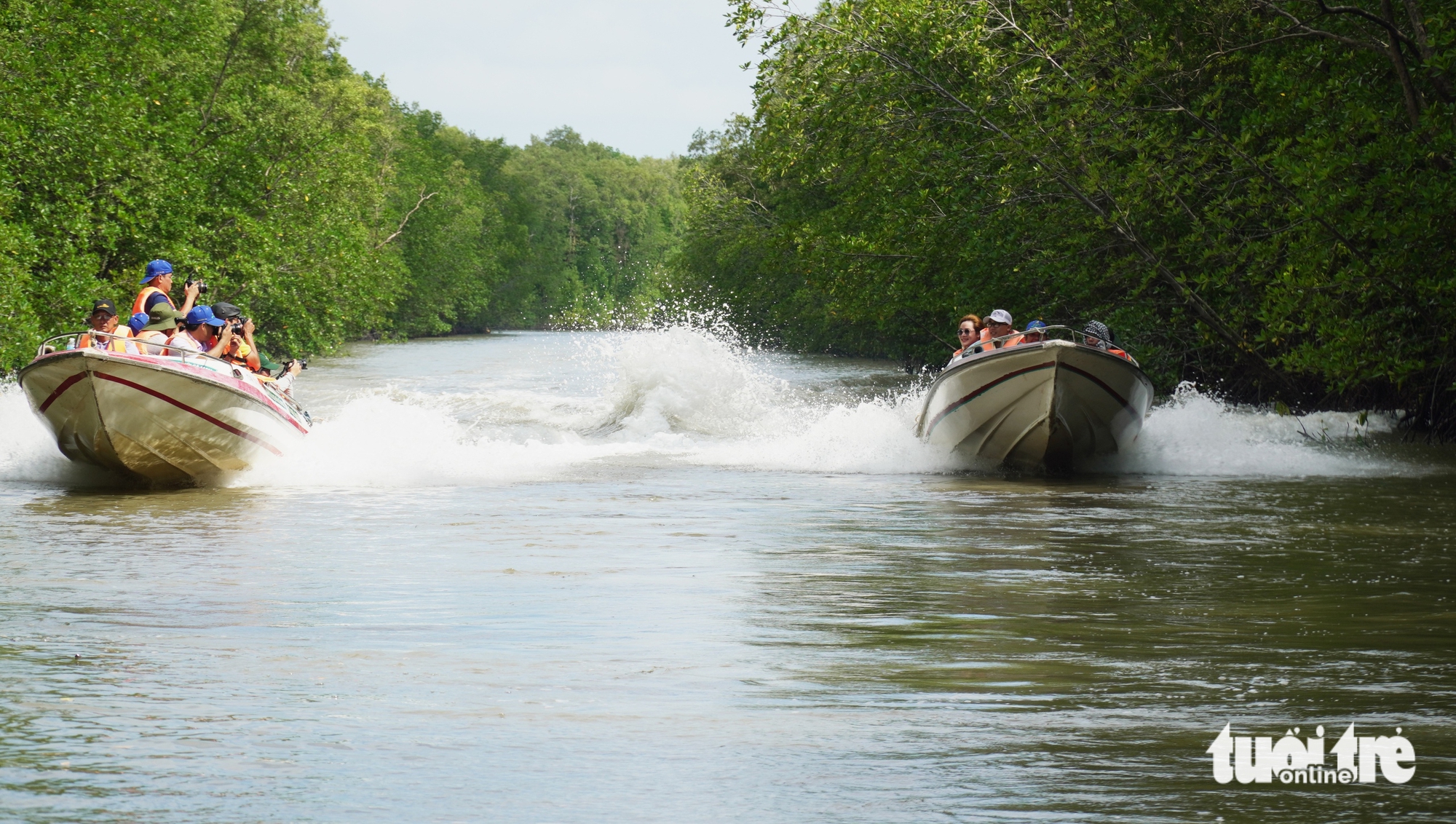
Tourists visiting Ca Mau can enjoy cruising through the forest on speedboats - Photo: THANH HUYEN
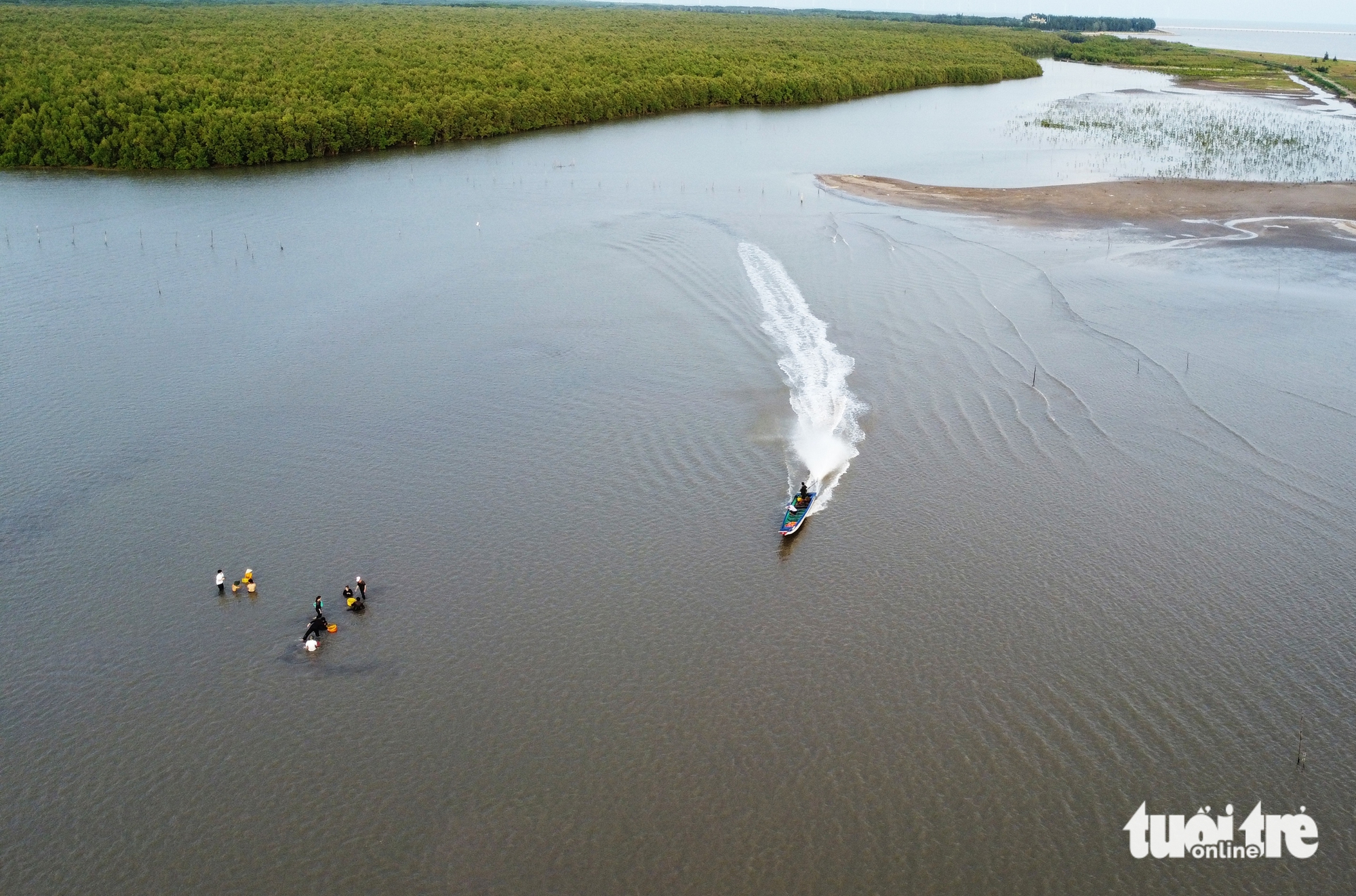
Clam beds stretch along the coast. Tourists can catch clams themselves and prepare them into various dishes - Photo: THANH HUYEN
For generations, the mangrove forests of Ca Mau have served as a conservation area, providing a safe haven for many rare and endangered wildlife species. Simultaneously, the incredibly diverse ecosystem surrounding the forests has created livelihoods for many households through crab and snail harvesting. The produce from beneath the forest canopy has delighted visitors from near and far with its delicious sweetness and firm flesh.
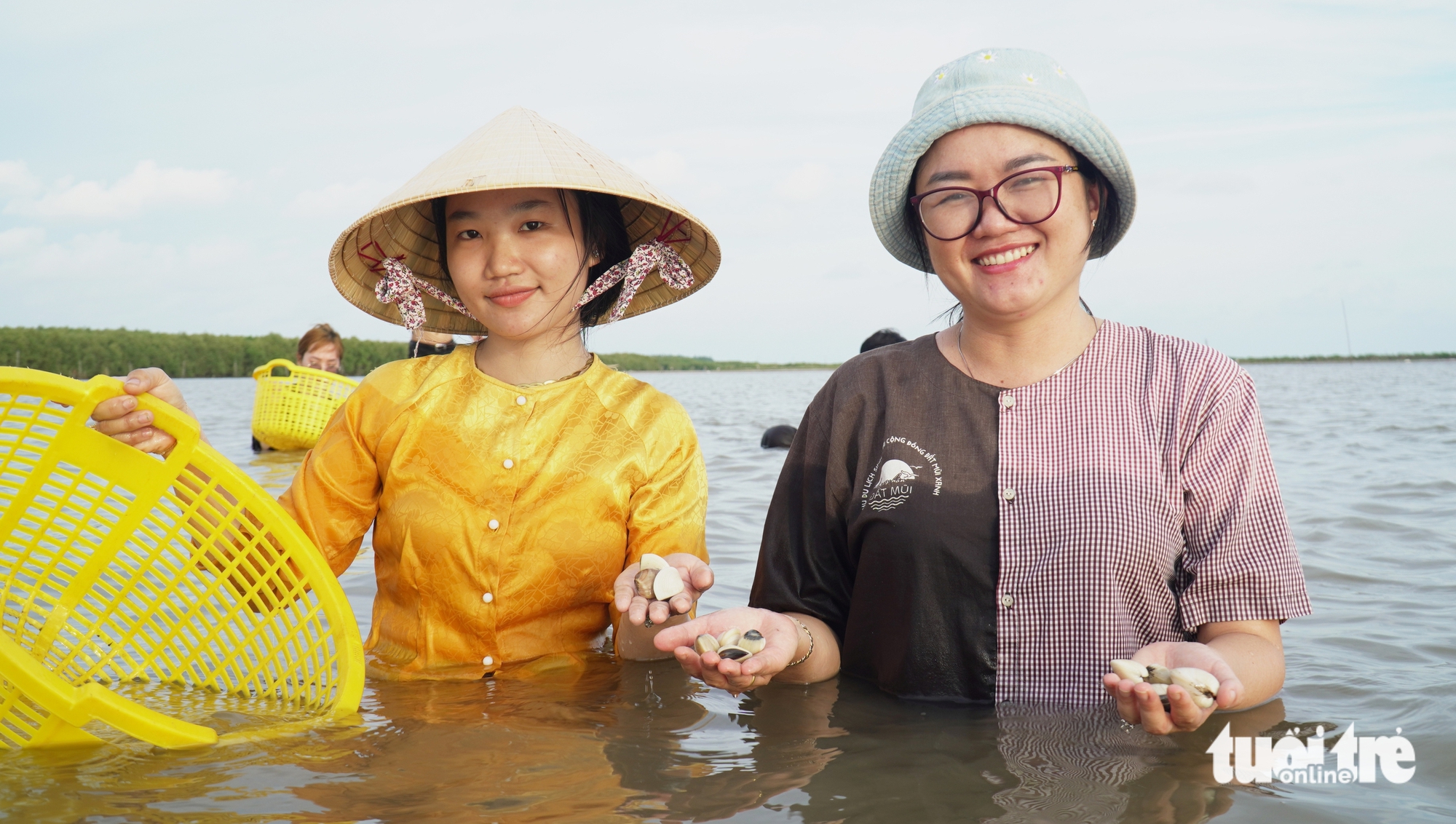
Catching clams by hand on the coastal mudflats is a fun experience for tourists from near and far - Photo: THANH HUYEN
When mentioning the places of Năm Căn and Ngọc Hiển in Cà Mau province, people not only think of the vast mangrove forests, but also marvel at the delicious seafood dishes featuring crabs from this region.
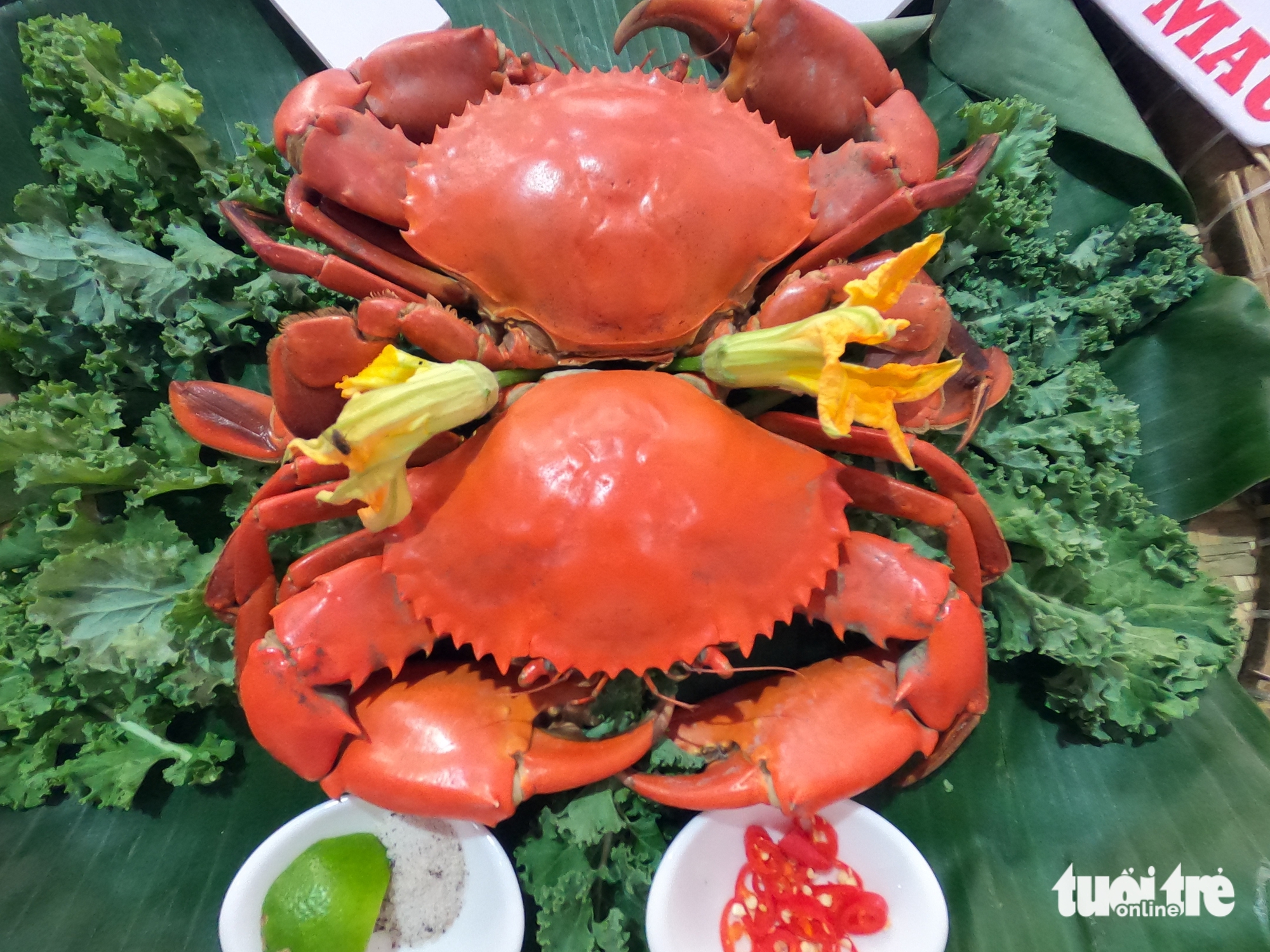
Cà Mau crabs are famous throughout the country for their firm, sweet meat, thanks to living in areas rich in alluvial soil - Photo: THANH HUYỀN
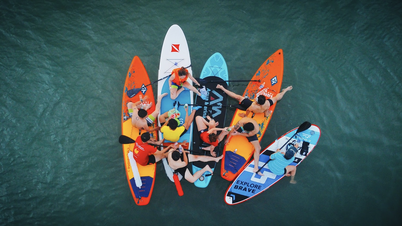
Besides exploring nature, visitors can also organize group outdoor activities, set up tents for overnight camping, or spend the night amidst the fresh air; they can even prepare their own dishes by the glowing red wood fire, such as boiled crab, shrimp paste, snails stir-fried with coconut, brown fish stewed with star fruit, mud crab, etc.
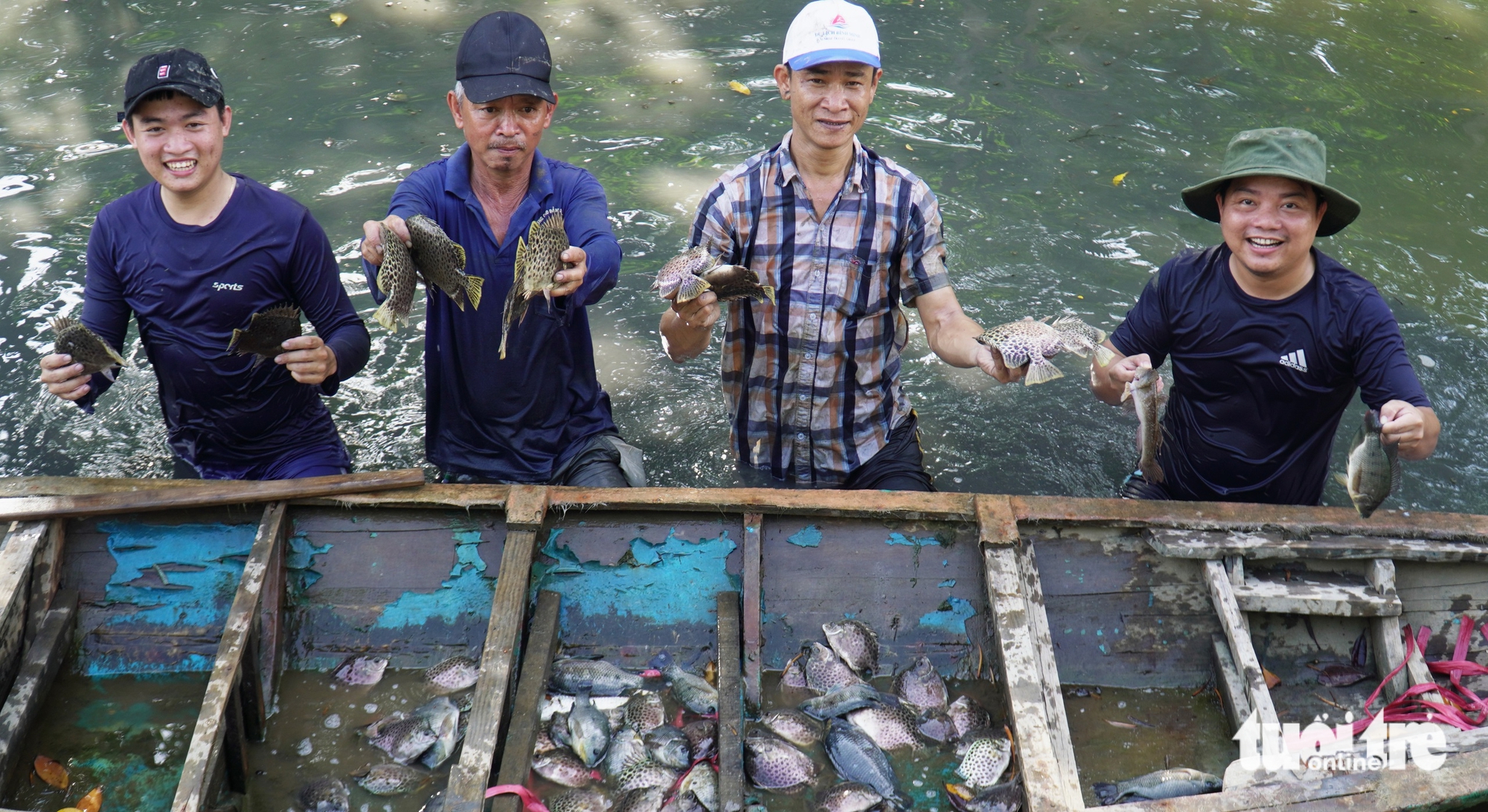
Catching brown fish by hand under the forest canopy to make braised brown fish with star fruit is a fun option when visiting Ca Mau - Photo: THANH HUYEN
One must-try specialty of the Ca Mau Peninsula is salted three-spotted crab. Three-spotted crabs belong to the crab family and typically live in mangrove swamps. They feed on fallen black mangrove fruits, resulting in firm meat and rich, red roe.
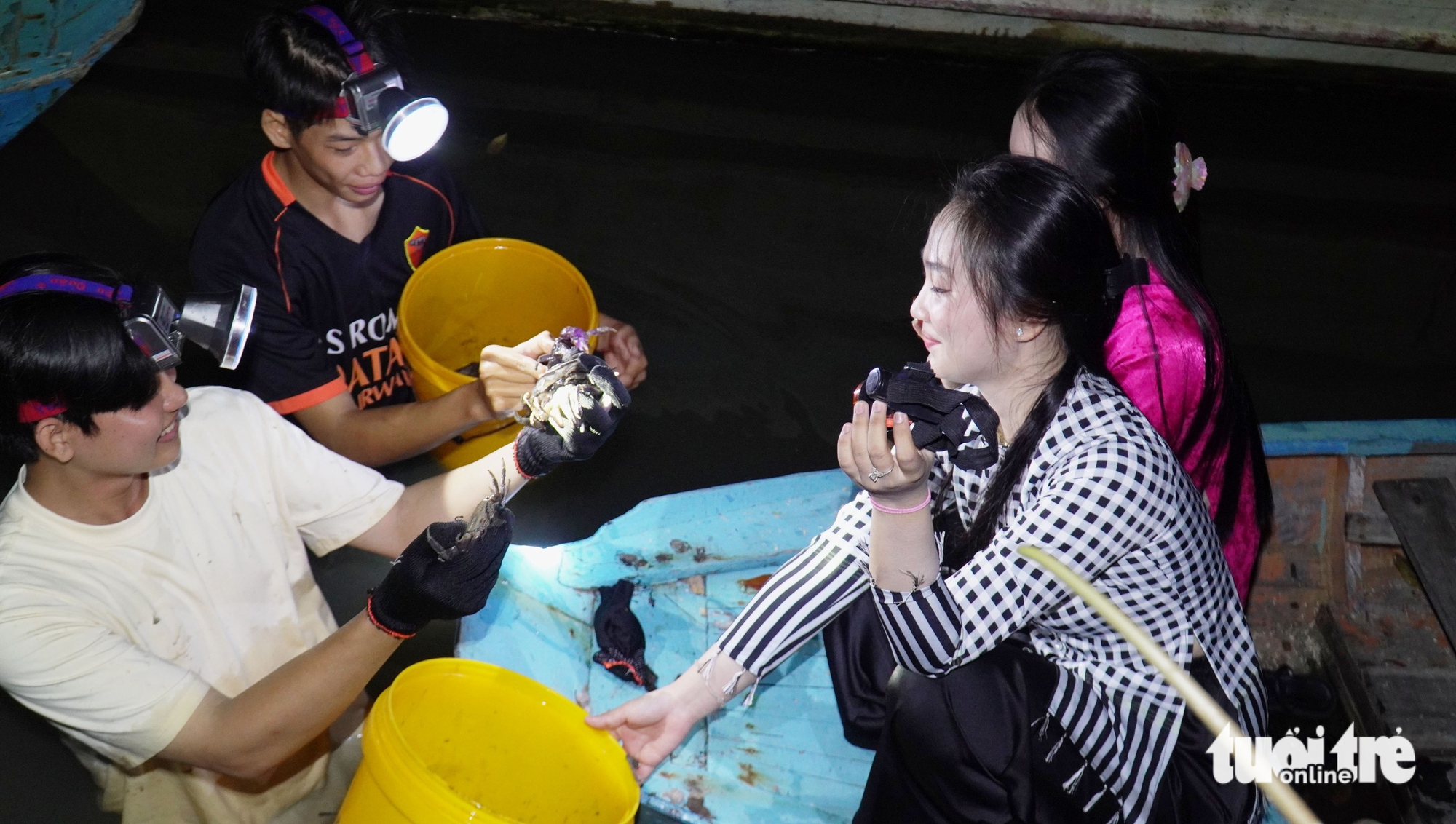
Catching mud crabs at night is one of the ecotourism activities in Ca Mau that attracts many tourists - Photo: THANH HUYEN
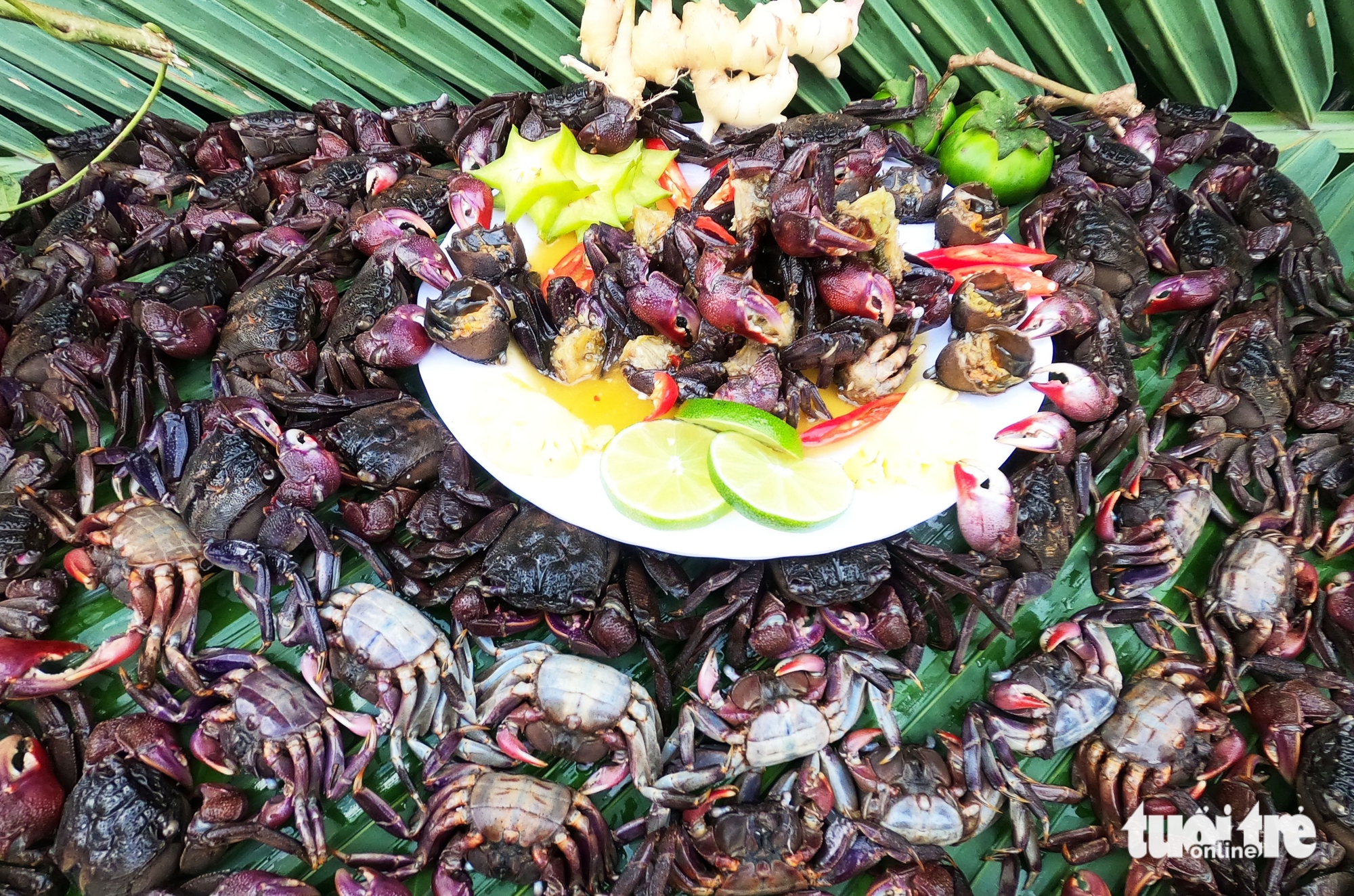
Dam Doi salted crab is one of the OCOP 4-star certified products in Ca Mau - Photo: THANH HUYEN
Mud snails live under the forest canopy, usually climbing trees when the water rises and crawling back down to the roots when the tide recedes. When stir-fried with coconut milk and a few spices, the sweet flavor of the snail meat blends with the richness of the coconut milk, creating an unforgettable impression for diners.
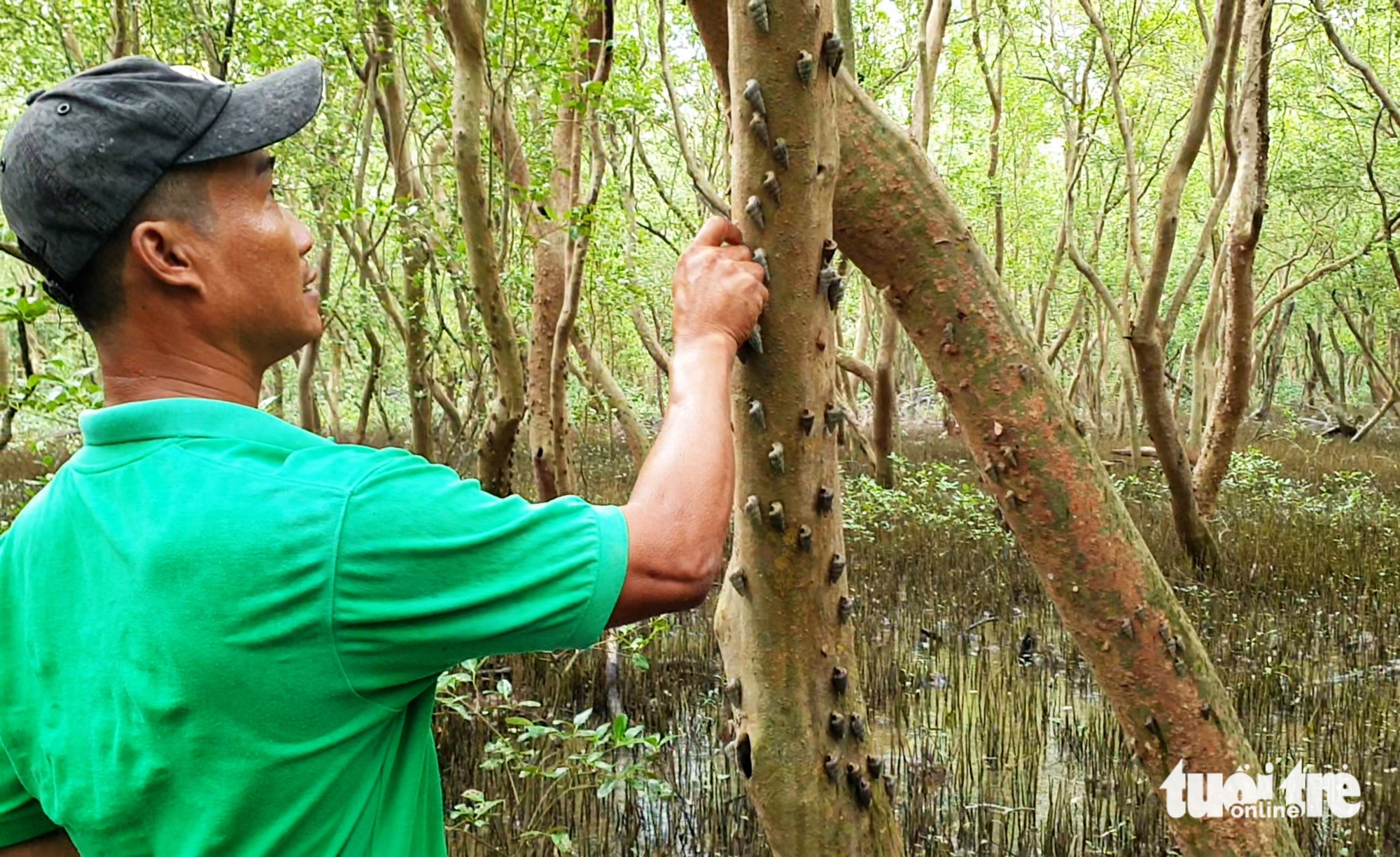
Taking advantage of the receding tide to catch snails is a fun experience - Photo: THANH HUYEN
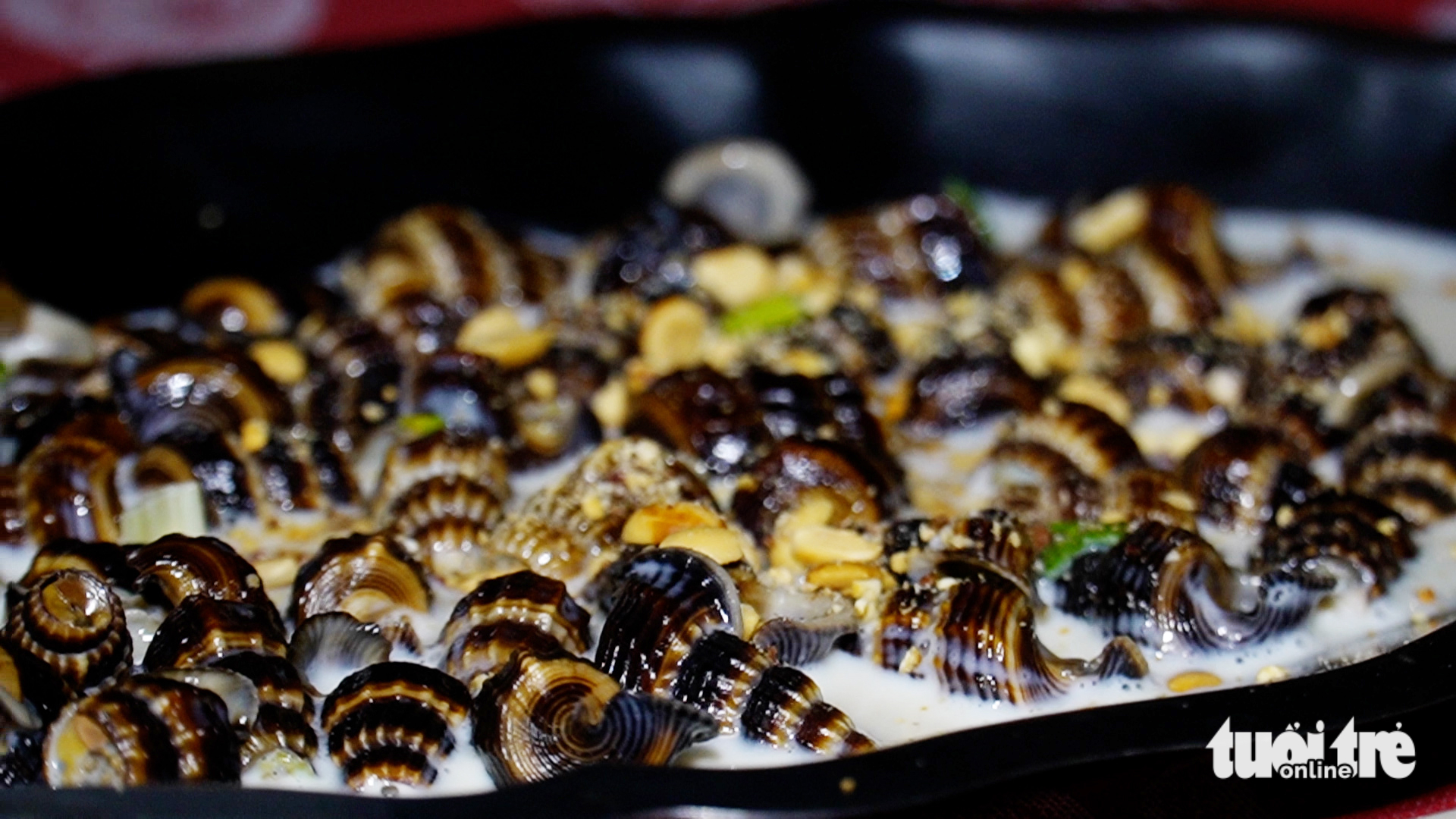
Stir-fried snails with coconut milk is a dish you should try at least once, thanks to the sweetness of the snails and the richness of the coconut milk. Especially noteworthy is that diners must use strong sucking force to get the snails into their mouths. - Photo: THANH HUYEN
A familiar and popular dish in the meals of people in the Ca Mau region is shrimp paste. With the rich flavor of shrimp, the spiciness of chili and ginger, combined with crunchy papaya and the slightly sour taste of the shrimp paste, it creates an incredibly appealing dish.
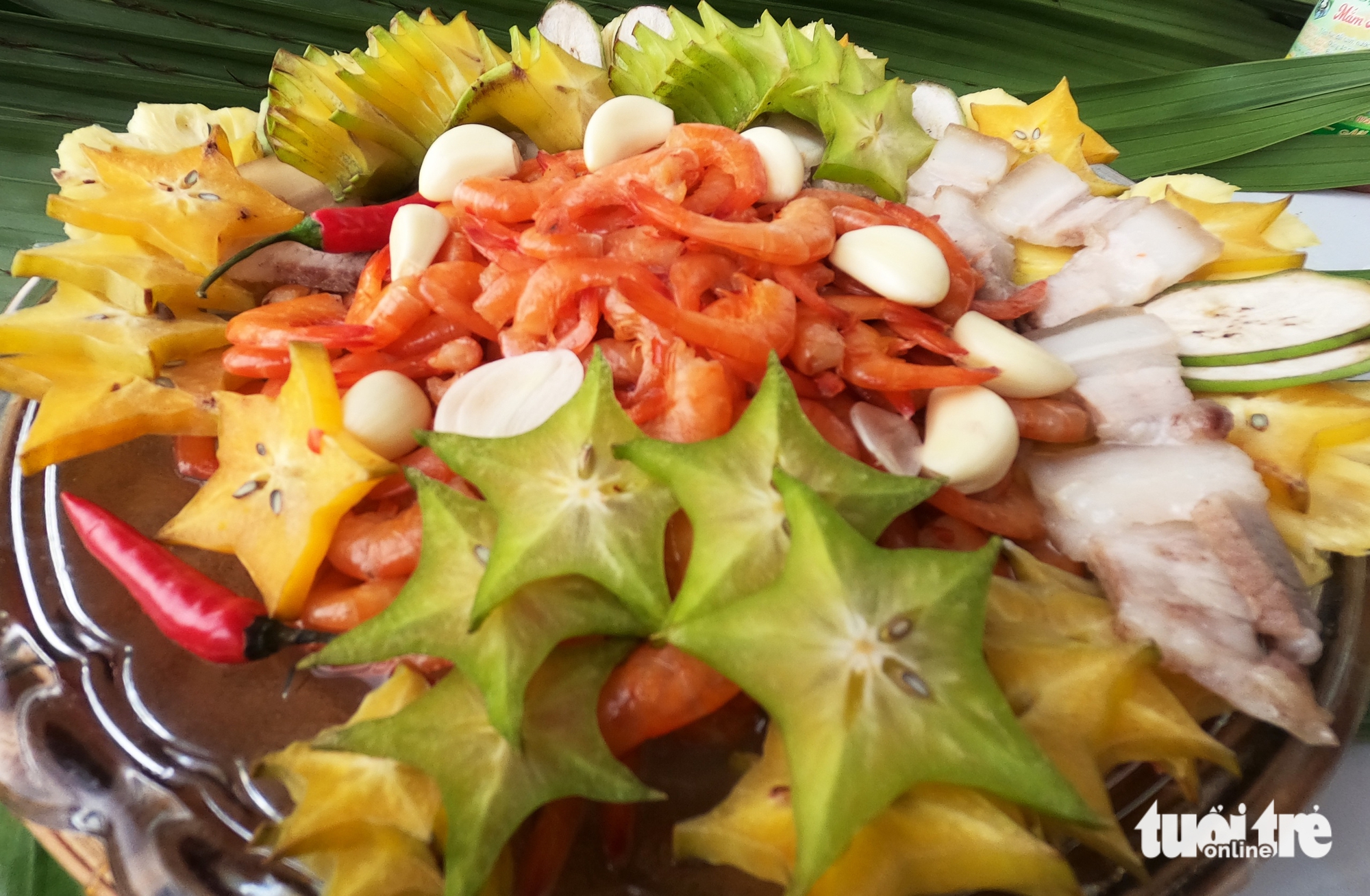
Shrimp paste is often served with pork and sour or astringent fruits to neutralize the strong aroma of the paste and the richness of the pork - Photo: THANH HUYEN
The specialties of Ca Mau, with their delicious and authentic flavors of the Mekong Delta, will take you on an impressive culinary journey that you'll find hard to forget after just one taste.
The mangrove forests of Ca Mau are divided into two types: coastal mangrove forests and production forests.
Animals living under the canopy of coastal mangrove forests and tidal flats in areas where aquatic life regenerates will be strictly protected, and exploitation and fishing in any form will be prohibited.
Production forests are allocated to the people for both shrimp and crab farming and economic development, including tourism. In these production forest areas, people are allowed to harvest products from under the forest canopy or cultivate and develop a diverse range of aquatic species.
Tuoitre.vn
Source: https://tuoitre.vn/thuong-thuc-dac-san-duoi-tan-rung-ngap-man-lon-thu-2-the-gioi-20250316192830009.htm#content-5















































































Comment (0)