

This is the opinion of financial expert, Dr. Nguyen Tri Hieu, when analyzing the impacts of the US Federal Reserve's interest rate cut on September 18th.
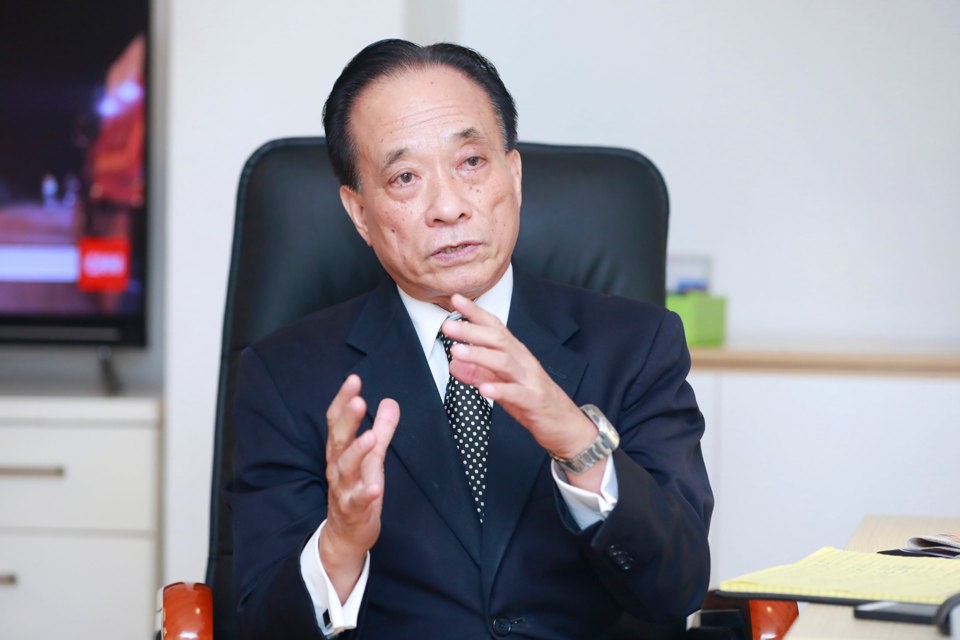
Positive impact on economic activity.
In September, the Fed decided to cut interest rates by 0.5%, the first time in four years. How will this impact the Vietnamese economy, sir?
- The Fed has decided to cut interest rates by 0.5%, signaling a new cycle of loose monetary policy. At this time, inflation in the US is well under control, although still above 2%, it is trending downwards. The Fed has reason to believe that lowering interest rates, reducing capital costs for businesses, will increase employment rates and support growth.
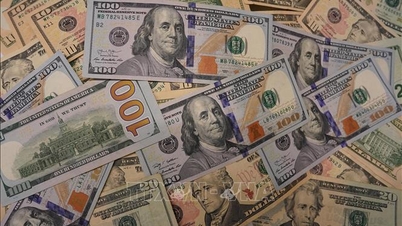
The Fed's interest rate cut will impact the Vietnamese economy. Firstly, lower interest rates and a potentially weaker US dollar will reduce its value against the Vietnamese dong. Conversely, the value of the dong will increase, halting further depreciation or, in other words, reducing pressure on the exchange rate to rise. That is the direct impact.
Indirect impacts are clearly evident in the reduction of the interest rate differential between VND and USD, thereby easing pressure on the exchange rate. Previously, when USD interest rates were high and VND interest rates were low, the value of the VND against the USD was low (putting upward pressure on the exchange rate).
Secondly, it benefits foreign trade. A stable exchange rate contributes to lower import costs, reducing inflationary pressure on the VND. Furthermore, a downward trend in global interest rates stimulates consumer demand, investment, and business production, helping the global economy maintain its growth momentum and sustainability, boosting demand for goods and services, and ultimately increasing demand for Vietnamese exports.
Regarding investment activities, the Fed's interest rate cut helps stabilize interest rates, reduce the cost of debt and foreign currency investment for businesses in Vietnam. The cost of borrowing for the government and FDI enterprises in foreign currency has also decreased. This contributes to reducing debt risk while stimulating credit and investment in the coming period. Furthermore, the stability of the VND exchange rate will further encourage investment activities by foreign investors.
Interest rates are appropriate for the Vietnamese context.
While many central banks have lowered interest rates, why hasn't the State Bank of Vietnam (SBV) reduced its policy interest rate yet?
- In Vietnam, given the prospect of the Fed cutting interest rates in September, the State Bank of Vietnam (SBV) reduced the lending interest rate for securities-backed loans (OMO) for the first time since the end of 2023, from 4.5% to 4.25% on August 5th, and again to 4% on September 16th.
The reduction in the two aforementioned interest rates is believed to be aimed at supporting liquidity in the banking system after a period of interest rate increases to alleviate exchange rate pressure. It's worth remembering that before the US reduced interest rates by 0.5% last September, the country had a series of consecutive interest rate hikes. During this period, the Fed raised interest rates by 75 basis points four times in a row, with the last increase in July 2023. Over the past few months, banks have collectively adjusted deposit interest rates upwards to meet the anticipated strong increase in credit demand in the final months of the year.
In reality, interest rates in the open market channel, through which the State Bank of Vietnam influences interbank interest rates (market 2), help to lower the cost of capital for banks, thereby indirectly helping banks reduce lending interest rates in (market 1) - where transactions take place between financial institutions and businesses and individuals.
The State Bank of Vietnam loosened monetary policy earlier than the Fed, and interest rates in Vietnam are already very low, so it is likely that monetary policy will remain stable from now until the end of the year.
The current context also requires consideration of inflation, exchange rates, macroeconomic stability, and the stability of the monetary and foreign exchange markets… The State Bank of Vietnam needs to balance the goals of macroeconomic stability and growth in the context of increasing exchange rate and inflationary pressures...
The volatile global situation, increasingly fierce trade competition, unpredictable escalation of political and military conflicts, and natural disasters such as storms and floods are driving up world commodity prices, thereby putting inflationary pressure on Vietnam – a country with a very high degree of openness to the world. In recent days, crude oil prices have risen again due to tensions in the Middle East.
This is also the sentiment of the Governor of the State Bank of Vietnam when explaining to businesses the need for recent reductions in lending interest rates. Because the State Bank of Vietnam's mission is multi-objective. What is the reason for the recent sharp increase in the domestic exchange rate, while the Fed is lowering interest rates on the US dollar?
- After a period of cooling down from August and bottoming out in September, the exchange rate between the Vietnamese Dong and the US Dollar has risen again since the beginning of October. This increase is not only due to the interest rate differential between the USD and VND but also to many other factors, including supply and demand in the market. Increased demand for US dollars also pushes the exchange rate up. The year-end period sees a surge in demand for foreign currency for payments from import businesses and FDI companies.
Exchange rate fluctuations are not yet a cause for concern. The USD price in the unofficial market has climbed again, while prices at banks remain stable. The Fed may cut interest rates by another 50 basis points by the end of 2024 if economic data continues to be positive. This could help ease pressure on the VND. However, it should be noted that any change in Fed policy could create significant volatility in the Vietnamese foreign exchange market.
Businesses are still hoping for lower interest rates. In your opinion, are the current interest rates appropriate?
Currently, the State Bank of Vietnam's policy interest rate is relatively low, at 3-4.5%, compared to the inflation target of 4-4.5%. The real interest rate differential between the policy interest rate and inflation is relatively narrow. Therefore, there is not much room for further monetary easing. I believe that the current monetary policy management is appropriate given the macroeconomic context, inflation, and the resilience of credit institutions.
Based on a balance between economic recovery, moderate inflationary pressure, and a weakening Vietnamese Dong against the US Dollar, the State Bank of Vietnam may find itself in a more favorable position to manage monetary policy. However, the overall trend suggests that banks will continue to maintain stable, low lending interest rates to prioritize credit growth. Businesses and borrowers in general should not expect lending interest rates to fall further, as the non-performing loan ratio is still trending significantly upwards recently, increasing the provisioning costs for banks.
Credit is flowing to the right places.
Businesses still struggle to access affordable capital and want quicker and easier access to production and business loans. What solutions can create a win-win situation for both banks and businesses?
- Banks always have strict terms and conditions, and businesses wanting to borrow must accept and comply. Policies related to credit, especially regarding collateral, particularly in the agricultural sector, need to be changed; increasing the loan value based on collateral. And especially, the role and effectiveness of the Credit Guarantee Fund need to be enhanced. Funding sources from the State, ministries, and projects should be explored to organize additional programs to improve the capacity of small and medium-sized enterprises (SMEs).
The State establishes and develops state-owned financial institutions to implement credit guarantee policies for businesses. The basic function of these institutions is to guarantee bank loans for small and medium-sized enterprises (SMEs) in order to encourage them to make long-term investments, innovate technology, enhance competitiveness, and integrate into the international market.
The target for GDP growth for the whole year of 2024 is over 7%, with growth in the fourth quarter ranging from 7.5% to 8%. A significant amount of capital will be injected into the economy from now until the end of the year. Do you think credit growth will reach the target of 15%? How can we ensure that this capital is absorbed and flows into production and business activities in a timely and effective manner?
- With the economy continuing its positive recovery in the second quarter and the first nine months of 2024, coupled with the continued stability of low lending interest rates, credit growth in 2024 will be achieved. However, in my personal opinion, we should not pursue credit growth at all costs but must ensure its quality.
Currently, Vietnam's credit-to-GDP ratio is over 125%. International organizations have also warned that Vietnam has one of the highest credit-to-GDP ratios among middle-income countries.
We need demand-stimulating policies and measures that are better than fiscal policies. In my view, fiscal policies to stimulate demand would include increasing government spending, especially public investment. Besides that, spending on social programs, such as business development support programs, should also be prioritized. We need to continue improving the investment and business environment and removing obstacles to production and business.
To support economic growth in the coming period, fiscal policy will continue to play a leading role, expanding in a focused and targeted manner, linked to accelerating the disbursement of public investment. Monetary policy will be proactive and flexible, increasing the ability to access capital for businesses…
Thank you, sir!
As of September 30th, credit growth reached 9%. Disbursements by banks after nine months totaled approximately 1.2 trillion VND, or about 60%. With less than three months remaining in 2024, approximately 800,000 billion VND still needs to be injected into the economy to achieve the target of 15% credit growth. This will open up opportunities for economic recovery as capital flows will be more strongly disbursed into key sectors, boosting production and business activities for enterprises more effectively.
Dr. Nguyen Tri Hieu
Source: https://kinhtedothi.vn/tin-dung-cuoi-nam-tap-trung-vao-chat-luong-tang-truong.html
![[Photo] Closing Ceremony of the 10th Session of the 15th National Assembly](/_next/image?url=https%3A%2F%2Fvphoto.vietnam.vn%2Fthumb%2F1200x675%2Fvietnam%2Fresource%2FIMAGE%2F2025%2F12%2F11%2F1765448959967_image-1437-jpg.webp&w=3840&q=75)













































![[OFFICIAL] MISA GROUP ANNOUNCES ITS PIONEERING BRAND POSITIONING IN BUILDING AGENTIC AI FOR BUSINESSES, HOUSEHOLDS, AND THE GOVERNMENT](https://vphoto.vietnam.vn/thumb/402x226/vietnam/resource/IMAGE/2025/12/11/1765444754256_agentic-ai_postfb-scaled.png)
















































Comment (0)