

Snail cuisine and archaeological tourism
In 2014, the Trang An scenic complex (Tay Hoa Lu Ward, Ninh Binh Province) received the title of World Heritage Site from UNESCO. This was the first mixed heritage site recognized by the organization in Southeast Asia. Mr. Nguyen Viet Cuong, from the Department of Cultural Heritage (Ministry of Culture, Sports and Tourism), stated at the time that Trang An met three criteria for outstanding global value. These included the fact that "Trang An contains evidence of the interaction between humans and the environment, demonstrating human adaptation to changing geographical conditions and the harshest environmental conditions in Earth's history, especially climate changes that occurred at the end and immediately after the last ice age."
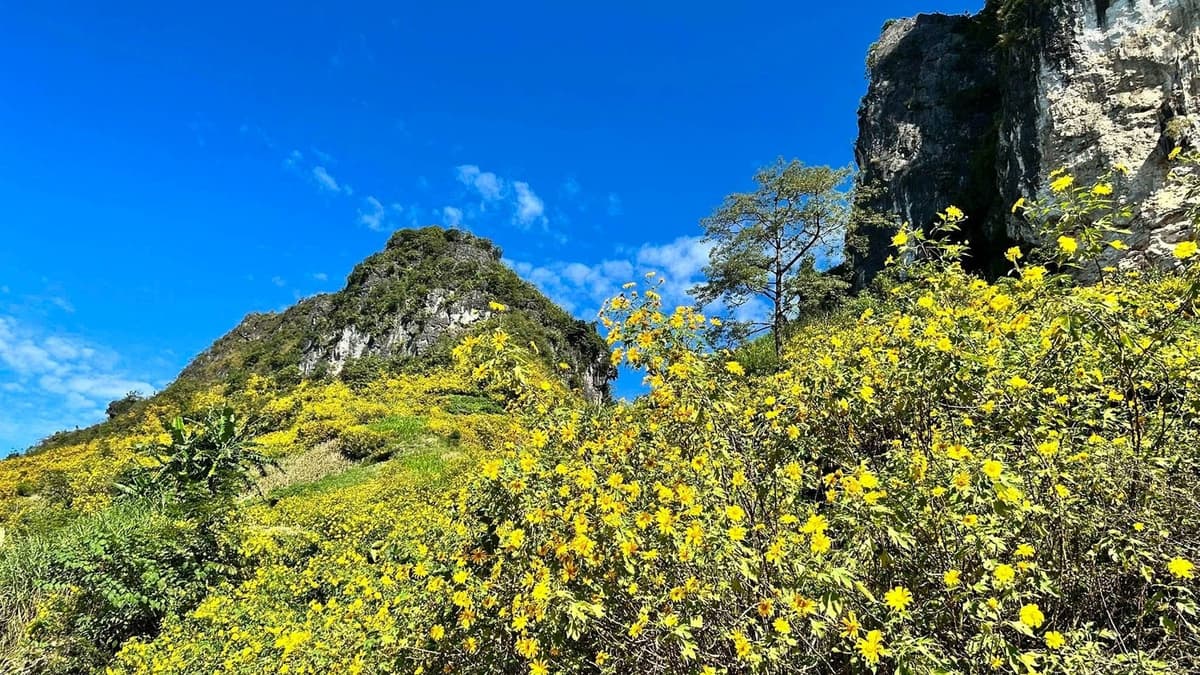
It should also be noted that the Trang An heritage dossier was initially planned to be developed as a World Natural Heritage site. However, this approach proved very difficult. Therefore, experts decided to switch to a mixed heritage dossier, based on archaeological findings at the site. Trang An still meets the criteria for aesthetic beauty with its karst tower landscape, majestic mountains, mysterious caves, and beautiful rivers and waterways. Trang An also meets the geological and geomorphological criteria as evidence of the final stages of karst evolution in a humid tropical climate. However, the criterion of human-environment interaction is ranked first in the dossier.
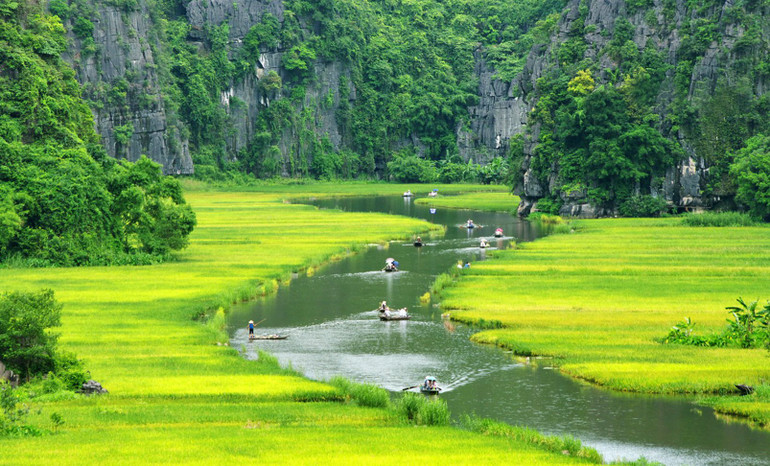
The picturesque scenery of Tam Coc - Bich Dong, part of the Trang An scenic complex. PHOTO: NINH BINH PROVINCE TOURISM DEPARTMENT
Previously, while studying Trang An to create a heritage dossier for the area, researchers found bones of various animals. In addition, they also found stream snails (with their shells cut off), and the remaining shells of marine mollusks such as oysters. Combined with traces of oysters clinging to the rocks and indentations in the limestone, scientists believed that the inhabitants of Trang An had adapted well to the environment. Dr. Nishimura (Japan) even suggested that mountain snails were the food source for the ancient people of Trang An. Traces of hearths indicated that the mountain snails were eaten after being cooked.
Dr. Nishimura even tried different cooking methods: putting the snails in ceramics and steaming them, and directly firing the shells. The experiments showed that when fired directly, the shells became rough, crumbly, and disintegrated. This is consistent with the many broken shells and limestone fragments found there. Mountain snails are still collected in Trang An. This could also serve as "material" for designing experiences if the public wants to understand how ancient people lived in Trang An.
In other words, archaeological tourism is entirely possible at this mixed World Heritage site. Through archaeological tourism, the public can experience Trang An through activities such as visiting prehistoric caves, exploring historical archaeological sites, camping, and experiencing the cooking, harvesting, and gathering methods used by people in the past.
Preserve the boundaries of Trang An.
Despite its beauty and uniqueness as the first mixed heritage site in Southeast Asia, the Trang An World Heritage Site also presents several "heart-stopping" moments. These include the bridge built through the core of the heritage site, as well as the incident that drew a UNESCO warning regarding the remnants of the Kong: Skull Island film set.
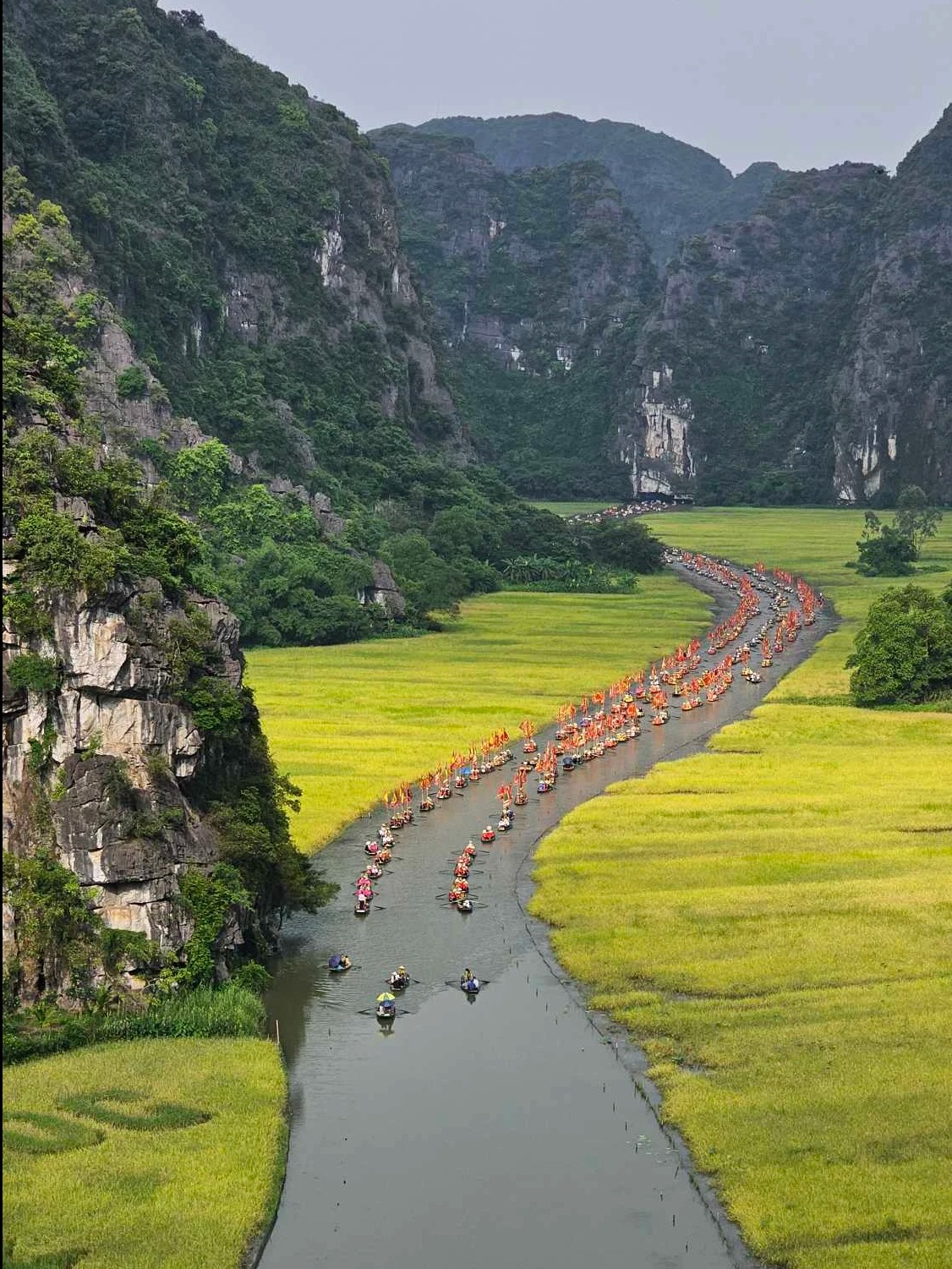
Trang An Scenic Landscape Complex. Photo: Phuc Ngu
Specifically, in 2018, public opinion was stirred by the construction of a bridge with over 2,000 steps in the Cai Ha mountain area, also known as ancient Trang An. The bridge had concrete pillars standing precariously on jagged cliffs. The project owner at the time, Trang An Tourism Joint Stock Company, announced: "The steps are built following the old route of the Dinh Dynasty; the mountain is 95 m high; it consists of 2,234 steps; the length of the step system is 1,115 m." Local authorities later stated that the project was not licensed, however, this does not absolve local leaders of their responsibility for allowing such a structure to run straight through the core of the heritage site.
In 2019, Trang An once again came under the scrutiny of heritage-loving audiences due to the filming location of Kong: Skull Island. After the film crew left, the bridge and the indigenous village were preserved. However, this led UNESCO to recommend the removal of structures that could affect the heritage site. The local Department of Tourism then had to oversee the removal process.
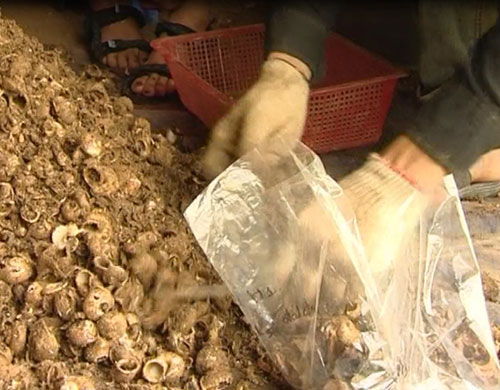
Classification of snails during archaeological excavations in Trang An. PHOTO: INSTITUTE OF ARCHAEOLOGY
Although specific actions have been taken to address these cases, they have raised serious concerns about the vision for heritage preservation. Specifically, the two cases highlight the problems faced by private enterprises when participating in the conservation and promotion of heritage values. For decades, UNESCO has strongly encouraged public-private partnerships in heritage conservation. In Trang An, up to the point of constructing the bridge through the core of the heritage site, a single enterprise had invested 17,000 billion VND and supported the nomination of Trang An as a World Heritage site. However, the monitoring of public-private partnerships and the development of products exploiting the value of Trang An still needs to be strictly enforced.
In 2018, a UNESCO research team even had to advise: "We have specific regulations on principles and approval processes. But we still see constructions being built. Some are stopped by the authorities, but some are not. Therefore, we need to consider the implementation of those regulations as well." Currently, Trang An has many attractive tourist products. However, it is still worthwhile to reiterate these past stories and management lessons.
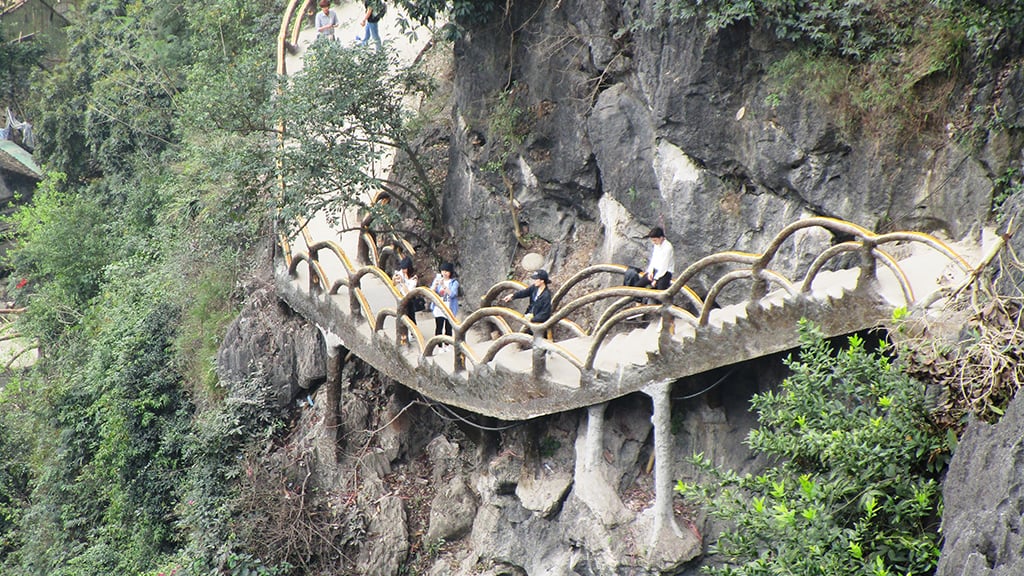
Bridge xuyên through the core of the Trang An heritage site. PHOTO: MINH HAI
Most recently, in August 2025, the workshop "The Brand Value of the Trang An Scenic Landscape Complex in relation to Heritage Conservation Policies and Sustainable Tourism Development" was organized by the Provincial People's Committee, the School of Interdisciplinary Sciences and Arts (Vietnam National University, Hanoi), and the UNESCO Office in Vietnam.
Here, the "Trang An Document" was adopted, orienting the preservation and exploitation of the Trang An heritage value towards sustainable tourism linked to the community and green economy. The document also opens up a direction for the "Urban - Heritage - Ecology - Culture" model, harmonizing preservation and development, and improving community welfare. Clearly, the human aspect is receiving increasing attention from heritage managers. (to be continued)
Source: https://thanhnien.vn/trang-an-can-them-cau-chuyen-con-nguoi-185250901221150385.htm
![[Photo] Prime Minister Pham Minh Chinh attends the Conference summarizing and implementing tasks of the judicial sector.](/_next/image?url=https%3A%2F%2Fvphoto.vietnam.vn%2Fthumb%2F1200x675%2Fvietnam%2Fresource%2FIMAGE%2F2025%2F12%2F13%2F1765616082148_dsc-5565-jpg.webp&w=3840&q=75)


































































Comment (0)