

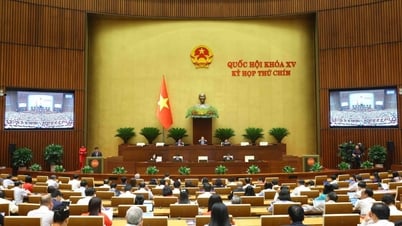
The draft law on the amendment of the Special Consumption Tax Law has just been submitted by the Government to the National Assembly . This is a draft law that will be discussed by the National Assembly at its 8th session, which will open on the morning of October 21st.
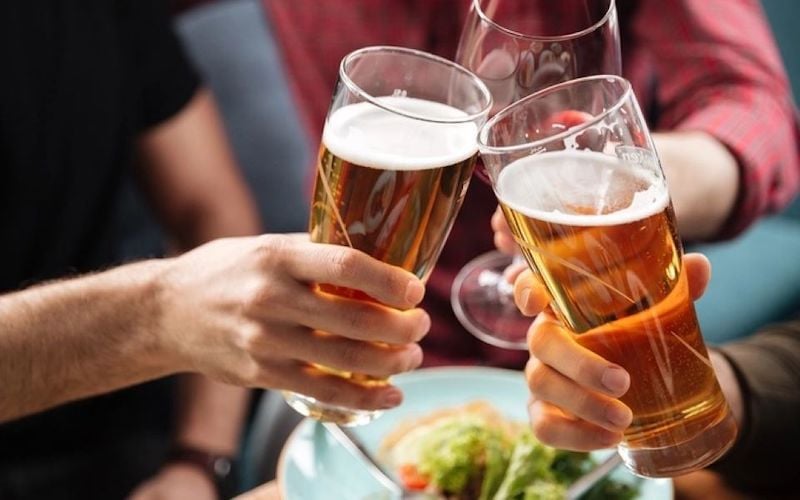 |
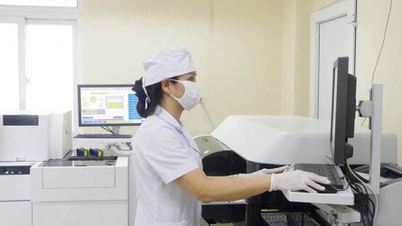
| Illustrative image. |
The draft revised Law on Special Consumption Tax (Draft) stipulates a percentage-based tax rate increase according to a roadmap each year from 2026-2030 to achieve the goal of increasing the selling price of alcohol and beer by at least 10%, as recommended by the World Health Organization (WHO).
In this revision, regarding the excise tax rate for alcoholic beverages with an alcohol content of 20 degrees or higher, the Government is considering two options.
Option 1: Increase the tax rate from the current 65% to 70%, 75%, 80%, 85%, and 90% annually during the period from 2026 to 2030.
Option 2: Increase the tax rate from the current 65% to 80%, 85%, 90%, 95%, and 100% annually during the period from 2026 to 2030.
For alcoholic beverages with an alcohol content below 20%, Option 1 is to increase the tax rate from the current 35% to 40%, 45%, 50%, 55%, and 60% annually during the period from 2026 to 2030.
Option 2: Increase the tax rate from the current 35% to 50%, 55%, 60%, 65%, and 70% annually during the period from 2026 to 2030.
There are also two options for the beer tax. First, increase the tax rate from the current 65% to 70%, 75%, 80%, 85%, and 90% annually during the period from 2026 to 2030. Second, increase the tax rate from the current 65% to 80%, 85%, 90%, 95%, and 100% annually during the period from 2026 to 2030.
In assessing the impact, the Government calculated that, under Option 1, the selling price in 2026 would increase by approximately 2-3% compared to 2025, and in subsequent years, the selling price would increase by 2-3% each year compared to the previous year to ensure that product prices increase proportionally with inflation and income growth in the following years.
Under Option 2, the selling price in 2026 will increase by approximately 10% compared to 2025, and in subsequent years, the selling price will increase by 2-3% each year compared to the previous year to ensure that the product price increases proportionally with inflation and income growth in the following years.
Comparing the impacts of the two options shows that option 2 would have a greater effect in increasing prices, reducing the affordability of strong alcoholic beverages, and having a higher impact in reducing alcohol consumption rates and the related harms caused by alcohol abuse. Therefore, the Government leans towards option 2.
The government's report also stated that, during the process of drafting the revised Law on Special Consumption Tax, there were suggestions to further study the mixed taxation method for alcoholic beverages.
Specifically, regarding alcoholic beverages, several businesses specializing in importing and trading high-end, high-priced wines from the UK and France have proposed considering the application of a mixed tax method. For beer, only one business producing and trading high-end, near-premium, high-priced beer has requested consideration of applying the special consumption tax using a mixed tax calculation method (Heineken Vietnam Brewery Co., Ltd.).
However, many opinions (State Capital Investment and Business Corporation, Association of Foreign Investment Enterprises, Vietnam Association of Financial Investors (VAFI), Saigon Beer, Wine and Beverage Joint Stock Corporation, Hanoi Beer, Wine and Beverage Joint Stock Corporation and many (more than 20) beer and wine production enterprises...) suggest not applying the mixed tax calculation method, but continuing to apply the current tax calculation method based on a percentage of the selling price of the manufacturer and importer for beer.
This method is suitable for the current conditions in Vietnam, given the unique characteristics of the domestic beer market where 80% of the market share consists of mainstream and low-priced local beers, while there is a significant price difference between premium, near-premium, and mainstream products.
According to international practice, developed countries usually apply absolute or mixed excise taxes to alcoholic beverages such as beer and wine because the selling prices and quality are similar and there is little difference. Developing countries usually apply excise taxes as a percentage of the selling price to these products, because the selling prices vary greatly and the quality is not uniform, especially the difference between common, low-priced local wines and beers and high-end wines and beers.
In the current context of Vietnam, where the selling price of common alcoholic beverages is much lower than that of premium alcoholic beverages, imposing a mixed excise tax or an additional absolute tax (taxing a fixed amount per unit of product) would put significant pressure on low-priced products.
Applying an additional absolute tax (where products with different selling prices are subject to the same tax) would lead to a significantly higher price increase for mass-market products compared to high-priced products. Consequently, high-end, high-priced goods could replace and dominate the market, putting pressure on mass-market, affordable beer and spirits, impacting production, competitiveness, and employment (as mass-market and low-priced local beers currently account for approximately 80% of the market). Therefore, the mixed tax calculation method or the application of an additional absolute tax on alcoholic beverages and beer is not suitable for Vietnam's current conditions.
Furthermore, in accordance with its commitments upon joining the World Trade Organization (WTO), Vietnam committed to applying a proportional tax method to beer, and the application of this method to beer and spirits is entirely consistent with Vietnam's commitments.
"Therefore, the Government has carefully discussed the choice of tax calculation method for alcoholic beverages. This is based on consideration of factors affecting the domestic alcoholic beverage industry and international commitments upon joining the WTO," the submission stated.
Source: https://baodautu.vn/trinh-phuong-an-thue-tieu-thu-dac-biet-voi-ruou-bia-d225513.html

![[Photo] Prime Minister Pham Minh Chinh holds a phone call with the CEO of Russia's Rosatom Corporation.](/_next/image?url=https%3A%2F%2Fvphoto.vietnam.vn%2Fthumb%2F1200x675%2Fvietnam%2Fresource%2FIMAGE%2F2025%2F12%2F11%2F1765464552365_dsc-5295-jpg.webp&w=3840&q=75)


![[Photo] Closing Ceremony of the 10th Session of the 15th National Assembly](/_next/image?url=https%3A%2F%2Fvphoto.vietnam.vn%2Fthumb%2F1200x675%2Fvietnam%2Fresource%2FIMAGE%2F2025%2F12%2F11%2F1765448959967_image-1437-jpg.webp&w=3840&q=75)







































![[OFFICIAL] MISA GROUP ANNOUNCES ITS PIONEERING BRAND POSITIONING IN BUILDING AGENTIC AI FOR BUSINESSES, HOUSEHOLDS, AND THE GOVERNMENT](https://vphoto.vietnam.vn/thumb/402x226/vietnam/resource/IMAGE/2025/12/11/1765444754256_agentic-ai_postfb-scaled.png)




































Comment (0)