

For three consecutive years, the national fertility rate has fallen below replacement level (2.1 children per woman), particularly in 2023 at 1.96 children per woman, and is projected to fall further to 1.91 children per woman in 2024, the lowest decline in history.
From low birth rates to an aging population, Vietnam needs a comprehensive population strategy.
For three consecutive years, the national fertility rate has fallen below replacement level (2.1 children per woman), particularly in 2023 at 1.96 children per woman, and is projected to fall further to 1.91 children per woman in 2024, the lowest decline in history.
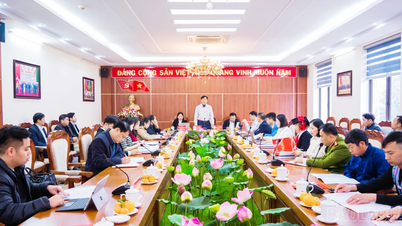
On December 27th, the Population Department ( Ministry of Health ) held a conference to summarize population work in 2024 and implement the plan for 2025. At the event, Director of the Population Department Le Thanh Dung stated that although Vietnam's population policy has achieved certain successes, this work is still facing many difficulties.
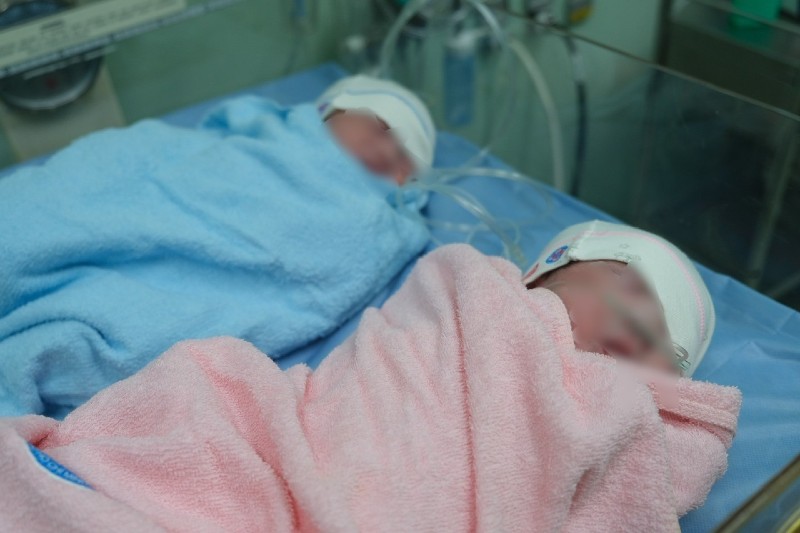 |
Recently, some localities, such as Ho Chi Minh City, have implemented support policies to encourage people to have two children. |
For three consecutive years, the national fertility rate has fallen below replacement level (2.1 children per woman), particularly in 2023 at 1.96 children per woman, and projected to drop further to 1.91 children per woman in 2024, the lowest level in history. If this trend continues, Vietnam will face a natural population decline in the not-too-distant future.
Another serious problem is the gender imbalance at birth, which, although reduced, remains high, estimated at 112 boys per 100 girls in 2024.
Furthermore, the population is aging rapidly, with a growing proportion of the elderly and an inadequate healthcare system to meet their needs. Improving the quality of the population and enhancing their physical, intellectual, and mental well-being remains a significant challenge.
During the period 2021-2025, Vietnam set important population goals, including reducing the gender imbalance at birth, maintaining replacement fertility levels, and improving the quality of the population.
However, achieving these targets requires a comprehensive strategy with strong participation from ministries, departments, and local governments.
One of the most important tasks is to focus on building and perfecting institutions, especially submitting the draft Population Law to the National Assembly at the 10th session (2025) in order to implement Resolution 21-NQ/TW on population.
In addition, it is necessary to implement population projects approved by the Prime Minister, especially programs on reproductive health care, family planning, and improving the quality of the population.
Communication efforts also need to be strengthened to change people's perceptions of population issues, especially the problem of low birth rates.
Media programs need to develop awareness campaigns and educate the community about the importance of having two children and create a favorable environment for families to have and raise their children in the best possible way.
In particular, recently, some localities such as Ho Chi Minh City have implemented support policies to encourage people to have two children.
Recently, the Ho Chi Minh City People's Council issued Resolution No. 40/2024/NQ-HĐND, which stipulates reward policies for families that perform well in population work, such as providing 3 million VND to women who have two children before the age of 35 and 2 million VND to pregnant women and newborns from poor and near-poor households when undergoing prenatal and newborn screening.
However, these financial support policies are merely incentives and cannot completely solve the problem of low birth rates. Developed cities in the Asian region have used financial solutions to address low birth rates, but the results have not been as effective as expected.
Therefore, financial support must be accompanied by synchronized policies on education, healthcare, housing, and social security, in order to create the best living environment for young families.
Addressing the low birth rate is not a task solely for the health sector; it requires the joint efforts of the entire political system and the consensus of the community.
To achieve lasting effectiveness, a synchronized strategy is needed across policies on education, healthcare, social security, and economic development, especially policies that support people in having the means to raise their children in a stable and adequate environment.
Furthermore, to address the problem of low birth rates, Ho Chi Minh City and other localities have adopted many new communication methods, such as using digital media channels, social networks, and mass media to raise public awareness of this issue. Effective communication campaigns will help the community better understand the current population situation and the necessary solutions to improve birth rates.
According to some experts, Vietnam needs to implement strong, comprehensive, and synchronized policies nationwide, from the central to local levels.
The participation of ministries, local authorities, and the community is crucial. Population policy is not simply a matter of reproduction, but also a matter of sustainable national development. With the right solutions, Vietnam can absolutely improve the quality of its population and build a stable and sustainable future.
Associate Professor Dr. Nguyen Thi Lien Huong, Deputy Minister of Health, stated that 2025 is the final year of the 2021-2025 five-year plan, and the final year of Phase 1 of the Vietnam Population Strategy to 2030.
To gradually find decisive solutions for 2025 and the following years to achieve the planned targets and tasks assigned by the Government, especially regarding new issues and turning points in Vietnam's population work in accordance with Resolution No. 21-NQ/TW and Vietnam's population strategy until 2030.
Therefore, Associate Professor Dr. Nguyen Thi Lien Huong requested the Population Department to focus all resources on perfecting the institutional framework, specifically completing the draft Population Law to submit to the National Assembly at its 10th session (2025) in order to put Resolution 21-NQ/TW into practice.
Proactively develop the three projects assigned in Government Resolution No. 68/NQ-CP dated May 9, 2024, and submit them to the competent authorities. Organize an evaluation of the results of the five-year implementation of the Vietnam Population Strategy; conduct preliminary and final reviews of population programs and projects approved by the Prime Minister to propose adjustments and implementation in the 2026-2030 period.
Simultaneously, coordinate with relevant agencies/units in allocating resources for population work to ensure the implementation of the 12 population programs and projects approved by the Prime Minister and the Minister of Health. Serve as the focal point for coordinating with member ministries and agencies to promote the activities of the National Steering Committee on Population and Development.
The Population Department needs to urgently finalize the draft guidelines for implementing population work in 2025 and send them to localities; focus on directing, guiding, and supporting provinces/cities in mobilizing resources and professional expertise in population matters to effectively achieve the population targets set out in the plan for 2025 and the 2021-2025 period.
Source: https://baodautu.vn/tu-muc-sinh-thap-den-gia-hoa-viet-nam-can-chien-luoc-toan-dien-ve-dan-so-d236090.html














































































Comment (0)