

Taking time off for treatment of a serious illness does not require a vote of confidence.
According to Hoang Thanh Tung, Chairman of the National Assembly 's Law Committee, on May 30 and June 9, 2023, the National Assembly discussed in committees and plenary sessions the draft Resolution on taking votes of confidence and no-confidence votes for those holding positions elected or approved by the National Assembly and People's Councils (amended).
There were 123 comments from National Assembly deputies, and basically all deputies agreed on the necessity and highly appreciated the preparation process of the draft Resolution.
Delegates believe that amending Resolution No. 85 ensures consistency and timely institutionalization of Political Bureau Regulation No. 96, contributing to improving the effectiveness and efficiency of supervision by the National Assembly and People's Councils, and enhancing the responsibility and effectiveness of state management agencies.
Regarding the decision not to hold a vote of confidence for individuals with confirmed serious illnesses who have not held office for six months or more, Mr. Tung stated that the Standing Committee of the Law Committee and the Committee on Representative Affairs unanimously agreed to accept the opinion of the majority of National Assembly deputies.
At the same time, revise the regulations in Clause 5, Article 2 of the draft Resolution to ensure stricter control over the process, by not requiring a vote of confidence for individuals on leave for treatment of serious illnesses with confirmation from a medical facility and who have not been in charge of work for 6 consecutive months or more.
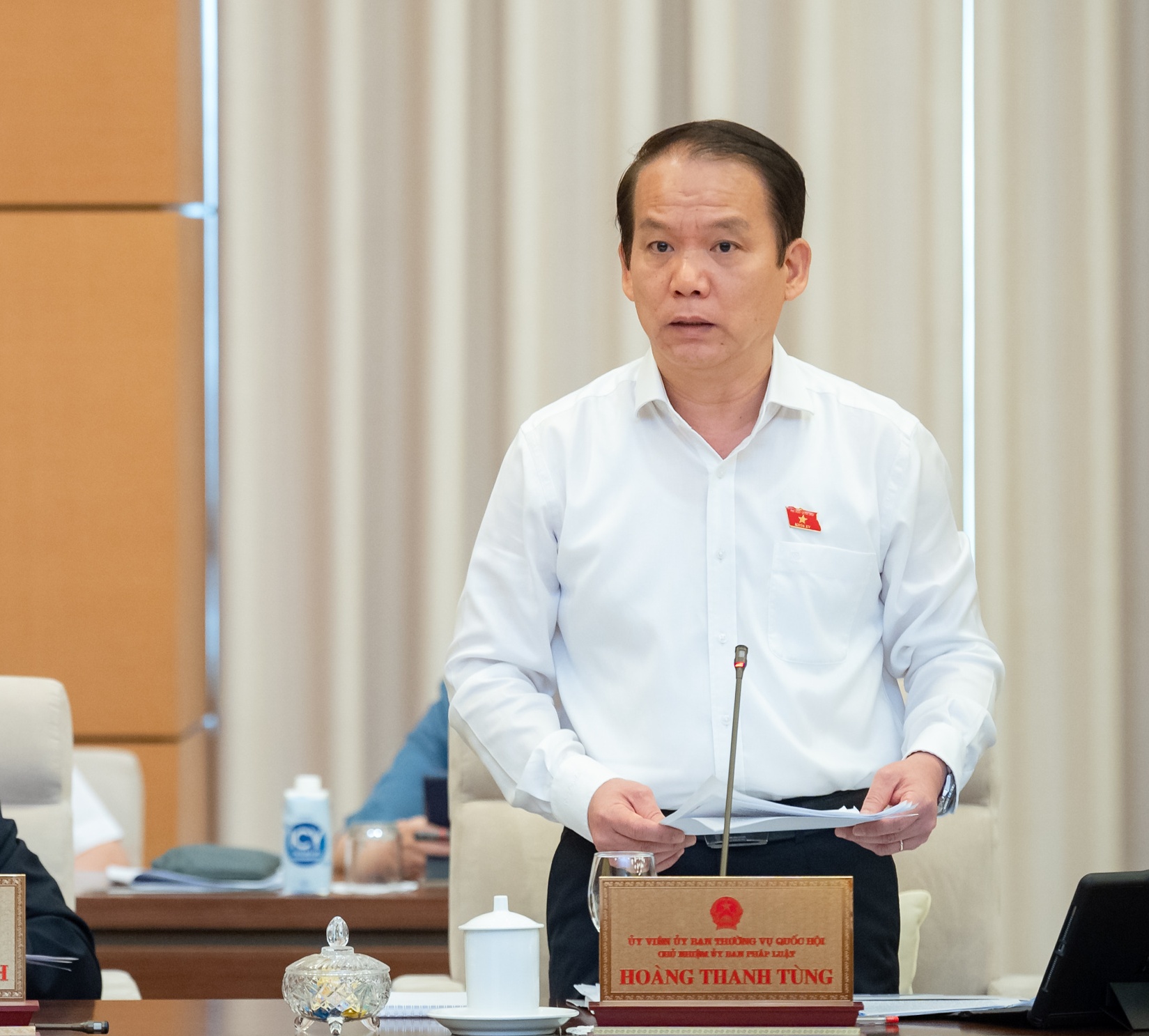
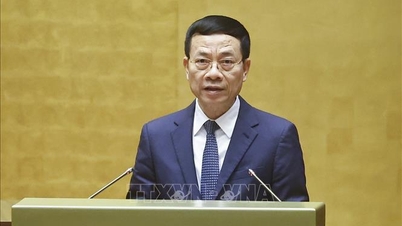
Chairman of the National Assembly's Law Committee, Hoang Thanh Tung.
"This is an issue arising from practical implementation of policies and regulations in personnel management. This includes health standards for leading officials, so appropriate regulations are needed to address this," Mr. Tung explained.
Regarding specific issues such as criteria for identifying serious illnesses, the authorized medical facilities for confirmation, etc., these are professional matters that need to be implemented in accordance with the law on medical examination and treatment and the decentralization of personnel management. If necessary, the Standing Committee of the National Assembly will provide specific guidance during the implementation process.
Regarding the process of taking and casting votes of confidence in the National Assembly and People's Councils, based on the opinions of National Assembly deputies, Mr. Tung said that the draft Resolution has been revised to the effect that the Standing Committee of the National Assembly and the Standing Committee of the People's Councils will only consider and propose a list of those subject to the vote of confidence and will issue a document requesting those subject to the vote of confidence, according to the proposed list, to prepare reports.
At the session, the Standing Committee of the National Assembly and the Standing Committee of the People's Council will submit to the National Assembly and the People's Council a list of individuals to be subject to a vote of confidence. This regulation both inherits and supplements Resolution No. 85, while clearly defining the authority and responsibility of the National Assembly, the People's Council, and their standing bodies.
Some have suggested revising the regulations to require those subject to the confidence vote to provide explanations regarding the issues raised in the consolidated report of voter opinions compiled by the Vietnam Fatherland Front Committee, and that these reports should be sent to National Assembly deputies and People's Council deputies at all levels.
Regarding this matter, the Standing Committee of the Law Committee and the Committee on Representative Affairs unanimously agreed to accept the above opinions and revise the provisions in Articles 10 and 11 of the draft Resolution to the effect that upon receiving the consolidated report of voters' opinions from the Vietnam Fatherland Front Committee, the Standing Committee of the National Assembly and the Standing Committee of the People's Council are responsible for sending it to National Assembly deputies, People's Council deputies, and those subject to the confidence vote.
At least three days before the confidence vote session, the person subject to the confidence vote is responsible for submitting an explanatory report (if any) on the issues raised in the summary report of voters' opinions compiled by the Vietnam Fatherland Front Committee to the Standing Committee of the National Assembly, the Standing Committee of the People's Council, and the requesting delegates.
Deadline for the person being subjected to a vote of confidence to resign.
Regarding the consequences of votes of confidence and no-confidence votes , the Standing Committee of the Law Committee and the Committee on Representative Affairs stated that the provisions in Clauses 2 and 3 of Article 12 of the draft Resolution consistently and fully reflect the spirit of Regulation No. 96 on the use of the results of votes of confidence and the requirement to strengthen Party building and rectification.
To align with the scope of regulation, this draft Resolution does not specify in excessive detail all the cases and timeframes for those subject to a vote of confidence to resign; this matter will be governed by other relevant regulations of the Party and the State.
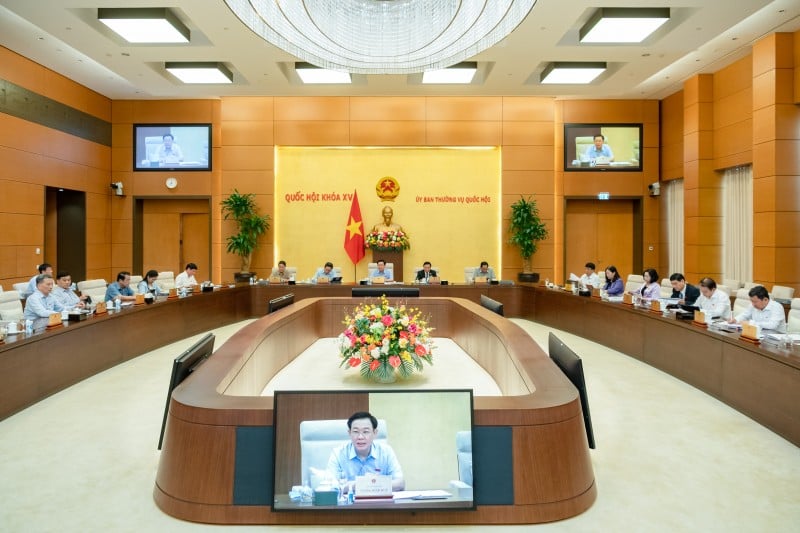
The Standing Committee of the National Assembly gave its opinion on several major issues, explaining, receiving feedback, revising, and perfecting the draft Resolution on taking votes of confidence and no-confidence votes.
There have been suggestions to review and clearly define the situation where a person holds multiple positions, but when a vote of confidence is taken, one position receives a high level of confidence while another receives a different level. The question is which result should be used as the basis for proceeding with the next steps.
The Standing Committee on Legal Affairs and the Committee on Representative Affairs request permission from the Standing Committee of the National Assembly to incorporate the above-mentioned opinions and revise the regulations on the case of taking a vote of confidence for a person simultaneously holding multiple positions elected or approved by the National Assembly or People's Councils, in order to have appropriate provisions on the consequences.
Accordingly, if a person holds multiple positions simultaneously, the vote of confidence will be conducted once for all those positions.
In cases where a person has been subjected to a vote of confidence for multiple positions simultaneously, and more than half but less than two-thirds of the total number of National Assembly deputies or People's Council deputies rate them as having "low confidence," then a vote of confidence will be conducted only once for those positions.
If a person has been subjected to a vote of confidence for multiple positions simultaneously and receives a "low confidence" rating from 2/3 or more of the total number of National Assembly deputies or People's Council deputies, then they shall be dismissed from all those positions .
Source





























































































Comment (0)