

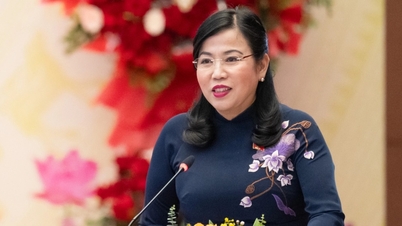
At a press conference on the afternoon of October 17, Ms. Pham Thi Hong Yen, a full-time National Assembly representative on the Economic and Financial Committee, answered a question about why the National Assembly has not yet amended the Land Law as planned.
The Land Law 2024 was promulgated and came into effect on August 1, 2024. According to Ms. Yen, this is a major and extremely important law, directly and profoundly impacting all socio-economic activities, affecting businesses and citizens.
According to Ms. Yen's assessment, many of the new provisions of the Law and the system of detailed guiding documents on the Land Law are groundbreaking.
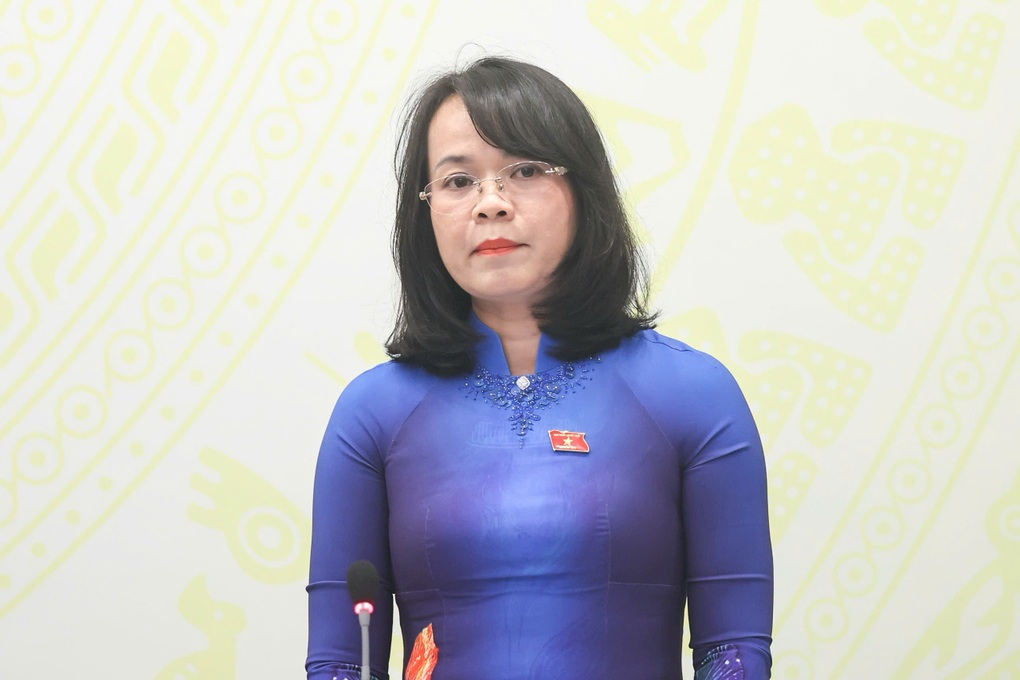
Ms. Pham Thi Hong Yen, a full-time member of the National Assembly's Economic and Finance Committee (Photo: Quang Phuc (Photo: Hong Phong).
However, since 2024, the global economic landscape has been highly unpredictable. Vietnam is prioritizing growth, macroeconomic stability, and implementing a revolution in streamlining the administrative apparatus and building a two-tiered local government model.
"These are new contexts, requiring immediate solutions to address shortcomings and adapt," said Ms. Yen.
Ms. Yen explained that the reason for not amending the Land Law immediately is that a comprehensive revision at this time requires more time to fully and comprehensively assess the difficulties and obstacles. At the same time, it is necessary to ensure that the proposed amendments are holistic, fundamental, comprehensive, synchronized, and interconnected; and adhere to the principle of harmonizing the interests of the State, the people, and businesses.
Therefore, the comprehensive amendment of the Land Law will continue to be studied in the coming time.
Instead, the immediate solution is to issue a Resolution to address the current obstacles right away.
This content is being further studied by the Government and National Assembly agencies to report to the National Assembly Standing Committee and the National Assembly.
"This solution is expected to contribute to achieving socio-economic development goals, improving land management efficiency, and creating momentum for Vietnam to become a high-income developed country," Ms. Yen said.
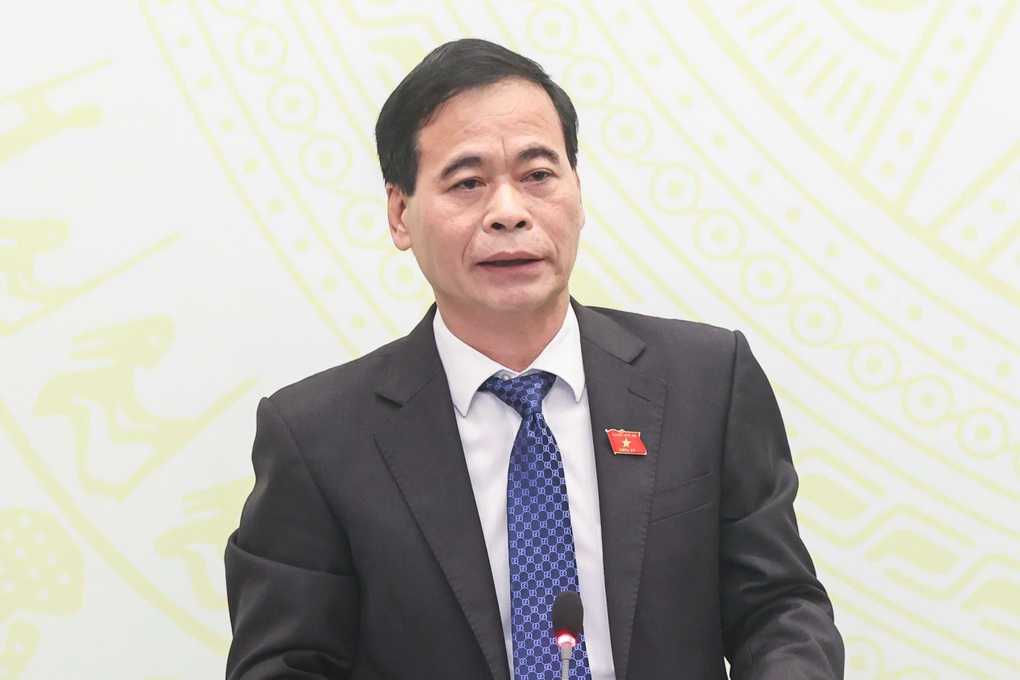
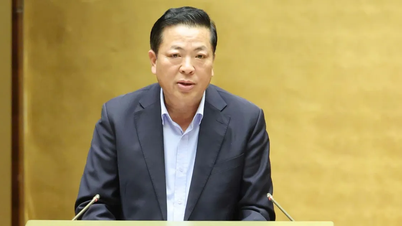
Deputy Chairman of the Committee on Law and Justice Nguyen Manh Cuong (Photo: Hong Phong).
Regarding the change in discussion format at the 10th session by combining related content, Deputy Chairman of the Committee on Law and Justice Nguyen Manh Cuong stated that combining laws and reports with related content into a single discussion session does have limitations, but it is the optimal and most feasible solution to complete the unprecedentedly massive workload at the 10th session.
He stated that at this session, the National Assembly will consider and approve 53 draft laws and resolutions.
With many urgent issues raised, along with the grouping of many discussion topics, according to Mr. Cuong, we should not chase quantity but still put the requirement of ensuring the quality of the draft laws first.
Mr. Cuong emphasized several solutions, including reforming legislative thinking, where the National Assembly only stipulates framework examples and principles within its authority, while leaving it to the Government to regulate matters that are subject to change.
The National Assembly Party Committee also regularly coordinates with the Government Party Committee and relevant agencies to improve the work of submitting, examining, receiving and revising draft laws; and removing difficulties and obstacles in the law.
Along with that, according to Mr. Cuong, the management of group and hall discussions must also ensure flexibility, focus on large, important issues, and avoid duplication.
Source: https://dantri.com.vn/thoi-su/vi-sao-chua-sua-luat-dat-dai-nhu-du-kien-20251017171222151.htm









![[Video] National Assembly passes the amended Civil Servant Law with 92.39% of delegates voting in favor](https://vphoto.vietnam.vn/thumb/402x226/vietnam/resource/IMAGE/2025/12/10/1765379039932_1-6690-3945-png.webp)


















![[Video] The craft of making Dong Ho folk paintings has been inscribed by UNESCO on the List of Crafts in Need of Urgent Safeguarding.](https://vphoto.vietnam.vn/thumb/402x226/vietnam/resource/IMAGE/2025/12/10/1765350246533_tranh-dong-ho-734-jpg.webp)















































Comment (0)