

During a meeting with scholars at Columbia University, the General Secretary and President affirmed that Vietnam is ready for a new historical beginning, a new era, an era of national resurgence for the Vietnamese people.
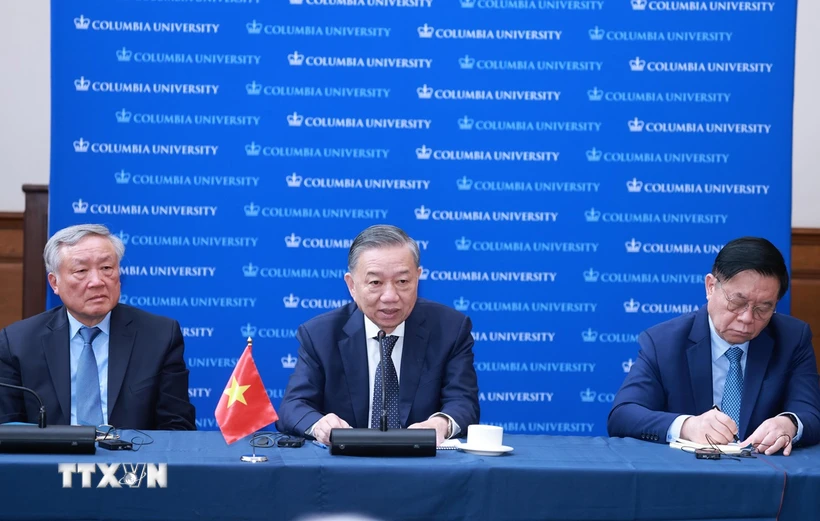
According to the VNA special correspondent, on the morning of September 23rd, local time, within the framework of his working trip to attend the Summit on the Future of the United Nations General Assembly, Session 79, and working in the United States, General Secretary and President To Lam met with experts and scholars at Columbia University.
Attending the meeting on the partners' side were leaders from Columbia University, leaders from the Weatherhead East Asia Institute, professors and researchers from schools and research institutes under Columbia University, US Deputy National Security Advisor for Cybersecurity Anne Neuberger, US Ambassador to Vietnam Marc Knapper, and representatives from several major corporations.
During the meeting, the delegates all agreed that Vietnam has the potential to maintain a high-growth economy based on growth drivers such as high-tech industries, innovation, and an improved investment environment.
Many opinions suggest that the government needs to play a guiding and leading role, using infrastructure as the foundation and the private sector as the main driving force to promote the development of technology, especially artificial intelligence, in Vietnam.
Vietnam needs to prioritize 2-3 emerging technology sectors to focus resources on, including key investment policies for research and development to form leading high-tech industries.
Thomas Vallely, Senior Advisor on Vietnam at the Weatherhead East Asia Institute, believes that Vietnam needs to quickly invest in and develop strategic digital infrastructure, especially in cloud computing and green energy.
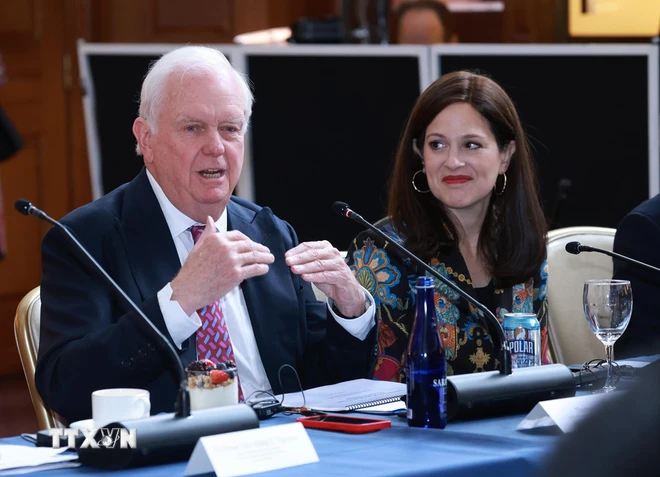
Regarding the semiconductor sector, experts highly appreciate Vietnam's development orientation for the semiconductor industry, affirming that high-quality human resources are a prerequisite for ensuring a country's solid position in the global supply chain and that a good semiconductor ecosystem needs to be developed on the foundation of cooperation between businesses and higher education institutions.
Scott Fritzen, President of Fulbright University Vietnam, proposed improving traditional educational programs to support students in developing the necessary skills to adapt to the rapid advancements in technology.
US Deputy National Security Advisor Anne Neuberger highly appreciated the comprehensive strategic partnership between Vietnam and the United States and believed that there is still much room for both sides to promote bilateral cooperation, especially in ensuring cybersecurity and combating cybercrime.
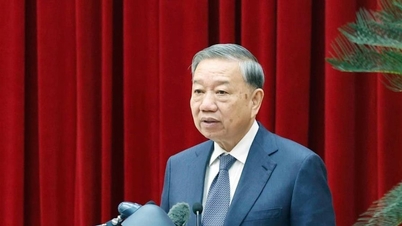
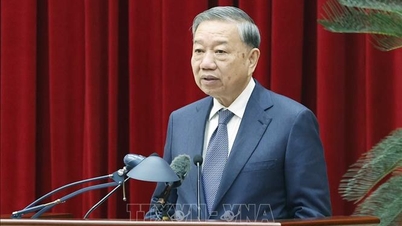
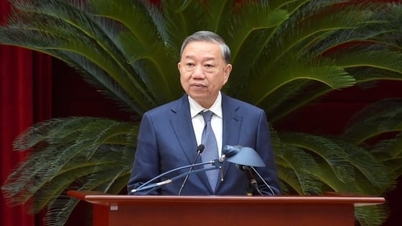
Speaking at the reception, General Secretary and President To Lam welcomed the assessments, heartfelt sharing, and especially the affection that experts and scholars have for Vietnam.
With new strength and momentum, the General Secretary and President affirmed that Vietnam is ready for a new historical starting point, a new era, an era of national progress for the Vietnamese people; stating that Vietnam will continue to comprehensively and synchronously promote the renovation and development of the country, aiming for rapid and sustainable development based on the perspective that economic and social development and environmental protection are central, Party building is key, cultural development is the foundation, ensuring national defense and security and strengthening foreign relations are crucial and ongoing, with the spirit of "self-reliance, self-confidence, self-sufficiency, self-strength, and national pride."
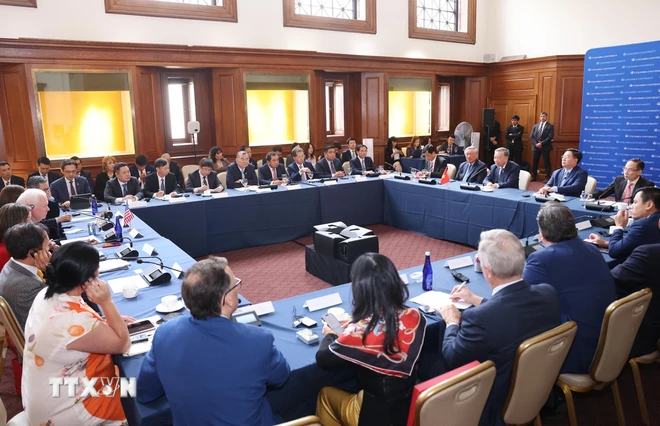
General Secretary and President To Lam emphasized four major orientations in socio-economic development in the coming period: focusing on building, perfecting, and comprehensively reforming the country's development institutions; strongly developing science, technology, innovation, and digital transformation to create breakthroughs in productivity, quality, efficiency, and competitiveness of the economy; continuing fundamental, comprehensive, effective, and substantive reforms in education and training, focusing on developing high-quality human resources for priority and emerging sectors and fields.
With the view that developing internal strengths is fundamental, strategic, and long-term, and a decisive factor; external forces and contemporary factors are important and breakthrough elements, Vietnam persistently pursues an independent, self-reliant, multilateral, and diversified foreign policy, ensuring the highest national and ethnic interests on the basis of the basic principles of international law.
The General Secretary and President requested that experts and scholars continue to pay attention to and strengthen cooperation with Vietnam, especially in research cooperation, policy exchange, and support for Vietnam's scientific and technological development.
In the presence of General Secretary and President To Lam, President of Columbia University Angela Olinto, and other delegates attending the reception, Deputy Minister of Foreign Affairs Do Hung Viet and Executive Vice President of Columbia University Wafaa El-Sadr exchanged the Framework Memorandum of Understanding on cooperation between Columbia University and the Ministry of Foreign Affairs. VinUni University and Fulbright University Vietnam also announced two memoranda of cooperation with Columbia University to promote collaboration in the field of education.
![[Photo] Closing Ceremony of the 10th Session of the 15th National Assembly](/_next/image?url=https%3A%2F%2Fvphoto.vietnam.vn%2Fthumb%2F1200x675%2Fvietnam%2Fresource%2FIMAGE%2F2025%2F12%2F11%2F1765448959967_image-1437-jpg.webp&w=3840&q=75)















































![[OFFICIAL] MISA GROUP ANNOUNCES ITS PIONEERING BRAND POSITIONING IN BUILDING AGENTIC AI FOR BUSINESSES, HOUSEHOLDS, AND THE GOVERNMENT](https://vphoto.vietnam.vn/thumb/402x226/vietnam/resource/IMAGE/2025/12/11/1765444754256_agentic-ai_postfb-scaled.png)





































Comment (0)