

Nestled in the heart of Son La's vast forests, a small village sits precariously at an altitude of over 2,000 meters, where clouds swirl around weathered pine wood roofs and hawthorn blossoms blanket the hills in white. This is Nam Nghiep – a highland village in Ngoc Chien commune, a destination that is becoming a "paradise of white flowers" in the Northwest region.
The name and story of the land
Few people know that the name "Nam Nghiep" also holds an interesting story. According to the village's cultural officer, in the ancient Thai language, "Nam" means water or stream, while "Nghep" is an onomatopoeia mimicking the sound of amphibians that often call around streams.
Initially, this place was called "Nam Nghep" - meaning "the stream where the nghẹp species lives." Over time, the pronunciation gradually changed to "Nam Nghiep."
A simple name, yet it embodies the essence of nature, connected to the sounds of streams and forests, and the pristine rhythm of life of the highland people.
Journey to the Cloud Village
From the center of Ngoc Chien commune, follow the winding road uphill to Nam Nghiep village. The red dirt road meanders, flanked by towering mountains and deep ravines. The higher you go, the thicker the fog, the colder the wind, and the clouds begin to descend, blanketing the mountain pass in white.
Nam Nghiep village, situated at an altitude of approximately 2,200 meters above sea level, is considered one of the highest inhabited villages in Vietnam. 100% of its residents are Hmong people. Nestled high in the mountains, the village enjoys a cool climate year-round, with mist and clouds covering the area in all seasons, and the air is fresh and pure.
Looking down from the top of the pass, Nam Nghiep appears small but peaceful, like a single note echoing in the majestic symphony of the Northwest mountains and forests.
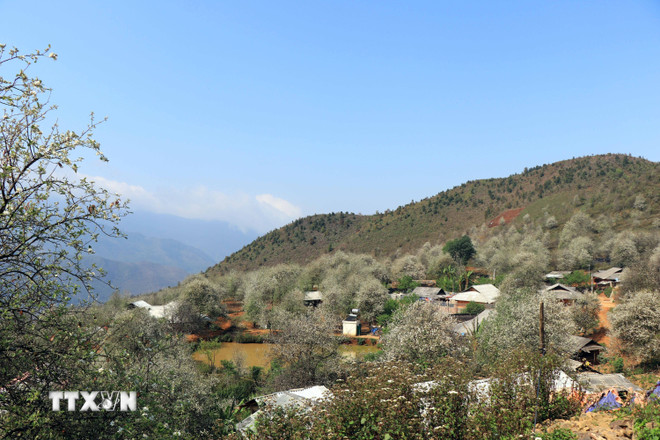
A pristine beauty amidst the clouds.
As evening falls, the last rays of sunlight cast a golden glow on the mountainside, and the blue smoke from cooking fires mingles with the mist. The sound of the Hmong flute rises again, its melodious notes rising and falling amidst the clouds.
At that moment, Nam Nghiep became eerily quiet. Standing on the mountaintop and looking down, all one could see were white clouds and tiny houses nestled amidst the vast forest. Suddenly, time seemed to stand still, and one's heart felt light.
Nam Nghiep is beautiful not only because of its flowers and clouds, but also because of its genuine and kind-hearted people.
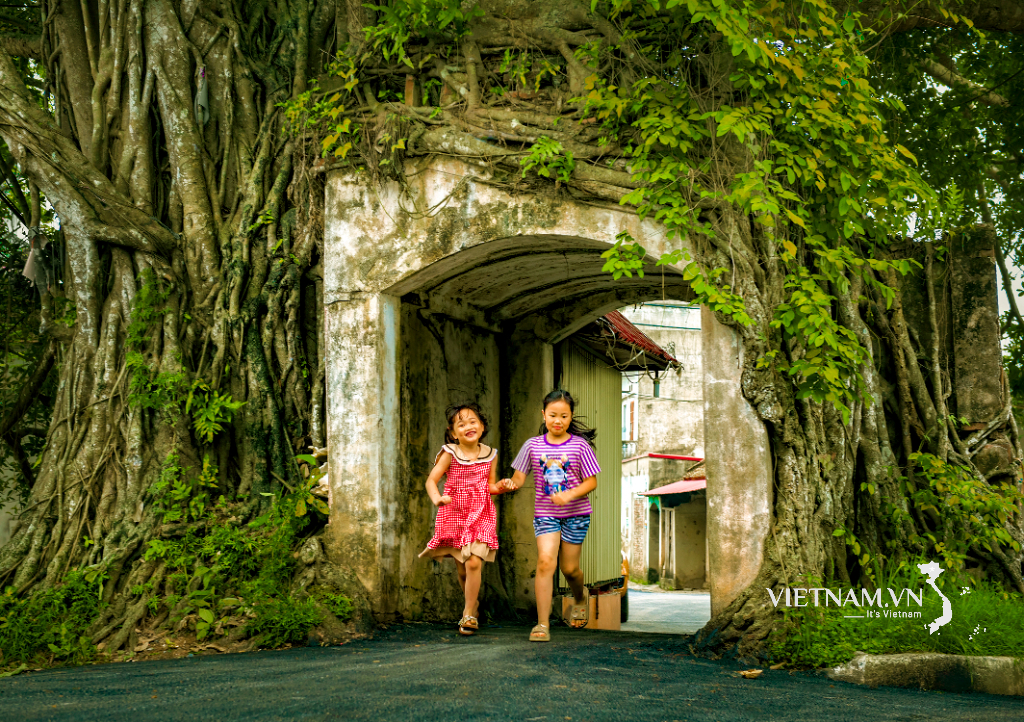
On the red dirt road leading into the village, Hmong mothers, with their wicker baskets on their backs, their faded indigo shirts, their bare feet firmly planted on the slopes, still wore gentle smiles. Children in brightly colored clothes, their cheeks flushed by the wind, ran alongside the vehicle, waving goodbye – an innocent and friendly habit.
If you have the chance to visit Nam Nghiep in the spring, you'll understand why it's called the "kingdom of hawthorn flowers."
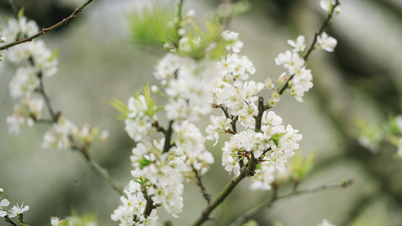
Across the mountains and hillsides, hawthorn blossoms bloom in a blanket of white – tiny, delicate clusters swaying in the breeze. The weathered wooden houses of the Pơ Mu tree nestle beneath the blossoms, the hazy smoke from the chimneys blending with the morning mist to create a dreamy, ethereal scene.
From afar, the entire village seems to be immersed in a sea of fluffy white clouds. It's a beauty that is both wild and poetic, leaving visitors mesmerized. The hawthorn flower is not only beautiful, but also symbolizes enduring vitality – a plant that can thrive in the cold and bloom amidst harsh snow and frost.
For the Hmong people, hawthorn trees are not just ornamental or symbolic plants, but a source of livelihood. At altitudes above 2,000 meters, hawthorn trees cling tightly to rocky mountain slopes, withstanding frost, snow, and cold winds.
From the hawthorn fruit, people make many products such as wine, jam, vinegar, tea, and traditional medicine. The ripe, golden-yellow fruit, with its characteristic sour and astringent taste, is a specialty of the Son La highlands, bringing significant economic value. Thanks to the hawthorn tree, many families in the village have escaped poverty and have a more prosperous life.
The hawthorn blossoms bloom in March every year and have now become a " tourism specialty" of Ngoc Chien. The hawthorn flower festival attracts thousands of visitors, opening up opportunities for economic development linked to community tourism for the Mong people of Nam Nghiep.
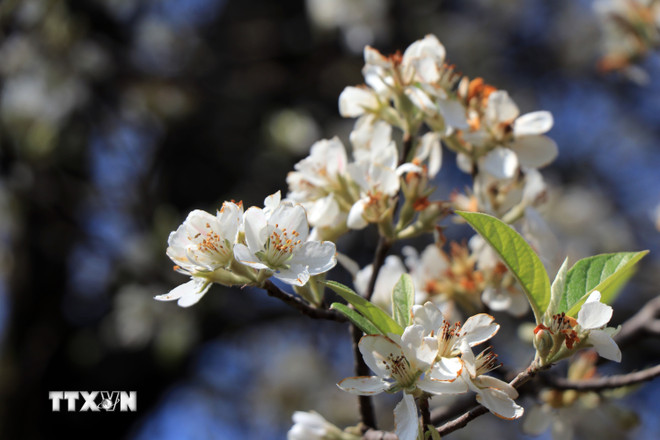
New features in the highland tourism landscape.
Previously, Nam Nghiep was a poor, remote village with poor transportation links. But since tourists started visiting, life has gradually changed.
In recent years, Nam Nghiep has become a new destination on the Northwest tourism map. Although the road to the village is still difficult, those who have visited find the journey well worth it.
In Nam Nghiep, visitors can immerse themselves in the tranquil atmosphere of the mountains and forests, admire ancient hawthorn trees hundreds of years old, breathe in the clean air, sip hawthorn flower-infused tea, or try a glass of sour yet fragrant apple wine.
During the flowering season, the village becomes bustling. Tourists from all over flock in, joining the locals in the hawthorn flower festival, dancing with the khene (a type of bamboo flute), throwing pao (a traditional game), pounding sticky rice cakes, and playing the flute. Amidst the fluffy white clouds, the sound of the Hmong khene echoes, as if leading people into a fairytale land.
These small stilt houses have now been transformed into homestays for guests. Locals have learned how to do tourism, cook local dishes, and tell stories of their village to visitors. Tourists come here not only to admire the flowers but also to experience Hmong culture: sleeping in wooden houses, eating sticky rice, grilled stream fish, smoked meat, and drinking apple wine by the fire.
The genuine hospitality of the locals is what leaves a lasting impression on visitors. No need for luxurious services; just a smile and a cup of forest tea are enough to captivate travelers from afar.
Nam Nghiep - a small village nestled high in the mountains - is not just a tourist destination, but also a symbol of the vitality and human kindness of the highlands.
Amidst that vast wilderness, the hawthorn blossoms still bloom white every spring, a reminder of a pure and enduring beauty – just like the Hmong people of the Northwest highlands.
Source: https://www.vietnamplus.vn/nam-nghiep-net-moi-trong-buc-tranh-du-lich-vung-cao-son-la-post1074910.vnp

![[Photo] Prime Minister Pham Minh Chinh holds a phone call with the CEO of Russia's Rosatom Corporation.](/_next/image?url=https%3A%2F%2Fvphoto.vietnam.vn%2Fthumb%2F1200x675%2Fvietnam%2Fresource%2FIMAGE%2F2025%2F12%2F11%2F1765464552365_dsc-5295-jpg.webp&w=3840&q=75)
![[Photo] Closing Ceremony of the 10th Session of the 15th National Assembly](/_next/image?url=https%3A%2F%2Fvphoto.vietnam.vn%2Fthumb%2F1200x675%2Fvietnam%2Fresource%2FIMAGE%2F2025%2F12%2F11%2F1765448959967_image-1437-jpg.webp&w=3840&q=75)













































![[OFFICIAL] MISA GROUP ANNOUNCES ITS PIONEERING BRAND POSITIONING IN BUILDING AGENTIC AI FOR BUSINESSES, HOUSEHOLDS, AND THE GOVERNMENT](https://vphoto.vietnam.vn/thumb/402x226/vietnam/resource/IMAGE/2025/12/11/1765444754256_agentic-ai_postfb-scaled.png)






































Comment (0)