

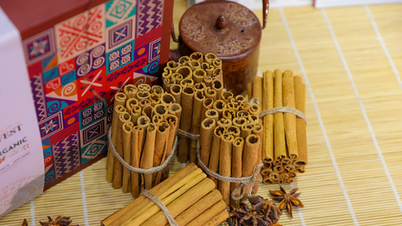
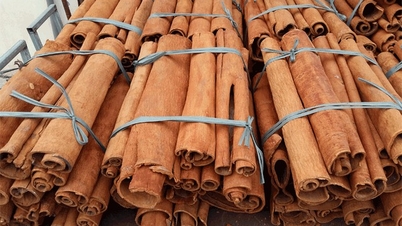
According to statistics from the Vietnam Pepper Association (VPA), Vietnam imported 443 tons of cinnamon in May, worth $1 million, an 18.8% increase in volume compared to the previous month.
In terms of market structure, Asia is Vietnam's largest cinnamon import market. Indonesia and China are the leading suppliers of cinnamon to Vietnam, with 308 tons and 96 tons respectively.
 |
| In May 2024, Vietnam imported cinnamon mainly from Indonesia and China, with volumes reaching 308 tons and 96 tons respectively. |
In the first five months of the year, Vietnam imported 2,452 tons of cinnamon with a value of 5.7 million USD, a decrease of 75.2% and 77.3% compared to the same period last year. Notably, China has risen to become the main supplier to Vietnam, accounting for 45.8% of the total.
Conversely, Vietnam exported 33,528 tons of cinnamon with a total value of over 96 million USD, a slight decrease of 1.1% in volume and a decrease of 4.4% in value compared to the same period last year.
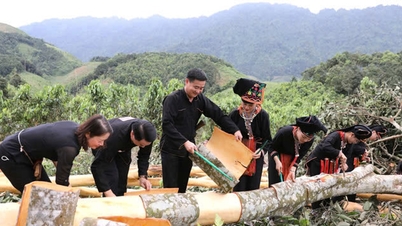
In Vietnam, cinnamon is distributed throughout most regions of the country. However, four major cinnamon-growing areas are Yen Bai , Quang Ninh, Thanh Hoa - Nghe An, and Quang Nam - Quang Ngai. In addition, each region may have different names for cinnamon, such as Yen Bai cinnamon, Quy cinnamon, Quang cinnamon, or May cinnamon (Tay dialect)... The estimated reserves of cinnamon bark in Vietnam are approximately 900,000 - 1,200,000 tons, with an average harvest of 70,000 - 80,000 tons per year. Vietnam is also the world's number one exporter of cinnamon, with export revenue exceeding US$292 million in 2022.
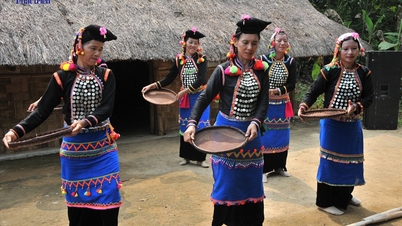
According to the Vietnam Pepper and Spice Association, cinnamon is mainly grown in Vietnam, China, Indonesia (Casia variety), Madagascar, and Sri Lanka (Ceylon variety). Cinnamon cultivation is currently a livelihood for hundreds of thousands of ethnic minority households in remote provinces, and contributes to the socio -economic development of many localities.
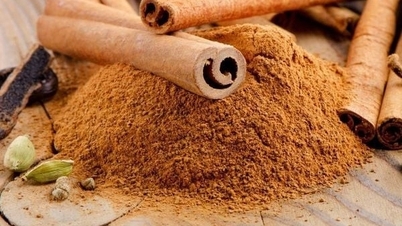
Cinnamon has many uses in production and daily life, such as being used as a spice, flavoring, medicine, in food processing, for raising livestock and poultry, or as fertilizer…
Vietnam possesses a diverse range of medicinal plants, many of which are valuable and rare. However, these are not yet high-value export commodities. The main reason is the lack of a comprehensive plan for the development of medicinal plants in Vietnam, which is largely spontaneous. Furthermore, the absence of clearly defined markets has led to the continued destruction of these plants due to unsold produce.
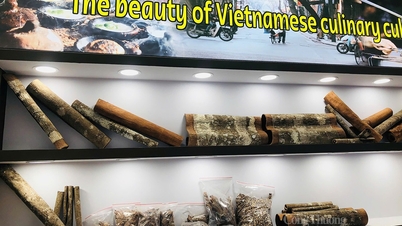
Experts say that to increase opportunities and facilitate the export of Vietnamese cinnamon, star anise, and medicinal plants to international markets, five main issues need to be addressed: promoting research and development of products, preserving rare and valuable medicinal plant genes and varieties; training human resources; strengthening joint ventures and partnerships to develop export markets; building brands for Vietnamese medicinal products and the medicinal plant industry; developing logistics services; and planning large-scale raw material areas to create sufficient commercial output for export.

![[Photo] Prime Minister Pham Minh Chinh holds a phone call with the CEO of Russia's Rosatom Corporation.](/_next/image?url=https%3A%2F%2Fvphoto.vietnam.vn%2Fthumb%2F1200x675%2Fvietnam%2Fresource%2FIMAGE%2F2025%2F12%2F11%2F1765464552365_dsc-5295-jpg.webp&w=3840&q=75)


![[Photo] Closing Ceremony of the 10th Session of the 15th National Assembly](/_next/image?url=https%3A%2F%2Fvphoto.vietnam.vn%2Fthumb%2F1200x675%2Fvietnam%2Fresource%2FIMAGE%2F2025%2F12%2F11%2F1765448959967_image-1437-jpg.webp&w=3840&q=75)



































![[OFFICIAL] MISA GROUP ANNOUNCES ITS PIONEERING BRAND POSITIONING IN BUILDING AGENTIC AI FOR BUSINESSES, HOUSEHOLDS, AND THE GOVERNMENT](https://vphoto.vietnam.vn/thumb/402x226/vietnam/resource/IMAGE/2025/12/11/1765444754256_agentic-ai_postfb-scaled.png)











































Comment (0)