

On the occasion of the 95th anniversary of the founding of the Communist Party of Vietnam (February 3, 1930 – February 3, 2025), Professor G. Devarajan, Secretary General of the All India Forward Bloc (AIFB), gave an interview assessing the innovative and reform efforts undertaken by the Party in leading the country.
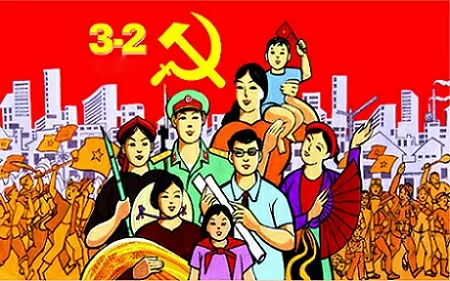 |
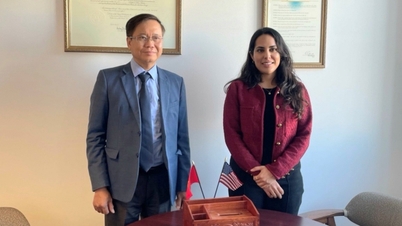
| Indian professor G. Devarajan expressed his admiration for the achievements of the Communist Party of Vietnam. (Illustrative image.) |
Since the start of the Doi Moi (Renovation) process in 1986, Vietnam has made remarkable progress, steadily advancing on the path to development and prosperity. Vietnam's journey towards prosperity and development continues to inspire other nations within and outside the region.
The Doi Moi (Renovation) process, initiated by the Communist Party of Vietnam in 1986, marked a significant shift in Vietnam's economic policy. Faced with economic stagnation, widespread poverty, and the inefficiency of the state-run economy, the Communist Party leadership recognized the need for comprehensive reforms.
The Doi Moi (Renovation) process was designed to modernize Vietnam's economy, improve efficiency, and open the country to global trade while maintaining the state's socialist orientation. These reforms have helped Vietnam transform from one of the world's poorest countries into a rapidly developing economy with significant improvements in living standards, infrastructure, and human development.
Professor G. Devarajan expressed his confidence that under the current leadership of the Communist Party of Vietnam, General Secretary To Lam and President Luong Cuong will continue the Doi Moi (Renovation) process and will address the new challenges emerging in the modern globalized world. According to the Professor, the leadership must focus on maintaining economic growth, improving social welfare, and ensuring the Party's leading role in the country's political life. Because, according to the Professor, one of the key aspects contributing to Vietnam's success during the Doi Moi period is the Communist Party of Vietnam's ability to maintain political stability while implementing reforms.
Assessing the innovative and reform efforts undertaken by the Communist Party of Vietnam in leading the country, Professor Devarajan stated that transformation and modernization, combating corruption, and streamlining the administrative apparatus are essential activities to achieve the Party's long-term goals of sustainable development, social justice, and political stability. By preventing corruption, the government ensures that policies and resources reach the people, while improving administrative efficiency, ultimately strengthening the leadership of the Communist Party of Vietnam and its relationship with the people.
Professor Devarajan expressed his pleasure at seeing Vietnam's current leadership focusing on anti-corruption efforts and ensuring the Party's accountability to the people. According to him, the anti-corruption campaign has helped improve public trust in the Party and its ability to fulfill its promises of modernization and development.
Regarding the goal of reaching new heights in the new era, Professor Devarajan noted that Vietnam is standing at the threshold of a new period of progress, marking an important chapter in the country's ongoing development journey, and under the current leadership of the Party, Vietnam is ready to rise to new heights, fulfilling the aspirations of its people.
Professor Devarajan expressed admiration for Vietnam's achievements and welcomed the dedication of the Communist Party of Vietnam, emphasizing that the journey Vietnam is undertaking will not only elevate the country but also serve as an inspiring example for socialist movements worldwide, demonstrating that a people-centered development path is not only feasible but also necessary to achieve true social justice.
Source
























![[Photo] Prime Minister Pham Minh Chinh holds a phone call with the CEO of Russia's Rosatom Corporation.](/_next/image?url=https%3A%2F%2Fvphoto.vietnam.vn%2Fthumb%2F1200x675%2Fvietnam%2Fresource%2FIMAGE%2F2025%2F12%2F11%2F1765464552365_dsc-5295-jpg.webp&w=3840&q=75)















































Comment (0)