

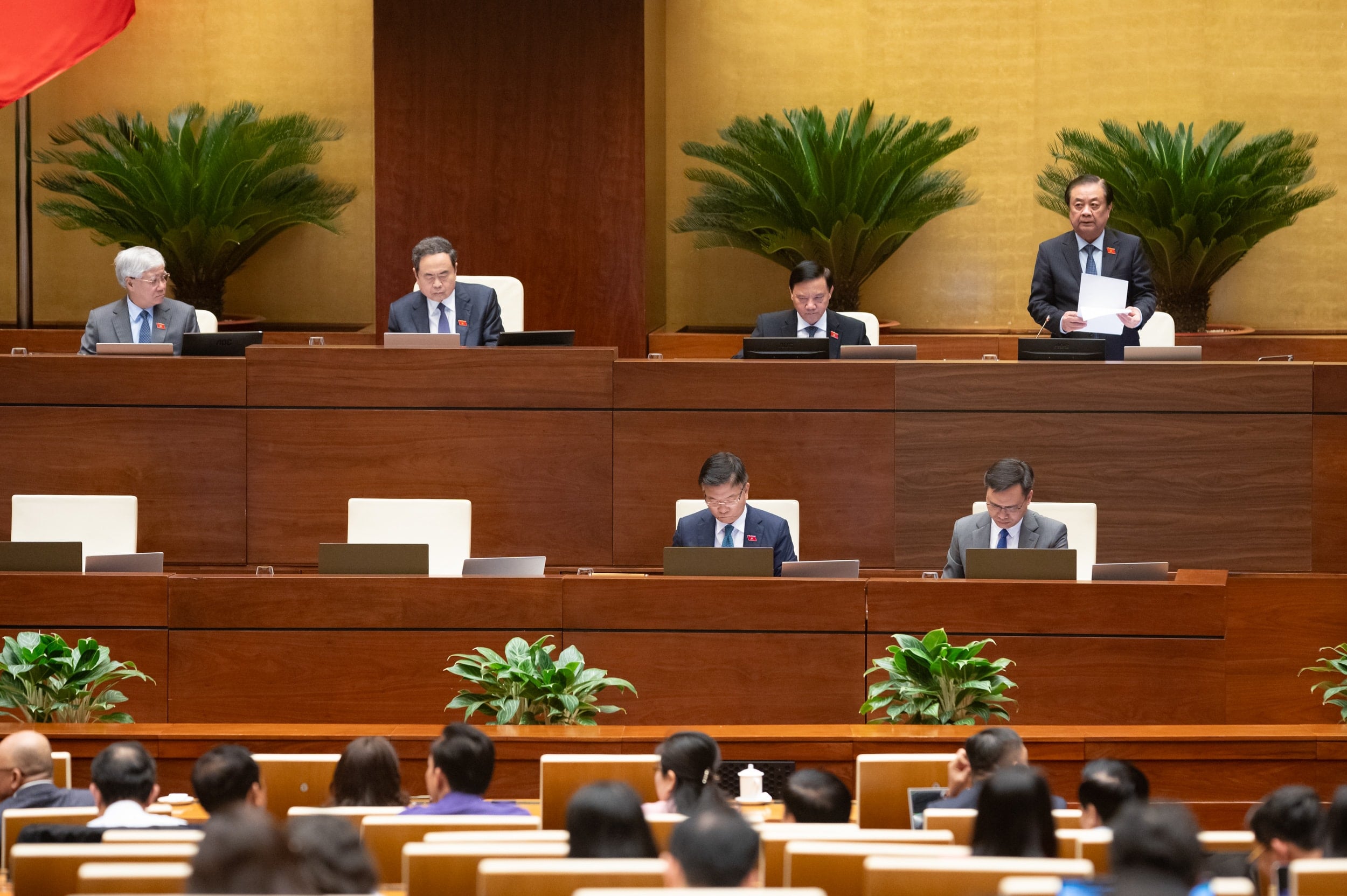
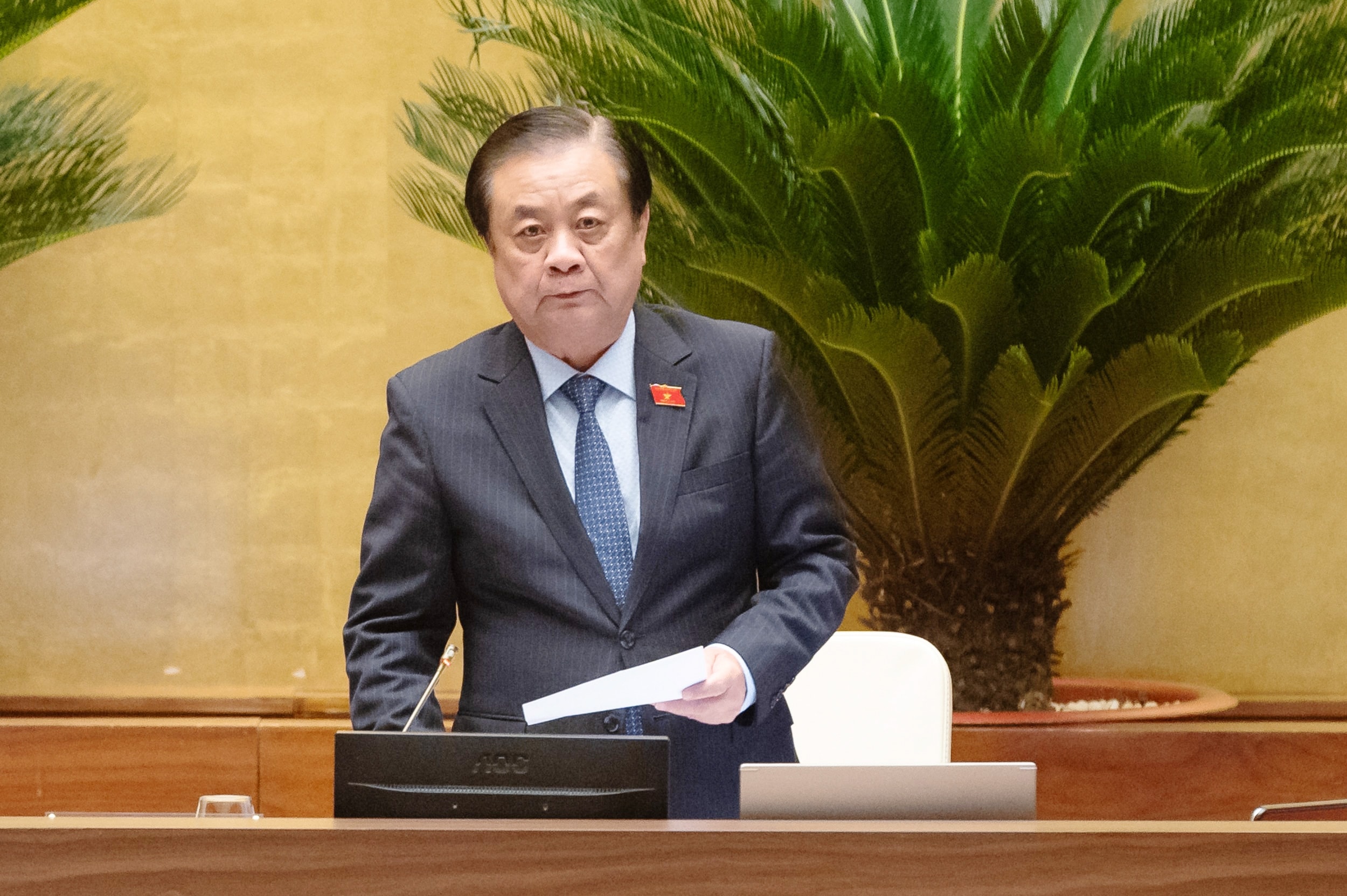
It is necessary to set goals to narrow the gap in facilities and educational quality between regions.
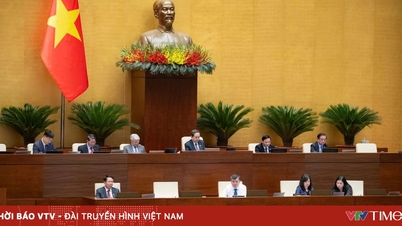
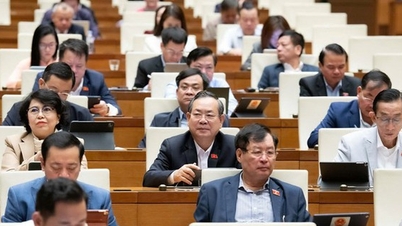
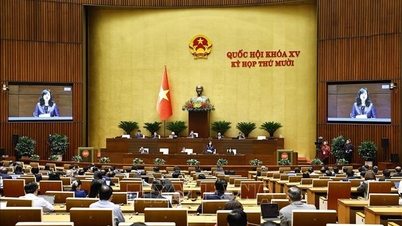
The National Assembly deputies highly agreed on approving the investment policy for the National Target Program on Modernization and Improvement of Education and Training Quality for the 2026-2035 period. This is a decision of long-term strategic significance according to the Party's policies and guidelines; creating a solid foundation for human development, developing high-quality human resources to serve the country's industrialization and modernization in the context of digital transformation and international integration.
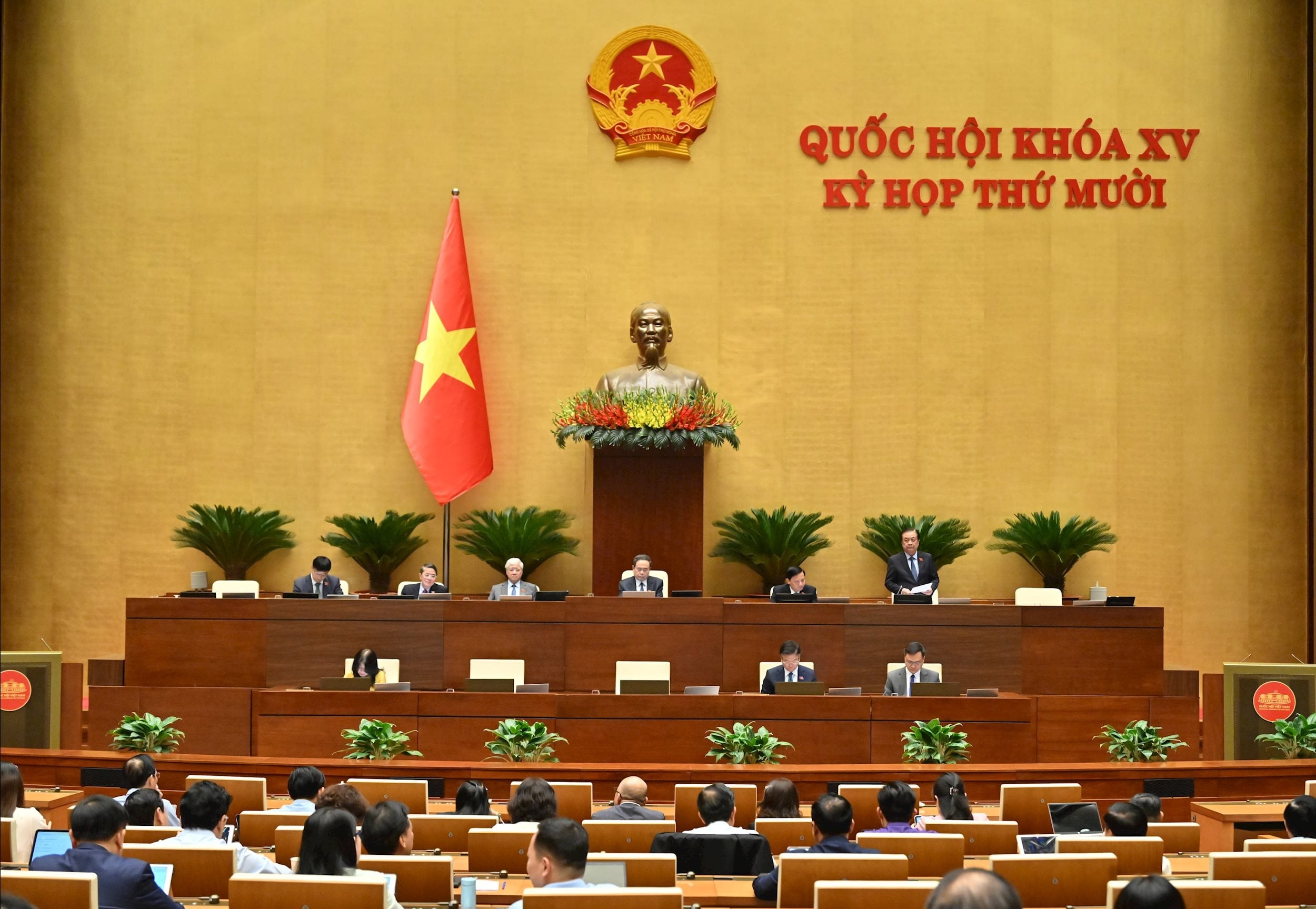
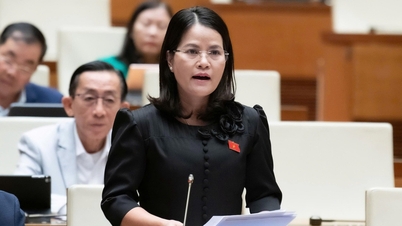
Regarding the objectives of the Program, National Assembly Deputy Nguyen Tam Hung (Ho Chi Minh City) agreed with the orientation of standardizing and modernizing the entire education and training system. However, to ensure fairness and sustainability, the delegate suggested considering adding more clarity to the goal of narrowing the gap in facilities, education quality and learning opportunities between urban - rural - mountainous - island - ethnic minority areas. Reality in recent times has shown a large differentiation between regions. If this goal is not established from the beginning, resources will easily be concentrated on areas that are already good, while weak areas remain weak.
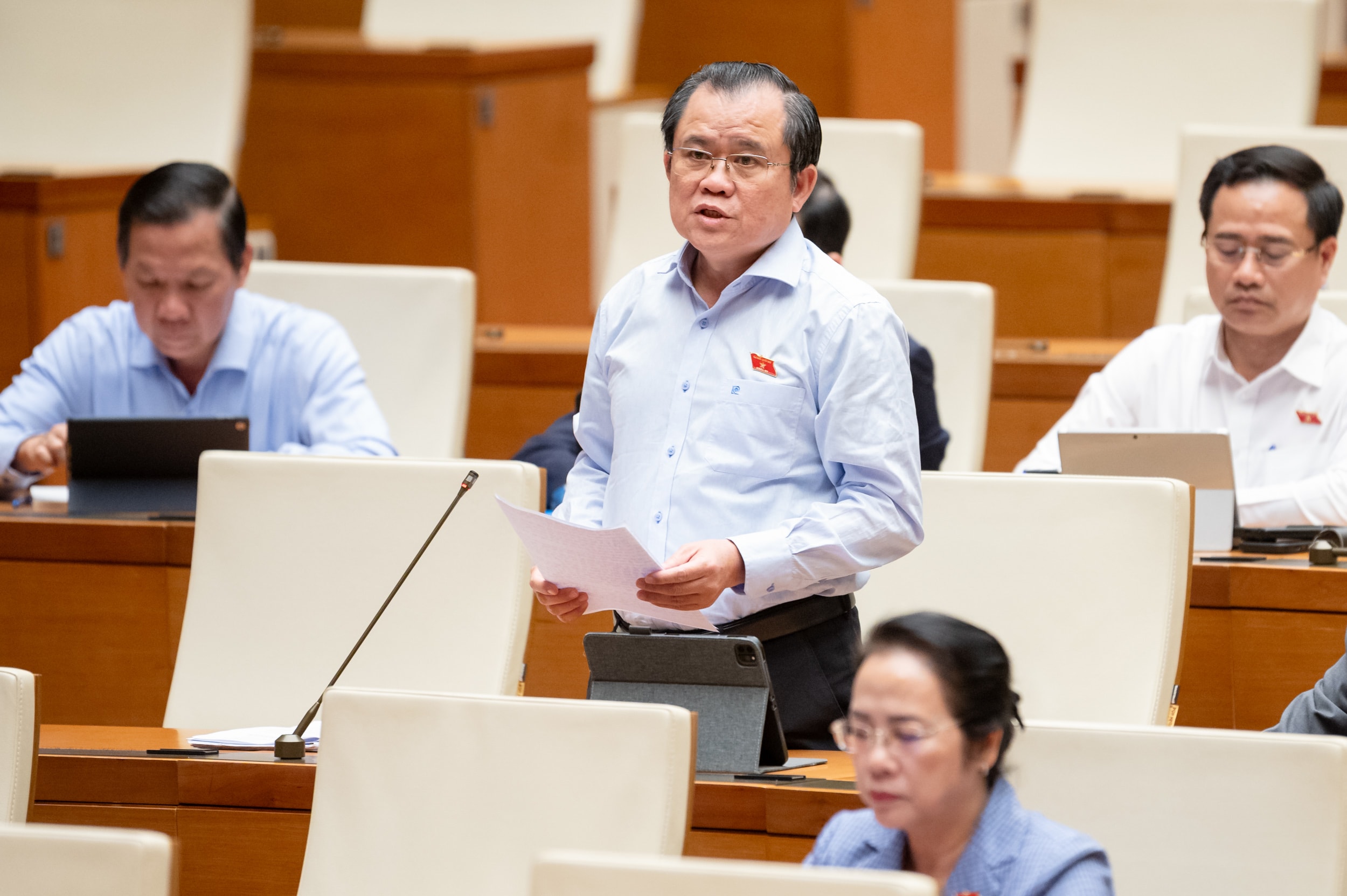
Regarding the principle of allocating central budget capital in Clause 6, Article 1, the delegate agreed with the principle of prioritizing disadvantaged localities, but also suggested considering establishing an independent monitoring mechanism for investment in infrastructure and purchasing teaching equipment, in order to end wasteful purchases, wrong needs or unused equipment. "This is urgent content to protect the state budget and improve the efficiency of public investment in education and training," the delegate emphasized.
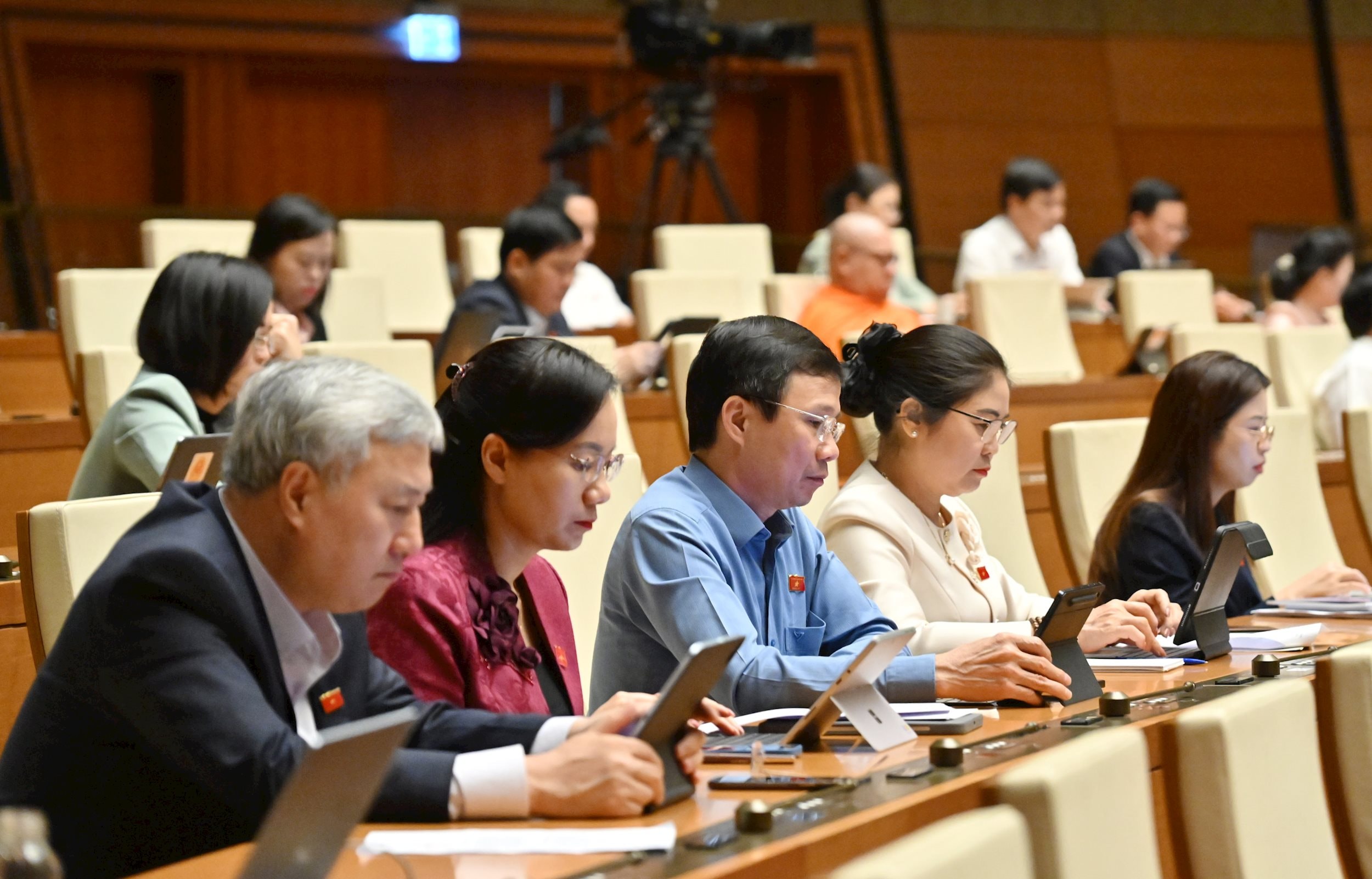
Regarding the solutions and management and operation mechanisms of the Program in Clause 8, Article 1, according to the delegate, it is necessary to consider adding incentive mechanisms, ensuring legal risks, protecting investors' rights when businesses participate in investing in facilities, training human resources and transforming digital education in the form of public-private partnerships (PPP), to diversify capital sources to implement the program. According to the delegate, transparent socialized resources will reduce pressure on the state budget and create conditions to promote innovation in education.
Component project 1 on facilities of the Program determines to ensure facilities and teaching equipment to meet the requirements of implementing preschool and general education programs with a budget of 80,000 billion VND.
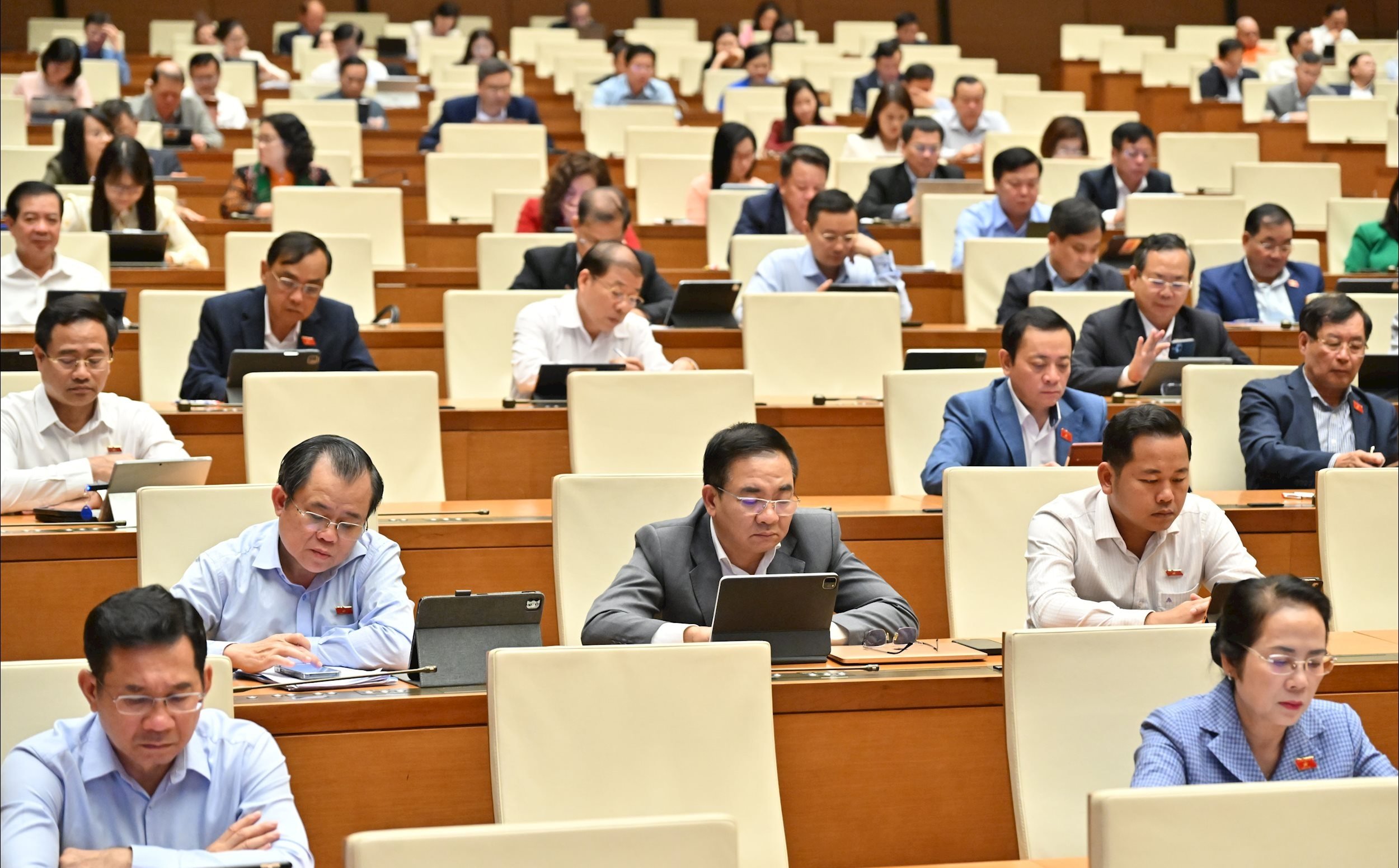
National Assembly Deputy Tran Hoang Ngan (Ho Chi Minh City) suggested that it is necessary to increase this funding, especially in the current situation, when climate change is becoming increasingly severe - "storms on top of floods, floods on top of storms", so investing in building safe educational facilities and schools that adapt to climate change is extremely important.
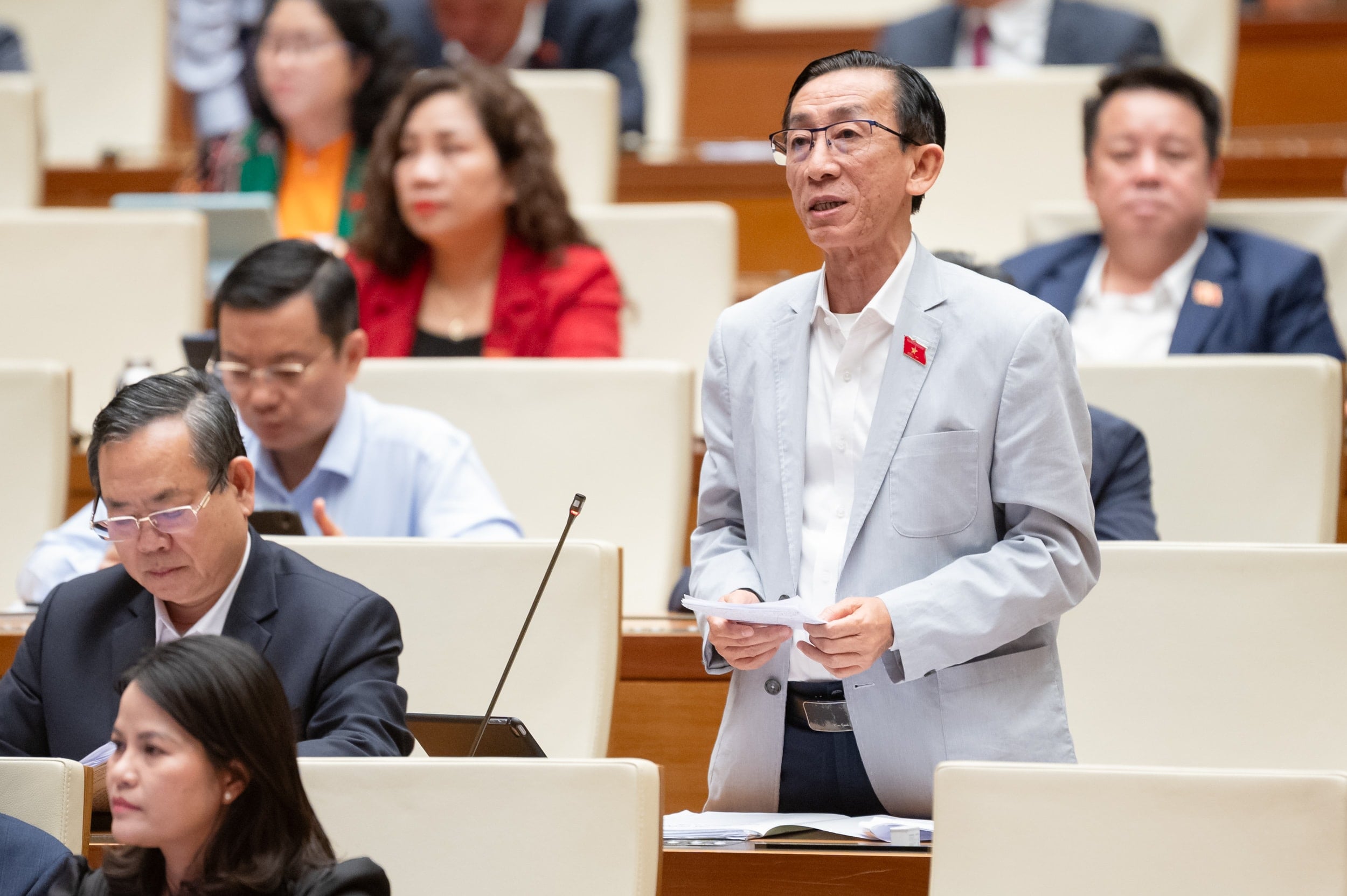
Delegates also said that there needs to be a long-term solution to the increasingly severe climate change that is happening today. Building new schools in localities that are often affected by natural disasters and floods needs to ensure that they are both teaching facilities and shelters when floods increase rapidly to protect people's health and lives. In addition, the current school construction needs to have more classrooms and equipment for teaching English and STEAM to encourage young people to be interested in science, technology and innovation.
The Program's capital allocation structure is too heavily concentrated in the 2031-2035 period.
Specifically analyzing the capital structure, allocation principles and implementation mechanism, National Assembly Deputy Thach Phuoc Binh (Vinh Long) found that the proportion of public investment capital of the Program accounts for 83.91% in the 2026-2030 period and 90.27% in the 2031-2035 period; while regular expenditures only account for 10.9% and 5.5%, respectively. According to the delegate, this structure is not suitable for the orientation of comprehensive fundamental innovation of education, because the quality of education is essentially dependent on investment in people, especially funding for training and fostering teachers and managers.
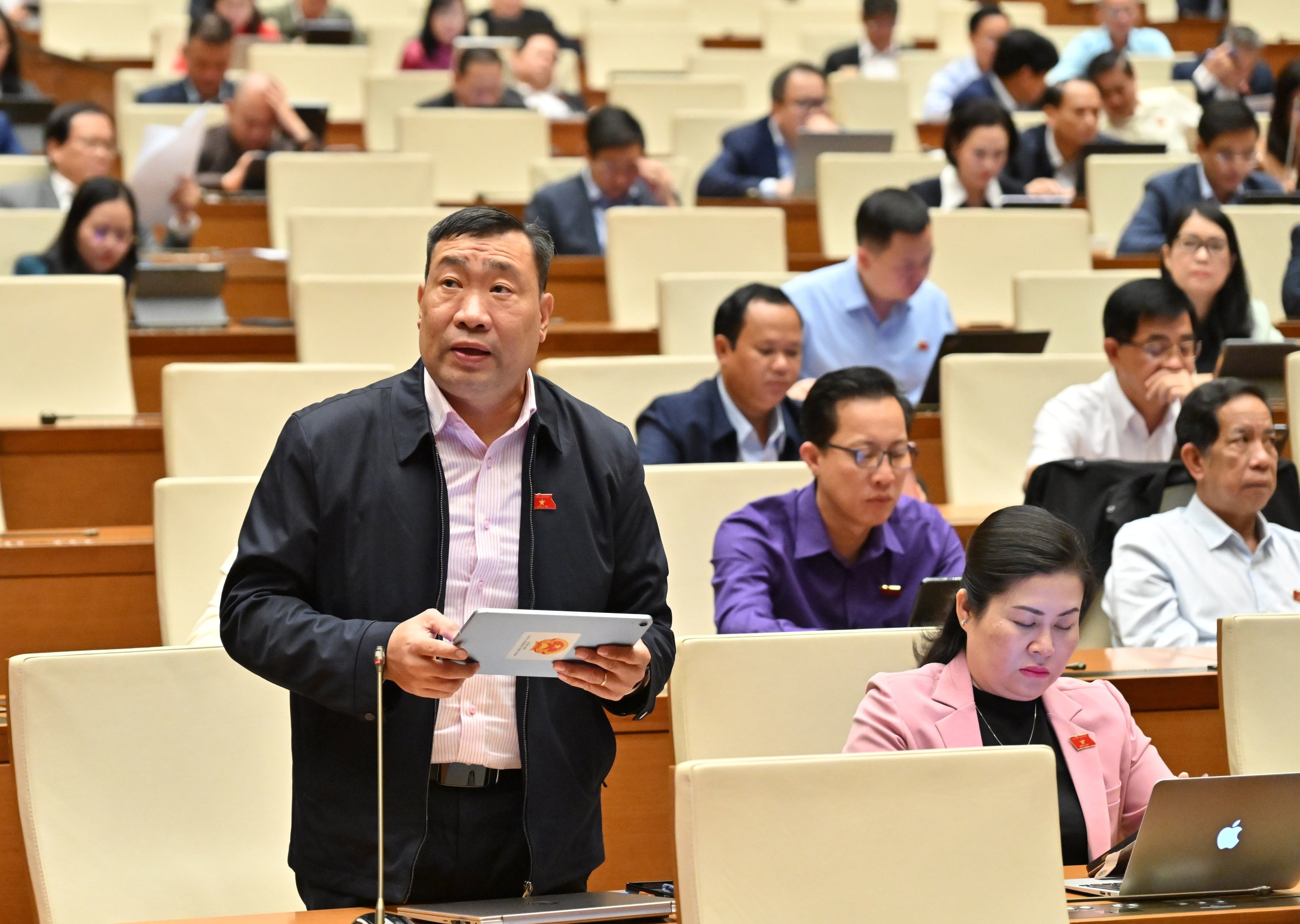
Practice also shows that the disbursement rate of regular expenditure and education career budget is often much lower than that of public investment capital, making the current structure even less effective. Therefore, delegates noted that the capital arrangement is biased towards construction and purchasing but lacks resources for operation and quality improvement, potentially leading to the risk of falling into the trap of formal investment: many spacious schools can be built but there is a lack of teachers, a lack of capacity to innovate teaching methods and a lack of funding to maintain and operate equipment.
On the other hand, the required counterpart capital for universities, colleges and vocational training institutions as stipulated in the draft Resolution is very large. The review agency also determined that this is an excessively high, unreasonable and difficult to implement counterpart ratio, especially for public schools that are facing many financial difficulties. In addition, the draft has not clarified the basis and criteria for determining the counterpart ratio, and has not distinguished by school type, level of autonomy or financial capacity, which can easily lead to inequity among educational institutions.
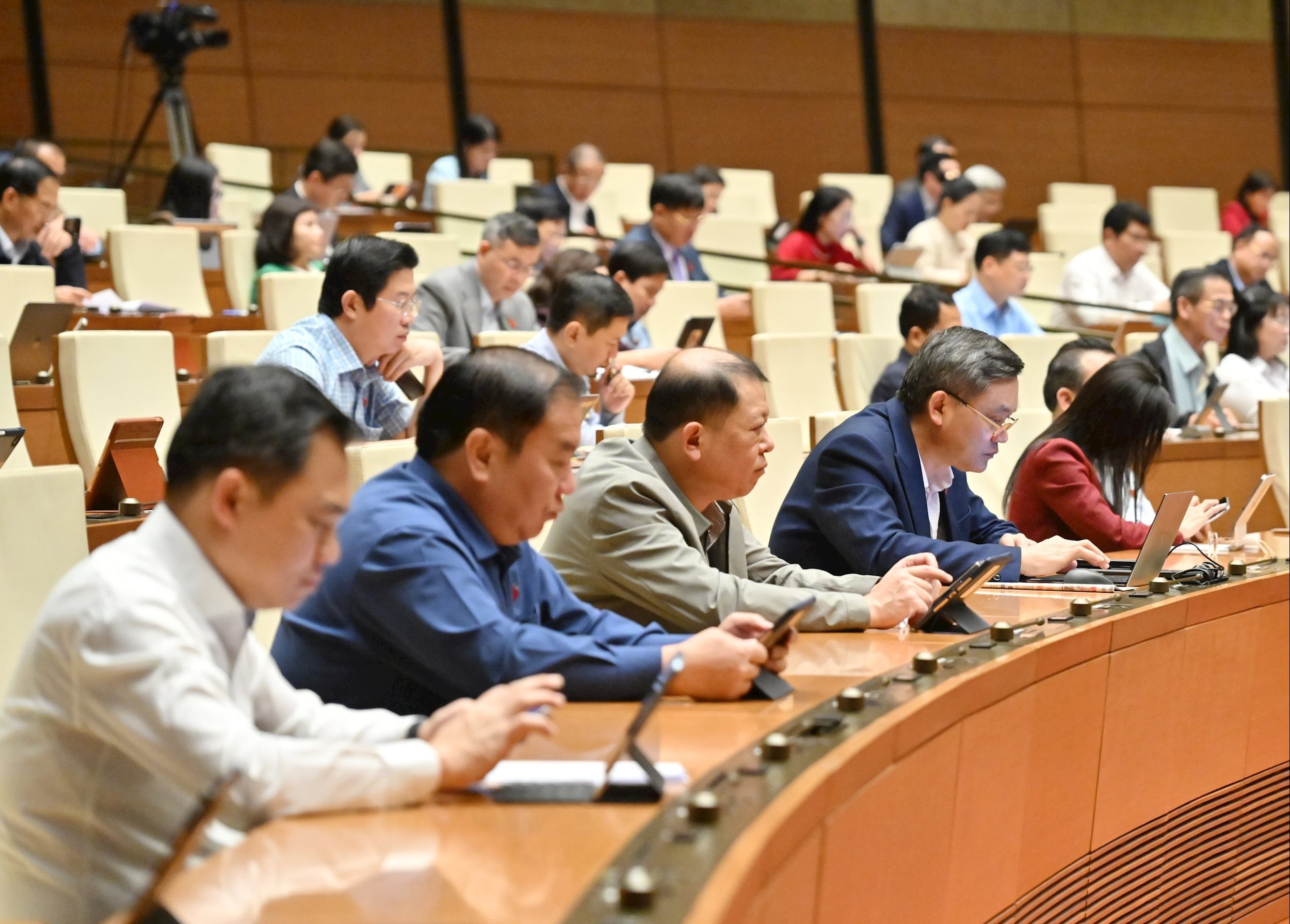
Regarding other legally mobilized capital sources, delegate Thach Phuoc Binh said that the capital levels of VND9,143 billion for phase 1 and VND17,030 billion for phase 2 have only been stated in numbers, without a clear explanation of the basis for determination, nor has it been specifically indicated whether it is ODA capital, PPP, sponsorship or socialized capital. This reduces feasibility in the context that both localities and public schools are very limited in their ability to mobilize resources outside the state budget.
Therefore, delegates suggested that it is necessary to consider readjusting the ratio between public investment capital and regular expenditure in the direction of increasing the proportion of expenditure on human resources, especially funds for training and fostering teachers and managers, instead of focusing too much capital on basic construction investment and equipment procurement.
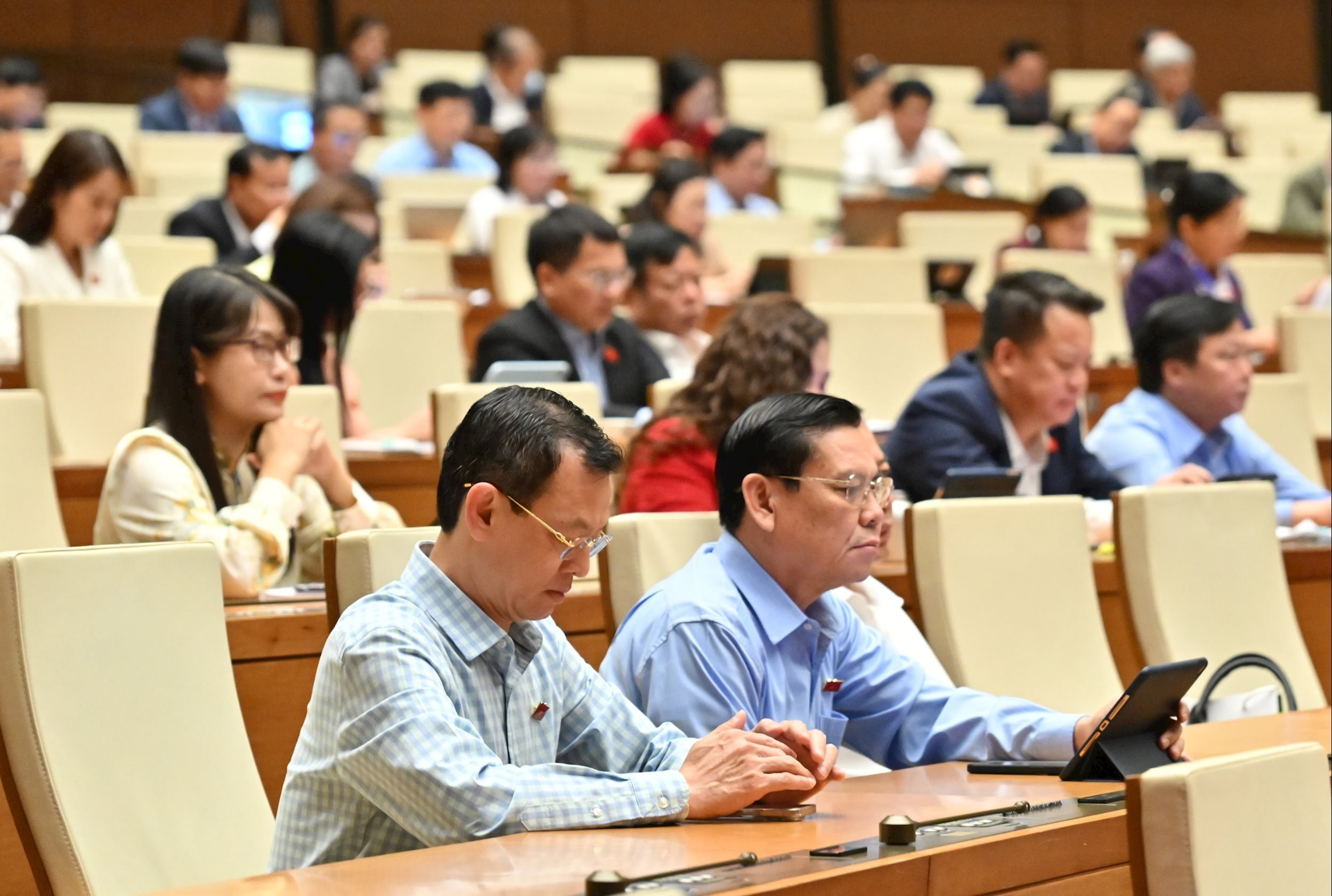
This restructuring will be appropriate, contributing to avoiding waste and reducing the risk of slow disbursement. For disadvantaged localities, especially those receiving additional balance from the central budget of 60% or more, it is necessary to study removing the requirement for counterpart capital or applying a lower counterpart rate, and at the same time, develop a capital allocation mechanism based on the actual level of difficulty, ensuring the principle of fairness and supporting the right subjects.
At the same time, delegates also proposed to remove the requirement to combine capital sources with different management and settlement mechanisms to avoid congestion and legal risks during implementation. The draft also needs to clarify the basis for determining the counterpart capital of universities, colleges and vocational training institutions based on the classification of the counterpart ratio according to the level of autonomy, type of institution, training scale and financial capacity.
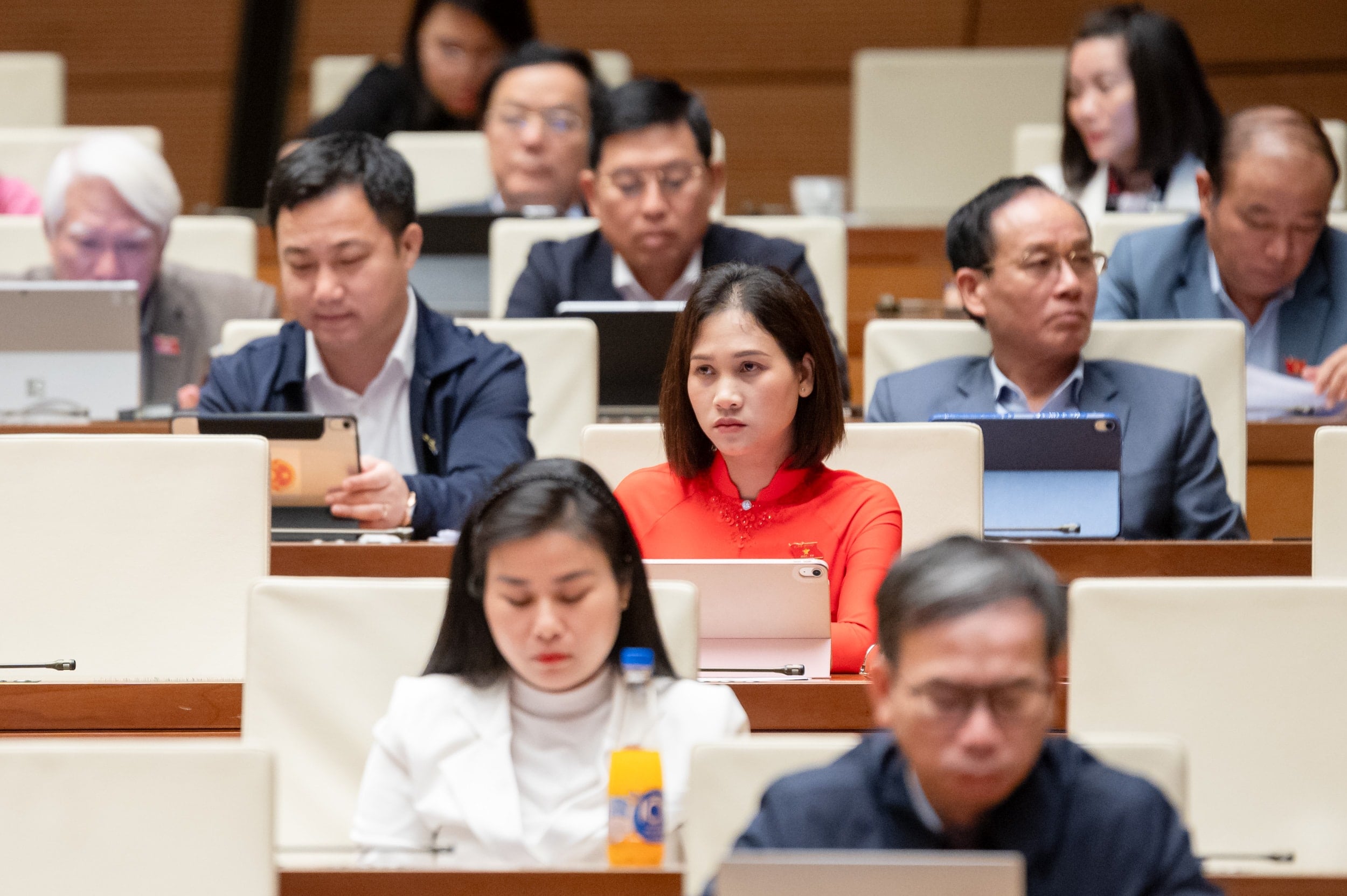
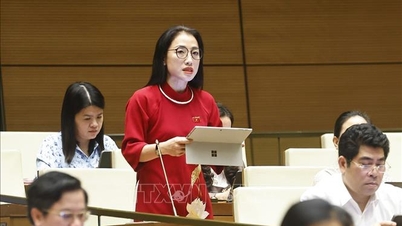
Sharing this concern, National Assembly Delegate Chu Thi Hong Thai (Lang Son) noticed that the capital structure of the Program is focusing too much on the 2031-2035 period. This period is expected to account for more than 70% of total resources, while the 2026-2030 period is only allocated equivalent to 30% of total resources.
This allocation method requires the first 5 years of the identified period to complete fundamental goals such as: solidifying 100% of classrooms, ensuring public housing for teachers in difficult areas, key investment for 18 colleges, striving for 50% of higher education facilities to meet standards, at least 30% of educational facilities to be invested in modernly.... The fundamental targets are very large but there are not enough resources to create clear changes.
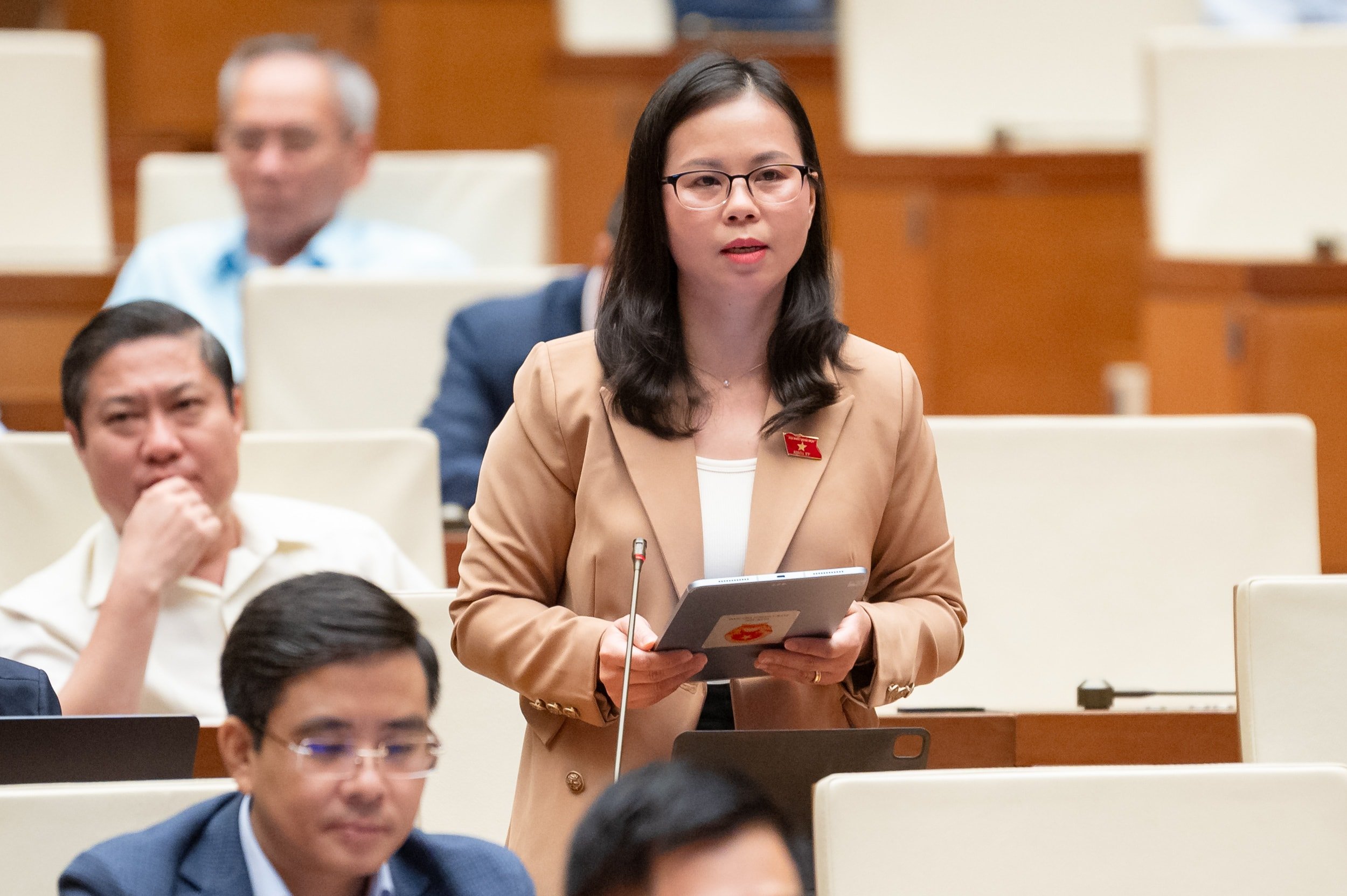
“Concentrating most of the capital to the later stages increases the risk of work accumulation and target accumulation, causing the implementation progress to not closely follow the requirements of the National Assembly Resolution. Especially, in the context of the ability to balance the budget after 2030, there are many unpredictable factors.” Emphasizing this risk, the delegate suggested that the Government study the restructuring of capital allocation towards increasing the proportion for the 2026-2030 period, ensuring enough resources to complete fundamental goals such as solidifying classrooms, public housing, semi-boarding, boarding and adding teachers in difficult areas.
At the same time, according to delegate Chu Thi Hong Thai, it is necessary to clearly define the order of capital priority, in which priority should be given to ethnic minority areas, mountainous areas, border areas and poor communes to create substantial changes right from the beginning and avoid putting pressure on the 2031-2035 period. In the case of implementing many national target programs at this time, resources are limited and cannot be arranged, I suggest that the targets for the 2026-2030 period only focus on the most urgent and fundamental tasks first.
Source: https://daibieunhandan.vn/xem-xet-dieu-chinh-lai-co-cau-nguon-von-va-phan-ky-dau-tu-10397916.html




![[Photo] Worshiping the Tuyet Son statue - a nearly 400-year-old treasure at Keo Pagoda](/_next/image?url=https%3A%2F%2Fvphoto.vietnam.vn%2Fthumb%2F1200x675%2Fvietnam%2Fresource%2FIMAGE%2F2025%2F12%2F02%2F1764679323086_ndo_br_tempimageomw0hi-4884-jpg.webp&w=3840&q=75)
![[Photo] Parade to celebrate the 50th anniversary of Laos' National Day](/_next/image?url=https%3A%2F%2Fvphoto.vietnam.vn%2Fthumb%2F1200x675%2Fvietnam%2Fresource%2FIMAGE%2F2025%2F12%2F02%2F1764691918289_ndo_br_0-jpg.webp&w=3840&q=75)





![[Video] Continuing the 34th working day, 10th Session, 15th National Assembly](https://vphoto.vietnam.vn/thumb/402x226/vietnam/resource/IMAGE/2025/12/03/1764720131270_dung00-53-48-32301still010-jpg.webp)






























































Comment (0)