

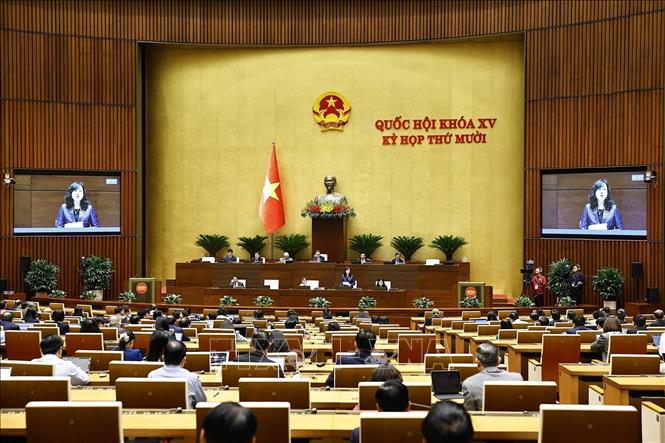
Help people access quality health services
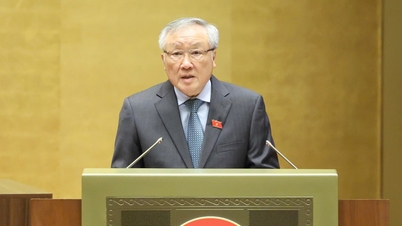
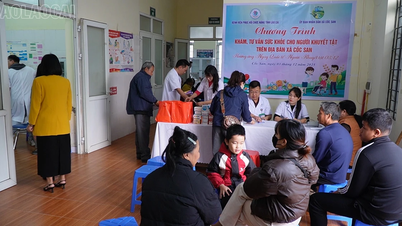
According to Director of Lao Cai Department of Health Hoang Quoc Huong, the National Target Program on health care, population and development for the period 2026-2035 focusing on allocating resources to build new and upgrade and renovate the system of health stations and commune-level health points is of special importance to the health sector in particular and Lao Cai province in general.
First of all, this investment is not only to improve infrastructure but also a necessary condition for health stations and stations to fully undertake new tasks and functions from primary health care, non-communicable disease management, maternal and child care to epidemic prevention and control and digital health deployment.
The Director of Lao Cai Department of Health stated: For a mountainous province with a scattered population like Lao Cai, an upgraded network of facilities will help people access quality health services right in the community, reduce unnecessary referrals, shorten emergency times and ensure timely response to epidemics, improve access to basic health services: primary health care, vaccination, maternal and child care, non-communicable disease management; increase the ability to handle common diseases at the commune level, reduce the workload at the provincial level; improve the rate of women giving birth at health facilities, improve the quality of prenatal care, vaccination, nutrition, increase people's trust in the local health system...
In addition, synchronous investment in infrastructure combining equipment, human resources and technology will improve operational efficiency and improve the quality of medical services, reduce overall treatment costs for the system and people; at the same time, create a foundation for technology transfer, on-site training and retention of medical human resources at the grassroots level, creating conditions for Lao Cai to develop tourism, services and border gate economy, overcome the situation of degraded stations, lack of functional rooms, lack of equipment...
In particular, prioritizing resource concentration also demonstrates the State's commitment to narrowing the gap in access to health services between regions, thereby strengthening people's trust and creating a solid foundation for the stable development of the health system in the new period.
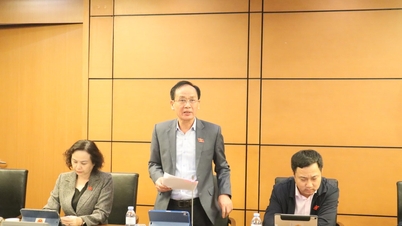
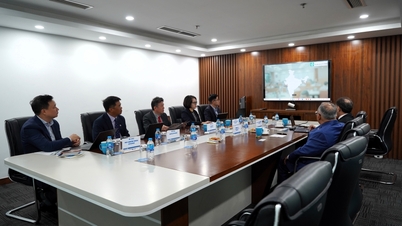
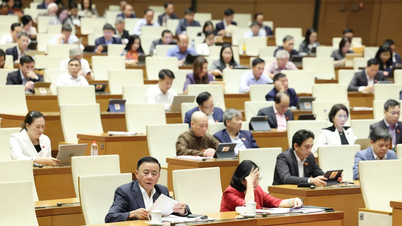
Highly agreeing with the proposals of the delegates at the discussion session, in order for the new health station model to operate smoothly and effectively, Mr. Hoang Quoc Huong suggested that the National Assembly and the Government pay attention to directing the allocation of funding sources for investment in facilities, equipment, and information technology for grassroots health care. In particular, it is necessary to include the content of periodic health check-ups for people at least once a year in the policy paid by the health insurance fund; direct the issuance of prices for health insurance examination and treatment services that correctly and fully calculate all costs or have a clear support mechanism for costs that are not included in the service price, ensuring the full implementation of functions and tasks and ensuring health care for the people. The Government should soon amend the norms for direct payment, surgery, procedures, etc. for medical staff to be consistent with reality.
Strengthening medical human resources to meet new requirements
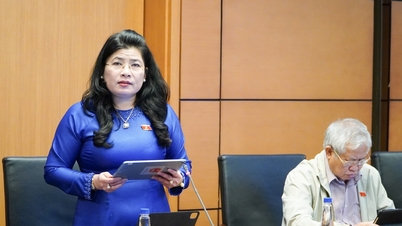
Regarding the issue of grassroots medical human resources, Ms. Ho Kim Dung, Head of the Faculty of Medicine and Pharmacy, Lao Cai College, said that when implementing a 2-level local government, the development space and expanded administrative boundaries require the medical human resources at medical points and stations when performing new functional tasks to be strengthened to meet the problem of grassroots preventive medicine. Therefore, training and attracting human resources: Implementing policies to support training, rotation and treatment for grassroots doctors is very necessary.
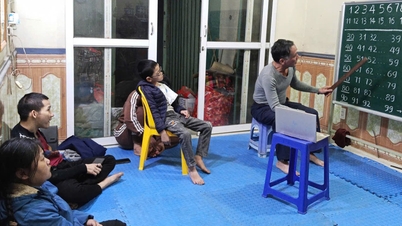
According to Ms. Ho Kim Dung, in order to help people access quality medical services right at the grassroots level, in addition to the professions currently being trained such as Pharmacist, Nursing, Village Health and Village Midwife, the Faculty of Medicine and Pharmacy, Lao Cai College also plans to train two more professions in the period 2030 - 2045, including: First Aid - Basic Emergency and Care for the Elderly, People with Disabilities and Rehabilitation. The goal of the program is to provide short-term training for the community, meet the health care needs in the context of population aging and improve the quality of medical services at the grassroots level, help people access quality medical services conveniently, and take better care of people's health.
Source: https://baotintuc.vn/thoi-su/cu-tri-lao-cai-de-xuat-nang-cap-tram-y-te-cai-thien-dieu-kien-cham-soc-suc-khoe-cong-dong-20251202120736737.htm















![[Photo] Parade to celebrate the 50th anniversary of Laos' National Day](/_next/image?url=https%3A%2F%2Fvphoto.vietnam.vn%2Fthumb%2F1200x675%2Fvietnam%2Fresource%2FIMAGE%2F2025%2F12%2F02%2F1764691918289_ndo_br_0-jpg.webp&w=3840&q=75)
![[Photo] Worshiping the Tuyet Son statue - a nearly 400-year-old treasure at Keo Pagoda](/_next/image?url=https%3A%2F%2Fvphoto.vietnam.vn%2Fthumb%2F1200x675%2Fvietnam%2Fresource%2FIMAGE%2F2025%2F12%2F02%2F1764679323086_ndo_br_tempimageomw0hi-4884-jpg.webp&w=3840&q=75)






















































Comment (0)