

If the Resolution is issued late, many development opportunities will be missed.
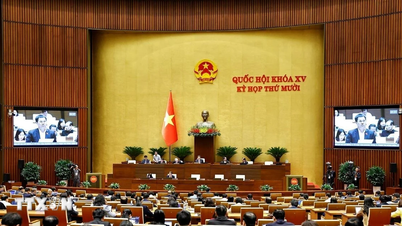
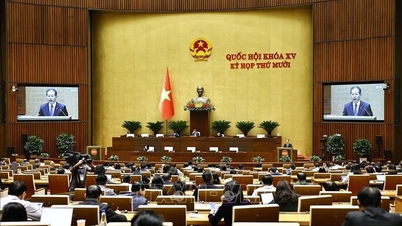
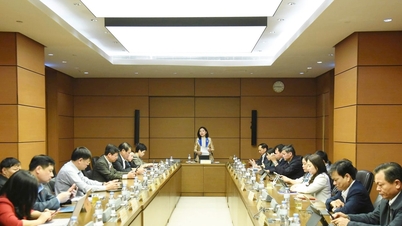
National Assembly deputies agreed with the necessity of developing a draft Resolution amending and supplementing a number of articles of Resolution No. 136/2024/QH15 of the National Assembly on the organization of urban government and piloting a number of specific mechanisms and policies for the development of Da Nang city.

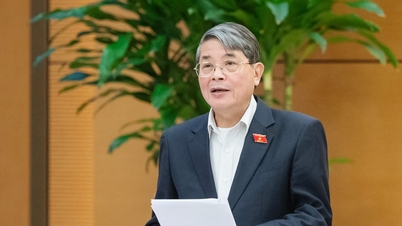
According to National Assembly Delegate Lo Thi Viet Ha (Tuyen Quang), after more than 1 year of implementing Resolution No. 136/2024/QH15, the city's economy (before the rearrangement) from a serious decline due to the impact of the Covid-19 pandemic has recovered quickly and gradually developed stably on the basis of renewing the growth model, restructuring associated with the application of science and technology, and innovation.
However, the implementation process so far shows that some mechanisms and policies have not yet met the practical requirements of Da Nang in the new situation; some provisions in the Resolution are not complete and need to be further specified; some provisions in the Resolution have now been legalized and applied nationwide; some provisions in the Resolution are no longer superior to laws that have been issued or are expected to be issued.

Therefore, to realize the goal of developing Da Nang into one of the major socio-economic centers of the country and Southeast Asia, the core of the urban chain and growth pole of the key economic region of the Central Highlands and the whole country, striving to achieve the target of double-digit economic growth in the period of 2026-2030 according to Conclusion No. 79-KL/TW dated May 13, 2024 of the Politburo, Da Nang needs to have specific and outstanding mechanisms and policies suitable to the conditions of the city after the arrangement and merger to effectively exploit the space, potential and new advantages.
National Assembly Deputy Ta Van Ha (Da Nang) affirmed that the draft Resolution was not built to "give" Da Nang more preferential mechanisms than other localities. "We must understand that Da Nang is carrying out a very important mission and responsibility before the Party, the State and the People, as a growth pole of the Central region, a locomotive to pull the economy of the whole region. The National Assembly gives the city a special resolution to have the tools to carry out the assigned tasks most effectively and quickly," the delegate emphasized.

However, delegate Ta Van Ha also affirmed that this is not simply a story of Da Nang development or for Da Nang people only, but to carry out the task of an economic - political center, a driving force for the entire Central region.
“To put it bluntly, in order for Da Nang to develop the fastest, the State will grant special mechanisms, but with conditions and tasks attached. Budget contributions must increase, and other roles and responsibilities must also be higher,” emphasized delegate Ta Van Ha.

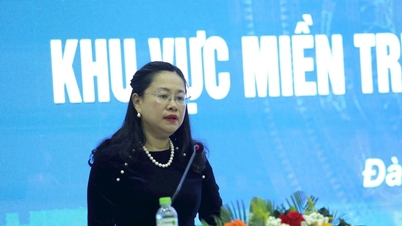
From another perspective, National Assembly Deputy Pham Duc An (Da Nang) said that if policies for Da Nang are not adjusted, revised, or supplemented, development opportunities will be missed, affecting the progress of key projects, people's interests, and national resources.
Therefore, the delegates highly appreciate that in the context of a huge workload, the National Assembly Standing Committee, the Government, relevant ministries and committees of the National Assembly have worked actively to be able to add the content of consideration and approval of the draft Resolution to the agenda of the 10th Session. According to the delegates, in the context of high competitive pressure today, if the draft Resolution is delayed in submitting to the National Assembly for consideration and approval, many development opportunities for Da Nang will be missed.
Delegate Pham Duc An affirmed that the People's Committee of Da Nang City is participating in developing proposals, ensuring the novelty and consistency between Da Nang's specific mechanisms and policies with those of Hanoi, Hai Phong, and Ho Chi Minh City. "Da Nang is ready to be the place to pilot new mechanisms and policies, so that if they are effective, they will be widely applied across the country and included in regulations in relevant laws."
Focus on the "poor core" area, avoid spreading out
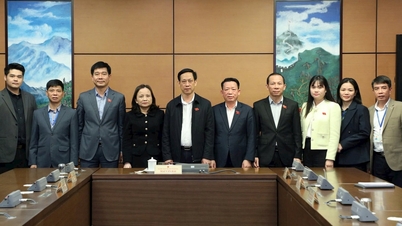
At Group 16, National Assembly Deputies Ma Thi Thuy (Tuyen Quang), Dang Thi Bao Trinh (Da Nang), Hoang Ngoc Dinh (Tuyen Quang), Tran Chi Cuong (Da Nang)... also agreed on the necessity of investing in implementing the National Target Program on new rural areas, sustainable poverty reduction, and socio-economic development in ethnic minority and mountainous areas by 2035, on the basis of integrating 3 national target programs.

Regarding the objectives of the new Program, delegate Dang Thi Bao Trinh noted that many of the objectives are still general, slogan-like, lacking quantitative basis and current status database after implementing the two-level local government model. In the current period, if the objectives are not quantified, it will be very difficult to evaluate, monitor or hold accountable the implementation, which may lead to a situation where policies are spread out, capital sources are dispersed, efficiency is low, and the livelihoods of ethnic minorities cannot be improved as required.
Therefore, the delegate proposed that the National Assembly Resolution at this stage should only stipulate framework goals, assigning the Government to continue to consider reviewing and perfecting current data (after organizing 2-level local government) and quantify the indicators when approving the detailed Program.
Considering that the target of average income of ethnic minorities being 2/3 of the national average (more than 3 times higher than 2025) and higher than the average income in rural areas is not really reasonable, while investment resources are still limited, delegate Ma Thi Thuy suggested considering and reviewing the above target to make it closer to reality; the Government should assess more realistically the multidimensional poverty reduction target and should not assign annual poverty reduction targets.
Regarding the target of striving for 100% of communes to escape poverty, ethnic minority areas to have no more particularly difficult communes and villages, delegates said that this is a big challenge, so it is necessary to focus key resources on building essential infrastructure, creating sustainable livelihoods and having a strong enough specific mechanism to implement. In addition, it is necessary to clarify the feasibility of the target of about 65% of communes meeting new rural standards, especially in the condition that communes merge and consolidate many criteria through low assessment...
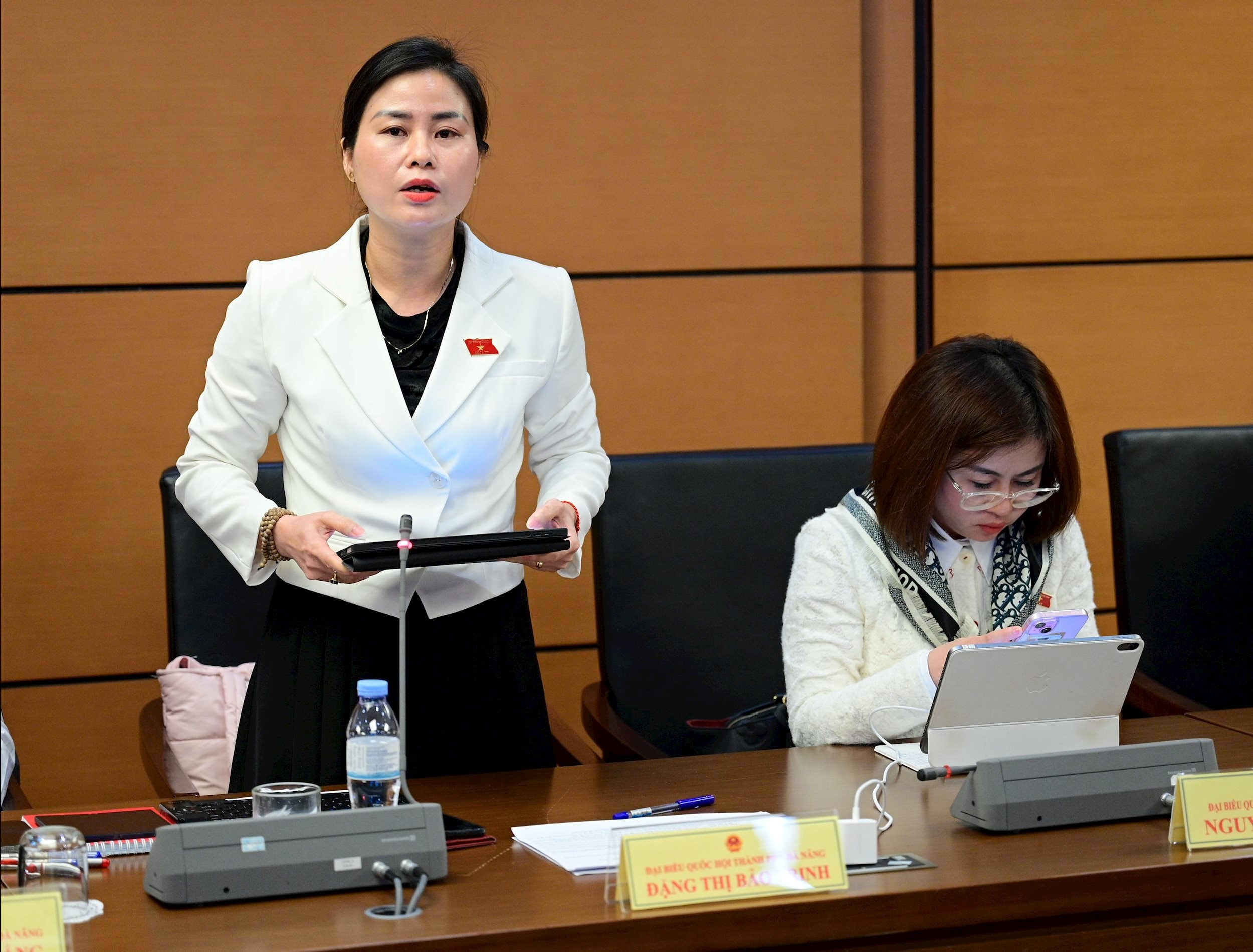
Delegate Lo Thi Viet Ha also said that the 3% career conversion target needs to be considered because it is difficult to achieve. Along with that, it is necessary to continue reviewing other targets of the Program because they overlap with the two national target programs on education and health, to avoid overlapping and spreading implementation resources.
The delegate also said that the Government should only stipulate framework policies. Localities will choose and decide on investments that are suitable to their reality, because not all localities are the same. It is necessary to focus on the "core poor" areas, avoiding spreading out.
Source: https://daibieunhandan.vn/nghi-quyet-cua-quoc-hoi-vua-la-co-hoi-vua-la-trach-nhiem-trong-trach-doi-voi-da-nang-10398099.html
![[Photo] Cat Ba - Green island paradise](/_next/image?url=https%3A%2F%2Fvphoto.vietnam.vn%2Fthumb%2F1200x675%2Fvietnam%2Fresource%2FIMAGE%2F2025%2F12%2F04%2F1764821844074_ndo_br_1-dcbthienduongxanh638-jpg.webp&w=3840&q=75)































![[VIMC 40 days of lightning speed] Da Nang Port: Unity - Lightning speed - Breakthrough to the finish line](https://vphoto.vietnam.vn/thumb/402x226/vietnam/resource/IMAGE/2025/12/04/1764833540882_cdn_4-12-25.jpeg)




































Comment (0)