

At the discussion session on the afternoon of December 3 on the investment policy of the National Target Program on new rural areas, sustainable poverty reduction and socio -economic development in ethnic minority and mountainous areas until 2035, many delegates emphasized the urgency of integrating the three programs to concentrate resources more effectively. Opinions also proposed adding a mechanism for relocating people in landslide areas, completing the set of new rural criteria, adjusting the capital allocation structure in a flexible direction, ensuring the program's implementation is substantial and sustainable.

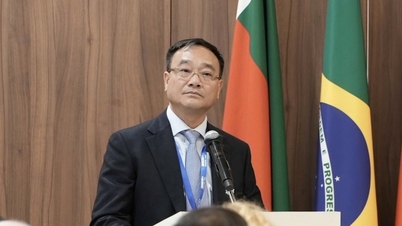
National Assembly Chairman Tran Thanh Man attends the discussion at Group 11. Photo: Lam Hien
During the working session at Group 11 (including the National Assembly delegations of Can Tho and Dien Bien), National Assembly Chairman Tran Thanh Man attended with delegates to discuss 4 contents: investment policy for national target programs; amendments and supplements to Resolution 98 on special mechanisms of Ho Chi Minh City; amendments and supplements to Resolution 136 on urban government organization and special mechanisms of Da Nang; and investment policy for Vinh - Thanh Thuy expressway.
Supplementing population relocation mechanism to attract international investment
Delegates agreed that the consolidation of the three national target programs would help reduce overlaps and optimize financial and human resources. The multi-dimensional approach would also help promote combined strength and simultaneously resolve socio-economic, environmental, and defense-security issues from the grassroots level. This would create continuity and stability in implementing the new rural development goals in the coming period.
Delegate Nguyen Tuan Anh (Head of the Can Tho National Assembly Delegation) said that the recent extreme weather, floods, and landslides have created an urgent need for plans to relocate people from high-risk areas. He suggested adding this content to the national target program, along with a model to support sustainable livelihoods for people after resettlement.
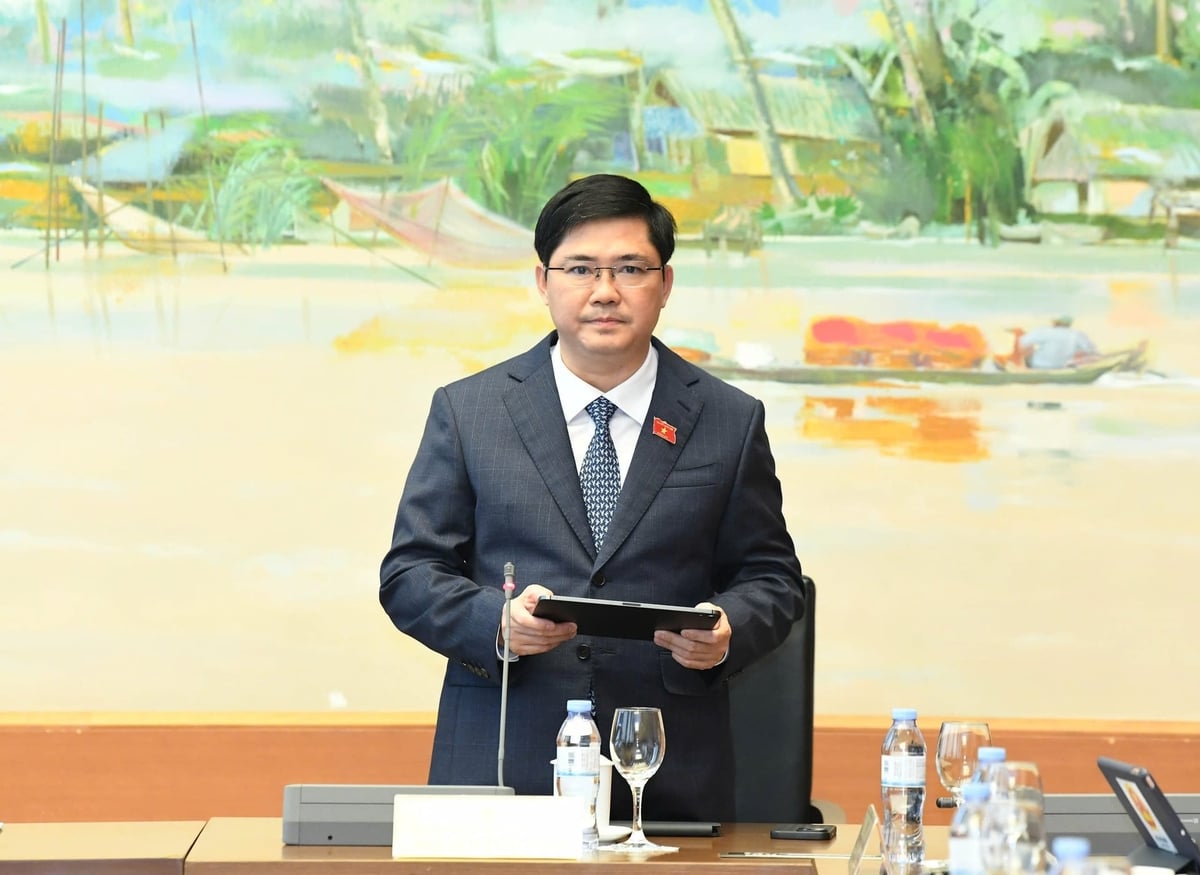
Head of the National Assembly Delegation of Can Tho City Nguyen Tuan Anh. Photo: Lam Hien
Delegates also emphasized the need to summarize and update data on the program to eliminate temporary and dilapidated houses and build schools in mountainous areas to build realistic estimates.
A new point proposed by Mr. Tuan Anh is to supplement the international cooperation mechanism, attract foreign funding and investment for new rural construction, sustainable poverty reduction and development of ethnic minority areas in the spirit of Resolution 59 of the Politburo on international integration.
Regarding the application of science and technology, he proposed a comprehensive assessment of the level of computerization and digital transformation in the implementation of target programs in the past time to adjust appropriate targets for the 2026 - 2035 period.
Capital structure needs to be layered and flexible.
Citing the local reality, delegate Le Thi Thanh Lam (Can Tho delegation) said that the implementation results from 2021 to now have a clear difference between the three programs: new rural areas have completed 7/7 targets, poverty reduction has completed 4/5 targets, and the socio-economic development program for ethnic minority areas has only achieved 6/9 targets.
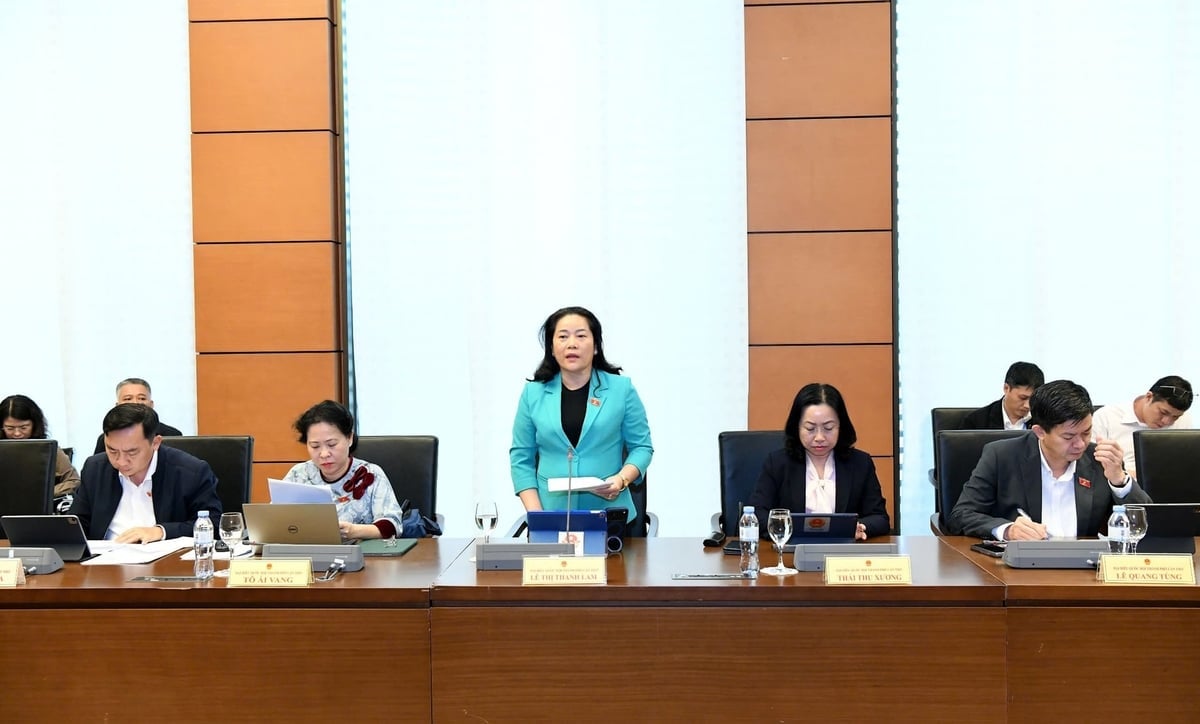
Delegate Le Thi Thanh Lam (Can Tho). Photo: Lam Hien
According to her, the main "bottlenecks" lie in complicated implementation mechanisms and guidelines, overlapping investment content, and scattered resources. Localities must allocate counterpart funds up to 1.5 times the central capital, while small-scale projects make it difficult to concentrate resources.
She agreed to give more initiative to localities and suggested adjusting the system of indicators to more clearly demonstrate the goals of digital transformation and innovation, such as the rate of cooperatives applying digital technology, the rate of OCOP products being digitized and traceable.
Regarding resources, the total capital of the program for the 2026 - 2030 period is expected to be 1.23 million billion VND, of which the local budget accounts for 33%. Delegate Le Thi Thanh Lam assessed that this ratio reflects the spirit of decentralization, but will put great pressure on disadvantaged localities, especially ethnic minority and mountainous areas, where the ability to balance the budget is limited.
She proposed to develop a set of new rural criteria for the 2026-2030 period in a practical direction, reducing formal criteria, increasing focus on livelihoods, basic services, and multidimensional poverty reduction. At the same time, the capital structure should be stratified according to the capacity of each locality: localities should balance and apply the general matching rate; disadvantaged areas should reduce the matching rate; and particularly disadvantaged areas should receive higher support.
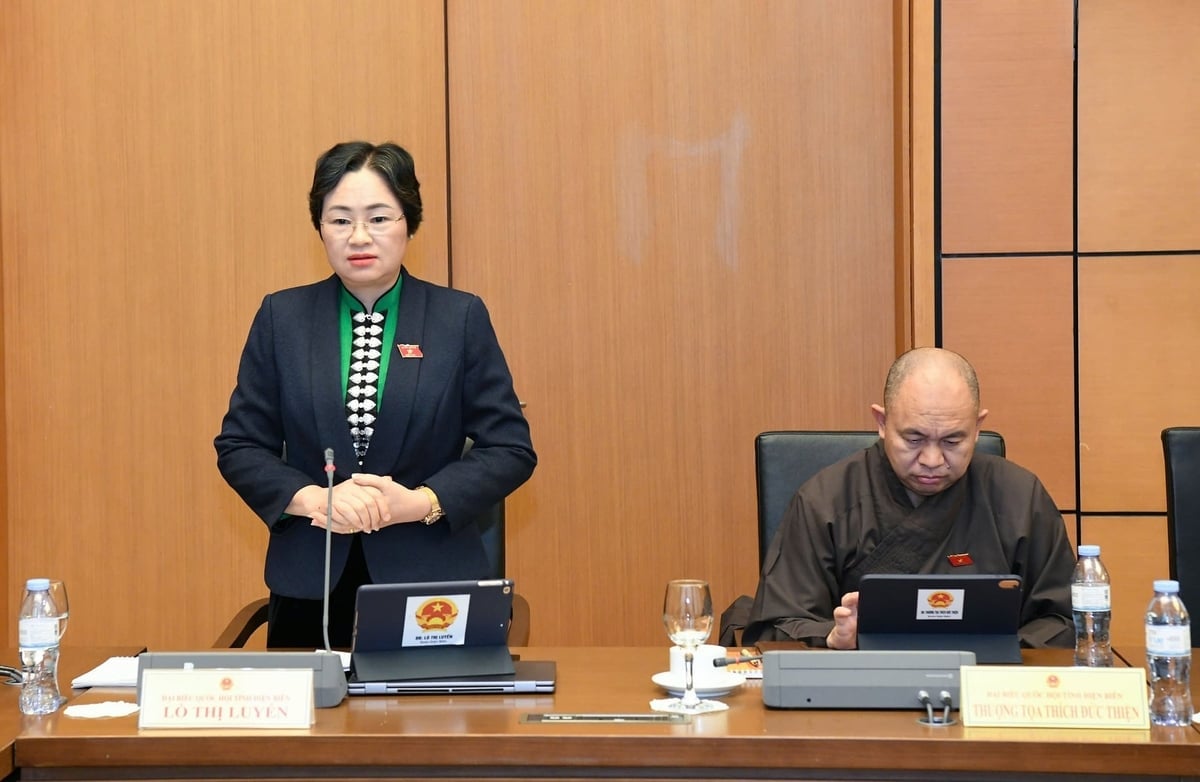
Delegate Lo Thi Luyen, National Assembly Delegation of Dien Bien province. Photo: Lam Hien
She also warned that specific areas such as health and education in remote areas cannot be overly socialized or require high levels of response, due to the lack of businesses and resources.
Sharing the same view, delegate Lo Thi Luyen (Dien Bien Delegation) proposed to name the program more concisely: "National target program on socio-economic development in rural and mountainous areas and sustainable poverty reduction for the period 2026-2030".
Delegates also proposed a regulation that: localities receiving central budget support of 70% or more do not have to arrange counterpart capital; at the same time, it is not required to integrate capital sources between national target programs or with other programs and projects.
Source: https://nongnghiepmoitruong.vn/phan-bo-nguon-luc-linh-hoat-ho-tro-vung-kho-khan-d787895.html


![[Photo] Cat Ba - Green island paradise](/_next/image?url=https%3A%2F%2Fvphoto.vietnam.vn%2Fthumb%2F1200x675%2Fvietnam%2Fresource%2FIMAGE%2F2025%2F12%2F04%2F1764821844074_ndo_br_1-dcbthienduongxanh638-jpg.webp&w=3840&q=75)


































![[VIMC 40 days of lightning speed] Da Nang Port: Unity - Lightning speed - Breakthrough to the finish line](https://vphoto.vietnam.vn/thumb/402x226/vietnam/resource/IMAGE/2025/12/04/1764833540882_cdn_4-12-25.jpeg)




































Comment (0)