

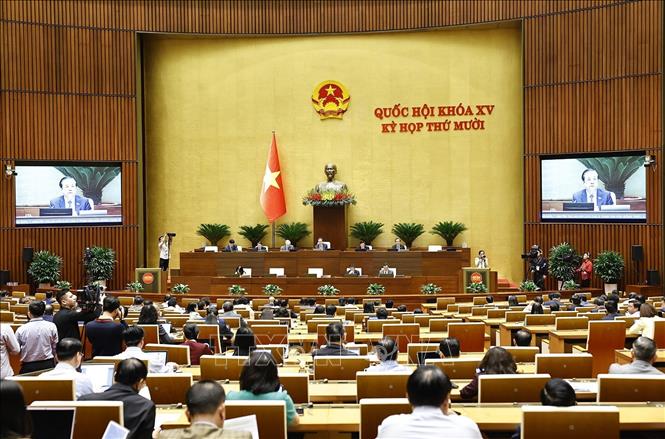
Need a suitable and synchronous roadmap
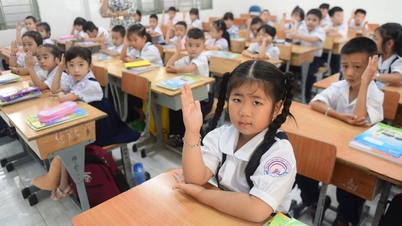
The draft Resolution sets a target that by 2030, at least 30% of preschool and general education facilities will be equipped with equipment to implement English teaching and learning, gradually making English the second language in schools.
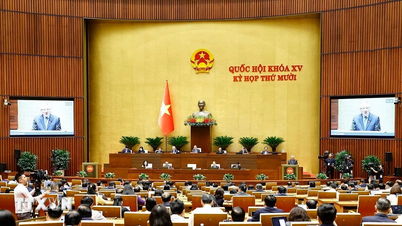
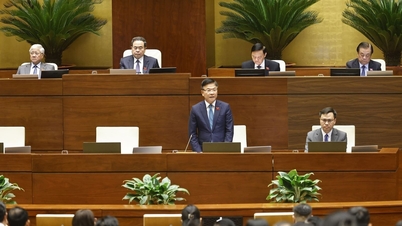
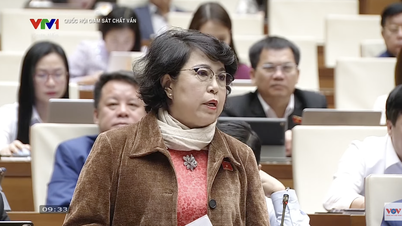
According to delegate Huynh Thi Anh Suong ( Quang Ngai ), it is necessary to have a suitable roadmap, synchronous investment, ensuring conditions for facilities, teaching equipment, curriculum, textbooks and teaching staff. This goal can be achieved if there is enough funding.
There are currently no textbooks for all subjects in English or bilingual textbooks in English. The delegates suggested that the Ministry of Education and Training research a set of textbooks, in addition to being written in Vietnamese, with bilingual Vietnamese-English and English versions for general education institutions to choose from according to their actual conditions. To achieve this goal, the decisive factor is the teaching staff and teachers must have good English skills.
With the project of teaching and learning foreign languages in the national education system for the period 2008 - 2020; the period 2017 - 2025, delegate Huynh Thi Anh Suong stated, it took us 17 years to basically complete improving the standards and teaching methods for English teachers.
In reality, almost all higher education institutions only train English teachers, but cannot train teachers to teach subjects in English. English teachers cannot teach other subjects in English without in-depth knowledge of that subject. On the contrary, teachers of other subjects do not have enough English skills to teach in English. Not to mention educational institutions in remote areas, areas with difficult socio-economic conditions, and lack English teachers.
The goal of the new program focuses on having teaching equipment, while the goal of training and improving teachers' qualifications is still general. Investment in facilities and teaching equipment must be synchronized with training and developing the teaching staff to meet teaching requirements. Therefore, it is necessary to add to the goal that by 2030, teachers will be trained and educated to meet the requirements of teaching in English, avoiding the situation of having equipment but not being able to teach in English, causing a waste of resources - delegate Huynh Thi Anh Suong suggested.
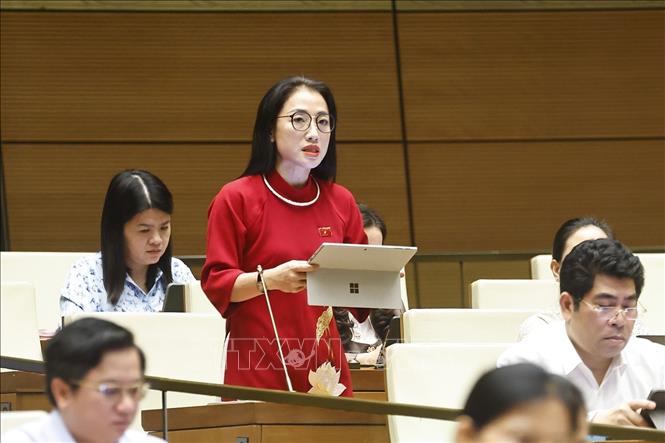
Assessing that this is a major orientation, demonstrating the determination to deeply integrate internationally, delegate Tran Khanh Thu (Hung Yen) is concerned about the feasibility of the goal because to successfully implement it, it is necessary to carefully assess the conditions and challenges regarding facilities, human resources and environment for implementation.
Considering that the most difficult problem is the difference in regions, students' English proficiency, and problems with facilities, human resources, and teachers, delegate Tran Khanh Thu suggested that there should be a specific roadmap, especially for mountainous provinces and disadvantaged areas. In particular, it is necessary to increase investment in facilities for provinces, especially mountainous provinces, such as supporting the construction of standard foreign language rooms; having strong enough policies to attract quality English teachers, such as paying attention to increasing the attraction allowance up to 100% of the basic salary for teachers in disadvantaged areas, supporting housing with a long-term contract commitment. In addition, there should be policies to promote the application of technology to connect online classrooms, using AI intelligence to support to compensate for the shortage of teachers; building English centers in disadvantaged areas according to the inter-commune model...
Ensuring regional fairness
Regarding this issue, delegate Ha Anh Phuong (Phu Tho) said, "there must be conditions to ensure that the equipment goes first and the people follow, or vice versa." According to the delegate, teaching English as a second language in schools is not the same as teaching English as a foreign language; it is necessary to prioritize implementation according to a stratified roadmap and ensure regional and regional equity.
"The gap is not only in equipment but also in the quantity and quality of teachers, curriculum, learning environment, teaching level, and the introduction of English as a second language in schools will be different in different regions and at different levels. In addition, it is also necessary to reasonably allocate resources for training and attracting a sufficient number and quality of English teachers, suitable for each region," said the delegate.
Delegate Ha Anh Phuong proposed that it is necessary to promote the mechanism of decentralization and delegation of power, giving local authorities the initiative, and educational institutions the right to decide and take responsibility for investing in facilities.
Sharing the same view with delegate Ha Anh Phuong, delegate Nguyen Thi Lan Anh (Lao Cai) said that if the 30% target is kept as it is for the whole country, the possibility of achieving it is "very low". To ensure feasibility, the delegate recommended that the drafting agency consider adjusting the target for each locality group. Specifically, provinces with particularly difficult socio-economic conditions are 20%; provinces with difficult social conditions are 25%; and the remaining provinces and cities, from 30% or more.
The delegates also proposed to add to the draft Resolution the following content: "The State prioritizes resources to support training and fostering of English teachers for mountainous provinces, ethnic minority areas and particularly disadvantaged localities. Encourage businesses, social organizations, and international organizations to coordinate with the Ministry of Education and Training to support English teaching equipment for schools in disadvantaged areas. Assign the Ministry of Education and Training to coordinate with relevant ministries to develop a long-term training plan for English teachers for disadvantaged areas with separate funding support from the central budget."
"Only with reasonable decentralization and appropriate mechanisms can the goal of making English the second language in schools be truly feasible, fair and effective for all regions of the country," said delegate Nguyen Thi Lan Anh.
Source: https://baotintuc.vn/ban-tron-giao-duc/phan-cap-manh-me-va-co-lo-trinh-phu-hop-de-tieng-anh-tro-thanh-ngon-ngu-thu-hai-20251202190249635.htm


![[Photo] Parade to celebrate the 50th anniversary of Laos' National Day](/_next/image?url=https%3A%2F%2Fvphoto.vietnam.vn%2Fthumb%2F1200x675%2Fvietnam%2Fresource%2FIMAGE%2F2025%2F12%2F02%2F1764691918289_ndo_br_0-jpg.webp&w=3840&q=75)


![[Photo] Worshiping the Tuyet Son statue - a nearly 400-year-old treasure at Keo Pagoda](/_next/image?url=https%3A%2F%2Fvphoto.vietnam.vn%2Fthumb%2F1200x675%2Fvietnam%2Fresource%2FIMAGE%2F2025%2F12%2F02%2F1764679323086_ndo_br_tempimageomw0hi-4884-jpg.webp&w=3840&q=75)

























![[Video] Protecting World Heritage from Extreme Climate Change](https://vphoto.vietnam.vn/thumb/402x226/vietnam/resource/IMAGE/2025/12/03/1764721929017_dung00-57-35-42982still012-jpg.webp)

















































Comment (0)