

.jpg)
Recently, the Office of the Ho Chi Minh City People's Committee has identified reforming the civil service system as a key task, focusing on building a team of professional cadres, civil servants and public employees capable of adapting to modern management requirements. Equipping the team with digital technology knowledge and skills is considered a key factor in achieving the goal of administrative reform.
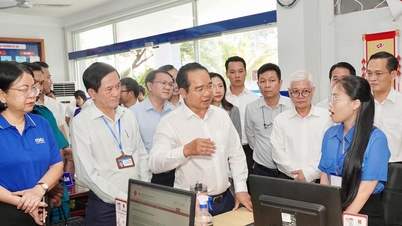
Recently, the City People's Committee Office organized a training course on "Application of artificial intelligence (AI) technology in performing tasks and solving routine work" for leaders and nearly 200 officials, civil servants and public employees. This is an activity to enhance technological capacity, especially in the context of AI playing an increasingly important role in administrative procedure reform - a field directly related to the quality of service for people and businesses.
According to Dr. Tran Quy - Director of the Vietnam Institute of Digital Economy , AI can strongly support many operations of the City People's Committee Office such as document drafting, file standardization, legal research, data synthesis and automation of electronic file processing procedures. AI not only helps reduce errors and increase productivity but also improves the quality of consulting through analysis and forecasting capabilities. In particular, AI can support receiving, classifying and responding to citizen information more quickly, contributing to significantly reducing the workload of regular staff.
However, AI does not replace humans. Experts emphasize that civil servants still need to continue to practice critical thinking, creativity and understanding – qualities that machines will find difficult to replace.
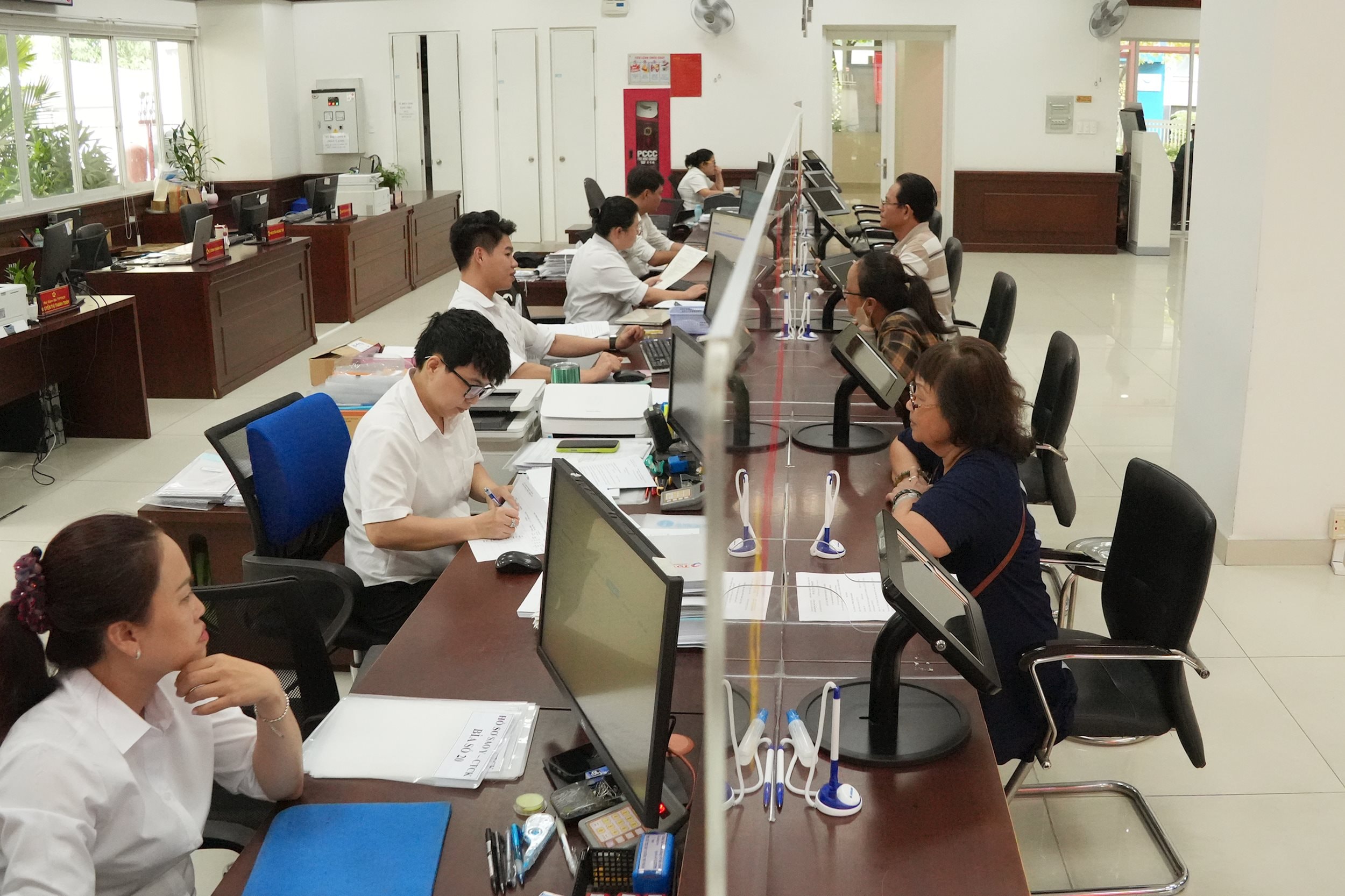
In parallel with training, the Ho Chi Minh City People's Committee is piloting the Digital Government Management Platform - an important step in modernizing operations and building a data-based governance model.
According to the Chief of the City People's Committee Office, Duong Hong Thang, the need to build a centralized management platform stems from the fact that after the city merged administrative units, the number of cadres, civil servants and public employees increased to nearly 50,000 people. The use of many separate software, each system with one account, causes great difficulty in operation and supervision.
The Digital Government management platform is designed to overcome data fragmentation, integrating functions that directly serve daily tasks such as assigning tasks - reminding tasks, monitoring progress, internal communication, managing official contacts, etc. Thereby, helping to standardize work processes and improve the efficiency of coordination between departments and branches.
The City People's Committee Office is the core unit to exploit this platform, and is assigned to guide and train agencies, develop usage regulations and continue to perfect the system with the Digital Transformation Center. Phase 2 of the platform is expected to be deployed in the first quarter of 2026, adding more features and developing web, iOS, and Android versions, creating conditions for officials to work flexibly anytime, anywhere.
Ho Chi Minh City expects that the application of AI combined with the deployment of the Digital Government Management Platform will create a fundamental change in the working methods of the administrative apparatus, towards a professional, transparent and effective working environment. The focus of this process is to put people and businesses at the center of service, reduce the time and cost of administrative procedures, and improve the quality of public service activities in the comprehensive digital transformation period.
Source: https://daibieunhandan.vn/tp-ho-chi-minh-day-manh-chuyen-doi-so-trong-xay-dung-nen-hanh-chinh-phuc-vu-10397966.html


![[Photo] Parade to celebrate the 50th anniversary of Laos' National Day](/_next/image?url=https%3A%2F%2Fvphoto.vietnam.vn%2Fthumb%2F1200x675%2Fvietnam%2Fresource%2FIMAGE%2F2025%2F12%2F02%2F1764691918289_ndo_br_0-jpg.webp&w=3840&q=75)

![[Photo] Worshiping the Tuyet Son statue - a nearly 400-year-old treasure at Keo Pagoda](/_next/image?url=https%3A%2F%2Fvphoto.vietnam.vn%2Fthumb%2F1200x675%2Fvietnam%2Fresource%2FIMAGE%2F2025%2F12%2F02%2F1764679323086_ndo_br_tempimageomw0hi-4884-jpg.webp&w=3840&q=75)


















![[Video] Protecting World Heritage from Extreme Climate Change](https://vphoto.vietnam.vn/thumb/402x226/vietnam/resource/IMAGE/2025/12/03/1764721929017_dung00-57-35-42982still012-jpg.webp)












































Comment (0)