

To achieve its goals, Vietnam's footwear industry continues to expand and diversify its markets, while focusing on maintaining traditional markets such as the US and EU due to their large purchasing power and market size.

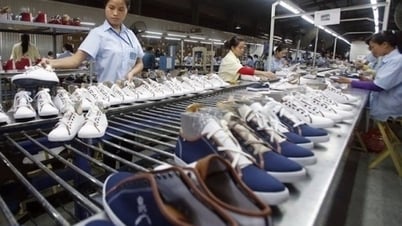
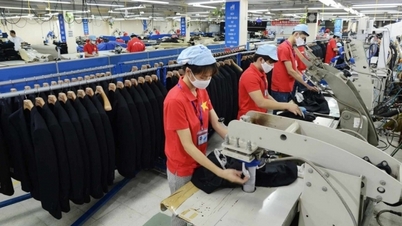
We manufacture shoes for export to the EU market.
The Vietnam Leather and Footwear Association (Lefaso) forecasts that the industry's export turnover in 2024 will reach approximately 26-27 billion USD.
To achieve the above goals, in 2024, the Vietnamese footwear industry will continue to expand and diversify its markets, while focusing on maintaining traditional markets such as the US and EU due to their large purchasing power and market size, and especially boosting exports to markets with FTAs.
Ms. Phan Thi Thanh Xuan, Vice President and General Secretary of the Vietnam Leather and Footwear Association, said that businesses are continuously recruiting workers again to accelerate production after a period of layoffs. In terms of product segment, Vietnam is considered capable of producing footwear of medium to high quality, as well as high-quality, complex products.
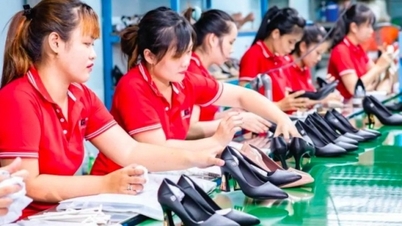
In the future, the footwear industry will not focus on producing low-value products due to low profit margins and wasted resources, but will continue to concentrate on the mid- and high-end product segments.
In the first six months of 2024, Vietnam's footwear exports reached over $6.5 billion, an increase of 5.7% compared to the same period in 2023.
According to Ms. Xuan, for the export market, the footwear industry still focuses on five main markets. The US accounts for the largest share at about 35%, followed by the EU at 26%, Japan and South Korea.
China alone currently accounts for 9% of the total and its export value is growing steadily, providing the footwear industry with significant potential for export growth in 2024.
Experts believe that major economies are also potential export markets for Vietnam's footwear industry, with a promising outlook for 2024. In particular, Vietnam possesses several significant competitive advantages over other countries producing and exporting footwear and handbags. Vietnam is a country with numerous free trade agreements, accounting for over 60% of global trade volume.
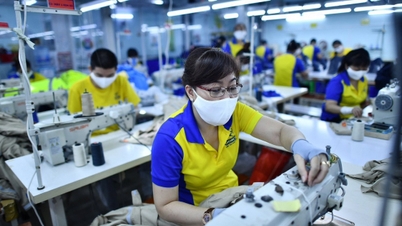
Currently, Vietnam has over 1,000 shoe factories, providing employment for approximately 1.5 million workers and contributing about 8% to the country's GDP.
In particular, the Southwestern and Central regions of Vietnam still have a large labor force, low labor costs, and vast areas of vacant land... This presents an opportunity for Vietnamese businesses to continue developing, while also attracting foreign investors to Vietnam's footwear industry.
Ms. Phan Thi Thanh Xuan stated that some green and sustainable development standards, such as policies on eco-products, extended responsibility towards manufacturers, and supply chain traceability, may be adopted by major Vietnamese footwear import markets this year and in the coming years, impacting the industry's exports. Ms. Xuan believes that compliance is mandatory.
Regarding the Carbon Pricing Mechanism (CBAM), Ms. Xuan stated that the footwear industry is considered to generate significant emissions during production and is therefore among the sectors affected by CBAM. The EU is currently a major export market for Vietnam, worth approximately 6 billion Euros annually, so preparing for and responding to this regulation is essential.
To achieve this, businesses must first thoroughly understand the information and processes required to meet and comply with CBAM. In addition, they need to prepare significant resources in terms of human resources, technology, and finance to move towards meeting CBAM requirements.
Therefore, businesses cannot venture into the global market alone; they need to participate in better networking activities to gather information, plan more thoroughly and effectively, learn from experience, and ultimately succeed in meeting regulations and participating in the supply chain.
According to Ms. Phan Thi Thanh Xuan, businesses need to apply digital transformation in management to ensure a continuous flow of data within the factory, helping leaders update information and make timely decisions. In particular, businesses need to focus on building a compliance department. This department updates information about customer requirements and accurately transmits it to the production system.
Furthermore, footwear businesses need to make good use of free trade agreements.
Therefore, especially in the markets covered by the Vietnam-EU Free Trade Agreement and the Comprehensive and Progressive Trans- Pacific Partnership Agreement, these are fundamental factors that help the industry achieve high export turnover.
The Vietnam Industrial Development Strategy to 2025, with a vision to 2035, issued under Decision No. 879/QD-TTG dated June 9, 2014, identified textiles and footwear as two of Vietnam's seven priority industries.
In order to support the stable and sustainable development of the footwear industry in the coming period, the Ministry of Industry and Trade has been urging relevant units and localities to focus on effectively implementing the Strategy for the Development of the Vietnamese Footwear Industry until 2030, with a vision to 2035; and to develop a Sustainable Development Program for the Footwear Industry for the period 2021-2030.
Source: VNA
Source: https://baophutho.vn/xuat-khau-da-giay-nam-2024-du-kien-dat-khoang-26-27-ty-usd-215297.htm



















































































Comment (0)