

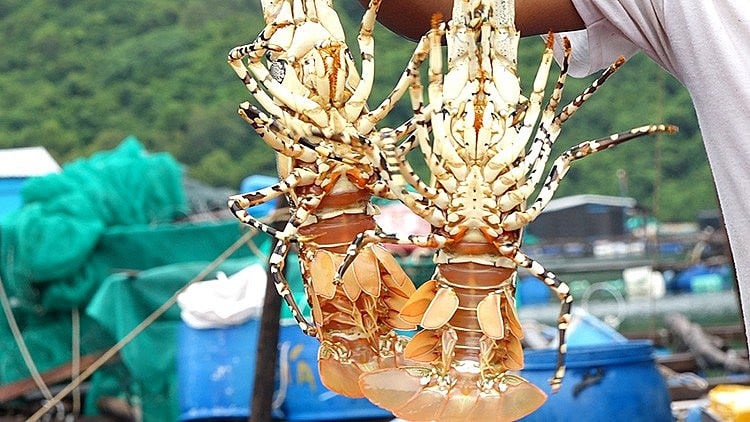
| Latest information on the bottleneck in the export of spiny lobsters to China: China accounts for up to 99% of Vietnam's spiny lobster export market. |
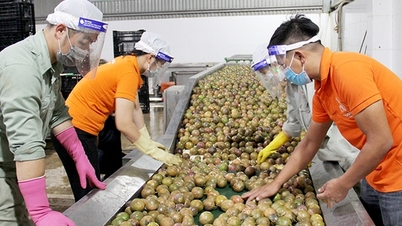
According to the Vietnam Association of Seafood Processing and Export, in the first two months of 2024, seafood exports increased by 13% compared to the same period last year, mainly due to a breakthrough increase of 64% in January. Many key products showed positive growth in the past two months, including whiteleg shrimp (up 18%), tuna (up 21%), pangasius (up 6.5%), and tiger shrimp (up 9%). Notably, lobster exports surged by more than 18 times compared to the same period last year.
 |
| Lobster exports to the Chinese market increased 27 times. |
By the end of February 2024, lobster exports reached nearly $30 million, a 1,746% increase compared to $1.6 million in the same period last year. Of this, exports of green lobsters (rock lobsters) accounted for over 90% at $27.6 million, an 80-fold increase, followed by spiny lobsters at $2.15 million, a 45-fold increase compared to the same period.
China remains the largest import market for Vietnamese lobster products, with a value of nearly $29 million, 27 times higher than the same period last year. Since October 2023, China has stopped importing spiny lobsters from Vietnam due to regulations related to its Wildlife Protection Law.
To export spiny lobsters to China, businesses must prove that the lobster larvae are not caught directly from the sea, provide clear evidence of the farming process, and not use larvae harvested from the wild, meaning the larvae must be F2 generation; the importing unit must have a license...
On January 20, 2024, Deputy Minister of Agriculture and Rural Development Tran Thanh Nam led a delegation from the Ministry to work with the People's Government of Guangdong Province (China) on cooperation in agricultural development and trade.
In related discussions, both sides also agreed to coordinate in resolving obstacles in the import and export of sturgeon and spiny lobster under a special mechanism, which will be included in the Protocol between the two countries. While awaiting the signing of the Protocol, China will consider creating a special mechanism for businesses to register to export spiny lobster to the country.
While awaiting this special mechanism, many spiny lobster farmers have switched to farming green lobsters. Demand for green lobsters from China remains quite high, and farmers continue to export live green lobsters to this market, while only a small portion of spiny lobsters are exported there as frozen products.
Besides China, Vietnam also exports green lobsters and spiny lobsters to Thailand, Malaysia, and Singapore, and crayfish to the United States.
Source


![[Photo] Prime Minister Pham Minh Chinh holds a phone call with the CEO of Russia's Rosatom Corporation.](/_next/image?url=https%3A%2F%2Fvphoto.vietnam.vn%2Fthumb%2F1200x675%2Fvietnam%2Fresource%2FIMAGE%2F2025%2F12%2F11%2F1765464552365_dsc-5295-jpg.webp&w=3840&q=75)

![[Photo] Closing Ceremony of the 10th Session of the 15th National Assembly](/_next/image?url=https%3A%2F%2Fvphoto.vietnam.vn%2Fthumb%2F1200x675%2Fvietnam%2Fresource%2FIMAGE%2F2025%2F12%2F11%2F1765448959967_image-1437-jpg.webp&w=3840&q=75)













































![[OFFICIAL] MISA GROUP ANNOUNCES ITS PIONEERING BRAND POSITIONING IN BUILDING AGENTIC AI FOR BUSINESSES, HOUSEHOLDS, AND THE GOVERNMENT](https://vphoto.vietnam.vn/thumb/402x226/vietnam/resource/IMAGE/2025/12/11/1765444754256_agentic-ai_postfb-scaled.png)

















































Comment (0)