

Furthermore, having a larger brain does not necessarily mean higher intelligence, according to a key finding about prehistoric humans by a team of researchers from the National Geographic Society.
Through discoveries in the Rising Star cave system in what is known as the Cradle of Humanity in Africa, researchers have confirmed that Homo naledi, an ancient species that lived from 335,000 to 236,000 years ago, was the first to bury its own kind and mark the burial sites, according to ABC News.
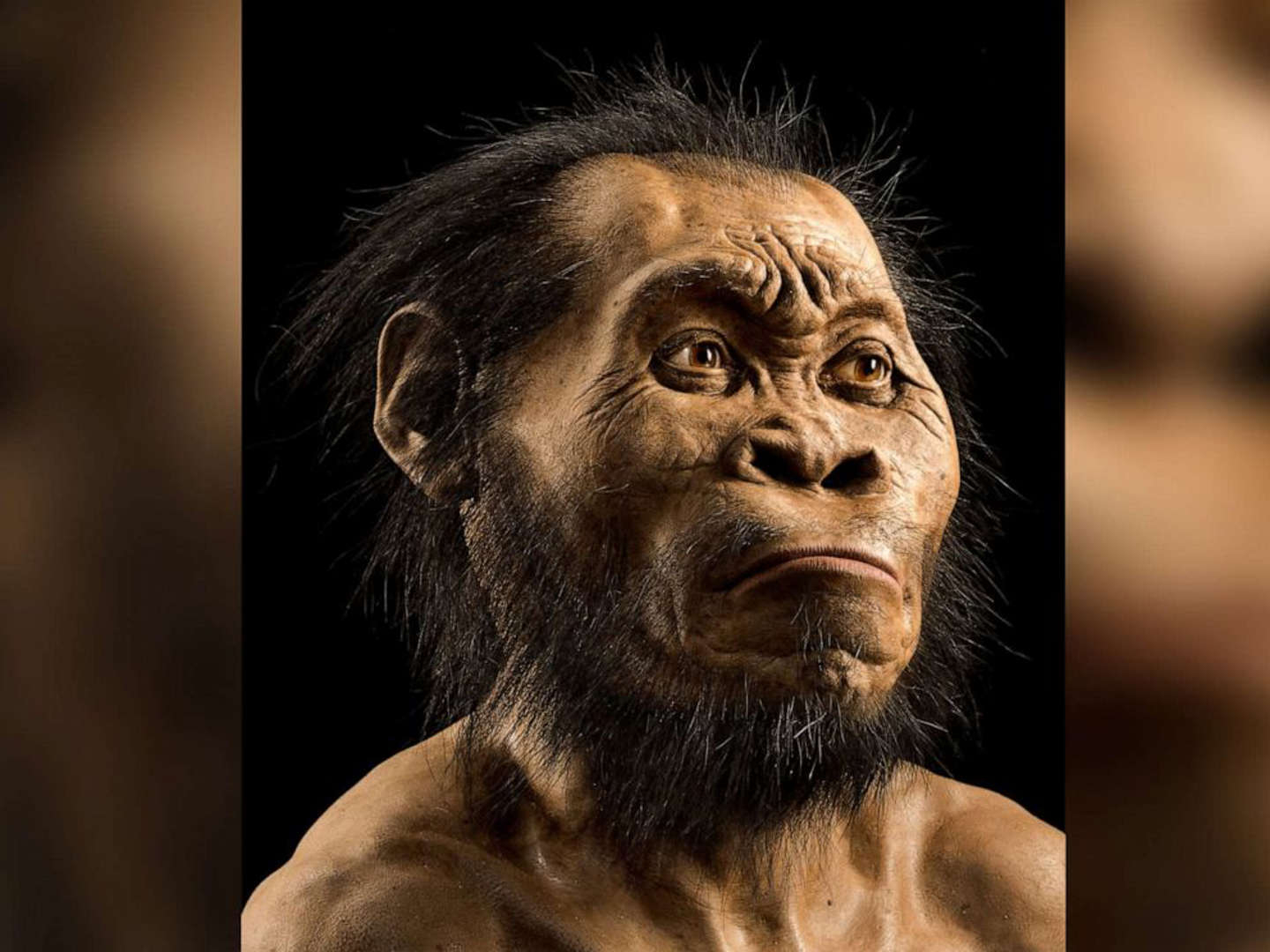
A simulated image of the Homo naledi species.
SCREENSHOT FROM ABC NEWS
The research team found the remains of adult and juvenile Homo naledi placed in a fetal position in depressions within the cave and filled with earth. These burials predate the remains of Homo sapiens by at least 100,000 years. All modern humans belong to the species Homo sapiens.
Homo naledi had human-like limbs but a brain size only one-third that of humans. Researchers previously believed that brain size was a measure of their significantly lower intelligence compared to Homo sapiens.
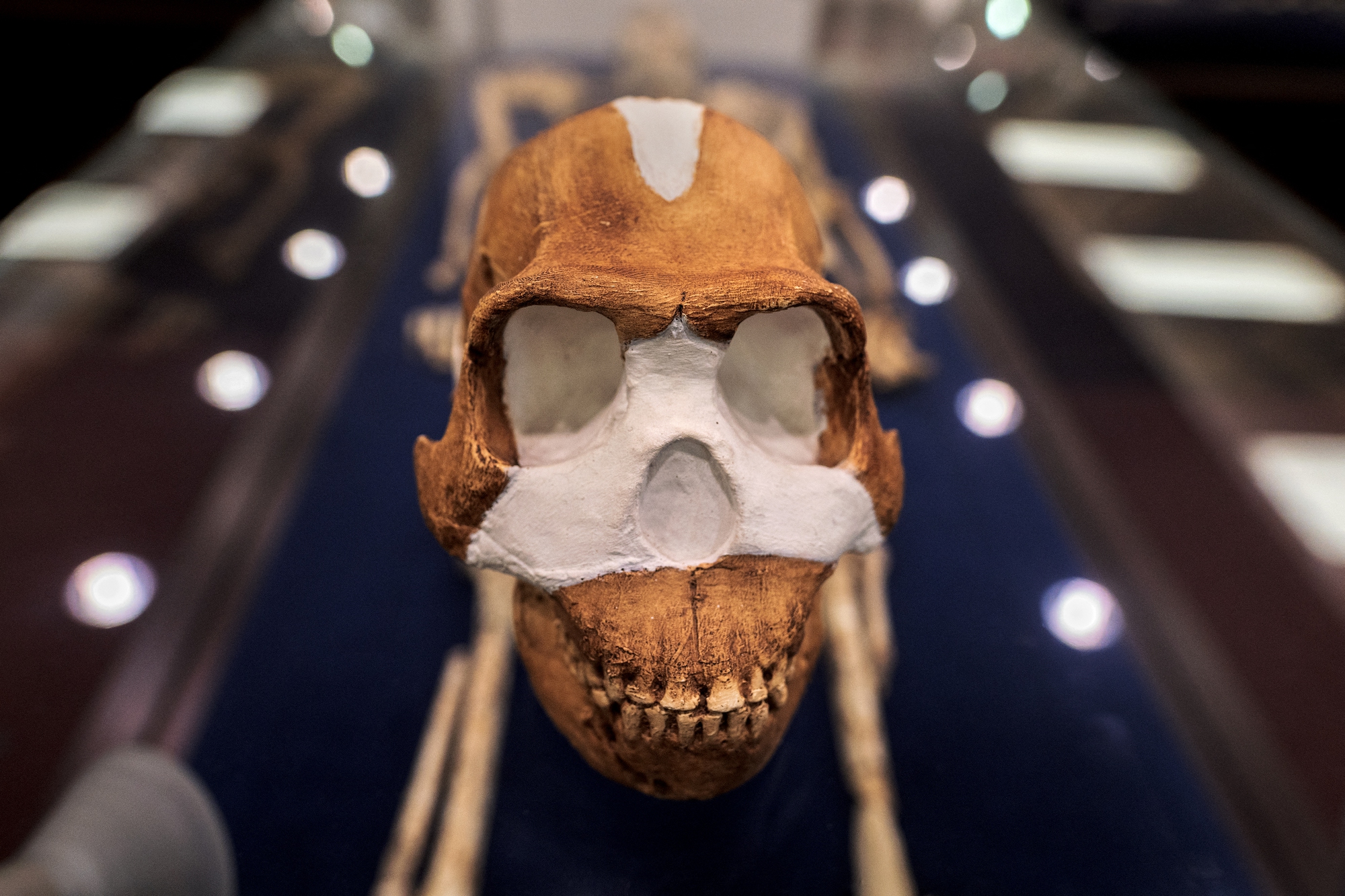
The skull of a Homo naledi individual at the University of Wits, South Africa.
However, this hypothesis is now being overturned by new findings from the research team. "It was the first non-human species to know how to bury their dead," paleoanthropologist Residence Lee Berger, a member of the research team, told ABC News.
Researchers also found numerous characters carved into the rocks in the cave, believed to mark burial sites. The characters included triangles, squares, diagonals, and various other shapes.
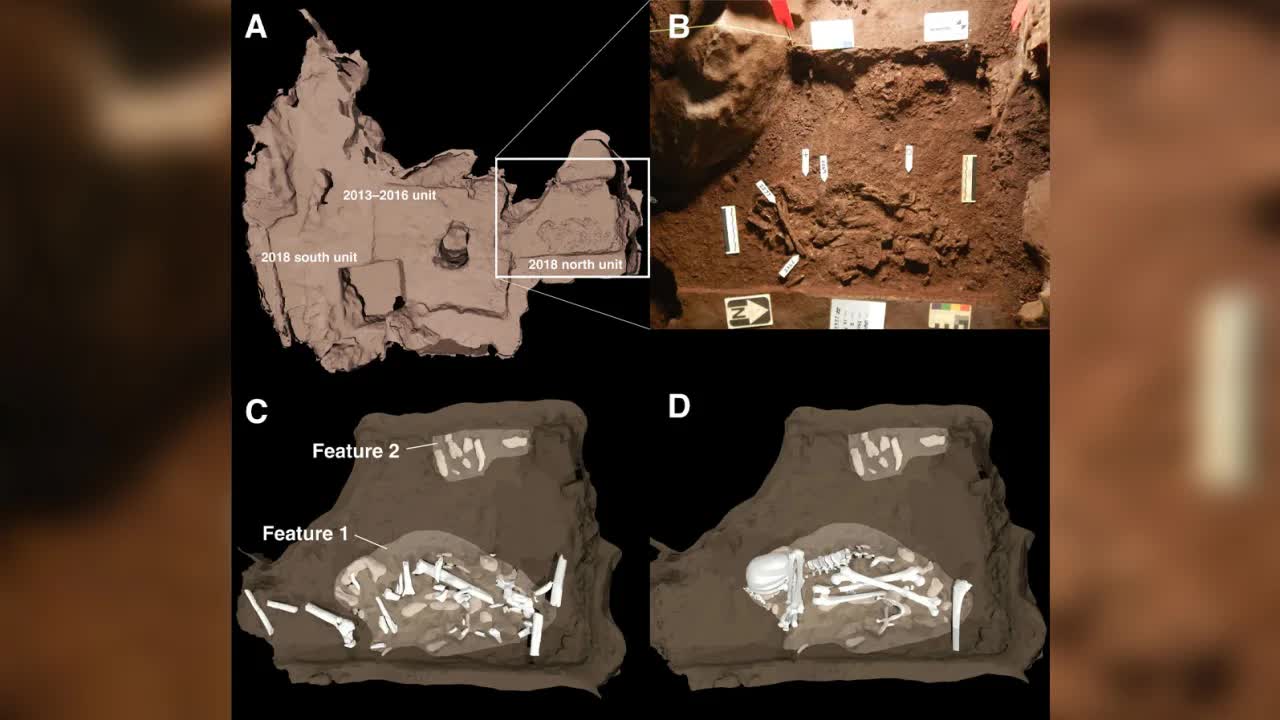
The skeletons were found in the cave.
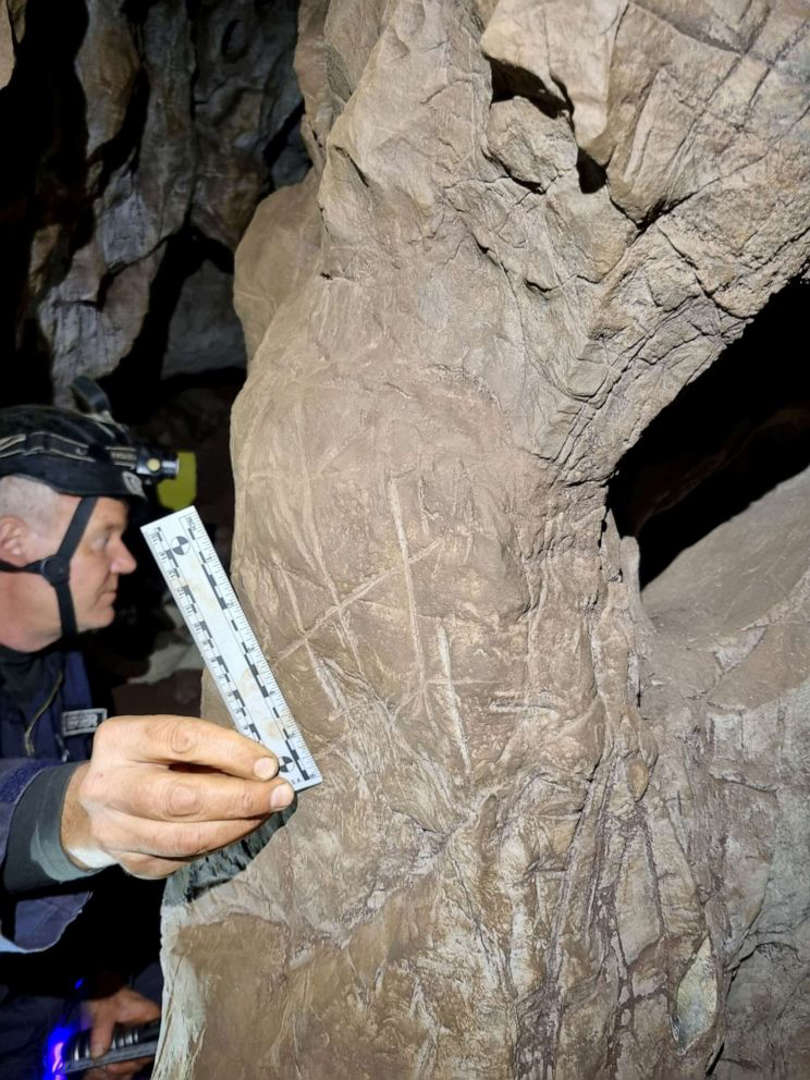
Symbols alongside the burial site of Homo naledi
SCREENSHOT FROM ABC NEWS
Similar symbols have also been found in other caves carved by Homo sapiens 80,000 years ago and Neanderthals 60,000 years ago. This is thought to be a way for them to store and share information.
Researchers have not yet been able to determine whether Homo naledi and Homo sapiens interacted in any way, given that both species had a parallel existence period approximately 250,000 years ago.
Berger called the discovery "shocking and groundbreaking," helping to dispel the previous notion that humans differed from animals because of their larger brains. "Homo naledi had a brain the size of a chimpanzee's but knew how to bury things, a behavior previously thought to be unique to humans," Berger said.
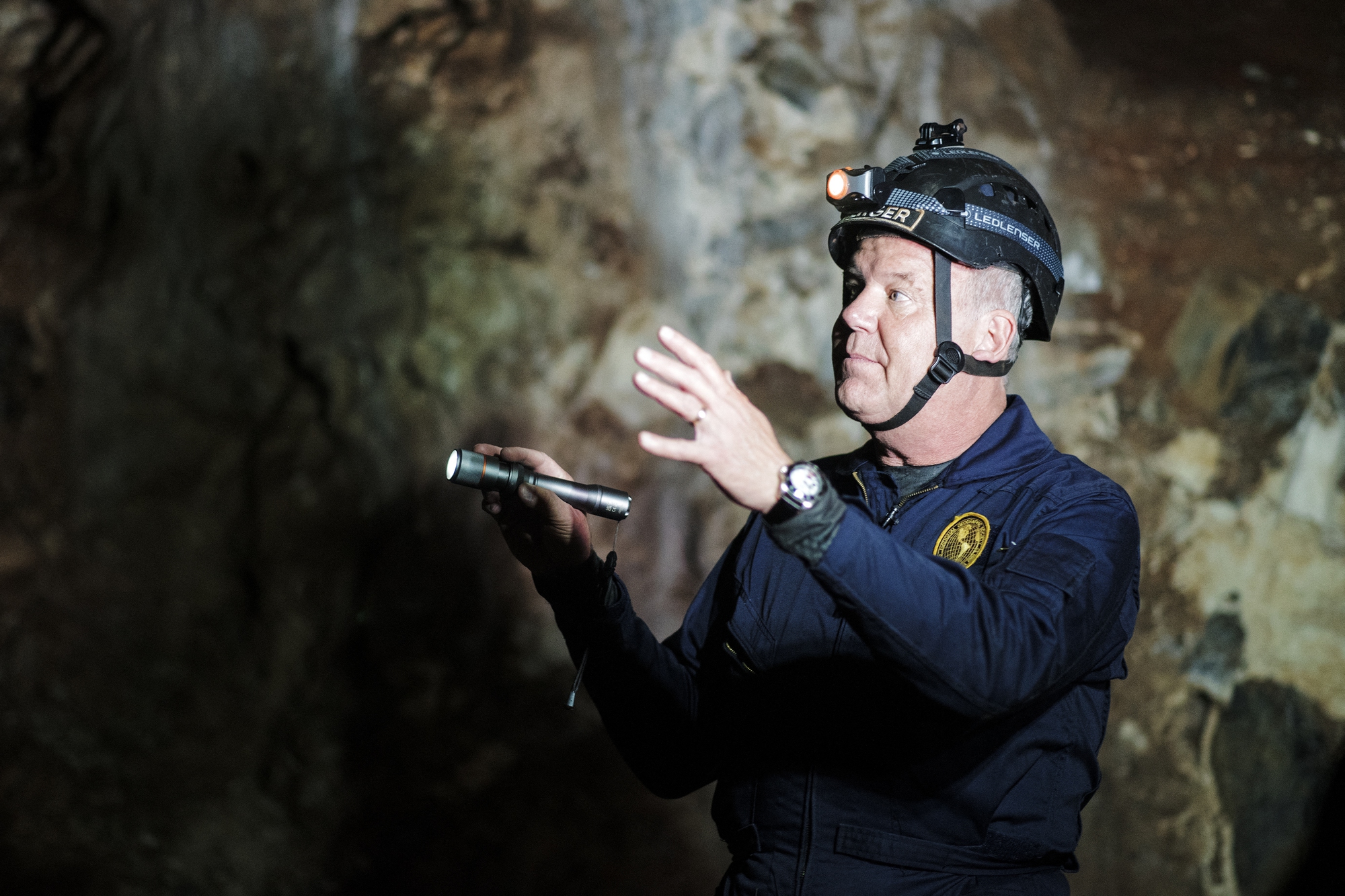
Mr. Residence Lee Berger inside the cave
Researchers believe that Homo naledi knew how to use fire and eat animals, and placed artifacts on tombs. However, they do not yet know why this species became extinct. The new findings are detailed in three accepted studies published in the journal eLife , according to CNN.
Did Neanderthals become extinct because of sex?
The Rising Star Caves, located in South Africa, are one of the world's most famous caves within the Cradle of Humanity paleontological site. This area has been a UNESCO World Heritage site since 1999. Berger's team mapped the caves in 2008 and subsequently discovered a labyrinth of narrow passageways leading to caves containing skeletons. The first fossilized skeletons of Homo naledi were discovered in 2013.
Source link

![[Photo] Closing Ceremony of the 10th Session of the 15th National Assembly](/_next/image?url=https%3A%2F%2Fvphoto.vietnam.vn%2Fthumb%2F1200x675%2Fvietnam%2Fresource%2FIMAGE%2F2025%2F12%2F11%2F1765448959967_image-1437-jpg.webp&w=3840&q=75)
![[Photo] Prime Minister Pham Minh Chinh holds a phone call with the CEO of Russia's Rosatom Corporation.](/_next/image?url=https%3A%2F%2Fvphoto.vietnam.vn%2Fthumb%2F1200x675%2Fvietnam%2Fresource%2FIMAGE%2F2025%2F12%2F11%2F1765464552365_dsc-5295-jpg.webp&w=3840&q=75)















































![[OFFICIAL] MISA GROUP ANNOUNCES ITS PIONEERING BRAND POSITIONING IN BUILDING AGENTIC AI FOR BUSINESSES, HOUSEHOLDS, AND THE GOVERNMENT](https://vphoto.vietnam.vn/thumb/402x226/vietnam/resource/IMAGE/2025/12/11/1765444754256_agentic-ai_postfb-scaled.png)


















































Comment (0)