

Even without knowing Chinese, tourists can still travel independently and fully experience China if they have sufficient information and make thorough preparations.
Reader Trinh Hang (40 years old, Hanoi ) shared her experience of traveling in China without knowing Chinese, after her trip in June.
Not knowing a single Chinese character and having never been to China, we still had over 10 days of amazing experiences on our self-guided trip. It turns out that independent travel in China isn't as difficult as we thought, if you prepare well and aren't afraid to ask locals for help. Here are some things to keep in mind:
Create a detailed plan and schedule.
No matter where we go, we always make a detailed plan. For our trip to China, we spent more time and effort planning than any previous trip, because if we couldn't use Google and other English- and Vietnamese-language tools once we got there, it would be very difficult to manage.
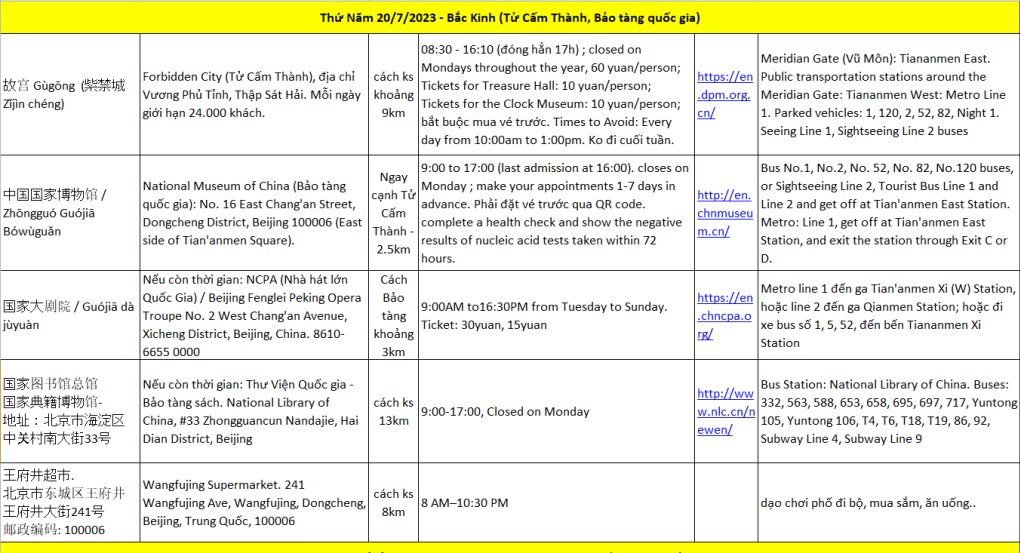
Your itinerary should include the following information: the destination you want to visit, and its address (clearly stating the name and address in four ways: Chinese characters, English name, Vietnamese name, and pinyin). When using navigation apps, buying tickets, or registering, you will enter the pinyin into the keyboard, and the Chinese characters will appear on the screen. You just need to compare the Chinese characters on the screen with the Chinese characters in your itinerary; if they match, that's the correct address. When you need to ask for directions, Chinese people will look at the Chinese characters to show you; they won't understand if you give an English address. Therefore, without Chinese characters and pinyin, tourists will almost certainly be unable to find or ask for directions, or use mobile apps (which are only in Chinese). Additionally, you should save photos of all the locations to your phone.
Opening and closing times, ticket sales hours, ticketing methods, and prices: Many places in China only sell tickets or make reservations through apps, while some offer both paper and mobile ticket sales. Many require reservations at least one day in advance, so visitors who don't check beforehand may not be able to enter their desired location. Most museums and historical sites are closed on Mondays; opening hours vary depending on the season, so it's advisable to check the website beforehand.
Distance and transportation: Research the relative locations of places beforehand to plan a reasonable itinerary that minimizes time, distance, and cost. Most tourist destinations have their own websites and suggest public transportation options. Simply copy these suggestions into your itinerary to catch the right train or bus. Street signs, information boards at stations, on all trains, subways, and most buses are in English, making them easy to read.
Contact information in case of need: Vietnamese embassy and consulate in China, emergency phone numbers for each city ( medical , police, fire), phone numbers of relatives, places you will be going to (hotel, guesthouse owner, airline, train/bus company).
Install and familiarize yourself with Chinese apps.
China has developed a very powerful system of applications for communication, travel, and shopping, and without them, independent travelers will find it very difficult to travel independently. For example, to find directions, even if you somehow manage to access Google, the suggested routes and transportation options are not as accurate as those from Baidu. For communication, booking, and purchasing tickets, in many cases you can only use WeChat. Therefore, Baidu and WeChat are two essential applications that every traveler should install on their phone when traveling independently in China.
You should buy a Chinese SIM card to access the internet. Only with a phone number can you register an account and log in to WeChat. As soon as you buy the SIM card, ask the staff to help activate WeChat, because this software requires a referral from a user who has been active for more than 6 months before you can activate your account.
Once you've installed and are using Baidu and WeChat, finding directions, choosing public transportation, communicating, and making reservations all become simple. Baidu is only available in Chinese, while WeChat supports multiple languages, including Vietnamese.
Install translation software.
With the most popular translation software, Google Translate, you can download a simplified Chinese translation app to your phone. This way, even if you can't access Google or the internet in China, you can still communicate with Chinese people using your phone by translating from Vietnamese to Chinese. This is also the most common method of communication between tourists and locals throughout their trip.
Chinese people are very enthusiastic, kind, patient, and almost everyone has a smartphone. Many are willing to spend 10-15 minutes, or even more, to help. Of the hundreds of people we met in China, not many spoke English, but most were willing to communicate with foreigners and help until the problem was solved. One tip is that the shorter the question, the more effective the translation software will be. Instead of typing a long sentence like "Excuse me, sir/madam, could you please tell me the way to the Forbidden City?", you can just type "Please show me the way to the Imperial Palace."
Book your room and buy your tickets in advance.
Tourists should book accommodation in advance before arriving in China to avoid any surprises. Accommodation options in China are quite diverse and range in price, from hotels and homestays to apartments, typically from a few hundred thousand to several million yuan per night. You can book rooms on websites such as Trip.com, Booking.com, and Agoda.com. Almost all accommodations have phone numbers and WeChat IDs; you should save this information for convenient communication, especially via WeChat. Most hosts are always willing to help with local travel information, send photos, location information, and suggestions, even though it's not usually their job.
For travel within the city, you don't need to buy train or bus tickets in advance because tickets are always readily available. However, if you need to travel between different provinces or cities, it's highly recommended to buy train tickets in advance, and as early as possible. Many train and bus journeys can sell out quite quickly.
Bring enough cash and your passport.
Nowadays, most Chinese people don't use cash; they mostly use their phones and pay via apps like Alipay and WeChat. However, tourists may find it difficult to use these apps because they don't have a Chinese bank account linked to the application. Not many places have card readers, so international credit cards may not be accepted.
Make sure you have enough cash, both large and small bills. A small note: there's no conductor collecting fares on the bus, only the driver, and usually the driver doesn't have change on hand. So if you want to take the bus, prepare small bills, preferably 1 Yuan notes, as bus fares in China typically range from 1 to 3 Yuan (3,000-10,000 VND). When you board the bus, simply insert the correct amount into the fare machine to begin your journey.
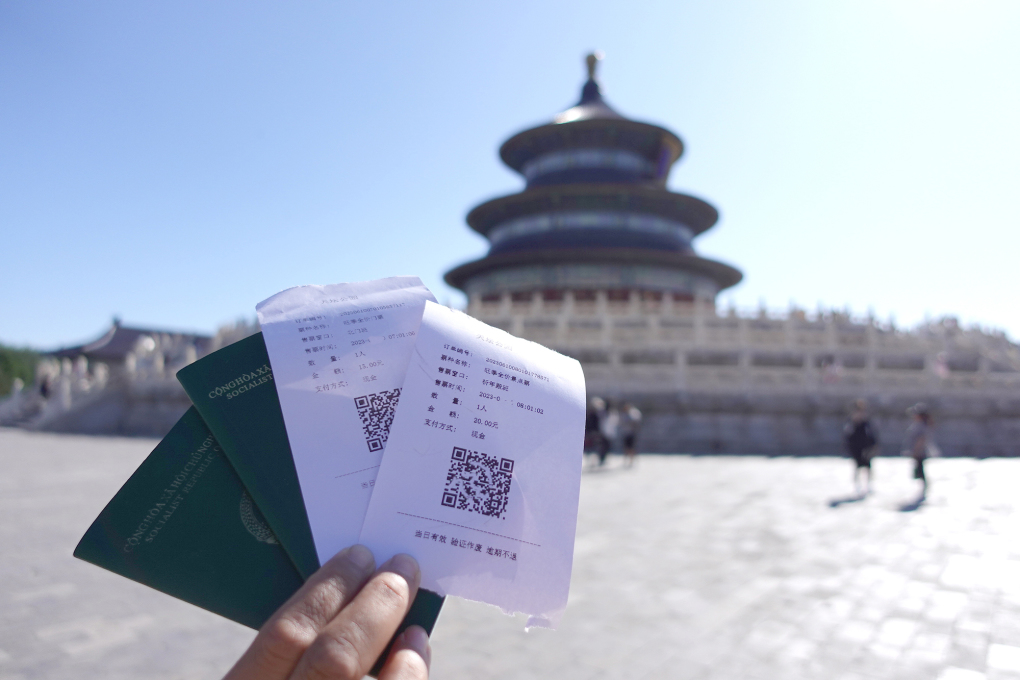
At most tourist attractions in China, you will need to present your passport upon entry. Therefore, always carry your passport and keep it safe. Keep your daily luggage as light as possible, and avoid carrying dangerous items (knives, lighters, chemicals) as all subway and train stations and most tourist attractions have baggage scanners and security checks.
Tourism services in China are abundant and professional, the environment is clean and safe, and most Chinese people are friendly, enthusiastic, and dedicated. Therefore, you can absolutely start a self-guided trip, just prepare a little and be ready for new experiences.
According to vnexpress.net
Source

























































































Comment (0)