

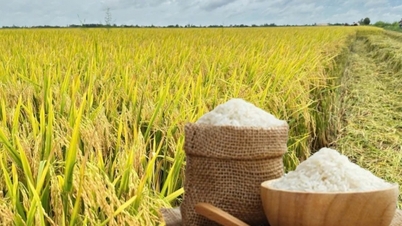
Now that India has lifted its ban on rice exports, Vietnamese businesses need to focus on niche markets while building high-quality rice brands.
Pressure from increasing global rice supply
According to data from the US Department of Agriculture , in the first two months of 2025 alone, the global rice supply reached a record high of 532.7 million tons. This was primarily due to India – the world's largest rice exporter – lifting its export ban. This created intense competition, particularly in the lower-quality rice segment, directly impacting major rice exporting countries like Vietnam and Thailand.
According to Mr. Nguyen Van Thanh, Director of Phuoc Thanh IV Production - Trading Co., Ltd., a company specializing in rice exports, "The return of Indian rice is like an earthquake, especially in the white rice segment, which is their strength and also our main product. However, I believe this impact is only temporary, because 80% of Vietnam's exported rice belongs to the high-quality segment."
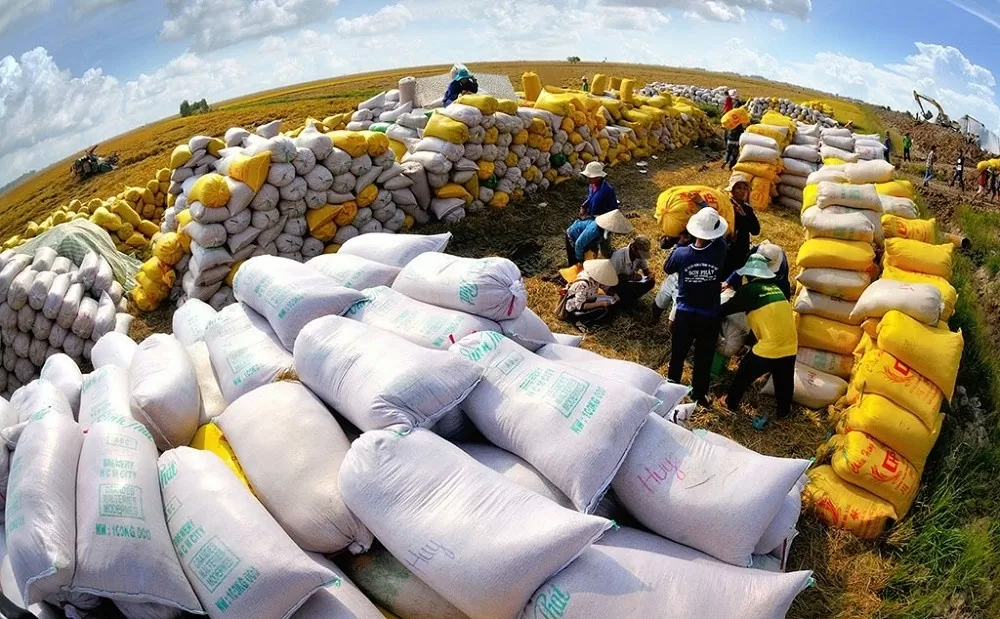 |
| Experts believe that Vietnamese businesses need to focus on niche markets while building high-quality Vietnamese rice brands. |
According to data from the Ministry of Agriculture and Environment , in the first two months of 2025, Vietnam exported 1.1 million tons of rice, an increase of 5.9% compared to the same period last year. However, the export value only reached 613 million USD, a decrease of 13%. This shows that the average export price of Vietnamese rice has decreased significantly, clearly reflecting the competitive pressure from India.
Besides facing price competition, Vietnam's rice industry must also adapt to increasingly stringent requirements from international markets. Major markets such as the EU and the US demand that products meet standards for sustainable development, emission reduction, and traceability.
"This is an inevitable market trend, and we cannot stand aside," commented Ms. Le Thi Huong, an expert in the rice industry.
"However, the transition from traditional to green and smart production requires significant investment and a change in farmers' mindset. Along with that, the project to cultivate 1 million hectares of high-quality, low-emission rice in the Mekong Delta is a step in the right direction, but it needs more investment and more decisive implementation," Ms. Huong emphasized.
Businesses need to proactively seek out niche markets.
Despite the challenging economic climate, there are still positive signs for Vietnam's rice industry. White rice, which dominates the market share (71%), targets mass markets such as the Philippines, Indonesia, and Africa, with competitive pricing. Meanwhile, premium fragrant rice varieties like Jasmine, ST24, and ST25 (19% market share) are conquering demanding markets such as the EU, the US, and Japan, where value is paramount. This diversification, along with projected increased demand from China (5-6 million tons/year) and the Philippines (4.5-4.7 million tons) from Q2/2025, is also supporting the recovery of Vietnamese rice prices.
"We believe that, with the quality of our fragrant and specialty rice already established in the international market, Vietnam still has many opportunities to maintain and expand its market share in high-end markets," Mr. Nguyen Van Thanh added.
According to rice industry expert Le Thi Huong, diversifying export markets, focusing on niche markets, and building high-quality Vietnamese rice brands are key to enhancing the industry's competitiveness.
"To overcome challenges and seize opportunities, Vietnam's rice industry needs comprehensive solutions. First, it is necessary to accelerate production restructuring, improve product quality and added value. Second, it is necessary to strengthen trade promotion and expand export markets, especially niche markets. Third, effective support policies are needed for farmers and businesses, helping them access capital, technology, and markets," Ms. Huong analyzed.
According to Mr. Nguyen Ngoc Nam, Chairman of the Vietnam Food Association (VFA), Vietnam exported over 8 million tons of rice in 2023 and is expected to reach approximately 9 million tons in 2024. This confirms that Vietnamese businesses have proactively sought markets, and the amount of rice produced is sufficient to address consumption concerns.
| On the export market, Vietnam's rice export prices today (March 10) remained stable compared to the end of last week. According to the Vietnam Food Association (VFA), the current price for 5% broken rice is 389 USD/ton; 25% broken rice is 364 USD/ton; and 100% broken rice is 307 USD/ton. |
Source: https://congthuong.vn/an-do-cho-xuat-khau-gao-doanh-nghiep-ung-pho-ra-sao-377599.html

![[Photo] Prime Minister Pham Minh Chinh holds a phone call with the CEO of Russia's Rosatom Corporation.](/_next/image?url=https%3A%2F%2Fvphoto.vietnam.vn%2Fthumb%2F1200x675%2Fvietnam%2Fresource%2FIMAGE%2F2025%2F12%2F11%2F1765464552365_dsc-5295-jpg.webp&w=3840&q=75)













































































Comment (0)