

Fast drainage, anti-slip, increased safety.
The Institute of Transport Science and Technology is summarizing and evaluating the application of porous asphalt concrete drainage technology in Vietnam.
According to current standards, for highways and high-speed roads, a surface roughening layer is required to ensure safety and smooth operation. Porous asphalt concrete technology has long been used worldwide to meet this requirement. However, its application in Vietnam requires careful research to ensure suitability.
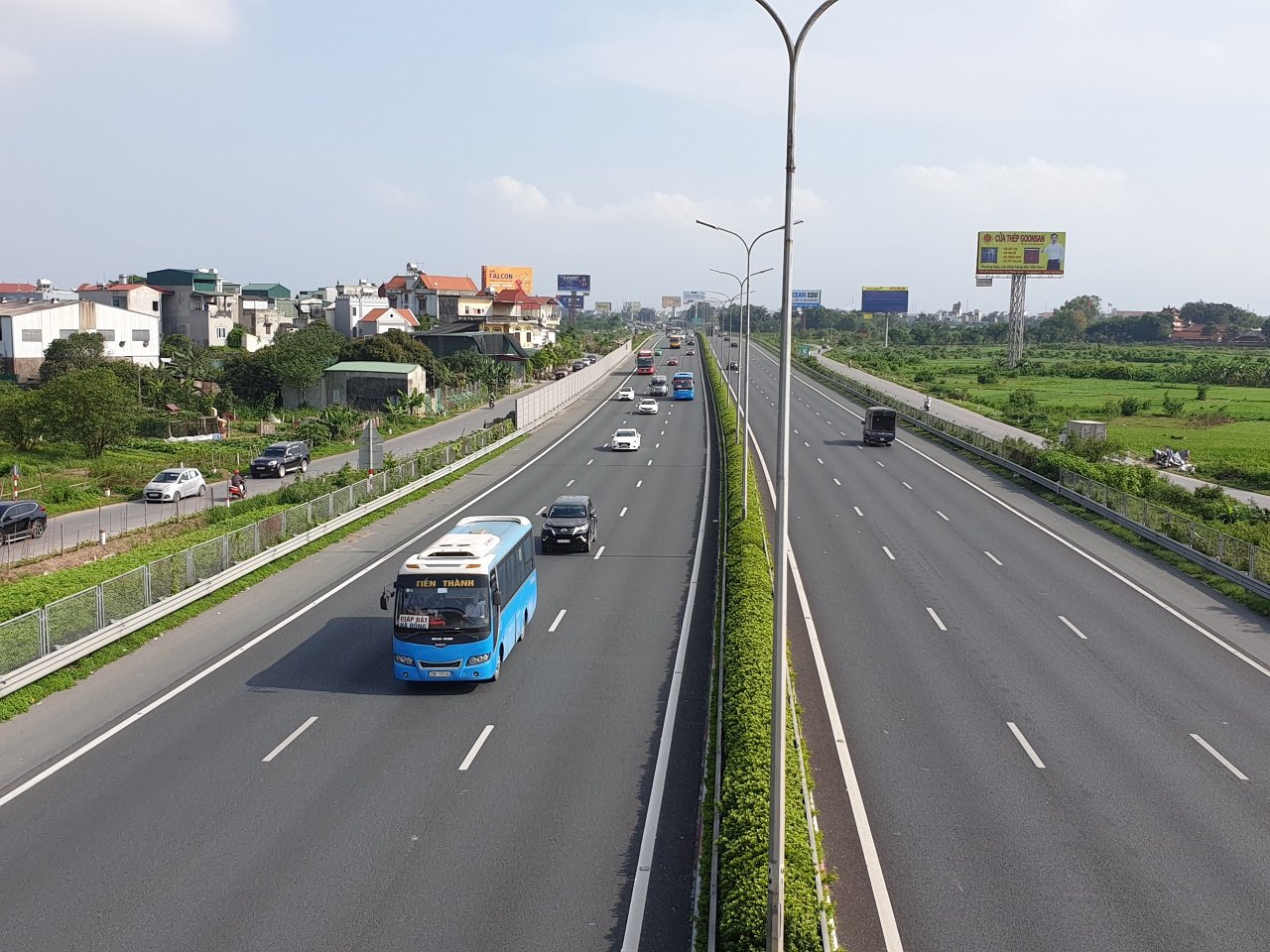
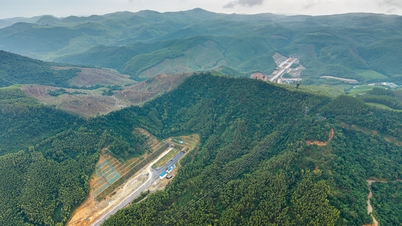
The Phap Van - Cau Gie expressway utilizes porous asphalt concrete technology with many advantages, increasing safety.
Therefore, the Institute conducted research and laboratory testing from 2012; then collaborated with Japanese partners to conduct field trials. In 2016, it submitted to the Ministry of Transport a regulation on the design, construction, and acceptance of porous asphalt concrete pavements with additives; in 2018, it carried out large-scale construction with a length of nearly 30km on the Phap Van - Cau Gie route; in 2020, the Institute developed the standard TCVN 13048:2020 "Porous asphalt concrete pavement layer - Construction and acceptance"; in 2022, it continued to monitor several sections using porous asphalt concrete on Thung Khe Pass - Hoa Binh and National Highway 6 - Son La.
Representatives from the Institute of Transport Science and Technology emphasized that after 10 years of research and application, it is necessary to summarize and evaluate the application of this technology in Vietnam in order to make adjustments and proposals to improve it.
Field observations and assessments have shown that porous asphalt concrete with good drainage has many advantages. In terms of road surface structure, it has high durability, resists wheel rutting, and prevents cracking. Importantly, it contributes to ensuring traffic safety for vehicles on the road because its rapid drainage increases slip resistance, reduces wheel skidding, prevents smoke and splashing, thereby improving visibility for drivers and reducing the risk of accidents.
Qualified for widespread application
The Institute of Transport Science and Technology reported that the results after one month, 12 months, and 24 months of construction of the pilot road section all showed no change in road surface quality throughout the monitoring period; the road surface was flat, evenly rough, with no signs of rutting, peeling, material shifting, or stone wear. After 105 months, the road surface remained flat with no cracks or fractures.
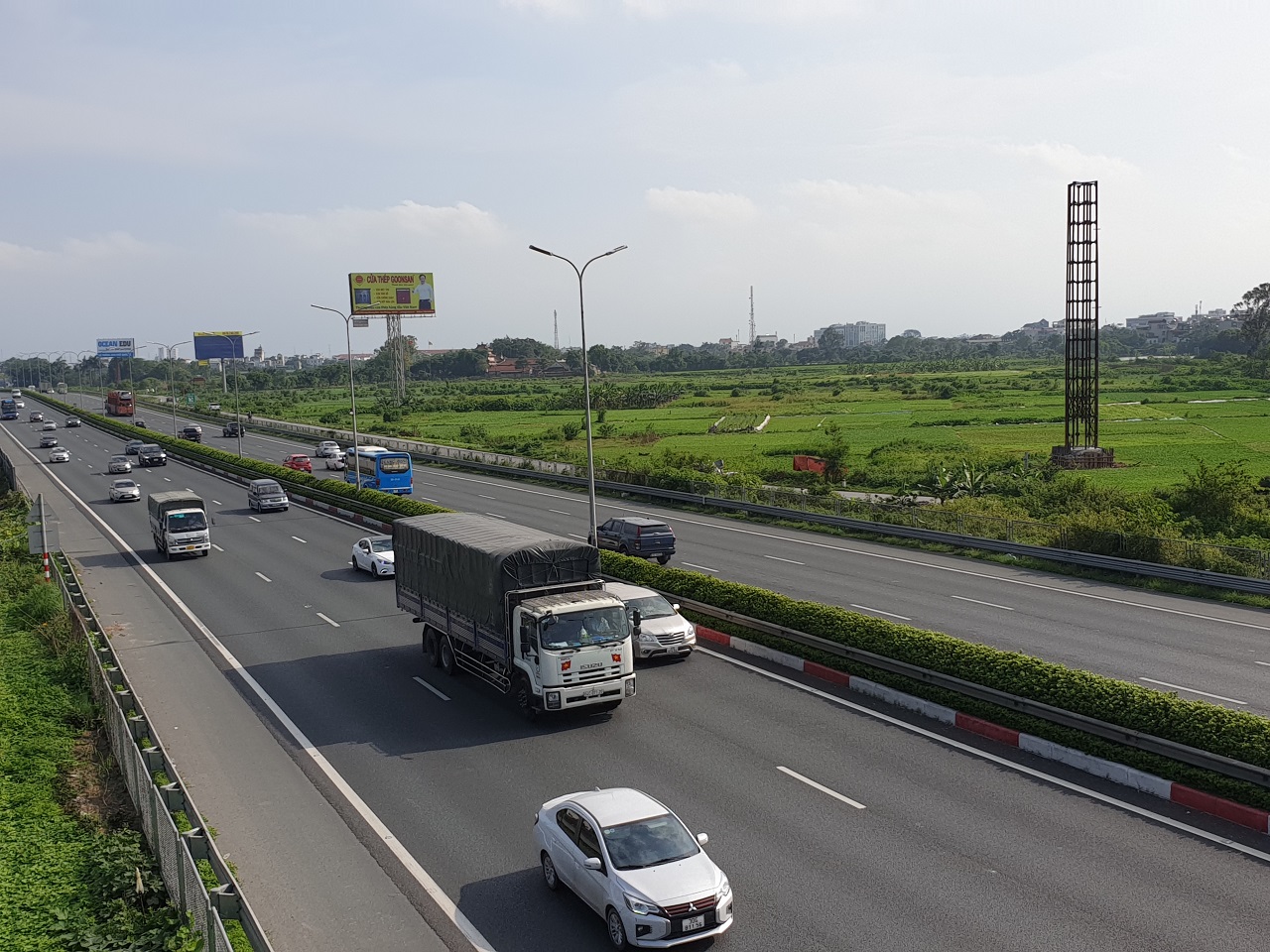
According to the Institute of Transport Science and Technology, porous asphalt concrete technology with good drainage is suitable for widespread application in new road construction and maintenance (Image: illustration).
According to Phuong Thanh Construction Investment Joint Stock Company, the entire 29.3km length of the Phap Van - Cau Gie expressway has been constructed with a porous asphalt concrete surface for drainage. After 53 months of construction, the following performance indicators were checked: Surface roughness and skid resistance showed a tendency to decrease over time but still met requirements; localized wheel rutting appeared in a few locations; seepage decreased over time but remained above the required values.
"The application of porous asphalt concrete technology in recent times has shown good operational quality, ensuring safe vehicle speeds exceeding 120 km/h as stipulated by Vietnamese standards. The Ministry of Transport has also issued TCVN 13048:2020 "Porous asphalt concrete pavement layer - Construction and acceptance". Therefore, it meets the standards for widespread application in new construction projects as well as road maintenance, improving operational safety," said a representative from the Institute of Transport Science and Technology.
Source: https://www.baogiaothong.vn/ap-dung-cong-nghe-be-tong-nhua-rong-thoat-nuoc-nang-cao-an-toan-mat-duong-192231204142056964.htm

![[Photo] Prime Minister Pham Minh Chinh holds a phone call with the CEO of Russia's Rosatom Corporation.](/_next/image?url=https%3A%2F%2Fvphoto.vietnam.vn%2Fthumb%2F1200x675%2Fvietnam%2Fresource%2FIMAGE%2F2025%2F12%2F11%2F1765464552365_dsc-5295-jpg.webp&w=3840&q=75)


![[Photo] Closing Ceremony of the 10th Session of the 15th National Assembly](/_next/image?url=https%3A%2F%2Fvphoto.vietnam.vn%2Fthumb%2F1200x675%2Fvietnam%2Fresource%2FIMAGE%2F2025%2F12%2F11%2F1765448959967_image-1437-jpg.webp&w=3840&q=75)















































![[OFFICIAL] MISA GROUP ANNOUNCES ITS PIONEERING BRAND POSITIONING IN BUILDING AGENTIC AI FOR BUSINESSES, HOUSEHOLDS, AND THE GOVERNMENT](https://vphoto.vietnam.vn/thumb/402x226/vietnam/resource/IMAGE/2025/12/11/1765444754256_agentic-ai_postfb-scaled.png)















































Comment (0)